Join us on a literary world trip!
Add this book to bookshelf
Grey
Write a new comment Default profile 50px
Grey
Subscribe to read the full book or read the first pages for free!
All characters reduced
The Ultimate Question - cover

The Ultimate Question

Pasquale De Marco

Publisher: Publishdrive

  • 0
  • 0
  • 0

Summary

In this thought-provoking exploration of one of humanity's most enduring questions, The Ultimate Question delves into the depths of the debate surrounding the existence of God. With meticulous analysis and thought-provoking insights, this book invites readers on a journey to explore the nature of divinity, the arguments for and against God's existence, and the profound implications of these questions for our understanding of reality, meaning, and purpose.

Through a comprehensive examination of the cosmological, ontological, and teleological arguments, the book provides a thorough analysis of the rational foundations of belief in God. It scrutinizes these arguments, uncovering their strengths and weaknesses, and delving into the complexities of the concepts they invoke, such as causality, necessity, and design.

Furthermore, the book confronts the persistent challenge of the problem of evil, grappling with the apparent contradiction between the existence of a benevolent and omnipotent God and the presence of suffering and evil in the world. It explores various attempts to reconcile these seemingly irreconcilable concepts, considering the concepts of free will, divine permission, and the mystery of hiddenness.

Moving beyond philosophical arguments, the book delves into the historical and cultural dimensions of the question of God's existence. It examines the life and teachings of Jesus Christ, the central figure of Christianity, and investigates the claims of divinity and resurrection that have shaped the beliefs of millions. It also explores the diversity of religious traditions around the world, seeking commonalities and differences in their conceptions of the divine.

Throughout its exploration, the book reflects on the personal and existential implications of these inquiries. It ponders the nature of faith and the role of reason in shaping our beliefs. It contemplates the meaning of life, the quest for purpose, and the hope of immortality.

Ultimately, The Ultimate Question is an invitation to engage with one of the most profound and enduring questions of human existence. It is an exploration of the boundaries of knowledge, the limits of language, and the mysteries that lie beyond our grasp. Whether you are a seasoned seeker of truth, a skeptic searching for answers, or simply a curious mind yearning for deeper understanding, this book will challenge your assumptions, provoke your thoughts, and leave you contemplating the ultimate question: Does God exist?


If you like this book, write a review!
Available since: 06/02/2025.
Print length: 163 pages.

Other books that might interest you

  • Let My Country Awake - Indian Revolutionaries in America and the Fight to Overthrow the British Raj - cover

    Let My Country Awake - Indian...

    Scott Miller

    • 0
    • 0
    • 0
    On the eve of World War I, a band of Indian immigrants living in the United States hatched an audacious plan to liberate their homeland from British colonial rule. Founded by a group of student radicals at UC Berkeley, the Ghadar Movement mounted one of the most significant challenges to the British Raj before the rise of the Indian National Congress under Gandhi—but unlike the INC, the Ghadar Movement advocated for a violent insurrection against colonial rule. From its bases on the West Coast of the US and Canada, the movement recruited thousands of supporters via its underground newspaper and sent hundreds of freedom fighters across the Pacific in an attempt to smuggle guns and seditious literature into India—an effort abetted by spies working for the German government, who were keen to undermine a wartime adversary. All the while, the Ghadar Movement was tracked by Britain's intelligence service, which eventually convinced the US government to crack down. The result was one of the most complex trials to date, culminating in a courtroom gun battle that shocked the nation. Scott Miller's Let My Country Awake is the first book to tell the story of this overlooked moment in Indian, and American, history—one that offers a new perspective on anticolonial struggle in the twentieth century.
    Show book
  • Footmarks - A Journey into Our Restless Past - cover

    Footmarks - A Journey into Our...

    Jim Leary

    • 0
    • 1
    • 0
    'Lucid, poetic and fascinating' ALICE ROBERTS
    'Engaging, authoritative and full of fascinating stories of the past' RAY MEARS
    
    
    'A gentle, personal and very readable book' JULIA BLACKBURN AUTHOR OF TIME SONG
    'A triumph!' JAMES CANTON, AUTHOR OF THE OAK PAPERS
    
    
    'I loved this book' FRANCIS PRYOR
    
    On paths, roads, seas, in the air, and in space - there has never been so much human movement. In contrast we think of the past as static, 'frozen in time'. But archaeologists have in fact always found evidence for humanity's irrepressible restlessness. Now, latest developments in science and archaeology are transforming this evidence and overturning how we understand the past movement of humankind.
    
    In this book, archaeologist Jim Leary traces the past 3.5 million years to reveal how people have always been moving, how travel has historically been enforced (or prohibited) by people with power, and how our forebears showed incredible bravery and ingenuity to journey across continents and oceans.
    
    With Leary to show the way, you'll follow the footsteps of early hunter-gatherers preserved in mud, and tread ancient trackways hollowed by feet over time. Passing drovers, wayfarers and pilgrims, you'll see who got to move, and how people moved. And you'll go on long-distance journeys and migrations to see how movement has shaped our world.
    Show book
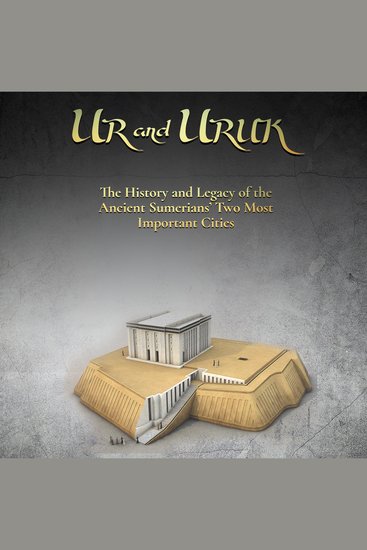
  • Ur and Uruk: The History and Legacy of the Ancient Sumerians’ Two Most Important Cities - cover

    Ur and Uruk: The History and...

    Editors Charles River

    • 0
    • 0
    • 0
    In southern Iraq, a crushing silence hangs over the dunes. For nearly 5,000 years, the sands of the Iraqi desert have held the remains of the oldest known civilization: the Sumerians. When American archaeologists discovered a collection of cuneiform tablets in Iraq in the late 19th century, they were confronted with a language and a people who were at the time only scarcely known to even the most knowledgeable scholars of ancient Mesopotamia. The exploits and achievements of other Mesopotamian peoples, such as the Assyrians and Babylonians, were already known to a large segment of the population through the Old Testament and the nascent field of Near Eastern studies had unraveled the enigma of the Akkadian language that was widely used throughout the region in ancient times, but the discovery of the Sumerian tablets brought to light the existence of the Sumerian culture, which was the oldest of all the Mesopotamian cultures.  
    	Although the Sumerians continue to get second or even third billing compared to the Babylonians and Assyrians, perhaps because they never built an empire as great as the Assyrians or established a city as enduring and great as Babylon, they were the people who provided the template of civilization that all later Mesopotamians built upon. The Sumerians are credited with being the first people to invent writing, libraries, cities, and schools in Mesopotamia, and many would argue that they were the first people to create and do those things anywhere in world. Indeed, a close examination of Sumerian culture and chronology reveals that the Sumerians set the cultural tone in Mesopotamia for several centuries in the realms of politics/governments, arts, literature, and religion. The Sumerians were truly a great people whose legacy continued long after they were gone.
    Show book
  • Digital Mavericks - A Guide to Web3 NFTS and Becoming the Main Character of the Next Internet Revolution - cover

    Digital Mavericks - A Guide to...

    Debbie Soon

    • 0
    • 0
    • 0
    In Digital Mavericks, founder, NFT collector, and tech entrepreneur Debbie Soon delivers an exciting and eye-opening exploration of the seismic changes and tremendous opportunities that can be found at the intersection of creativity and technology. You'll learn about how blockchain technology and non-fungible tokens (NFTs) are challenging the way we think about our careers and discover inspirational stories behind the personal triumphs and challenges experienced by successful artists, entrepreneurs, and technologists. 


    This book is a career guide for the new age of the Internet, a world being reshaped by blockchain technology. Despite the countless fortunes Web3 has already created, it remains a space subject to both criticism and skepticism. Digital Mavericks is an easy-to-follow roadmap for those eager to play a part in shaping the future of our increasingly digital world. You’ll also find in-depth interviews and stories from movers and shakers in the space; an explanation of the evolution of the Internet, the basics of how Web3 works and is being used today, and its historical significance at this moment in time; A step-by-step guide on how best to enter and navigate the Web3 space; and predictions for the future and how we can best prepare ourselves for the impact of regulatory changes and generative AI on blockchain adoption.
    Show book
  • Rubáiyát of Omar Khayyám (Le Gallienne) - cover

    Rubáiyát of Omar Khayyám (Le...

    Omar Khayyám

    • 0
    • 0
    • 0
    Richard le Gallienne was an English poet and critic, who, although unfamiliar with the Persian language, had a profound interest in the Rubaiyat of Omar Khayyam. In 1897 he published a collection of 211 quatrains, which was based on earlier English translations, in particular the prose version by Justin Huntly McCarthy. A expanded edition, containing fifty additional quatrains was published in 1901, and this has been used for the present recording. (Summary by Algy Pug)
    Show book
  • Galileo Galilei - History Discoveries and Scientific Revolution - cover

    Galileo Galilei - History...

    Kelly Mass

    • 0
    • 0
    • 0
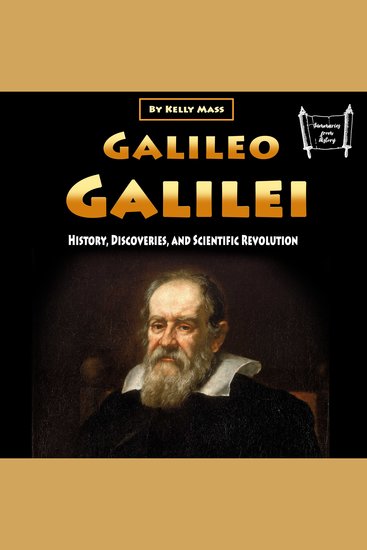
    Galileo di Vincenzo Bonaiuti de' Galilei, known just as Galileo, was an astronomer, physicist, and engineer from Pisa, modern-day Italy, who was regularly described as a polymath. Galileo has been called the "creator of observational astronomy," "father of modern-day physics," "father of the clinical technique," and "father of contemporary science," to name a few titles. 
    Galileo engaged on useful science and innovation, clarifying the characteristics of pendulums and "hydrostatic balances," and also studying speed and speed, gravity and free fall, the concept of relativity, inertia, and projectile movement. He created the thermoscope and some army compasses, and he used the telescope to observe celestial things clinically. Telescopic verification of Venus' stages, observation of Jupiter's 4 biggest satellites, research study of Saturn's rings, and analysis of sunspots are amongst his contributions to observational astronomy. 
    Galileo's big testimony and support of Copernican heliocentrism (the Earth turning daily and circling the sun) drew criticism from the Catholic Church and certain astronomers. In 1615, the Roman Inquisition checked out the subject and realized that heliocentrism was silly, absurd, and profane because it went against the Holy Bible. 
    No doubt Galileo was an intelligent person, who paved the way for many discoveries and inventions. Let’s take a look at his life, his mission, and his accomplishments.
    Show book