Join us on a literary world trip!
Add this book to bookshelf
Grey
Write a new comment Default profile 50px
Grey
Subscribe to read the full book or read the first pages for free!
All characters reduced
The Symphony of American Literature - cover

The Symphony of American Literature

Pasquale De Marco

Publisher: Publishdrive

  • 0
  • 0
  • 0

Summary

"The Symphony of American Literature" is a captivating journey through the rich tapestry of American literary history, inviting readers to discover the voices and stories that have shaped a nation. From the early days of colonization to the vibrant contemporary scene, this book explores the diverse and ever-evolving landscape of American literature.

In its pages, readers will encounter the Puritan plain style of Anne Bradstreet and Cotton Mather, the Romantic musings of Washington Irving and Nathaniel Hawthorne, and the gritty realism of Mark Twain and William Dean Howells. They will witness the Harlem Renaissance's celebration of African American culture through the works of Langston Hughes and Zora Neale Hurston, and experience the modernist innovations of F. Scott Fitzgerald, Ernest Hemingway, and William Faulkner.

The book delves into the social and political upheavals of the 20th century, examining the impact of the Beat Generation, the Civil Rights Movement, and the rise of multiculturalism on American literature. It explores the diverse voices of contemporary authors who continue to push boundaries and challenge norms, reflecting the ever-changing face of American society.

"The Symphony of American Literature" offers a comprehensive and engaging overview of American literature, providing readers with a deeper understanding of the nation's history, culture, and identity. It is a must-read for anyone interested in exploring the rich literary heritage of the United States and the profound impact it has had on the world stage.

This book is a valuable resource for students, scholars, and general readers alike, offering a comprehensive exploration of American literature from its colonial origins to the present day. Through insightful analysis and engaging storytelling, it brings to life the works of iconic authors and sheds light on the cultural and historical context in which they were created.

With its accessible writing style and thought-provoking insights, "The Symphony of American Literature" is an invitation to immerse oneself in the vibrant world of American stories, poems, and plays. It is a celebration of the human spirit and a testament to the power of literature to reflect and shape society.


If you like this book, write a review!
Available since: 06/02/2025.
Print length: 161 pages.


Other books that might interest you

  • Taj Mahal - Its History Its Construction and Its Purpose - cover

    Taj Mahal - Its History Its...

    Kelly Mass

    • 0
    • 0
    • 0
    The Taj Mahal stands as a breathtaking testament to Indo-Islamic architecture, celebrated as one of the most exquisite examples of this style in the world. Its origins are steeped in the emotional backdrop of its commission, reflecting the rich culture and history of the Mughal Empire, which wielded power over vast regions of India during the 16th and 17th centuries. The monument was commissioned by Mughal Emperor Shah Jahan in memory of his beloved wife, Mumtaz Mahal, who died during childbirth in 1631. Her passing left an indelible mark on the emperor, inspiring him to create a monument that would embody his love and devotion.While the majestic, domed marble mausoleum is the most iconic aspect of the Taj Mahal, the complex itself encompasses an extensive area of 22.44 hectares (55.5 acres) and comprises a variety of architectural features and landscaped gardens. Surrounding the central tomb are subsidiary tombs, a sophisticated system of waterworks, and the small town of Taj Ganji to the south. Additionally, a 'moonlight garden' lies to the north of the River Yamuna, designed to enhance the ethereal quality of the monument.
    Show book
  • Philosophies of Language and Society - The Shifting Understandings of Truth Power and the Social Construct (3 in 1) - cover

    Philosophies of Language and...

    Hector Davidson

    • 0
    • 0
    • 0
    This book bundle contains the following three titles:  
    - Derrida: Jacques Derrida, one of the most influential philosophers of the 20th century, revolutionized the way we think about language, meaning, and interpretation. His development of the concept of deconstruction has left a profound impact on philosophy, literary theory, and critical thought. To understand Derrida's legacy, it is essential to explore the key elements of his intellectual journey and how his ideas continue to shape contemporary discourse. 
    - Deconstructionism: Deconstructionism emerged in the late 20th century as a philosophical and literary movement that fundamentally questioned the nature of meaning, language, and interpretation. It is primarily associated with the work of French philosopher Jacques Derrida, who, in the 1960s and 1970s, began to develop ideas that would challenge long-held assumptions in philosophy, literary theory, and critical thought. The movement was a response to structuralism, which sought to uncover the underlying structures that govern language and society. In contrast, deconstruction aimed to show that meaning is inherently unstable and that texts and concepts can never be fully fixed or understood in a singular, unchanging way. 
    - Michel Foucault: Michel Foucault, a French philosopher, historian, and social theorist, is renowned for his critical exploration of power, knowledge, and social institutions. Born in 1926, Foucault’s work spans a range of disciplines, from philosophy to sociology, psychology, and political science. His intellectual journey reflects a unique approach to understanding human societies, focusing not on abstract metaphysical systems but on the structures that shape human behavior, knowledge, and institutions.
    Show book
  • Teach for Climate Justice - A Vision for Transforming Education - cover

    Teach for Climate Justice - A...

    Tom Roderick

    • 0
    • 0
    • 0
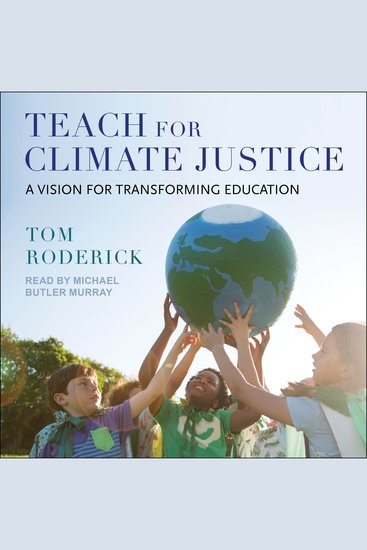
    In Teach for Climate Justice, accomplished educator and social and emotional learning expert Tom Roderick proposes a visionary interdisciplinary and intersectional approach to PreK–12 climate education. He argues that meaningful instruction on this urgent issue of our time must focus on climate justice—the convergence of climate change and social justice—in a way that is emotionally safe, developmentally appropriate, and ultimately empowering. 


    Drawing on examples of real-life educators teaching climate change, Roderick identifies eight key dimensions of climate education that will prepare students to face the challenges of the climate crisis and give them the means to take action. These dimensions include not only educating for a deep understanding of the scientific, geopolitical, and socioeconomic equity issues that surround global warming, but also cultivating appreciation for the environment, building a supportive community, and fostering active hope for the future. In support of this crucial endeavor, Roderick suggests evidence-based teaching strategies, practices that promote inclusivity, and tools for social and emotional learning. 


    This timely and uplifting book lays out a powerful vision for teaching, learning, and curriculum development to nurture a generation of courageous, informed advocates for climate justice.
    Show book
  • Algorithms of Armageddon - The Impact of Artificial Intelligence on Future Wars - cover

    Algorithms of Armageddon - The...

    George Galdorisi, Sam J....

    • 0
    • 0
    • 0
    It is unclear if U.S. policy makers and military leaders fully realize that we have already been thrust into an artificial intelligence race with authoritarian powers. The United States' peer adversaries—China and Russia—have made clear their intentions to make major investments in AI and insert this technology into their military systems, sensors, and weapons. Algorithms of Armageddon examines this most pressing security issue in a clear, insightful delivery by two experts. 


    The authors cover in depth debates surrounding the AI "genie out of the bottle" controversy, AI arms races, and the resulting impact on policy and the laws of war. Given that global powers are leading large-scale development of AI, it is likely that use of this technology will be global in extent. Will AI-enabled military weapons systems lead to full-scale global war? The later chapters of the work explore these questions, point to the possibility of humans failing to control military AI applications, and conclude that the dangers for the United States are real. 


    Neither a protest against AI, nor a speculative work on how AI could replace humans, Algorithms of Armageddon provides a time-critical understanding of why AI is being implemented through state weaponization, the realities for the global power balance, and more importantly, U.S. national security.
    Show book
  • Men of Armor - The History of B Company 756th Tank Battalion in World War II Part Two: Cassino and Rome - cover

    Men of Armor - The History of B...

    Jeff Danby

    • 0
    • 0
    • 0
    Winner, 2022 Army Historical Foundation Distinguished Writing Awards, Unit HistoryThis second volume follows on from the first in recounting the WWII history of B Company, 756th Tank Battalion in vivid detail. The outfit, since upgraded from M5 light tanks to M4 ‘Sherman’ mediums, claws through some of the toughest battles of WWII—from a horrific stalemate at Cassino in February 1944, through the bloody Operation Diadem May breakout, to the stunning capture of Rome on 4 June 1944.  This unique multi-volume history covers the full spectrum of experiences of the men in one tank company from inception in June 1941 through the occupation of Germany in 1945. An American tank company in WWII consisted of only five officers and approximately 100 enlisted men—all living, traveling and fighting in seventeen tanks, two jeeps, one truck, one half-track and one tank retriever. Uniting the official record with the rich, personal accounts of the participants, the reader is swept along a highly detailed and shocking journey chronicling the evolution of American armor doctrine and tank design from June 1941 through VE Day.  The B Company tankers often fought at a disadvantage—struggling to survive a myriad of battlefield challenges and triumph against enemy armor better armed and better protected. What was once envisioned as a warfare of sweeping armored formations managed by West Point lieutenant colonels and ROTC captains quickly devolved into small unit street fights relying more and more on the initiative, resourcefulness and cunning of lowly OCS lieutenants and combat-seasoned sergeants. The journey is long, unforgiving and brutal, and 47 tankers would be lost along the way.
    Show book
  • Trauma and Attachment - Over 150 Attachment-Based Interventions to Heal Trauma - cover

    Trauma and Attachment - Over 150...

    PhD Christina Reese

    • 0
    • 0
    • 0
    Christina Reese has dedicated her life's work to helping those with trauma cope to live healthier, happier, and more fulfilling lives. In her book, Trauma and Attachment, she has created a resource to guide clients from a place of fear, anxiety, and trauma to healthy attachment. 


    In this comprehensive yet accessible book, Dr. Reese provides an attachment framework for treating clients who have experienced a multitude of traumas, ranging from abuse and neglect to medical traumas, natural disasters, and exposure to violence. Through a variety of worksheets, exercises, and activities, this book provides clients with the tools they need to develop a foundation for healing so they can find feelings of safety and security within relationships again. 


    Clinicians will find tools to help clients heal from the impact of: abuse by helping them establish safety and security within relationships; neglect by teaching them to find their voice and express their needs; medical trauma by helping them adjust to a new normal and better tolerate uncertainty; natural disasters by using mindful grounding techniques to navigate sensory triggers and cultivate mind-body awareness; and witnessing violence by restoring clients' sense of felt safety and helping clients identify what they can control to keep themselves safe.
    Show book