Join us on a literary world trip!
Add this book to bookshelf
Grey
Write a new comment Default profile 50px
Grey
Subscribe to read the full book or read the first pages for free!
All characters reduced
The Stones of Noh - cover

The Stones of Noh

Pasquale De Marco

Publisher: Publishdrive

  • 0
  • 0
  • 0

Summary

The Pacific War, also known as the Asia-Pacific War, was a brutal and devastating conflict that raged across the Pacific Ocean from 1941 to 1945. This comprehensive book delves into the origins, major battles, key players, and lasting impact of this transformative war.

Beginning with the historical context that set the stage for the conflict, we explore the rise of Japanese militarism, the global economic crisis of the 1930s, and the outbreak of World War II in Europe. These factors converged to create a tinderbox that ignited the Pacific War when Japan attacked Pearl Harbor in 1941.

The book then takes readers on a chronological journey through the major battles of the war, from the early Japanese victories to the eventual Allied triumph. We examine the strategies and tactics employed by both sides, the heroic sacrifices of soldiers and civilians, and the devastating impact of the war on the Pacific region.

Beyond the battlefields, we also explore the human cost of the war. The Pacific War resulted in the deaths of millions of people, including military personnel and civilians. The book sheds light on the atrocities committed during the war, the suffering endured by prisoners of war, and the long-term consequences of the conflict.

The Pacific War also had a profound impact on the geopolitical landscape of the world. The war marked the end of European colonialism in Asia and the rise of the United States as a global superpower. We analyze the war's role in shaping the Cold War and the subsequent global order.

In addition to its historical significance, the Pacific War also left a lasting legacy in popular culture. The book explores the portrayal of the war in films, literature, and other media. We examine how these representations have shaped our understanding of the war and its impact on society.

This book is a comprehensive and accessible account of the Pacific War, providing readers with a deeper understanding of this pivotal conflict and its enduring legacy. Through a combination of historical analysis, personal narratives, and cultural insights, this book offers a fresh perspective on one of the most consequential wars in human history.


If you like this book, write a review!
Available since: 06/02/2025.
Print length: 160 pages.

Other books that might interest you

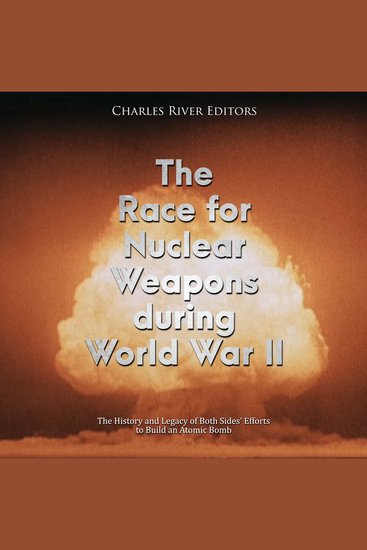
  • Race for Nuclear Weapons during World War II The: The History and Legacy of Both Sides’ Efforts to Build an Atomic Bomb - cover

    Race for Nuclear Weapons during...

    Editors Charles River

    • 0
    • 0
    • 0
    Before the Second World War, military conflicts were fought under orthodox conditions, usually termed “conventional warfare,” but several innovations had significantly changed combat, leading inextricably to the race for a nuclear weapon in the 1930s and 1940s. Conflicts had been fought by armies on horseback with guns of varying sophistication since the 16th century, but mechanized warfare and machine guns changed this calculus and set the stage for future combat by the end of World War I. Other sinister changes entered the fray during this conflict, such as chemical weapons like chlorine and mustard gas. The total warfare brought about by World War I and ensuing wars like the Spanish Civil War made the quest for the most powerful weapons somewhat necessary. 
    The Manhattan Project would ultimately yield the “Little Boy” and “Fat Man” bombs that released more than 100 Terajoules of energy at Hiroshima and Nagasaki, but as it turned out, the Axis were not far behind with their own nuclear weapons program. When the Nazis’ quest for a nuclear weapon began in earnest in 1939, no one really had a handle on how important nuclear weapons would prove to war and geopolitics. The attacks on Hiroshima and Nagasaki in August 1945, along with the Cold War-era tests and their accompanying mushroom clouds, would demonstrate the true power and terror of nuclear weapons, but in the late 1930s these bombs were only vaguely being thought through, particularly after the successful first experiment to split the atom by a German scientist. The nuclear age itself was in its infancy, barely 35 years old, but within a few short years the advent of nuclear war loomed over the world and the prospect of the enemy winning the nuclear race kept Allied leaders awake at night.
    Show book
  • Second Book of John The - The World English Bible Book 63 (Unabridged) - cover

    Second Book of John The - The...

    Various Authors

    • 0
    • 0
    • 0
    The Second Book of John is a book of the New Testament attributed to John the Evangelist, traditionally thought to be the author of the other two epistles of John, and the Gospel of John (though this is disputed). Most modern scholars believe this is not John the Apostle, but in general there is no consensus as to the identity of this person or group.
    Show book
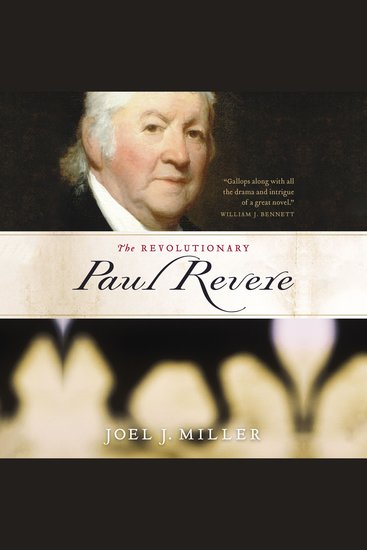
  • The Revolutionary Paul Revere - A Biography of a Hero of the American Revolution - cover

    The Revolutionary Paul Revere -...

    Joel J. Miller

    • 0
    • 0
    • 0
    “Quick in the saddle and fast out of town.” Watch one of America’s most remarkable heroes come alive through fast-paced prose and gripping storytelling. 
    He’s Famous for his Ride.  He’s Essential for So Much More. 
    The story of Paul Revere is the story of the American Revolution. 
    Always smack dab in the thick of things, he was an ordinary citizen living in extraordinarily turbulent times. Revere played key roles in colonial tax fights and riots, the infamous Boston Massacre, the Tea Party, the Battle of Lexington and Concord, and even the rati?cation of the U.S. Constitution. In this fast-paced, dramatic account, Paul Revere’s life pulses with energy as author Joel J. Miller explores his family and church life along with his revolutionary contribution as a spy, entrepreneur, express rider, freemason, and commercial visionary. 
    Accompanying images are included in the audiobook companion PDF download. 
    “The story of Paul Revere—a hero of Massachusetts, a hero of America—was never more timely. Nor has it ever been better told than by Joel J. Miller. The Revolutionary Paul Revere gallops along with all the drama and intrigue of a great novel, highlighting what makes Revere so essential in the story of America’s founding and its growth as a force for freedom in the world. This is a vibrant, vital, and wonderful story.” 
    ?WILLIAM J. BENNETT, Author, America: The Last Best Hope and A Century Turns
    Show book
  • Every Day Counts : The Power of Small Steps to Greatness - cover

    Every Day Counts : The Power of...

    Malik LEFFAD

    • 0
    • 0
    • 0
    In a world where everything seems to move at top speed, where instantaneity is king, this book is a breath of fresh air for all those who seek to grow and evolve at their own pace. "Every Day Matters" is much more than a simple guide to personal development: it's an invitation to rediscover the power of small gestures, daily decisions, and the cumulative impact of our actions on our life's journey. 
    The author takes us on an introspective journey, peppered with inspiring anecdotes, touching testimonials and universal life lessons. Discover proven strategies for defining meaningful goals, establishing routines that promote growth and overcoming the inevitable obstacles life puts in our path. Each chapter is designed to provide you with practical tools, deep insights and actionable exercises that will help you move forward, step by step, toward your ideal vision of yourself. 
    This book is for you if :You feel like you're stagnating despite your best efforts.You're looking for a sustainable and authentic means of personal growth.You want to understand how small, everyday gestures can lead to major transformations.You need inspiration to keep going, even when the going gets tough. 
    Join a growing community of readers who have chosen to embrace the "small steps" philosophy, and discover how every day can be a new opportunity to grow, learn and flourish.
    Show book
  • Political Rumors - Why We Accept Misinformation and How to Fight It - cover

    Political Rumors - Why We Accept...

    Adam J. Berinsky

    • 0
    • 0
    • 0
    Political rumors and misinformation pollute the political landscape. This is not a recent phenomenon; before the currently rampant and unfounded rumors about a stolen election and vote-rigging, there were other rumors that continued to spread even after they were thoroughly debunked, including doubts about 9/11 (an "inside job") and the furor over President Obama's birthplace and birth certificate. If misinformation crowds out the truth, how can Americans communicate with one another about important issues? In this book, Adam Berinsky examines why political rumors exist and persist despite their unsubstantiated and refuted claims, who is most likely to believe them, and how to combat them. 


    Drawing on original survey and experimental data, Berinsky shows that a tendency toward conspiratorial thinking and vehement partisan attachment fuel belief in rumors. Berinsky argues that in fighting misinformation, it is as important to target the undecided and the uncertain as it is the true believers. In a world where most people don't pay attention to politics, political leaders are often guilty of disseminating false information—and failing to correct it when it is proven wrong. Berinsky suggests that we should focus on the messenger as much as the message. Just as important as how misinformation is debunked is who does the debunking.
    Show book
  • Conspiracy - Why the Rational Believe the Irrational - cover

    Conspiracy - Why the Rational...

    Michael Shermer

    • 0
    • 0
    • 0
    Best-selling author Michael Shermer presents an overarching theory of conspiracy theories—who believes them and why, which ones are real, and what we should do about them. 
     
    Nothing happens by accident, everything is connected, and there are no coincidences: that is the essence of conspiratorial thinking. Long a fringe part of the American political landscape, conspiracy theories are now mainstream: 147 members of Congress voted in favor of objections to the 2020  
    presidential election based on an unproven theory about a rigged electoral process promoted by the mysterious group QAnon. But this is only the latest example in a long history of ideas that include the satanic panics of the 1980s, the New World Order and Vatican conspiracy theories, fears about  
    fluoridated water, speculations about President John F. Kennedy's assassination, and the notions that the Sandy Hook massacre was a false-flag operation and 9/11 was an inside job. 
     
    In Conspiracy, Michael Shermer presents an overarching review of conspiracy theories—who believes them and why, which ones are real, and what we should do about them. Trust in conspiracy theories, he writes, cuts across gender, age, race, income, education level, occupational status—and even  
    political affiliation. One reason that people believe these conspiracies, Shermer argues, is that enough of them are real that we should be constructively conspiratorial: elections have been rigged (LBJ's 1948 Senate race); medical professionals have intentionally harmed patients in their care (Tuskegee); your  
    government does lie to you (Watergate, Iran-Contra, and Afghanistan); and, tragically, some adults do conspire to sexually abuse children. But Shermer reveals that other factors are also in play: anxiety and a sense of loss of control play a role in conspiratorial cognition patterns, as do certain personality traits. 
     
    This engaging book will be an important read for anyone concerned about the future direction of American politics, as well as anyone who's watched friends or family fall into patterns of conspiratorial thinking. 
     
    A supplemental PDF is included with this audiobook.
    Show book