¡Acompáñanos a viajar por el mundo de los libros!
Añadir este libro a la estantería
Grey
Escribe un nuevo comentario Default profile 50px
Grey
Suscríbete para leer el libro completo o lee las primeras páginas gratis.
All characters reduced
The Spectrum of Deafness - Lived Experiences and Cultural Expressions - cover

The Spectrum of Deafness - Lived Experiences and Cultural Expressions

Pasquale De Marco

Editorial: Publishdrive

  • 0
  • 0
  • 0

Sinopsis

In a world designed for hearing people, the deaf community has carved out a unique and vibrant culture. This book celebrates the richness and diversity of the deaf experience, while also shedding light on the challenges that deaf people face.

Through personal stories, research findings, and historical accounts, this book offers a comprehensive exploration of deafness, from the intricacies of deaf communication to the power of language and the resilience of deaf communities. It examines the barriers that deaf people encounter in education, employment, and other areas of life, and the ongoing fight for equality and inclusion.

Readers will gain a deeper understanding of the deaf experience and the importance of creating a more inclusive society. This book is a valuable resource for educators, policymakers, healthcare professionals, and anyone who works with or interacts with deaf people.

Here's a glimpse into what you'll discover in this book:

* The fascinating world of deaf culture, including its unique language, traditions, and values.
* The power of language and the importance of bilingualism for deaf people.
* The rich history of deaf education, from the early days of sign language schools to the present day.
* The different ways in which deaf people communicate, including sign language, lip reading, and assistive technology.
* The challenges and triumphs of the deaf experience, from the impact of audism to the power of deaf gain.
* The importance of inclusive education for deaf children and the role of technology in supporting deaf learners.
* The barriers that deaf people face in employment and the strategies that can be used to overcome these barriers.
* The need for accessibility in all areas of life, from public spaces to online content.
* The rich artistic and cultural traditions of deaf communities, from visual art to theater to literature.
* The future of deafness and the ways in which technology and advocacy can be used to create a more inclusive society for deaf people.

With its engaging writing style and thought-provoking insights, this book is a must-read for anyone who wants to understand the deaf experience and contribute to creating a more inclusive world.


If you like this book, write a review!
Disponible desde: 02/06/2025.
Longitud de impresión: 160 páginas.


Otros libros que te pueden interesar

  • How to Choose Children’s Toys Wisely - …and Empower Your Child Through Play! - cover

    How to Choose Children’s Toys...

    Owen Jones

    • 0
    • 0
    • 0
    This comprehensive manual is designed to assist parents, guardians, and caregivers to tackle the often overwhelming task of selecting toys for children. With an array of options available, ranging from traditional favourites to the latest trends, it can be challenging to make informed decisions that prioritise both fun and developmental benefits.  
    This guide aims to demystify the toy-buying process by offering practical advice and insights. From understanding age-appropriate choices to considering safety, educational value, and durability, each aspect of toy selection is explored in detail.  
    By equipping adults with the knowledge and tools necessary to make thoughtful choices, we hope to enhance children’s play experiences and support their overall development.  
    Come with us as we explore the world of children’s toys and empower caregivers to create enriching play environments that foster creativity, learning, and joy.
    Ver libro
  • Washington's Lieutenants - Major versus Brigadier Generals in the Revolutionary War - cover

    Washington's Lieutenants - Major...

    Douglas M. Branson

    • 0
    • 0
    • 0
    As commander-in-chief of the Continental Army, George Washington developed the strategy that won the Revolutionary War, but while Washington directed some battles, his strategy for the most part was carried out by his subordinates. In the spirit of the best military history and biography, Washington's Lieutenants tells the story of the generals who served under Washington from 1775 to 1781. 


    Based on extensive research, the book finds the brigadier generals a laudable group of commanders. A quarter of all brigadiers died in the service of the new nation. 


    Only three served for the war's duration, including the great Nathanael Greene and Henry Knox. Ten resigned. Benedict Arnold turned coat. At least three were involved in the so-called Conway Cabal of 1777–78 to oust General Washington. The controversial Horatio Gates, self-proclaimed victor of Saratoga, was accused of cowardice at the Battle of Camden, South Carolina. 


    At once entertaining information about some of the Revolutionary War's most colorful military commanders and an insightful analysis of how the young nation fought for its independence, Washington's Lieutenants will be essential during the wars 250th anniversary and beyond.
    Ver libro
  • Tanks of the Eastern Front - Armored Warfare in the Battle Between Germany and the Soviet Union - cover

    Tanks of the Eastern Front -...

    Sage Winters

    • 0
    • 0
    • 0
    The Eastern Front of World War II was a vast and brutal theater of combat that spanned thousands of miles, from the icy steppes of northern Russia to the warm plains of the Ukraine. It was here that some of the largest and most decisive battles of the war took place, involving millions of soldiers, tanks, and aircraft. The conflict between Nazi Germany and the Soviet Union began in 1941 with the German invasion under Operation Barbarossa, and it would continue until the final Soviet assault on Berlin in 1945. This epic struggle not only shaped the outcome of the war but also fundamentally altered the future of Europe and the global balance of power. 
      
    The war on the Eastern Front was marked by its sheer scale and the intensity of its combat. The German Army, bolstered by its formidable armored forces, initially swept across Soviet territory with alarming speed, encircling entire Soviet armies and capturing vast stretches of land. However, the Soviet Union, under the leadership of Joseph Stalin, mobilized its resources and manpower to repel the invasion. The conflict would evolve into a war of attrition, with both sides suffering staggering casualties in their attempt to either conquer or defend the heartland of Eastern Europe. 
      
    The role of tanks on the Eastern Front cannot be overstated. Both the Germans and Soviets relied heavily on armored vehicles, with each side developing and refining its tank forces throughout the war. German tanks, such as the Panzer III, IV, and the iconic Tiger, were initially superior in design and firepower. However, the Soviet Union, despite early setbacks, quickly adapted and mass-produced the T-34, which would become one of the most effective and influential tanks of the war. The T-34’s combination of mobility, armor, and firepower helped shift the balance of armored warfare in favor of the Soviets.
    Ver libro
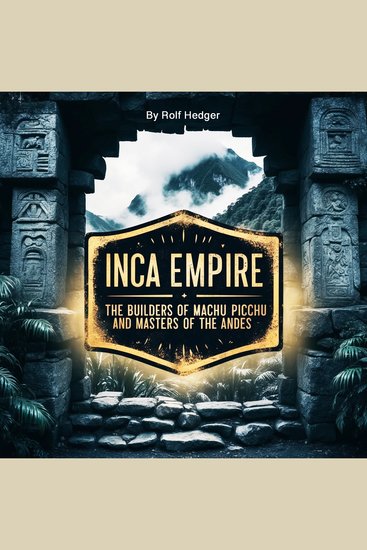
  • Inca Empire - The Builders of Machu Picchu and Masters of the Andes - cover

    Inca Empire - The Builders of...

    Rolf Hedger

    • 0
    • 0
    • 0
    The story of the Inca Empire begins with a mix of myth and history, deeply rooted in the Andean highlands of South America. According to Inca legend, the empire’s origins trace back to the Sun God, Inti, who sent his son, Manco Cápac, to establish a kingdom on Earth. Manco Cápac and his sister-wife Mama Ocllo emerged from the waters of Lake Titicaca, tasked with finding the place where the sun would set forever. Guided by this divine mission, they journeyed through the Andes, eventually founding the city of Cusco, which would become the heart of the Inca Empire. This mythic narrative blended with historical elements, shaping the early identity of the Incas as a people divinely chosen and destined for greatness. 
    The rise of the Inca Empire began in earnest during the 12th century, but it wasn’t until the 15th century that the Inca began their ambitious expansion under the leadership of Pachacuti. Before this period, the Inca were a small ethnic group living in the valley of Cusco, a modest settlement by the standards of the Andean world. The powerful Wari and Tiwanaku civilizations had already left their marks on the region, and other neighboring cultures, such as the Chanka and the Nazca, vied for dominance in the highlands. However, it was the strategic leadership and military genius of the early Inca rulers that laid the foundation for what would become the largest empire in pre-Columbian America. 
    Manco Cápac, the first Sapa Inca (the title for the emperor), established the social and political framework that would support future conquests. He was followed by a line of rulers who solidified Cusco’s position as the seat of power, but it wasn’t until Pachacuti’s reign that the Inca’s ambitions expanded beyond their small kingdom. Under Pachacuti’s rule, the Inca adopted a highly organized and disciplined military structure, which allowed them to conquer surrounding territories and absorb them into their growing empire.
    Ver libro
  • Fundamentals of Qabbalistic Cosmogony - cover

    Fundamentals of Qabbalistic...

    Manly Palmer Hall

    • 0
    • 0
    • 0
    The Qabbalists conceive of the Supreme Deity as an Incomprehensible Principle to be discovered only through the process of eliminating, in order, all its cognizable attributes. That which remains--when every knowable thing has been removed--is AIN SOPH, the eternal state of Being. Although indefinable, the Absolute permeates all space. Abstract to the degree of inconceivability, AIN SOPH is the unconditioned state of all things. Substances, essences, and intelligences are manifested out of the inscrutability of AIN SOPH, but the Absolute itself is without substance, essence, or intelligence. AIN SOPH may be likened to a great field of rich earth out of which rises a myriad of plants, each different in color, formation, and fragrance, yet each with its roots in the same dark loam--which, however, is unlike any of the forms nurtured by it. The "plants" are universes, gods, and man, all nourished by AIN SOPH and all with their source in one definitionless essence; all with their spirits, souls, and bodies fashioned from this essence, and doomed, like the plant, to return to the black ground--AIN SOPH, the only Immortal--whence they came.
    Ver libro
  • True Crime: Missouri - The State's Most Notorious Criminal Cases - cover

    True Crime: Missouri - The...

    David J Krajicek

    • 0
    • 1
    • 0
    Eleven stories of deadly doings in Missouri by “a standout writer of terse, staccato prose and vivid details” (The Omaha Reader).   Missouri has a bloody history dating back to frontier days—not just in St. Louis or Kansas City but in small towns and rural hamlets where one local summed up how Missourians prefer to handle conflicts: You shoot, you shovel, and you shut up. In this book, David J. Krajicek recounts eleven true tales of shocking and infamous crimes in the state, among them:     The St. Louis barroom murder that inspired the popular song “Stagger Lee”   The vigilante killing of Ken McElroy, the “town bully” of tiny Skidmore, MO   The heartless kidnapping and murder of millionaire Robert Greenlease’s son in Kansas City by a couple of St. Joseph barflies  The Kirkwood City Council massacre  The “throwaway” serial killings of over a dozen young prostitutes in Kansas City by a garbage collector  The forgotten story of “Cockeyed” Cook, a lost soul from Joplin who massacred an entire family and dumped them down a mineshaft  The “American Gothic” killers, farmer Ray Copeland and his wife, Faye, who murdered their farmhands near Chillicothe in a bizarre plot to make money—but made the mistake of planting their human crop too shallow  And more
    Ver libro