Begleiten Sie uns auf eine literarische Weltreise!
Buch zum Bücherregal hinzufügen
Grey
Einen neuen Kommentar schreiben Default profile 50px
Grey
Jetzt das ganze Buch im Abo oder die ersten Seiten gratis lesen!
All characters reduced
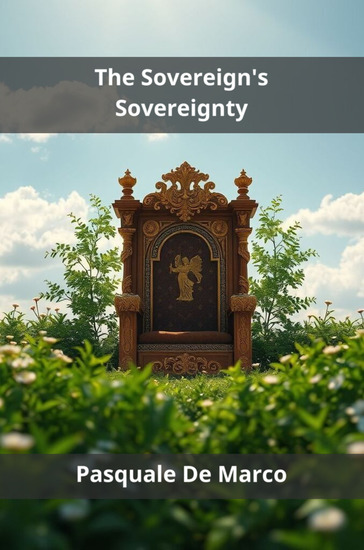
The Sovereign's Sovereignty - cover

The Sovereign's Sovereignty

Pasquale De Marco

Verlag: Publishdrive

  • 0
  • 0
  • 0

Beschreibung

In a world grappling with complex global challenges, the concept of sovereignty stands as a cornerstone of political systems and international relations. This comprehensive book delves into the intricate tapestry of sovereignty, exploring its historical foundations, theoretical underpinnings, and contemporary manifestations.

Through a captivating narrative, the book takes readers on a journey through the evolution of sovereignty, from ancient civilizations to modern nation-states. It examines the diverse theories of sovereignty, tracing their origins, analyzing their key elements, and evaluating their implications for governance and political legitimacy.

In an era of globalization and interconnectedness, the traditional notions of sovereignty are being tested and reshaped. This book explores the contemporary challenges to sovereignty, examining how states can navigate the complexities of a rapidly changing world while preserving their autonomy and safeguarding the well-being of their citizens.

Furthermore, the book investigates the relationship between sovereignty and concepts such as authority, legitimacy, rights, and justice. It delves into the intricate interplay between these elements, shedding light on the foundations of modern governance. Case studies, historical examples, and contemporary debates illuminate the complexities of sovereignty and its impact on societies around the world.

With its comprehensive analysis, insightful perspectives, and engaging writing style, this book is an essential resource for scholars, students, policymakers, and anyone seeking a deeper understanding of sovereignty and its role in shaping our world. It is an invitation to engage with the complexities of sovereignty, to question its assumptions, and to envision new possibilities for organizing political power in a constantly evolving global landscape.


If you like this book, write a review!
Verfügbar seit: 02.06.2025.
Drucklänge: 164 Seiten.

Weitere Bücher, die Sie mögen werden

  • Scottish Literature - An Introduction - cover

    Scottish Literature - An...

    Alan Riach

    • 0
    • 0
    • 0
    What do we mean by 'Scottish literature'?
    Why does it matter?
    How do we engage with it?
    Bringing infectious enthusiasm and a lifetime's experience to bear on this multi-faceted literary nation, Alan Riach, Professor of Scottish Literature at the University of Glasgow, sets out to guide you through the varied and ever-evolving landscape of Scottish literature.
    A comprehensive and extensive work designed not only for scholars but also for the generally curious, Scottish Literature: an introduction tells the tale of Scotland's many voices across the ages, from Celtic pre-history to modern mass media. Forsaking critical jargon, Riach journeys chronologically through individual works and writers, both the famed and the forgotten, alongside broad overviews of cultural contexts which connect texts to their own times. Expanding the restrictive canon of days gone by, Riach also sets down a new core body of 'Scottish Literature': key writers and works in English, Scots, and Gaelic.
    Ranging across time and genre, Scottish Literature: an introduction invites you to hear Scotland through her own words.
    Zum Buch
  • Stalking the Great Killer - Arkansas's Long War on Tuberculosis - cover

    Stalking the Great Killer -...

    Larry C. Floyd, Joseph H. Bates

    • 0
    • 0
    • 0
    Stalking the Great Killer is the story of Arkansas's struggle to control tuberculosis, and how the state became a model in its treatment of the disease. 


    To place the story of tuberculosis in Arkansas in historical perspective, the authors trace the origins of the disease. Arkansas suffered some of the worst ravages of the disease, and the authors argue that many of the improvements in the state's medical infrastructure grew out of the desperate need to control it. 


    In the early twentieth century, Arkansas established a sanatorium and thirty years later, the segregated Black sanitorium. These institutions helped slow the disease but at a cost: removed from families and communities, patients suffered from the isolation. Joseph Bates saw this when he delivered an uncle to the sanitorium in the 1940s. In the 1960s, Bates, now a physician, and his colleague Paul Reagan overcame a resistant medical-political system to develop a new approach to treating the disease. 


    In the age of Covid-19, this history offers valuable lessons about community involvement in public health, the potential efficacy of public-private partnerships, and the importance of leadership in the battle to eradicate disease.
    Zum Buch
  • History Biographies - Marie Curie Nostradamus and Alan Turing - cover

    History Biographies - Marie...

    Kelly Mass

    • 0
    • 0
    • 0
    This is a combo of biographies about the following well-known individuals: 
    Marie Curie - Marie Salomea Skodowska Curie was a Polish-born, naturalized-French researcher and chemist who originated radioactivity research. She was the first woman to win the Nobel Reward, the first and only woman to win it two times, and the only individual to win the Nobel Reward in 2 different clinical classifications. 
    Her first Nobel Reward was co-won by her spouse, Pierre Curie, making them the first married set to win the reward and developing the Curie family tradition of 5 Nobel Prizes. She was the first woman to be selected as a teacher at the University of Paris in 1906. 
    Nostradamus - Michel de Nostredame, referred to as Nostradamus in Latin, was a French astronomer, doctor, and presumed seer mostly known for his work Les Prophéties, a collection of 942 poetic quatrains supposedly predicting future events. In the year 1555, the book was first released. 
    Since the release of his Les Prophéties, Nostradamus has acquired a very large following of followers who, in addition to the majority of the well-known press, credit him with properly anticipating many essential historic events. 
    Alan Turing - Alan Mathison Turing was a mathematician, computer system researcher, scholar, cryptanalyst, thinker, and theoretical biologist from the U.K. With the Turing device, which can be considered a design of a general-purpose computer system, Turing had a substantial influence on the development of theoretical computer technology, offering a formalization of the ideas of algorithm and calculation. Turing is considered the creator of theoretical computer technology and AI. Turing was born in Maida Vale, London, and raised in the south of England.
    Zum Buch
  • Warrior Empires of India - Conquerors and Defenders (3 in 1) - cover

    Warrior Empires of India -...

    Rolf Hedger

    • 0
    • 0
    • 0
    The history of India is filled with tales of powerful warrior empires that shaped the destiny of the subcontinent. Among them, the Hoysala Empire, the Rashtrakuta Empire, and the Kakatiya Dynasty stood as formidable forces in the Deccan region, each leaving behind a unique legacy of conquest, governance, and cultural patronage.  
    The Rashtrakutas, known for their military might, expanded their rule across vast territories, engaging in wars with the Pratiharas and Palas while fostering art and architecture, as seen in the magnificent Kailasanatha temple at Ellora.  
    The Hoysalas, emerging later, were fierce warriors and master builders, commissioning iconic temples such as those at Belur and Halebidu while defending their kingdom against rival invasions.  
    The Kakatiya Dynasty, renowned for its defensive strategies, constructed impressive fortifications like the Warangal Fort and resisted repeated invasions, including those from the Delhi Sultanate.  
    These warrior empires not only fought to expand and defend their territories but also enriched Indian culture, trade, and architecture, leaving an enduring impact on the history of the Deccan.
    Zum Buch
  • Principles of Psicology - William James - cover

    Principles of Psicology -...

    William James

    • 0
    • 0
    • 0
    The Principles of Psychology is an 1890 book about psychology by William James, an American philosopher and psychologist who trained to be a physician before going into psychology. There are four methods from James' book: stream of consciousness (James' most famous psychological metaphor); emotion (later known as the James–Lange theory); habit (human habits are constantly formed to achieve certain results); and will (through James' personal experiences in life).
    Zum Buch
  • The Hundred Years’ War - History of the War between the French and English in the 14th Century - cover

    The Hundred Years’ War - History...

    Kelly Mass

    • 0
    • 0
    • 0
    The Hundred Years' War was a series of prolonged and intense conflicts between the kingdoms of England and France, spanning from 1337 to 1453. At its core, the war was rooted in a bitter dispute over the French throne, which was claimed by both the English royal House of Plantagenet and the French House of Valois. This disagreement over succession became more than a dynastic struggle; it evolved into a broader geopolitical and cultural clash, drawing in various powers from across Western Europe. The war became a defining event in medieval history, fundamentally shaping the course of European politics, society, and warfare. 
    The conflict was not a single, continuous battle but a series of engagements, truces, and temporary pauses in fighting, lasting a staggering 116 years. Over five generations, English and French rulers alternated between direct conflict and negotiated ceasefires, each side hoping to gain an upper hand in the long-running struggle. The war is commonly divided into three main phases: the Edwardian War (1337–1360), the Caroline War (1369–1389), and the Lancastrian War (1415–1453). These stages were marked by shifts in momentum and power, with the English initially achieving significant victories but eventually losing their dominance in the final stages of the war. 
    One of the most significant outcomes of the Hundred Years' War was its profound impact on European warfare. Both England and France introduced new military strategies and technologies, including the use of professional standing armies and the widespread deployment of artillery. These advancements marked a dramatic shift away from the feudal levies and knightly combat that had previously defined medieval warfare. The use of the longbow by English archers, for example, proved particularly effective in the decisive Battle of Crécy in 1346, and the war’s artillery, such as cannons and siege weapons, changed the way battles were fought.
    Zum Buch