Junte-se a nós em uma viagem ao mundo dos livros!
Adicionar este livro à prateleira
Grey
Deixe um novo comentário Default profile 50px
Grey
Assine para ler o livro completo ou leia as primeiras páginas de graça!
All characters reduced
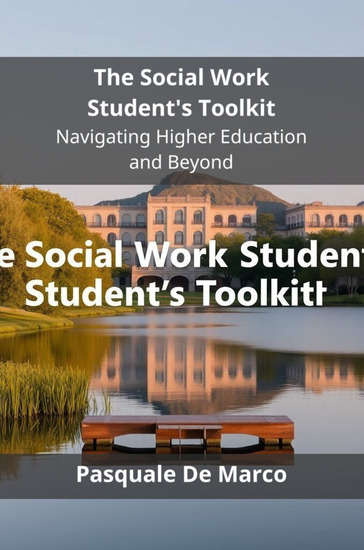
The Social Work Student's Toolkit - Navigating Higher Education and Beyond - cover
LER

The Social Work Student's Toolkit - Navigating Higher Education and Beyond

Pasquale De Marco

Editora: Publishdrive

  • 0
  • 0
  • 0

Sinopse

Embark on a transformative journey through social work education with this comprehensive guide, designed to equip you with the knowledge, skills, and values essential for success in the field. This book is your trusted companion as you navigate the academic, personal, and professional challenges of becoming a competent and compassionate social work professional.

Inside, you'll find a wealth of practical strategies and insights to help you excel in your studies and prepare for the demands of social work practice. Master critical thinking, effective communication, time management, and self-care skills to thrive in the classroom and beyond. Delve into the core social work courses, gaining a deep understanding of human behavior, social welfare policy, research methods, and social work practice.

Beyond the classroom, this book provides invaluable guidance on navigating fieldwork placements, overcoming obstacles, and maintaining a healthy work-life balance. Learn from the experiences of other social work students and professionals, gaining insights into the realities of the field and developing strategies for success. Explore the diverse career pathways available in social work and discover your passion for making a difference in the lives of others.

With a focus on integrating theory and practice, this book prepares you for the complexities of social work practice. You'll gain a deep understanding of the social, economic, and political factors that shape human behavior and develop the skills to effectively intervene and advocate for change. Learn to work with individuals, families, groups, and communities, promoting social justice and human rights.

This book is more than just a textbook; it's a roadmap for your journey into the world of social work. It will empower you to make informed decisions about your education and career, and it will inspire you to become a change agent in your community. With its supportive and engaging approach, this book is an essential resource for anyone seeking to make a positive impact on the world through social work.


If you like this book, write a review!
Disponível desde: 02/06/2025.
Comprimento de impressão: 166 páginas.
Outros livros que poderiam interessá-lo

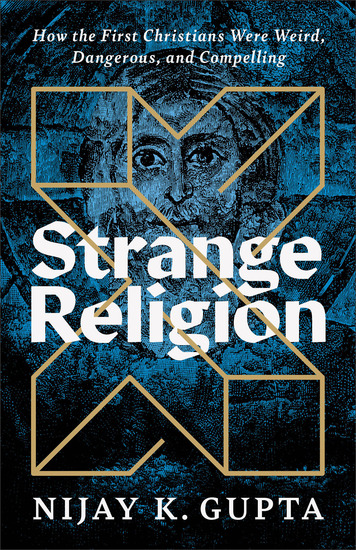
  • Strange Religion - How the First Christians Were Weird Dangerous and Compelling - cover

    Strange Religion - How the First...

    Nijay K. Gupta

    • 0
    • 0
    • 0
    Outreach 2025 Recommended Resource of the Year (Culture) 
     
    The first Christians were weird. 
     
    Within Roman society, the earliest Christians stood out for the oddness of their beliefs and practices. They believed unusual things, worshiped God in strange ways, and practiced a whole new way of doing religion that would have been viewed as bizarre and dangerous compared to other religions of the ancient world. 
     
    In Strange Religion, award-winning author and New Testament teacher Nijay Gupta traces the emerging Christian faith in its Roman context, showing how the first Christians 
     
    ● dared to be different and pushed the boundaries of what was acceptable 
    ● believed, worshipped, and lived in radical ways 
    ● transformed how others thought about religion 
    ● started a movement that grew like wildfire 
     
    Brought to life with numerous images, this book shows how the example of the earliest Christians can offer today's believers encouragement and hope. 
     
    "A fresh and rigorously researched take on Christianity's founding."--Publishers Weekly
    Ver livro
  • Talking Cure - An Essay on the Civilizing Power of Conversation - cover

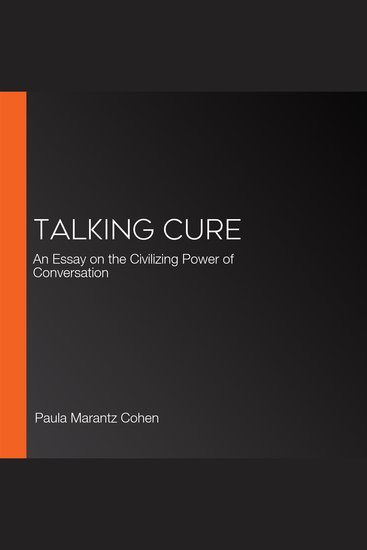
    Talking Cure - An Essay on the...

    Paula Marantz Cohen

    • 0
    • 0
    • 0
    Talking Cure is a timely and enticing excursion into the art of good conversation. Paula Marantz Cohen reveals how conversation connects us in ways that social media never can and explains why simply talking to each other freely and without guile may be the cure to what ails our troubled society. 


    Drawing on her lifelong immersion in literature and culture and her decades of experience as a teacher and critic, Cohen argues that we learn to converse in our families and then carry that knowledge into a broader world where we encounter diverse opinions and sensibilities. She discusses the role of food in encouraging conversation, the challenges of writing dialogue in fiction, the pros and cons of Zoom, the relationship of conversation to vaudeville acts, and the educational value of a good college seminar where students learn to talk about ideas. Cohen looks at some of the famous groups of writers and artists in history whose conversation fed their creativity, and details some of the habits that can result in bad conversation. 


    Blending the immediacy of a beautifully crafted memoir with the conviviality of an intimate gathering with friends, Talking Cure makes a persuasive case for the civilizing value of conversation and is essential listening for anyone interested in the chatter that fuels culture.
    Ver livro
  • The Brexit Referendum - The UK's EU Departure - cover

    The Brexit Referendum - The UK's...

    Nova Ashford

    • 0
    • 0
    • 0
    The Brexit referendum, which took place on June 23, 2016, marked a pivotal moment in the history of the United Kingdom and its relationship with the European Union. The decision to leave the EU, known as Brexit, came after years of mounting debate and growing division within British society and politics. The referendum was the result of a long-standing debate over the UK’s membership in the European Union, with political, economic, and cultural tensions playing a central role in shaping the outcome. 
    The road to Brexit began long before the referendum vote. The United Kingdom joined the European Economic Community (EEC) in 1973, a precursor to the European Union, and since then, the nation’s relationship with the organization has been fraught with disagreement. Euroscepticism, or skepticism about the benefits of EU membership, had been steadily rising, particularly among certain political groups and sections of the public. Critics of the EU argued that membership undermined national sovereignty and that the UK was bound by regulations and policies that did not align with its interests. This sentiment was exacerbated by issues such as immigration, trade regulations, and the financial burden of contributing to the EU budget. 
    In the years leading up to the referendum, the political landscape of the UK began to shift. The rise of UKIP (the United Kingdom Independence Party), led by Nigel Farage, brought the issue of EU membership into sharper focus. UKIP’s success in the 2014 European Parliament elections, where it emerged as the largest UK party, put pressure on the Conservative Party to address the growing concerns over the EU. Prime Minister David Cameron, seeking to quell dissent within his own party and avoid a potential electoral challenge from UKIP, promised a referendum on EU membership in 2013. This pledge set the stage for the referendum that would ultimately decide the UK’s fate within the EU.
    Ver livro
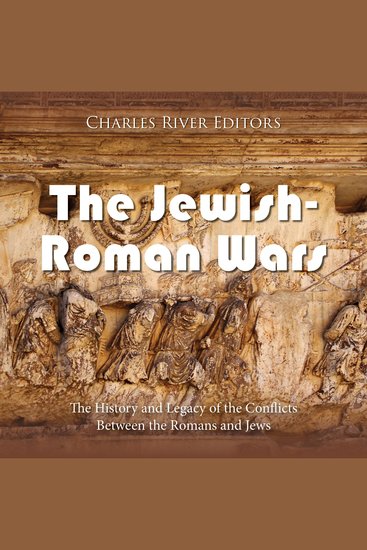
  • Jewish-Roman Wars The: The History and Legacy of the Conflicts Between the Romans and Jews - cover

    Jewish-Roman Wars The: The...

    Editors Charles River

    • 0
    • 0
    • 0
    Judea is one of the most important regions in the modern world. It is the center of two of the world’s great religions and extremely important to a 3rd. Politically, the whole area is the focus of conflict between Jews and Arabs, as well as different Muslim sects. Its history is littered with wars, insurrections, and religious revolutions. To say that it has had a turbulent past is to understate the case in the extreme.  
    	The history of Judea is, of course, inextricably linked to the history of the Jewish people, their dispersal throughout the Mediterranean world, and their reestablishment of the modern state of Israel in the wake of the horrors of the Holocaust. And among all the tumultuous events associated with Jewish history, few can rival the period of Roman rule during the 1st century A.D., when Roman attempts to suppress Jewish nationalism met with violent resistance. Ultimately, the Romans forcibly removed much of the Jewish population from the region, setting the scene for later events that have impacted so directly on world history. Events in the region during the 1st century A.D. also brought about the birth of Christianity, a religious movement that has been at the forefront of European history ever since.  
    	 The small area around Jerusalem was originally known to the ancient Greeks as Ioudaioi, hence the name Judea. An Iron Age kingdom is said, in the Bible, to have existed as a successor to the United Kingdom of Israel, which, it is claimed, existed from approximately 1010-930 B.C.. Two kingdoms, Judah in the south and Israel in the north, co-existed uneasily, with frequent outbreaks of war between them in the following years. Judah was invaded by the Egyptian Pharaoh, Shishak, in the 5th year of Rehoboam’s reign, and Jerusalem was sacked. Rehoboam gave the Egyptians all of the nation’s treasure and became an Egyptian vassal. 
    Ver livro
  • Neoliberalism Unveiled - Understanding the Shift Towards Free Market Policies - cover

    Neoliberalism Unveiled -...

    Arlo Holders

    • 0
    • 0
    • 0
    Neoliberalism is a term that has been widely used in academic, political, and economic discussions, yet its exact definition often varies depending on the context. Broadly, neoliberalism refers to a set of economic and political policies that emphasize the role of free markets in achieving economic prosperity, social well-being, and individual freedom. At its core, neoliberalism promotes the idea that markets should operate with minimal interference from the state, and that individuals should be free to pursue their economic interests without governmental restrictions. 
    The roots of neoliberalism can be traced back to the early 20th century, particularly to the ideas of economists such as Friedrich Hayek and Milton Friedman. These thinkers were critical of state intervention in the economy and argued that government control of markets often led to inefficiency and loss of individual freedoms. Hayek’s influential work, The Road to Serfdom (1944), warned against the dangers of central planning and collectivism, which he believed could lead to authoritarianism. Similarly, Friedman, through his advocacy for monetarism and the reduction of government spending, pushed for policies that emphasized the importance of individual choice and market forces over state control. Their ideas laid the intellectual foundation for what would later become neoliberalism. 
    Neoliberalism as a political and economic force began to take shape during the 1970s as many Western economies faced economic stagnation and rising inflation, often referred to as stagflation. Traditional Keynesian approaches, which advocated for government intervention to manage demand and stabilize economies, appeared to fail in addressing these new challenges. In response, neoliberal ideas gained traction, especially in the United States and the United Kingdom.
    Ver livro
  • Room for Two - cover

    Room for Two

    Abel Keogh

    • 0
    • 0
    • 0
    "Sweetie, I'm home." I tried to put as much kindness into my voice as possible. I didn't want to have another argument - at least not right away. 
    Silence. 
    "Sweetheart?" 
    A gunshot echoed from our bedroom, followed by the sound of a bullet casing skipping along a wall. 
    Everything slowed down. 
    *** 
    When a life is destroyed, when guilt says you played a role in its destruction, how do you face the days ahead? Twenty-six-year-old Abel Keogh chooses to ignore the promptings he receives concerning his wife's mental illness, and now he feels he is to blame for her choices. If only he had listened . . . 
    At some point in our lives, each of us face devastating afflictions and must eventually cope with loss. Regardless of how it happens, the outcome is still the same - we are left isolated, alone, wondering what we could have done differently, and where we can turn for peace. This is Abel's story of love and loss in his own words. His search for peace and the miracle that follows is proof that love and hope can endure, despite the struggles and tragedies that shape each of our lives.
    Ver livro