Join us on a literary world trip!
Add this book to bookshelf
Grey
Write a new comment Default profile 50px
Grey
Subscribe to read the full book or read the first pages for free!
All characters reduced
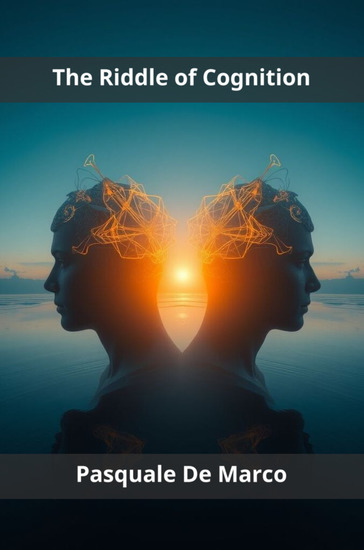
The Riddle of Cognition - cover

The Riddle of Cognition

Pasquale De Marco

Publisher: Publishdrive

  • 0
  • 0
  • 0

Summary

Enter the captivating world of cognition, where the mysteries of the human mind unfold. Embark on a journey to understand the intricate workings of perception, memory, attention, reasoning, problem-solving, decision-making, and more. Discover the fascinating relationship between cognition and neuroscience, and delve into the neural mechanisms that underpin our mental abilities.

Unravel the enigma of perception, exploring how our senses construct our understanding of the world. Witness the remarkable interplay of memory, as information is encoded, stored, and retrieved, shaping our experiences and identities. Investigate the complexities of attention and focus, revealing how we direct our mental resources to navigate the vast landscape of information.

Explore the realm of reasoning, uncovering the different types of logical and inferential processes we employ to make sense of the world. Delve into the art of problem-solving, uncovering the strategies and techniques we use to tackle challenges and find creative solutions. Discover the intricacies of decision-making, examining the factors that influence our choices and the models we use to make optimal decisions.

Delve into the diverse landscape of cognitive abilities, from intelligence and creativity to emotional and cultural intelligence. Examine the nature of expertise and how it is acquired, and explore the frontiers of cognitive neuroscience, where scientists are unlocking the brain's remarkable ability to adapt and change.

Peer into the future of cognition, contemplating the potential and limitations of artificial intelligence, the evolving relationship between humans and technology, and the ethical considerations surrounding cognitive enhancement.

This book is an invitation to embark on an enthralling journey into the realm of cognition, unveiling the wonders of the human mind and discovering the profound implications of our mental processes for our lives and our world.


If you like this book, write a review!
Available since: 06/02/2025.
Print length: 172 pages.

Other books that might interest you

  • Violence - A Very Short Introduction - cover

    Violence - A Very Short...

    Philip Dwyer

    • 0
    • 0
    • 0
    Violence is part and parcel of human history and of human nature. It is one of our most distinctive traits, the one thing that all cultures and societies, across time, share in common. It has defined not only the ways in which individuals relate to each other, but also how collective entities and states have interacted with each other over the millennia. All societies are violent and all individuals have the capacity for violence. However, not all societies and not all individuals are equally violent, and nor does violence exist with the same intensity across cultures. 


    This Very Short Introduction examines the more visible, physical acts of violence—interpersonal, gendered, collective, religious, sexual, criminal, and political—in the modern world. It explores how violence in the pre-modern world was different from the modern world, and what is significant about those differences. It also discusses what violence is by examining understandings of the ideas, values, and cultural practices embedded in an act of violence, and considering acts of violence as the outcome of a process dependent on the cultural context in which they take place. Along the way Dwyer considers some core questions, asking whether violence is always 'bad', and if there are any limits to human violence? And, are we becoming more or less violent?
    Show book
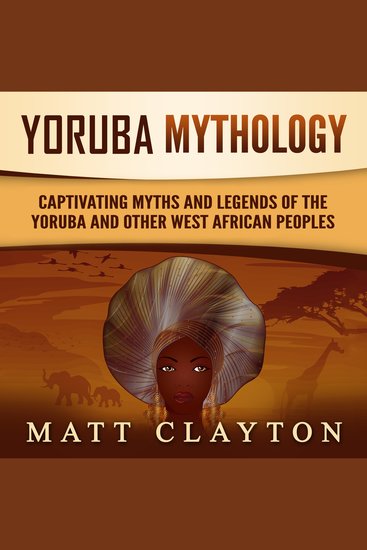
  • Yoruba Mythology: Captivating Myths and Legends of the Yoruba and Other West African Peoples - cover

    Yoruba Mythology: Captivating...

    Matt Clayton

    • 0
    • 0
    • 0
    Do you like stories about kings and queens, spirits and monsters, or tricksters and villains? 
    If so, this book is for you. Containing delightful stories from the Yoruba and other West African peoples, this book presents tales of courage and cunning, virtue and vice, and fortunes found and lost. Some of these stories draw upon actual historical persons and events, while others are purely fictional, but each story has something to delight any reader. 
    Here are just a few of the stories you will find inside this book:How Queen Moremi saved her people from their enemiesWhy King Oranyan’s staff still stands in its place todayHow Gassire gave up dreams of a kingdom to become a singer of talesHow a king wanted to know what it was like to be poor and found out the hard wayHow clever commoners outwitted the kings who wanted to kill themHow the Ashanti came to farm yamsHow a baby who was not yet ready to be born defeated the monster SasabonsamHow the wise and clever Kumba saved her village from a man-eating lionHow Kigbo the farmer learned the hard way that it is not wise to play around with spiritsAnd much, much more!                
    Scroll up and click the “add to cart” button to enjoy each of these captivating West African stories!
    Show book
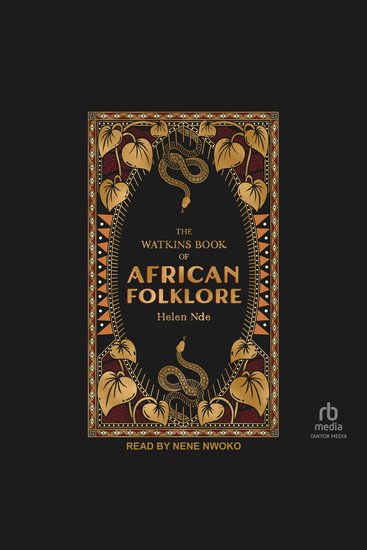
  • The Watkins Book of African Folklore - cover

    The Watkins Book of African...

    Helen Nde

    • 0
    • 0
    • 0
    From creation myths and foundation legends to fascinating stories of human relationships and animal tales, these stories provide a diverse look at the countries and cultures across the African continent. Noted folklorist Helen Nde provides context for history and colonial influences for the stories. 


    Discover the geographical and cultural variety of the continent with stories such as: 


    ● FROM ALGERIA: "The Story of the First Man and Woman", who meet when they struggle over access to a well, but go on to have 100 children and start the human race. 


    ● FROM SUDAN: "Okwa and the River Maiden", a tale about the great-grandson of the first man who seeks the river spirit's approval to marry two river maidens, half women and half crocodiles. 


    ● FROM ZIMBABWE: "The Moon and His Wives", a story about the first man who pleads with the creator to become mortal and go to earth, where the first star becomes his companion. 


    ● FROM GHANA: "How Goat Caused a War" by tricking the Supreme Being and giving his holy message to the wrong prince. 


    ● FROM TANZANIA: "The Singing Kaguru Birds", who offer help and riches to poor folk in exchange for a strict rule or even a trick.
    Show book
  • Insurrection - Rebellion Civil Rights and the Paradoxical State of Black Citizenship - cover

    Insurrection - Rebellion Civil...

    Hawa Allan

    • 0
    • 0
    • 0
    The little-known and under-studied 1807 Insurrection Act was passed to give the president the ability to deploy federal military forces to fend off lawlessness and rebellion, but it soon became much more than the sum of its parts. Its power is integrally linked to the perceived threat of black American equity in what lawyer and critic Hawa Allan demonstrates is a dangerous paradox. While the Act was initially used to repress rebellion against slavery, during Reconstruction it was invoked by President Grant to quell white-supremacist uprisings in the South. During the civil rights movement, it enabled the protection of black students who attended previously segregated educational institutions. Most recently, the Insurrection Act has been the vehicle for presidents to call upon federal troops to suppress so-called "race riots" like those in Los Angeles in 1992, and for them to threaten to do so in other cases of racial justice activism. 


    Allan's distinctly literary voice underscores her paradigm-shifting reflections on the presence of fear and silence in history and their shadowy impact on the law. Throughout, she draws revealing insight from her own experiences as one of the only black girls in her leafy Long Island suburb, as a black lawyer at a predominantly white firm, and as a thinker about the use and misuse of appeals to law and order.
    Show book
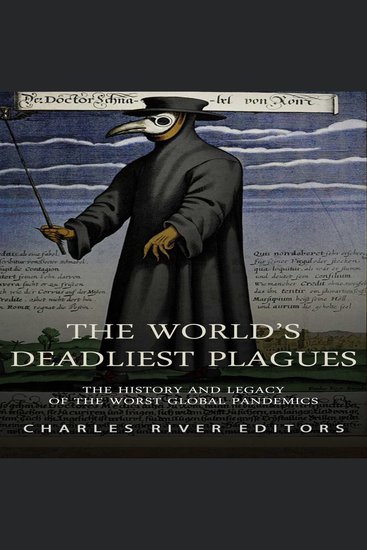
  • World’s Deadliest Plagues The: The History and Legacy of the Worst Global Pandemics - cover

    World’s Deadliest Plagues The:...

    Editors Charles River

    • 0
    • 0
    • 0
    Human beings seem to have a particular fascination for microbiological threats. They are invisible, unpredictable and mysterious, and it is only in the past 150 years or so that scientists have begun to understand microorganisms and the maladies they can cause. Modern society has long been horrified and enthralled by accounts of such pestilences as the Black Death, which exterminated up to 60% of the population of Europe from 1347-1351. Less known is the Plague of Justinian which was even more deadly in that it carried away a quarter of the world’s population within the space of one year (542 CE). The Great Plague of London, which killed 100,000 in 1666, is another infamous pestilence, as is the Spanish Flu of 1918, which took the lives of as many as one million worldwide, making that epidemic even deadlier than the medieval Black Death. 
    Such virulent outbreaks of disease are by no means distant historical events. While scientific and technological advances have limited and in many places eradicated such community-devastating diseases as cholera, smallpox, bubonic plague, typhus, Salmonella and yellow fever, new microscopic threats have arisen, including Ebola, SARS, bird flu, and most recently Coronavirus 2. 
    The terror associated with pestilence speaks to people’s insecurities concerning the unknown and invisible. The ancients had no knowledge of microorganisms that caused disease-instead they postulated that pestilence was caused by miasma, air fouled by decomposing matter. That said, modern awareness of microscopic viruses and bacteria does nothing to lessen humanity’s insecurity. If anything, it is terrifying that such tiny creatures have the capacity to overthrow powerful and vibrant societies. This is one of the themes of H. G. Wells’ famous War of the Worlds (1897).
    Show book
  • Tsar Peter the Great: A short biography - 5 Minutes: Short on time - long on info! - cover

    Tsar Peter the Great: A short...

    5 Minutes, 5 Minute Biographies,...

    • 0
    • 0
    • 0
    Tsar Peter the Great, Russian leader and modernizer: Life and work in a short biography! Everything you need to know, brief and concise. Infotainment, education and entertainment at its best!
    Show book