Join us on a literary world trip!
Add this book to bookshelf
Grey
Write a new comment Default profile 50px
Grey
Subscribe to read the full book or read the first pages for free!
All characters reduced
The Research Path - cover

The Research Path

Pasquale De Marco

Publisher: Publishdrive

  • 0
  • 0
  • 0

Summary

In a world awash with information, the ability to conduct effective research is more crucial than ever. This comprehensive guide empowers students and researchers alike to navigate the complexities of the research process and produce high-quality papers that make a lasting impact.

With its step-by-step approach and engaging writing style, this book demystifies the research journey, from selecting a compelling topic and formulating a research question to organizing findings and presenting them with clarity and precision. It also delves into the art of constructing strong arguments, employing persuasive language, and anticipating and addressing counterarguments.

Aspiring researchers will gain invaluable insights into effectively gathering and evaluating information from diverse sources, including libraries, databases, and online resources. They will learn the importance of proper citation and referencing, ensuring their work adheres to the highest academic standards.

Furthermore, this guide emphasizes the significance of proper formatting, ensuring that research papers conform to the required academic conventions. It provides detailed instructions on creating a strong introduction, developing a cohesive argument, and crafting a memorable conclusion.

Seasoned researchers will also find this book to be an invaluable resource, offering fresh perspectives and innovative strategies for enhancing their research skills. They will learn how to refine their writing style, strengthen their arguments, and effectively communicate their findings to a wider audience.

With its wealth of practical advice, expert guidance, and real-world examples, this book is the ultimate companion for anyone seeking to excel in the art of research and academic writing. It is an essential resource for students, researchers, and professionals across all disciplines, empowering them to produce research papers that are both informative and impactful.


If you like this book, write a review!
Available since: 06/02/2025.
Print length: 167 pages.
Other books that might interest you

  • The Permanent Husband - A Gripping Tale of Betrayal Guilt and the Burden of the Past - cover

    The Permanent Husband - A...

    Fyodor Dostoevsky, Tim Zengerink

    • 0
    • 0
    • 0
    What if the man you wronged refused to let you forget? 
    The Permanent Husband unfolds as a taut confrontation between suave Ivan Velchaninov and brooding Pavel Trusotsky, who arrives bearing the ghost of betrayal—and perhaps a child conceived in that very betrayal.  
    Their conversations crackle with hidden barbs, exposing wounds neither is willing to heal. Dostoevsky’s concise masterpiece becomes an immersive listening experience, rich with irony, tension, and unexpected flashes of dark humor. 
    What you’ll hear inside: 
    - A Psychological Chess Match – Every word a move, every pause a threat. 
    - Portraits of Guilt and Jealousy – Voices that reveal trembling pride and desperate vulnerability. 
    - A Modern Performance – Clear, dynamic narration that brings nineteenth-century St. Petersburg to life. 
    - A Story That Haunts Long After the Final Sentence – Perfect for listeners who crave moral complexity in under three hours. 
    Total listening time: approximately 2 hours 30 minutes—ideal for a single suspense-filled evening.
    Show book
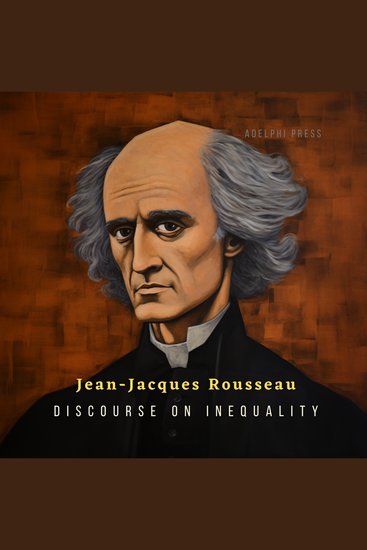
  • Discourse on Inequality - cover

    Discourse on Inequality

    Jean-Jacques Rousseau

    • 0
    • 0
    • 0
    "Discourse on Inequality" by Jean-Jacques Rousseau explores the origins and effects of social inequality. Rousseau reflects on the evolution of human societies, arguing that inequality arises from the development of private property and the establishment of civil society. He critiques the impact of civilization on human virtue and freedom, advocating for a return to a more natural and egalitarian state. The discourse delves into philosophical reflections on the nature of humanity, societal structures, and the pursuit of a just and harmonious existence. Read in English, unabridged.
    Show book
  • The Biggest Civil War Battles of 1863 - cover

    The Biggest Civil War Battles of...

    Editors Charles River

    • 0
    • 0
    • 0
    Americans have long been fascinated by the Civil War and its biggest battles, particularly Gettysburg, Antietam, and Shiloh, all of which involved Robert E. Lee or Ulysses S. Grant. But one of the 6 biggest battles of the war, and the one that took the heaviest toll by % on both armies was fought at the end of 1862 in Tennessee, and it involved neither of those generals. Though Stones River is mostly overlooked as a Civil War battle today, it had a decisive impact on the war. The two armies had both suffered nearly 33% casualties, an astounding number in 1862. 
    Of all the Civil War battles fought, and of all the victories achieved by Robert E. Lee at the command of the Confederate Army of Northern Virginia, the Battle of Chancellorsville is considered the most tactically complex and ultimately the most brilliant Confederate victory of the war. However, it cost them Stonewall Jackson, and the reorganization of the armies and the battle itself played an influential role in the way the Pennsylvania Campaign and the Battle of Gettysburg unfolded later that summer.  
    Without question, the most famous battle of the American Civil War took place outside of the small town of Gettysburg, Pennsylvania, which happened to be a transportation hub, serving as the center of a wheel with several roads leading out to other Pennsylvanian towns. From July 1-3, Robert E. Lee’s Confederate Army of Northern Virginia tried everything in its power to decisively defeat George Meade’s Union Army of the Potomac, unleashing ferocious assaults that inflicted nearly 50,000 casualties in all.  
    While many read about the siege of Vicksburg in the summer of 1863, as well as the desperate straits the Confederate soldiers and Vicksburg residents found themselves in, Grant’s initial attempts to advance towards Vicksburg met with several miserable failures, and it took several months just to get to the point where the Union forces could start a siege. 
    Show book
  • On Wave and Wing - The 100 Year Quest to Perfect the Aircraft Carrier - cover

    On Wave and Wing - The 100 Year...

    Barrett Tillman

    • 0
    • 0
    • 0
    What defended the US after the attack on Pearl Harbor, defeated the Soviet Union in the Cold War, and is an essential tool in the fight against terror? Aircraft carriers. 
    For seventy years, these ships remained a little-understood cornerstone of American power. In his latest book, On Wave and Wing, Barrett Tillman sheds light on the history of these floating leviathans and offers a nuanced analysis of the largest man-made vessel in the history of the world.
    Show book
  • A Brain-Friendly Life - How to Manage Cognitive Overload and Reduce Glitching - cover

    A Brain-Friendly Life - How to...

    Marisa Menchola

    • 0
    • 0
    • 0
    Modern life is brain-unfriendly: We are flooded with information and excessive cognitive demands, when we are often already depleted from chronic stress, sleep deprivation, and health issues. Many of us experience frequent 'glitches' or memory lapses, despite tests showing there is nothing wrong with our brains. This book provides concrete strategies, derived from neuropsychological science and clinical practice, to help people improve how they function in daily life. 
    Menchola draws on her experience as a clinical neuropsychologist who has worked with a widely diverse group of patients, to translate the findings from highly controlled research into concrete strategies that people can implement in their messy worlds to make their days more brain-friendly. The book also provides advice on how to address those factors that drain our brain resources, and gives guidance on when and how to seek a neuropsychological evaluation. 
    It is valuable listening for anyone experiencing frustrating cognitive problems that are not due to brain disease. It is also essential for neuropsychologists, psychologists and physicians in primary care, psychiatry, and neurology, who need a resource to offer to patients to help their healthy brains function better.
    Show book
  • Mikhail Gorbachev: The Life and Legacy of the Soviet Union’s Last Leader - cover

    Mikhail Gorbachev: The Life and...

    Editors Charles River

    • 0
    • 0
    • 0
    After going through three elderly leaders in three years, Mikhail Gorbachev was chosen as the new General Secretary of the Soviet Union at the relatively youg age of 54 in March 1985. Gorbachev hoped to build the Soviet economy to relieve the persistent shortages of consumer goods it faced, which were caused by enormous military spending of the Soviet Union. Gorbachev tried to introduce some economic reforms, but they were blocked by communist hardliners. Gorbachev then came to the belief that the Soviet economy could not improved without political reform as well. 
    In comparison with other Soviet leaders, Gorbachev was leader of the USSR for a relatively short period, but the changes that took place under his leadership were monumental, including some that were intended and others that were unforeseen. Gorbachev oversaw the end of the Cold War and the peaceful transition away from communism in Central and Eastern Europe, and he ended the war in Afghanistan and many other proxy conflicts in the developing world. Gorbachev improved relations with the West and developed enough trust with President Ronald Reagan and President George H.W. Bush to decommission thousands of nuclear weapons. He also liberalized the political environment within the Soviet Union itself, increased accountability, and brought in a certain degree of democracy.  
    	Gorbachev was awarded the Nobel Peace Prize for these efforts in 1990, but his regime also left a legacy of turbulence and destruction in its wake. As a result of his policies, many Soviet people rose up against the status quo, demanding national self-determination and reviving old grievances. Gorbachev could not prevent the USSR from disbanding at the end of 1991, leaving much of the country’s economy in ruins and nationalist and ethnic conflicts that are still unresolved today.
    Show book