Join us on a literary world trip!
Add this book to bookshelf
Grey
Write a new comment Default profile 50px
Grey
Subscribe to read the full book or read the first pages for free!
All characters reduced
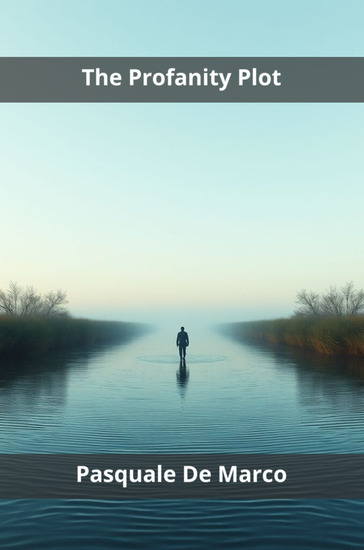
The Profanity Plot - cover

The Profanity Plot

Pasquale De Marco

Publisher: Publishdrive

  • 0
  • 0
  • 0

Summary

In this captivating exploration of profanity, we embark on a journey through the ages, tracing the evolution of swear words from their humble beginnings in ancient civilizations to their ubiquitous presence in modern-day discourse. We delve into the psychological and sociological factors that drive our use of profanity, shedding light on the intricate interplay between language, culture, and power.

Profanity, often regarded as the antithesis of polite speech, has long been a subject of fascination and debate. It challenges societal norms, pushing the boundaries of acceptable language and provoking strong reactions from both proponents and detractors. We examine the legal and ethical quandaries surrounding profanity, exploring the delicate balance between freedom of expression and the need to maintain social order.

Furthermore, we explore the multifaceted relationship between profanity and identity. Swear words can serve as powerful tools for self-expression, group bonding, and social differentiation. They can reflect our innermost emotions, our cultural heritage, and our place in society. We examine how profanity shapes and is shaped by individual and collective identities, shedding light on the complex interplay between language and the human experience.

In the digital age, profanity has found new avenues for expression and dissemination. Social media platforms and online forums have become virtual battlegrounds where linguistic norms are constantly challenged and redefined. We investigate the impact of the internet on profanity, exploring how it has both amplified and transformed the ways in which we use and perceive swear words.

Throughout this exploration, we encounter a diverse cast of characters—from ancient philosophers and religious leaders to contemporary comedians and pop culture icons—who have grappled with the power and significance of profanity. Their insights and experiences illuminate the multifaceted nature of this linguistic phenomenon, challenging our assumptions and inviting us to reconsider our own attitudes towards profanity.

As we delve into the depths of profanity, we gain a deeper understanding of its role in human communication and its profound impact on society. This book is an invitation to explore the complexities of profanity, to appreciate its nuances, and to engage in thoughtful discussions about its place in our world.


If you like this book, write a review!
Available since: 06/02/2025.
Print length: 167 pages.
Other books that might interest you

  • Catastrophe - cover

    Catastrophe

    Dick Morris, Eileen McGann

    • 0
    • 0
    • 0
    #1 New York Times Bestseller! In Catastrophe, Dick Morris and Eileen McGann—authors of the megabestsellers Fleeced and Outrage—take a hard look at America in free fall and at how Barack Obama is transforming a vulnerable U.S. into a socialist state. Their seventh consecutive New York Times bestseller, Catastrophe is a call to arms for every American skeptical of Big Business and politics as usual—and a must read for fans of Bill O’Reilly, Sean Hannity, Rush Limbaugh, Michael Savage, Bernie Goldberg, and Glenn Beck.
    Show book
  • The Wars of the Jews - cover

    The Wars of the Jews

    Flavius Josephus

    • 0
    • 0
    • 0
    The Wars of the Jews (or The History of the Destruction of Jerusalem, or as it usually appears in modern English translations, The Jewish War - original title: Phlauiou Iôsêpou historia Ioudaïkou polemou pros Rhômaious bibliona) is a book written by the 1st century Jewish historian Josephus. 
     
    It is a description of Jewish history from the capture of Jerusalem by the Seleucid ruler Antiochus IV Epiphanes in 164 BC to the fall and destruction of Jerusalem in the First Jewish-Roman War in AD 70. The book was written about 75, originally in Josephus's "paternal tongue", probably Aramaic, though this version has not survived. It was later translated into Greek, probably under the supervision of Josephus himself. 
     
    The sources of knowledge that we have of this war are Josephus's account and from the Talmud (gittin 57b) and in midrash Eichah. (Summary by Wikipedia)
    Show book
  • Best Education for Free - cover

    Best Education for Free

    Amisha Burn

    • 0
    • 0
    • 0
    Best Education for Free: The Essential Guide on How to Get a Scholarship to Achieve Your Dream Education for FreeA scholarship is a financial merit-based award that a student would have to apply for. The scholarship may be a package of financial aid to help the student. It could include housing and course materials as well as tuition, or just the tuition. It may only be a percentage of the tuition. This is dependent on the terms and conditions of the scholarship itself and what it offers. It may last for an academic year or for the duration of your degree course. However, it will always have conditions attached, and this will most likely relate to your grade point average. It would have to remain above a certain level for you to qualify for the scholarship.In this audiobook, you will learn The Essential Guide on How to Get a Scholarship to Achieve Your Dream Education for Free. So what are you waiting for, download a copy of the Best Education for Free today!
    Show book
  • Dot Con - The Art of Scamming a Scammer - cover

    Dot Con - The Art of Scamming a...

    James Veitch

    • 0
    • 0
    • 0
    From viral comedy sensation James Veitch (as seen on TED, Conan, and The Tonight Show with Jimmy Fallon) comes a collection of laugh-out-loud funny exchanges with email scammers.The Nigerian prince eager to fork over his inheritance, the family friend stranded unexpectedly in Norway, the lonely Russian beauty looking for love . . . they spam our inboxes with their hapless pleas for help, money, and your social security number. In Dot Con, Veitch finally answers the question: what would happen if you replied?Suspicious emails pop up in our inboxes and our first instinct is to delete unopened. But what if you responded to the deposed princess begging for money in your Gmail? Veitch dives into the underbelly of our absurd email scam culture, playing the scammers at their own game, and these  are the surprising, bizarre, and hilarious results.
    Show book
  • A Kidnapped West - The Tragedy of Central Europe - cover

    A Kidnapped West - The Tragedy...

    Milan Kundera

    • 0
    • 0
    • 0
    “We should welcome the context Kundera gives for the struggles between Russia and Europe, and the plight of those caught between them. His defense of small languages, small cultures, and small nations feels pressing.”—Claire Messud, Harper's Magazine 
    “Kundera focuses on the relationship of Europe’s central ‘small nations’ like Czechoslovakia and Ukraine to Western culture and argues that their cultural identities were increasingly threatened.”—New York Book Review  
    A short collection of brilliant early essays that offers a fascinating context for Milan Kundera’s subsequent career and holds a mirror to much recent European history.  It is also remarkably prescient with regard to Russia’s current aggression in Ukraine and its threat to the rest of Europe. 
    Milan Kundera’s early nonfiction work feels especially resonant in our own time. In these pieces, Kundera pleads the case of the “small nations” of Europe who, by culture, are Western with deep roots in Europe, despite Russia imposing its own Communist political regimes in Hungary, Czechoslovakia, Poland, Ukraine, and elsewhere. Kundera warns that the real tragedy here is not Russia but Europe, whose own identity and culture are directly challenged and threatened in a way that could lead to their destruction. He is sounding the alarm, which chimes loud and clear in our own twenty-first century. 
    The 1983 essay translated by Edmund White (“The Tragedy of Central Europe”), and the 1967 lecture delivered to the Czech Writers’ Union in the middle of the Prague Spring by the young Milan Kundera (“Literature and the Small Nations”), translated for the first time by Linda Asher, are both written in a voice that is at once personal, vehement, and anguished. Here, Kundera appears already as one of our great European writers and truly our contemporary. Each piece is prefaced by a short presentation by French historian Pierre Nora and Czech-born French political scientist Jacques Rupnik.
    Show book
  • Cambodia - History of Angkor Wat and the Khmer Empire (3 in 1) - cover

    Cambodia - History of Angkor Wat...

    Kelly Mass

    • 0
    • 0
    • 0
    Learn more about the history of those countries. The topics addressed will be these: 
    Angkor Wat-- The temple was built as the state temple for the Khmer Empire at the demand of Suryavarman II in the early 12th century in Yaodharapura (, contemporary Angkor), the Khmer Empire's capital. It was constructed in the early 12th century to honor the Hindu god Vishnu, but by the end of the century, it had been changed to a Buddhist temple. 
    Angkor Wat is a fascinating structure, dating back hundreds of years, and it’s impressive how much of it has remained intact. 
    The Khmer Empire--Historians describe Cambodia as the Khmer State or the Angkorian Empire (Khmer:) from the 9th century to the 15th century, when it was a Hindu/Buddhist empire in Southeast Asia. The empire, which developed from the old societies of Funan and Chenla, governed and/or "vassalized" the majority of mainland Southeast Asia and parts of Southern China, covering from the suggestion of the Indochinese Peninsula northward to modern-day Yunnan province in China, and from Vietnam westward to Myanmar. The Khmer Empire was greater at its peak than the Byzantine Empire (Eastern Roman Empire) that existed at the exact same period. 
    The Siamese-- Siam was just a much different name for what's now referred to as Thailand. The Siamese are the people who live there, though they're never ever called as such any longer. 
    Thailand is a fascinating country, with its own culinary arts, culture, history, royalty, infrastructure, and influence on the world. To learn more about these “Thai” people before they were called Thai, when they were Siamese, is to learn about those people’s roots.
    Show book