Join us on a literary world trip!
Add this book to bookshelf
Grey
Write a new comment Default profile 50px
Grey
Subscribe to read the full book or read the first pages for free!
All characters reduced
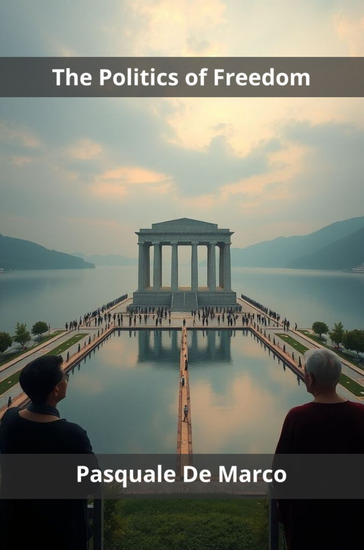
The Politics of Freedom - cover

The Politics of Freedom

Pasquale De Marco

Publisher: Publishdrive

  • 0
  • 0
  • 0

Summary

In a world where freedom is often taken for granted, this book embarks on an intellectual journey to explore its profound significance and the challenges it faces in the modern era. With a comprehensive examination of the concept of freedom, this book offers a fresh perspective on the values that underpin free societies and the threats that confront them.

Through a historical, philosophical, and political lens, this book traces the evolution of freedom as a concept and its impact on societies throughout history. It delves into the diverse perspectives of ancient and modern thinkers, shedding light on the complexities and contradictions inherent in the pursuit of liberty.

In an era defined by globalization and interdependence, this book examines how technology, economic forces, and global governance mechanisms shape our understanding and experience of freedom. It explores the opportunities and risks presented by these interconnected systems, highlighting the need for a nuanced approach to safeguarding freedom in the 21st century.

Moreover, the book addresses the pressing threats to freedom posed by authoritarian regimes, the erosion of civil liberties, and the growing inequality that plagues societies worldwide. It analyzes these challenges and proposes strategies for preserving and expanding freedom in the face of adversity.

With a focus on empowering readers to engage in meaningful conversations about the future of freedom, this book provides a timely and thought-provoking exploration of one of humanity's most cherished values. It is an essential read for anyone seeking a deeper understanding of the foundations of freedom and the responsibilities we bear as citizens to protect and nurture it.

Join the journey to unravel the complexities of freedom and discover how we can work together to build a more just, equitable, and free world for generations to come.


If you like this book, write a review!
Available since: 06/02/2025.
Print length: 167 pages.
Other books that might interest you

  • Guardians of the Good - Standing Firm in a Society Adrift - cover

    Guardians of the Good - Standing...

    Frederick Luke

    • 0
    • 0
    • 0
    Embark on a Quest for Honour in a World Losing Its Way  
    Within these pages lies a compelling invitation to rediscover the bedrock of moral character, as you journey through the essence of virtue, leadership, and the resilient power of purpose. It's more than a book—it's a mission for those who dare to define their why, set a soaring course for their lives, and live with intentional gusto, making every day a testament to their unwavering resolve. 
    Assume the esteemed mantle of the Valiant Protector, understanding that courage, protectiveness, and a sacred commitment to family are not antiquated ideals but the pillars of a stewardship that can shape the very world. Embrace the noble art of selflessness as you learn about sacrifice and the profound ripple effects of service that holds the power to transform society. 
    Pursuit of the Truth cuts through the fog of modern deception with the sharpness of critical thought, enabling you to shine the light of reality upon an oft-obscured path. This explorative odyssey rewards the seeker with the ultimate treasures of respect and honour—currencies that are earned through action, not bestowed by title. 
    In answering the call to return to tradition, you'll find that forgotten wisdom and ancient rituals still have a vital place in the modern man's world, offering stability amidst chaos. "Guardians of the Good" guides you through the trials of adversity and forges within you the resilience required to emerge stronger, more connected to your brothers in solidarity, and unwavering in your ethical convictions. 
    Answer the call. Take your place amongst the guardians. For you are the beacon of hope, the immortalised essence of goodness, in a world thirsting for the strength of virtue. This book is your map, your compass, your advocate—in forging the path to a life of brazen honour and unspoken legacies. Are you ready to become a guardian of the good?
    Show book
  • Treasure Island: A Christian Readers' Guide - cover

    Treasure Island: A Christian...

    Kristi Simonson

    • 0
    • 0
    • 0
    Embark on a captivating journey through the beloved classic, Treasure Island. In this insightful guide, author Kristi Simonson invites readers to dive deep into the heart of Robert Louis Stevenson’s timeless tale with an engaging approach that sparks curiosity and discussion.With thoughtfully crafted prompts and provocative questions, this guide not only illuminates the major and minor themes woven throughout the narrative but also unveils valuable lessons that resonate with readers of all ages. Kristi’s passion for the classics shines through as she provides a rich backdrop to the story, enhancing the literary experience.What sets this guide apart is its unique perspective—each chapter analysis is viewed through a Christian worldview, inviting readers to explore the Biblical lessons that enrich our understanding of the characters, plot, and our own lives. Discover how the adventures on the high seas reflect deeper truths and moral insights that can inspire and challenge us.Perfect for fans of classic literature, homeschool families, book clubs, or anyone keen on deepening their appreciation for the literary greats, this thorough and thoughtful companion to Treasure Island is an essential addition to any library. Join Kristi Simonson on this enlightening journey and uncover the treasures waiting to be found in Robert Louis Stevenson's classic tale. 
    Show book
  • Phaedrus - cover

    Phaedrus

    Plato

    • 0
    • 0
    • 0
    In "Phaedrus," Plato explores the nature of love, rhetoric, and the soul. Set in a scenic Athenian countryside, Socrates engages in a profound dialogue with Phaedrus, unravelling the complexities of love and its impact on the human spirit. The discourse delves into the art of persuasion and the immortality of the soul, offering timeless insights into the human condition and philosophical inquiry. Read in English, unabridged.
    Show book
  • Democratic Citizenship - A Continuous Approach to Proportionality in Political Participation - cover

    Democratic Citizenship - A...

    Gayatri kumari

    • 0
    • 0
    • 0
    Democratic Citizenship: A Continuous Approach to Proportionality in Political ParticipationIntroduction 
    Democratic citizenship is a fundamental concept that underpins the functioning of democratic societies. It encompasses the rights, responsibilities, and active participation of individuals in political and civic life. One of the critical aspects of democratic citizenship is ensuring proportionality in political participation, which means that all segments of society have an equal opportunity to engage in the political process. This continuous approach to proportionality is essential for maintaining a healthy, inclusive, and representative democracy.The Importance of Proportionality in Political Participation 
    Proportionality in political participation ensures that diverse voices and perspectives are heard and represented in the decision-making process. This inclusivity is vital for several reasons:Legitimacy and Trust:When political participation is proportional, the decisions made by elected officials are more likely to reflect the will of the people. This enhances the legitimacy of the government and fosters trust among citizens.Social Cohesion:Proportional political participation helps to bridge social divides by giving marginalized and minority groups a platform to express their concerns and contribute to policy-making. This can lead to greater social cohesion and reduced conflict.Innovation and Problem-Solving:Diverse participation brings a range of perspectives and ideas to the table, which can lead to more innovative solutions to societal problems.Challenges to Proportional Political Participation
    Show book
  • Fridtjof Nansen: A short biography - 5 Minutes: Short on time – long on info! - cover

    Fridtjof Nansen: A short...

    5 Minutes, 5 Minute Biographies,...

    • 0
    • 0
    • 0
    Fridtjof Nansen, polar explorer andNobel peace prize winner: Life and work in a short biography! Everything you need to know, brief and concise. Infotainment, education and entertainment at its best!
    Show book
  • The Republic - cover

    The Republic

    Plato

    • 0
    • 0
    • 0
    The Republic (Greek: Politeia) is a Socratic dialogue, written by Plato around 380 BC, concerning the definition of (justice), the order and character of the just city-state and the just man, reason by which ancient readers used the name On Justice as an alternative title (not to be confused with the spurious dialogue also titled On Justice). The dramatic date of the dialogue has been much debated and though it must take place some time during the Peloponnesian War, "there would be jarring anachronisms if any of the candidate specific dates between 432 and 404 were assigned".    It is Plato's best-known work and has proven to be one of the most intellectually and historically influential works of philosophy and political theory. In it, Socrates along with various Athenians and foreigners discuss the meaning of justice and examine whether or not the just man is happier than the unjust man by considering a series of different cities coming into existence "in speech", culminating in a city (Kallipolis) ruled by philosopher-kings; and by examining the nature of existing regimes.    The participants also discuss the theory of forms, the immortality of the soul, and the roles of the philosopher and of poetry in society. Short Summary (Epilogue): X.1—X.8. 595a—608b. Rejection of Mimetic Art X.9—X.11. 608c—612a. Immortality of the Soul X.12. 612a—613e. Rewards of Justice in Life X.13—X.16. 613e—621d. Judgment of the Dead The paradigm of the city — the idea of the Good, the Agathon — has manifold historical embodiments, undertaken by those who have seen the Agathon, and are ordered via the vision. The centre piece of the Republic, Part II, nos. 2–3, discusses the rule of the philosopher, and the vision of the Agathon with the allegory of the cave, which is clarified in the theory of forms.    The centre piece is preceded and followed by the discussion of the means that will secure a well-ordered polis (City). Part II, no. 1, concerns marriage, the community of people and goods for the Guardians, and the restraints on warfare among the Hellenes. It describes a partially communistic polis. Part II, no. 4, deals with the philosophical education of the rulers who will preserve the order and character of the city-state. In Part II, the Embodiment of the Idea, is preceded by the establishment of the economic and social orders of a polis (Part I), followed by an analysis (Part III) of the decline the order must traverse. The three parts compose the main body of the dialogues, with their discussions of the "paradigm", its embodiment, its genesis, and its decline. The Introduction and the Conclusion are the frame for the body of the Republic.    The discussion of right order is occasioned by the questions: "Is Justice better than Injustice?" and "Will an Unjust man fare better than a Just man?" The introductory question is balanced by the concluding answer: "Justice is preferable to Injustice". In turn, the foregoing are framed with the Prologue (Book I) and the Epilogue (Book X). The prologue is a short dialogue about the common public doxai (opinions) about "Justice". Based upon faith, and not reason, the Epilogue describes the new arts and the immortality of the soul.
    Show book