Join us on a literary world trip!
Add this book to bookshelf
Grey
Write a new comment Default profile 50px
Grey
Subscribe to read the full book or read the first pages for free!
All characters reduced
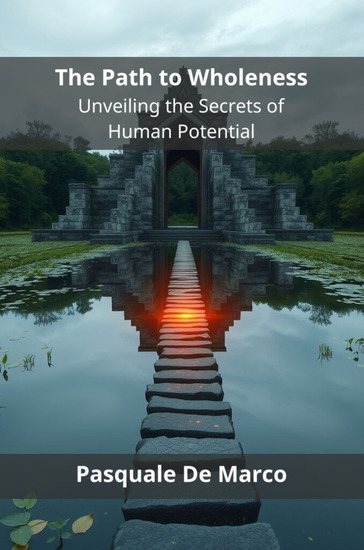
The Path to Wholeness - Unveiling the Secrets of Human Potential - cover

The Path to Wholeness - Unveiling the Secrets of Human Potential

Pasquale De Marco

Publisher: Publishdrive

  • 0
  • 0
  • 0

Summary

"The Path to Wholeness: Unveiling the Secrets of Human Potential" is a transformative guide that empowers readers to unlock their full potential and live a life of fulfillment and purpose. Inspired by the groundbreaking work of Abraham Maslow, this book offers a comprehensive roadmap for personal growth and self-actualization.

Through engaging narratives, practical exercises, and profound insights, readers are taken on a journey of self-discovery and transformation. They will explore the foundational principles of self-acceptance, embrace challenges as opportunities for growth, cultivate resilience in the face of adversity, and find deeper meaning and purpose in their lives.

This book is more than just a theoretical exploration; it is an invitation to embark on a personal odyssey of transformation. It challenges readers to confront their limiting beliefs, embrace their authentic selves, and cultivate a mindset of continuous learning and growth. By integrating Maslow's wisdom with contemporary research and inspiring stories, the book offers a roadmap for navigating the complexities of modern life and realizing one's fullest potential.

Whether you are seeking to overcome personal obstacles, find deeper meaning in your life, or simply live more authentically, this book will be your trusted companion on the path to wholeness. It offers a comprehensive understanding of human nature, providing readers with the tools and insights to unlock their potential and live a life of purpose, fulfillment, and joy.

As you embark on this journey of self-discovery, you will discover the profound impact that self-actualization can have on your life and the world around you. You will learn to embrace challenges as opportunities for growth, cultivate resilience in the face of adversity, and find fulfillment in every aspect of your being.

This book is not just a guide to self-improvement; it is a call to action, an invitation to step into your greatness and make a positive impact on the world. By embracing the principles of wholeness, you will not only transform your own life but also contribute to the creation of a more harmonious and fulfilling world for all.


If you like this book, write a review!
Available since: 06/02/2025.
Print length: 165 pages.

Other books that might interest you

  • Sensation Me Crazy - A Guide Tools and Fun Games to Assist and Help Develop Your Child With Sensory Processing Disorder (SPD) - cover

    Sensation Me Crazy - A Guide...

    Jane Elizabeth

    • 0
    • 0
    • 0
    SPD, also known as Sensory Processing Disorder, tends to show itself within children at an early age, however it is not always easy to understand what is wrong with the child without the proper tools, techniques, or methods. Within this book, SPD will be looked at, explained and the right activities will be given in order for parents to gain the proper understanding needed to help their child move effortlessly through childhood and into adulthood. 
      
    Being a child with SPD or any kind of disorder is not easy, but with the proper help guidance and love, the child can function just like anyone else. Do not give up on the child and do not make them feel like a burden, that will only worsen the disorder and create a far more difficult situation to fix later down the line. 
    Show book
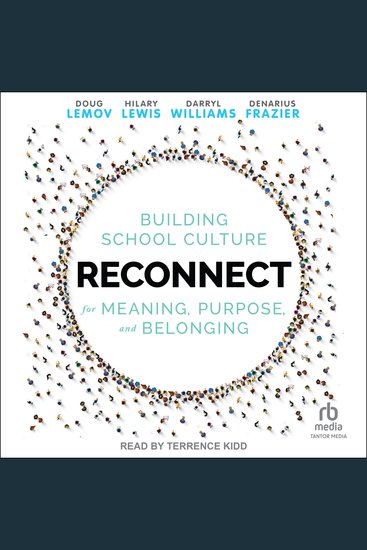
  • Reconnect - Building School Culture for Meaning Purpose and Belonging - cover

    Reconnect - Building School...

    Doug Lemov, Hilary Lewis, Darryl...

    • 0
    • 0
    • 0
    In Reconnect: Building School Culture for Meaning, Purpose, and Belonging, a team of distinguished educators from Teach Like a Champion and Uncommon Schools deliver practical guidance and concrete advice for teachers, administrators, and community members who seek to dramatically improve the lives of children and young people by fostering a sense of belonging in schools. In the book, you'll find hands-on solutions to build or rebuild students' sense of shared work and community in an era of increasing isolation and disconnections. 


    The authors draw on extensive experience with high-performing schools to show you how to build environments that allow young people to thrive and socialize. You'll also get: 


    ● Actionable strategies for countering the increasing isolation of students that has been aggravated by remote learning 


    ● Useful ways to facilitate positive and beneficial peer-to-peer interactions between students 


    A can't-miss resource for K-12 teachers and administrators working in public, private, or charter schools, Reconnect will also prove a practical guide for parents and community members involved in the education of local children and young people.
    Show book
  • James Joyce - A Very Short Introduction - cover

    James Joyce - A Very Short...

    Colin MacCabe

    • 0
    • 0
    • 0
    James Joyce is one of the greatest writers in English. His first book, A Portrait of the Artist as A Young Man, laid down the template for the coming of age novel, while his collection of short stories, Dubliners, is of perennial interest. His great modern epic, Ulysses, took the city of Dublin for its setting and all human life for its subject, and its publication marked the beginning of the modern novel. Joyce's final work, Finnegans Wake, is an experiment in narrative and language. But if Joyce is a great writer he is also the most difficult writer in English. 


    This Very Short Introduction explores the work of this most influential yet complex writer, and analyzes how Joyce's difficulty grew out of his situation as an Irish writer unwilling to accept the traditions of his imperialist oppressor, and contemptuous of the cultural banality of the Gaelic revival. Joyce wanted to investigate and celebrate his own life, but this meant investigating and celebrating the drunks of Dublin's pubs and the prostitutes of Dublin's brothels. No subject was alien to him and he developed the naturalist project of recording all aspects of life with the symbolist project of finding significant correspondences in the most unlikely material. Throughout, Colin MacCabe interweaves Joyce's life and history with his books, and draws out their themes and connections.
    Show book
  • The Illusory Bargain - Liberty in the Aftermath of the 17th Amendment - cover

    The Illusory Bargain - Liberty...

    Ralph H. Lehman

    • 0
    • 0
    • 0
    Out-of-control debt. Populism. Political vitriol and corruption. Where did America go wrong? Or rather, when did America go wrong?
    
    1913. The Seventeenth Amendment is ratified, allowing the people of America to vote directly for their senators in the US senate. The same year, the Federal Reserve Act is passed, establishing a central bank to oversee monetary policy. In The Illusory Bargain, Ralph H. Lehman demonstrates that these seemingly empowering and people-serving pieces of legislature were just that-an illusion. Tracing the vision of the Founding Fathers as outlined in The Federalist Papers, Lehman reveals how the safety features of the original constitutional framework have eroded since and given way to rampant abuse of power and arbitrary, tyrannical law.
    
    Through fresh, historically informed insights and over twenty years of financial expertise, Lehman reexamines the nation's fundamental values and proposes what may be the only course of action left to restore our liberty.
    Show book
  • The New Masculinity - A Roadmap for a 21st-Century Definition of Manhood - cover

    The New Masculinity - A Roadmap...

    Alex Manley

    • 0
    • 0
    • 0
    From AskMen senior editor and non-binary writer Alex Manley comes The New Masculinity: A Roadmap for a 21st-Century Definition of Manhood, a guide for escaping the shackles of toxic masculinity, unlearning what it means to be a man, and pushing back against the various ways masculinity teaches people to hurt rather than help, and to harm rather than heal. Manley charts a course for a wholly new future of the self that’s neither particularly manly nor particularly masculine, but responsive, invested, and caring.
    		 
    Having written and edited for a men’s website for seven and a half years, Manley has seen up close how angry, scared, and lonely men are, and how entrenched in a culture war they feel. This book is a guide for unlearning the habits that perpetuate that harm. There are an infinite number of ways to be a person, but to access them fully, men first need to unlearn the restrictions of modern gender roles and the ways society has taught them to shave parts of themselves off until their masculinity comes before their humanity.
    Show book
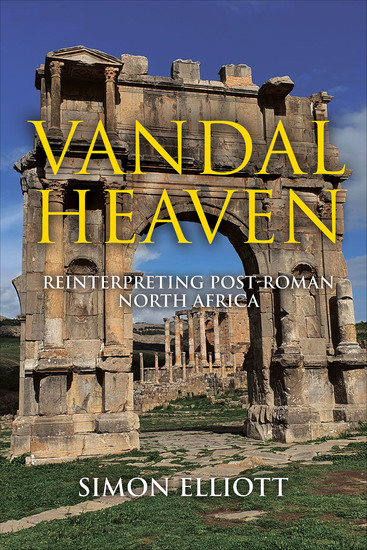
  • Vandal Heaven - Reinterpreting Post-Roman North Africa - cover

    Vandal Heaven - Reinterpreting...

    Simon Elliott

    • 0
    • 0
    • 0
    A new study that challenges previous interpretations of post-Roman North Africa.
    
    North Africa was one of the richest parts of the Roman Empire, the agricultural powerhouse of the Mediterranean. It was also home to some of the emperor’s biggest imperial estates, and prosperous cities of all kinds. Its loss to the Vandals in the first half of the 5th century AD was the mortal blow which both precipitated the fall of the western empire, and set the eastern empire back for decades. Its reconquest then became an obsession with each new emperor in Constantinople. Time and again the eastern Romans failed in this goal, until Justinian I finally succeeded in the AD 530s. Although North Africa’s restoration to the world of Rome only lasted a short time, it has widely been regarded as a positive development.
    
    However, new research—published here for the first time—shows that post-Roman North Africa thrived under the Vandals. To them it was Vandal heaven, a place where they found a way as the new incumbent elite to live comfortably alongside the late Roman inhabitants, despite their different interpretations of Christianity. Together, the two cultures flourished.
    
    When the eastern Romans – now styled Byzantines – returned, they weren’t welcome. This is evidenced in the surviving built environments of this new period of North African history, namely chains of small forts along the frontier and interior, where the Byzantines used mounted troops to keep an unhappy local population under control.
    
    Dr Elliott not only presents a brand-new interpretation of post-Roman North Africa, but makes the case that the Arab Conquest was so successful in this region because the Byzantine overlords were so unpopular. Furthermore his argument explains how the region today came to be part of the Arab world, in contrast to the regions along the northern Mediterranean freeboard, which maintain their Roman-ness to this day.
    Show book