Join us on a literary world trip!
Add this book to bookshelf
Grey
Write a new comment Default profile 50px
Grey
Subscribe to read the full book or read the first pages for free!
All characters reduced
The Odyssey of Humanity - cover

The Odyssey of Humanity

Pasquale De Marco

Publisher: Publishdrive

  • 0
  • 0
  • 0

Summary

In this captivating exploration of human history, we embark on a journey through time, from the dawn of civilization to the modern era. We delve into the forces that have shaped our world, from the rise and fall of empires to the transformative power of ideas.

With vivid storytelling and a keen eye for detail, this book brings to life the key moments and pivotal figures that have influenced the course of human history. From the ancient civilizations of Mesopotamia and Egypt to the sprawling empires of China and Rome, we witness the rise and fall of great powers and the enduring legacy they have left behind.

We explore the intellectual and cultural currents that have shaped human thought and creativity, from the scientific revolutions that reshaped our understanding of the universe to the artistic and literary movements that have reflected and influenced the human condition. We encounter visionary leaders, brilliant thinkers, and ordinary people whose lives have left an indelible mark on history.

Through this exploration, we gain a deeper appreciation for the complexity and interconnectedness of human history. We come to understand the forces that drive human progress and the challenges that we must overcome to build a better future for ourselves and for generations to come.

This book is an essential read for anyone interested in understanding the human experience and the forces that have shaped our world. It is a sweeping narrative that will captivate readers of all ages and backgrounds, leaving them with a new perspective on the past, present, and future of humanity.


If you like this book, write a review!
Available since: 06/02/2025.
Print length: 158 pages.


Other books that might interest you

  • Spanish Crash Course - The Best Way to Learn a New Language? Like Kids Do! Level 1 for Beginners (Lessons 1-30) Crazy Effective Conversational & Easy to Follow at Home Office or Driving Your Car! - cover

    Spanish Crash Course - The Best...

    Paul Jackson

    • 0
    • 0
    • 0
    Embark on an incredible journey with the "Spanish Crash Course"! 
    Master a new language effortlessly, just like children do. This audiobook is designed for beginners and covers the first 30 lessons of level 1, making it crazy effective and ridiculously fun! 
    Discover a revolutionary learning method based on intuitive principles. Say goodbye to boring grammar and vocabulary lists. "Spanish Crash Course" offers a simple and engaging approach that fits your lifestyle – learn at home, in the office, or while driving! 
    What makes this audiobook so effective? It combines proven teaching techniques with a conversational approach. Authentic dialogues, real-life examples, and engaging activities build a solid foundation in Spanish. Gain confidence in using common phrases and expressions, developing your communication skills step by step. 
    Experience the freedom to learn anywhere! The audio format allows for convenient, flexible learning. Transform car rides or downtime at home into engaging learning moments. Immerse yourself in the beauty and rhythm of the Spanish language as you effortlessly follow along. 
    "Spanish Crash Course" is the perfect companion for quick and effective language acquisition. Whether you're an absolute beginner or have basic knowledge, this audiobook is suitable for you. Tap into your natural learning ability and enjoy the engaging experience of the "Spanish Crash Course."Take control of your language learning journey and achieve extraordinary results. Purchase "Spanish Crash Course" today and become fluent in Spanish easier and more enjoyable than ever imagined!
    Show book
  • Women and Girls Thrive: Unlocking Hidden Strengths - "Boost your confidence and strength with 'Women and Girls Thrive'—transformative audio lessons at your fingertips!" - cover

    Women and Girls Thrive:...

    Dorian Ashcombe

    • 0
    • 0
    • 0
    Women and Girls Thrive: Unlocking Hidden Strengths 
    Are you eager to advance your career and enhance your knowledge in understanding autism's unique journeys?  
    Looking for a thorough guide that encompasses all the crucial elements to cultivate empathy and support?  
    Your search ends here!  
    This guide is your ultimate companion for expanding your understanding, applying your skills, and participating in meaningful exercises. With this resource, you're set for success. 
    Updated for the latest trends and insights into autism support. 
    Key features of this enriched guide: 
    - In-depth insights into understanding autism's unique journeys  
    - Comprehensive explanations that empower compassion for individuals with autism  
    - Effective strategies for support and advocacy  
    Our guide stands out through its comprehensive coverage, which is vital for your success. Topics are not just briefly mentioned; they are explored with precision and depth.  
    Please note that this guide operates independently and is not affiliated with any official autism organization.  
    Crafted with a straightforward structure and accessible language, our guide ensures smooth transitions between topics. Farewell to complex jargon—welcome clear, precise, and technically accurate content.  
    So, why wait? Click the BUY NOW button, secure your guide, and embark on a journey toward becoming an advocate for understanding and compassion! 
    Explore the hidden strengths that will help women and girls thrive!
    Show book
  • The North Korean Famine - A Chronicle of Suffering - cover

    The North Korean Famine - A...

    Sarah Willards

    • 0
    • 0
    • 0
    The roots of the North Korean famine can be traced back to a combination of political decisions, economic isolation, and environmental misfortune. In the decades following the Korean War, North Korea embraced a rigid command economy based on Juche, or self-reliance, which emphasized centralized planning and rejected significant foreign trade or aid. While this model initially allowed for rapid industrial growth and agricultural development, it was not sustainable in the long term. The system lacked flexibility and efficiency, and over time, infrastructure and productivity began to deteriorate. 
    A major turning point came with the dissolution of the Soviet Union in the early 1990s. North Korea had relied heavily on Soviet subsidies, favorable trade terms, and access to cheap fuel and machinery. The collapse of this relationship led to a sharp decline in industrial output and a severe energy crisis. The loss of external support laid bare the fragility of North Korea’s economy, which was unable to function independently at the necessary scale to support its population. 
    Compounding these issues were a series of natural disasters that struck the country in the mid-1990s. Heavy flooding in 1995 and 1996 destroyed large areas of farmland, washed away infrastructure, and further reduced the already-limited food supply. The government’s agricultural methods, which were outdated and heavily dependent on chemical fertilizers and machinery, proved ill-suited to withstand environmental shocks. Poor land management and deforestation made the country even more vulnerable to flooding and soil erosion.
    Show book
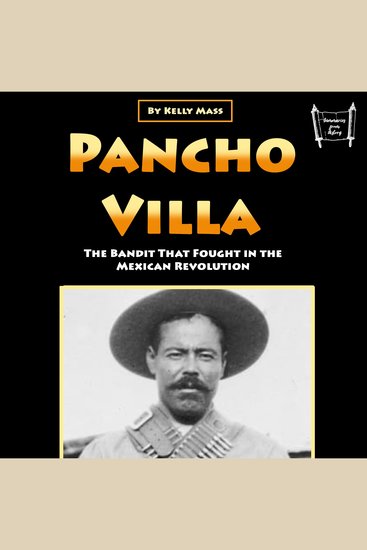
  • Pancho Villa - The Bandit That Fought in the Mexican Revolution - cover

    Pancho Villa - The Bandit That...

    Kelly Mass

    • 0
    • 0
    • 0
    Francisco Villa, better known as Pancho Villa, was a key figure in the Mexican Revolution, known for his transformation from a bandit to one of the revolution’s most influential commanders. Villa’s rise to prominence in the early 20th century marked him as a central player in the violent upheavals that reshaped Mexico’s political landscape. In 1911, Villa became a significant actor in the revolutionary violence that led to the overthrow of President Porfirio Díaz, ushering in Francisco I. Madero’s government. Villa, initially a leader of outlaw groups, aligned himself with Madero’s revolutionary cause, contributing to the instability that culminated in the fall of Díaz’s long-standing dictatorship. 
    The power dynamics in the revolution shifted again when General Victoriano Huerta attempted a right-wing coup in February 1913. As Madero’s government crumbled under Huerta’s forces, Madero led anti-Huerta soldiers in the Constitutionalist Army from 1913 to 1914. The civilian governor of Coahuila, Venustiano Carranza, became the leader of this anti-Huerta coalition. After Huerta’s eventual defeat and exile in July 1914, Villa and Carranza began to diverge politically. Villa, alongside other revolutionary leaders, assembled a gathering of generals in a bid to form a new government, but the resulting coalition was weak and inefficient. Though Villa and Emiliano Zapata, another revolutionary leader, were formally allied during this period, their partnership was largely theoretical. Both men supported land reform, but Villa’s reforms remained unrealized during his tenure of influence.
    Show book
  • Roman Medicine and Science - Advances of Ancient Civilization - cover

    Roman Medicine and Science -...

    Rogan Fish

    • 0
    • 0
    • 0
    Roman medicine was a blend of practical knowledge, religious beliefs, and influences from earlier civilizations, particularly the Greeks and Etruscans. While early Roman healing methods were deeply rooted in superstition, the expansion of the empire led to the adoption of more systematic medical practices. Over time, Roman medicine evolved into a structured system that combined natural remedies, surgical techniques, and public health initiatives. 
    Greek influence played a significant role in shaping Roman medical knowledge. Before Rome conquered Greece, healing in the Roman Republic was often associated with household remedies and religious rituals. However, as Greek physicians such as Archagathus and later Galen entered Rome, their advanced knowledge in anatomy, surgery, and pharmacology became widely accepted. Many Roman physicians were either trained by Greek mentors or studied Greek medical texts. Hippocratic principles, which emphasized observation and diagnosis, became foundational in Roman medical education. 
    Despite the growing reliance on scientific methods, religion and superstition remained integral to Roman healing practices. The Romans believed that diseases could be divine punishments or warnings from the gods. Temples dedicated to deities like Aesculapius, the god of medicine, served as healing centers where the sick sought divine intervention. Priests and healers performed rituals and sacrifices to appease the gods and cure ailments. Additionally, charms, amulets, and incantations were commonly used to ward off illness. Even as medical science progressed, many Romans continued to rely on religious customs for healing.
    Show book
  • Summary of Jeffrey D Sachs's The End of Poverty - cover

    Summary of Jeffrey D Sachs's The...

    Falcon Press

    • 0
    • 0
    • 0
    Buy now to get the main key ideas from Jeffrey D. Sachs's The End of Poverty 
      
    Can extreme poverty be eradicated in our lifetime? Jeffrey D. Sachs offers a detailed analysis of poverty in the world and proposes solutions in The End of Poverty (2005). He runs an economic diagnostic of the problem and offers practical solutions, integrating misconceptions and countering them. The End of Poverty is built on Sachs’ rich background in development economics and his professional expertise in the field. Though it is clear that extreme poverty will not be eradicated by 2025, as he once thought possible, The End of Poverty is a valuable read for anyone working in the field of development and sustainability.
    Show book