¡Acompáñanos a viajar por el mundo de los libros!
Añadir este libro a la estantería
Grey
Escribe un nuevo comentario Default profile 50px
Grey
Suscríbete para leer el libro completo o lee las primeras páginas gratis.
All characters reduced
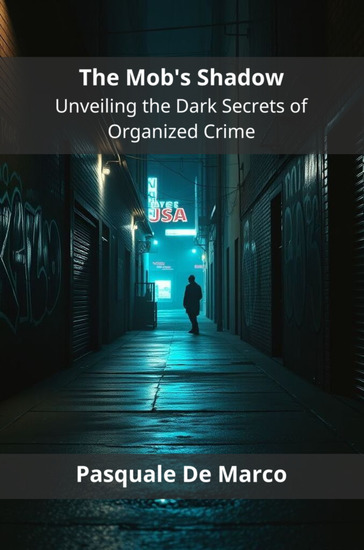
The Mob's Shadow - Unveiling the Dark Secrets of Organized Crime - cover

The Mob's Shadow - Unveiling the Dark Secrets of Organized Crime

Pasquale De Marco

Editorial: Publishdrive

  • 0
  • 0
  • 0

Sinopsis

Organized crime is a dark and dangerous world, but it is also a fascinating one. From the bootlegging gangs of the Prohibition era to the powerful Mafia families of today, organized crime has played a significant role in American history.

In this explosive new book, we take readers on a journey into the shadowy underworld of the Mob. We explore the history of organized crime, from its humble beginnings in the slums of New York City to its rise to power as the dominant force in American crime. We meet some of the most notorious mobsters of all time, including Al Capone, Lucky Luciano, and Meyer Lansky. We learn about the Mob's involvement in major crimes, such as the St. Valentine's Day Massacre and the assassination of President John F. Kennedy. And we examine the Mob's cultural impact, from its portrayal in movies and television to its influence on fashion and popular culture.

But this book is not just about the history of organized crime. It is also about the present day. The Mob is still alive and well, and it continues to pose a serious threat to our society. In recent years, the Mob has become increasingly involved in new criminal activities, such as drug trafficking, human trafficking, and cybercrime. It has also expanded its reach into new territories, both in the United States and abroad.

This book is a must-read for anyone who wants to understand the world of organized crime. It is a comprehensive and authoritative account of the Mob, from its humble beginnings to its powerful presence today. It is also a fascinating and entertaining read, full of stories of violence, corruption, and betrayal.

This book is perfect for fans of true crime, history, and American culture. It is also a valuable resource for law enforcement officers, journalists, and anyone else who wants to learn more about the Mob.


If you like this book, write a review!
Disponible desde: 02/06/2025.
Longitud de impresión: 161 páginas.

Otros libros que te pueden interesar

  • Mikhail Gorbachev: The Life and Legacy of the Soviet Union’s Last Leader - cover

    Mikhail Gorbachev: The Life and...

    Editors Charles River

    • 0
    • 0
    • 0
    After going through three elderly leaders in three years, Mikhail Gorbachev was chosen as the new General Secretary of the Soviet Union at the relatively youg age of 54 in March 1985. Gorbachev hoped to build the Soviet economy to relieve the persistent shortages of consumer goods it faced, which were caused by enormous military spending of the Soviet Union. Gorbachev tried to introduce some economic reforms, but they were blocked by communist hardliners. Gorbachev then came to the belief that the Soviet economy could not improved without political reform as well. 
    In comparison with other Soviet leaders, Gorbachev was leader of the USSR for a relatively short period, but the changes that took place under his leadership were monumental, including some that were intended and others that were unforeseen. Gorbachev oversaw the end of the Cold War and the peaceful transition away from communism in Central and Eastern Europe, and he ended the war in Afghanistan and many other proxy conflicts in the developing world. Gorbachev improved relations with the West and developed enough trust with President Ronald Reagan and President George H.W. Bush to decommission thousands of nuclear weapons. He also liberalized the political environment within the Soviet Union itself, increased accountability, and brought in a certain degree of democracy.  
    	Gorbachev was awarded the Nobel Peace Prize for these efforts in 1990, but his regime also left a legacy of turbulence and destruction in its wake. As a result of his policies, many Soviet people rose up against the status quo, demanding national self-determination and reviving old grievances. Gorbachev could not prevent the USSR from disbanding at the end of 1991, leaving much of the country’s economy in ruins and nationalist and ethnic conflicts that are still unresolved today.
    Ver libro
  • Poor Folk - A Heartfelt Story of Love Poverty and Human Struggle - A Modern Translation - Adapted for the Contemporary Reader - cover

    Poor Folk - A Heartfelt Story of...

    Fyodor Dostoevsky

    • 0
    • 0
    • 0
    How much suffering can a kind heart endure? 
    In Poor Folk, Fyodor Dostoevsky delivers a deeply moving epistolary novel that reveals the struggles of the impoverished through an intimate exchange of letters. Makar Devushkin, a poor government clerk, finds solace in his correspondence with Varvara Dobroselova, a young woman also trapped in a life of hardship. Their letters—filled with love, despair, and longing—reveal the pain of social isolation and the quiet endurance of those who live in poverty. 
    As Makar sacrifices his own well-being to support Varvara, his dignity is tested against the harsh realities of an uncaring society. Through his words, Dostoevsky masterfully explores themes of human compassion, self-sacrifice, and the invisible suffering of the lower class. 
    What You’ll Discover in This Modern Translation:A Poignant Tale of Poverty and Love – Experience the deeply personal struggles of two people trying to hold on to hope in a world of suffering.A Masterpiece of Russian Realism – Witness the raw emotions and unfiltered realities of 19th-century Russian society.A Modern, Accessible Translation – This adaptation retains the heart and soul of Dostoevsky’s novel while making it readable for contemporary audiences.An Unforgettable Exploration of Human Resilience – Discover how dignity, kindness, and love can persist even in the harshest conditions. 
    Can kindness and love overcome the crushing weight of poverty? 
    Get your copy today and experience one of the most heartfelt and compassionate novels ever written.
    Ver libro
  • Nerva-Antonine Dynasty The: The History and Legacy of the Emperors Who Ruled the Roman Empire at Its Peak - cover

    Nerva-Antonine Dynasty The: The...

    Editors Charles River

    • 0
    • 0
    • 0
    “The Five Good Emperors,” a reference to the five emperors who ruled the Roman Empire between 96 and 180 CE (Nerva, Trajan, Hadrian, Antoninus Pius, and Marcus Aurelius), was a term first coined by Machiavelli and later adopted and popularized by historian Edward Gibbon, who said that under these men, the Roman Empire “was governed by absolute power under the guidance of wisdom and virtue.”  
    	This period of 84 years is generally regarded as the high point of the Roman Empire, at least after Augustus, but what is uncertain and a matter of ongoing debate is whether the five emperors were personally responsible for the situation and the accompanying prosperity enjoyed throughout the empire at the time or if they were simply the beneficiaries of the Pax Romana, inaugurated by Augustus in the early part of the 1st century CE. In other words, historians have wondered whether anyone in power during those years would have enjoyed the same rewards.  
    	The description of these rulers as “good” is also a matter of interpretation, with some scholars suggesting they were only “good” in comparison to the preceding emperor (Domitian) and the emperor who followed Marcus Aurelius (Commodus). Both of them were horrible rulers in every aspect, making their near contemporaries look all the better.  
    	Regardless, it is clear that the era of the Five Good Emperors was one of unparalleled success and wealth, and the reasons Rome reached its zenith at this time are worthy of scrutiny. Perhaps most noteworthy is that none of these five emperors were blood relatives - while the final two are often referred to as the Antonines, they were not, in fact, related except by adoption, a practice that may in itself provide at least part of the answer to the question as to why this particular period was so magnificent.
    Ver libro
  • The Beatles - Yoga Secrets - cover

    The Beatles - Yoga Secrets

    Radha Krsna Das

    • 0
    • 0
    • 0
    In 1968, the Beatles trekked to a remote, mysterious, and beautiful part of India known as Rishikesh, or the valley of the saints. For literally thousands of years, this remote riverside valley has been a magnet for advanced yogis, mystics, and seekers of truth. In 1968, it was the absolute zenith of all of this and the pop world as well. It was here the Beatles wrote dozens of now iconic songs while meditating at the feet of the lauded spiritual master. Along with many of the world's most celebrated people, the group once again led the way as innovators in not only music, but innate spirituality as well. Fifty years later, we remember the group's bold trek and artistic accomplishment in this inspirational audio biography from Beatles author and historian Geoffrey Giuliano. The Maharishi, the Beatles, and friends tell their own story in this one-of-a-kind celebration of a magical time gone by. If you are a fan of the Beatles and love their music, you have to have this extended, in-depth look at the birth of The Beatles' White Album. In 1992 Geoffrey Giuliano was asked if he would do an exclusive interview with the Maharishi in Switzerland. The author readily agreed as the reclusive spiritual master almost never met the press and he was embarking on an ambitious program of mass meditation to try to purify vast areas of the United States. After a great deal of negotiation, the two finally got together on Christmas Eve and had a prolonged, stirring conversation that is documented here. In addition, the Maharishi was joined by the late world-class magician Doug Henning. Put together with a chronological, historical narration by Giuliano, here is your chance to go one on one with one of the greatest spiritual minds of our time. This is the complete, exhaustive, untold story of the Beatles and the Maharishi, circa 1968.
    Ver libro
  • Hearts of the Crown: Royal Romances That Shaped Nations - When kings and queens followed their hearts the world changed forever - cover

    Hearts of the Crown: Royal...

    James G. Edwards II

    • 0
    • 0
    • 0
    This audiobook is narrated by an AI Voice.   
    Hearts of the Crown: Royal Romances That Shaped Nations 
    True love stories that changed history—and the world. 
    When kings and queens followed their hearts, empires trembled, alliances shifted, and history was rewritten. Hearts of the Crown uncovers the most captivating royal romances that defined destinies, toppled thrones, and forever altered nations. 
    From King Edward VIII’s shocking abdication for Wallis Simpson to Queen Victoria and Prince Albert’s enduring love that strengthened an empire, these real-life love stories reveal how passion and politics collided behind palace doors. 
    Explore the forbidden affairs, arranged marriages, and secret relationships that influenced diplomacy, inspired revolutions, and tested the limits of loyalty and power. 
    Perfect for fans of The Crown, Victoria, and royal biography books, Hearts of the Crown blends historical nonfiction and human emotion to show how love—whether scandalous or strategic—shaped the fate of monarchies across Europe and beyond.
    Ver libro
  • Coloured - How Classification Became Culture - cover

    Coloured - How Classification...

    Tessa Dooms, Lynsey Ebony Chutel

    • 0
    • 0
    • 0
    'This is a book for Coloured people, by Coloured people, a book of Coloured and colourful stories from varied corners of the South African vista, past, present and future.'
    What does it mean to be Coloured? Who are Coloured people? Are they San or Khoe, Malay or mixed, and where in South Africa do they fit in? And then the enduring, but also insulting, question:
    do Coloured people even have a culture?
    In this book, Tessa Dooms and Lynsey Ebony Chutel challenge the notion that Coloured people do not have a distinct heritage or culture – that they are neither Black nor White enough – and present a different angle to that narrative. They delve into the history of Coloured people as descendants of indigenous Africans and as a people whose identity has been shaped by colonisation and slavery, and unpack the racial and political hierarchies these forces created.
    Although this book examines a difficult history, it is also about the culture that Coloured communities have created for themselves through food, music and shared lived experiences. This culture is an act of defiance and resilience.
    Coloured is a reflection on, and celebration of, Coloured identities as lived experiences. It is a call to Coloured communities to reclaim their identity – and an invitation to understand the history of Coloured people and their place in the making of South Africa's future.
    Ver libro