Junte-se a nós em uma viagem ao mundo dos livros!
Adicionar este livro à prateleira
Grey
Deixe um novo comentário Default profile 50px
Grey
Assine para ler o livro completo ou leia as primeiras páginas de graça!
All characters reduced
The Masculinity Puzzle - cover
LER

The Masculinity Puzzle

Pasquale De Marco

Editora: Publishdrive

  • 0
  • 0
  • 0

Sinopse

In a world where traditional notions of masculinity are increasingly challenged, this book offers a timely and thought-provoking exploration of what it means to be a man in the 21st century. Drawing on a range of disciplines, from sociology to psychology to history, this book provides a comprehensive and nuanced understanding of masculinity in all its complexity.

The book begins by examining the ways in which masculinity is constructed, experienced, and performed by men and boys around the world. It explores how masculinity intersects with other social identities, such as race, class, and sexuality, and how it is influenced by factors such as media, popular culture, and the workplace.

The book also delves into the impact of masculinity on men's health, relationships, and overall well-being. It examines the challenges that men and boys face today, such as the pressure to conform to traditional gender roles and the lack of positive role models. It also explores the ways in which masculinity can be a source of strength, resilience, and compassion.

One of the unique features of this book is its focus on the voices of men from all walks of life. Through interviews and personal narratives, the book presents a diverse and inclusive vision of masculinity. We hear from men who challenge traditional stereotypes and who offer new and inspiring perspectives on what it means to be a man.

This book is a must-read for anyone interested in gender studies, men's studies, or social justice. It is also an essential resource for anyone who works with men and boys, such as educators, counselors, and social workers.

Ultimately, this book is a call to action for men and boys to challenge traditional notions of masculinity and to create a more just and equitable world for all. It is a book that will change the way you think about masculinity and its role in society.


If you like this book, write a review!
Disponível desde: 02/06/2025.
Comprimento de impressão: 167 páginas.
Outros livros que poderiam interessá-lo

  • The EqualVoice Mindset - How to make every voice heard - cover

    The EqualVoice Mindset - How to...

    Stefan Mair, Annabella Bassler

    • 0
    • 0
    • 0
    So that gender equality doesn't go unnoticed
    
    In Switzerland, 72% of media coverage focuses on men. Globally, this figure rises to 82%, according to the Global Media Monitoring Project 2021. The aim of EqualVoice is to increase the visibility of women, create more female role models and give women and men an equal voice. In 2019, the media company Ringier launched the EqualVoice initiative in Zurich. Today, EqualVoice and its partners reach millions of users and its technology is used across Europe.
    
    This book tells the story of a movement that has become a benchmark for greater diversity: What milestones has it reached? What setbacks has it faced? How did the heated internal debates unfold? And what lessons can be learned — for the media industry and for other companies and movements?
    Ver livro
  • Sociology of Media and Culture - The Impact of Culture and Media on Society (3 in 1) - cover

    Sociology of Media and Culture -...

    Fred Grandsen

    • 0
    • 0
    • 0
    This volume examines how messages are crafted, how they influence audiences, and how consumption patterns reflect deeper cultural values. 
    In Media and Society, readers explore how media technologies—from traditional outlets to social platforms—mediate information, reinforce ideologies, and influence public opinion. It covers the evolution of media and its role in shaping social realities, trends, and narratives. 
    Culture and Society investigates how shared symbols, practices, and norms influence the ways people live, think, and interact. It explores the relationship between cultural production and societal structures, offering insights into identity formation, cultural diffusion, and social stratification. 
    The Sociology of Consumption dives into the everyday choices people make in buying, using, and valuing goods and services. It reveals how consumption practices are deeply tied to class, lifestyle, status, and the cultural meanings attached to products and experiences. 
    Together, these volumes provide a rich analysis of how media and culture interact with broader social systems, encouraging readers to critically engage with the content they consume and the culture they help create.
    Ver livro
  • The Cultural Revolution - A Captivating Guide to a Decade-Long Upheaval in China Unleashed by Mao Zedong to Preserve Chinese Communism - cover

    The Cultural Revolution - A...

    Captivating History

    • 0
    • 0
    • 0
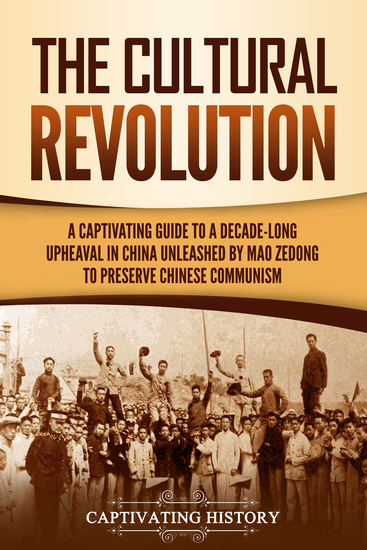
    If you want to discover the captivating history of the Cultural Revolution, then keep reading...
    
    The Cultural Revolution, known in full as the "Great Proletarian Cultural Revolution," was launched by Mao Zedong, the chairman of the Communist Party of China, as a means of quashing capitalism in China. He wanted to ensure that the desire for a communist government would remain strong in the country long after his death. Like other previous leaders who attempted to continue to rule after their death, his attempt did not work out quite the way he had planned. Over the course of a decade, from the summer of 1966 to 1976, Mao Zedong implemented a number of changes that have led him to be known as one of the most brutal tyrants of the modern age. It is estimated that between 500,000 to two million Chinese people, although numbers can go as high as twenty million, died as a direct result of Zedong's Cultural Revolution. It also resulted in millions of people being imprisoned, displaced, and tortured in an attempt to cement Mao Zedong's reputation as the leader of the communist world.
    In The Cultural Revolution:  A Captivating Guide to a Decade-Long Upheaval in China Unleashed by Mao Zedong to Preserve Chinese Communism, you will discover topics such as:
    
    -  Mao Zedong's Early Life, Rise to Power, and the Government Upheaval That Changed China during the First Half of the 20th Century 
    -  The Suspicion Behind the United Face 
    -  The Five-Year Plan, the Great Leap Forward, and the Events Leading to the Cultural Revolution 
    -  fighting the Capitalism of the West 
    -  The Introduction of Revolution 
    -  The Red Guards 
    -  July 20th Incident 
    -  Border Clashes with the Communist Soviets 
    -  Lin Biao – The Successor and Opponent 
    -  Health Issues and Slipping Grip on the Revolution 
    -  The 10th Congress and the Shifting of Power 
    -  Mass Killings in China and Devastation in Northern China 
    -  End of the Cultural Revolution 
    -  Lasting Effects 
    -  And much, much more! 
     So if you want to learn more about the Cultural Revolution, scroll up and click the "add to cart" button! 
    Ver livro
  • Moral Compass The: Navigating Right and Wrong in Modern Times - cover

    Moral Compass The: Navigating...

    Henry J. Howes

    • 0
    • 0
    • 0
    Description: The Moral Compass: Navigating Right and Wrong in Modern Times 
    In today's fast-paced and complex world, the line between right and wrong often blurs, presenting individuals with ethical dilemmas that challenge their values. The Moral Compass: Navigating Right and Wrong in Modern Times explores the intricate dynamics of morality, offering a guide to understanding and addressing these challenges with integrity and purpose. 
    This book delves into the philosophical foundations of morality, the impact of societal and cultural shifts on ethical behavior, and practical strategies for making sound decisions. With a focus on real-world examples and contemporary issues, it provides readers with the tools to navigate moral complexities in both personal and professional settings. 
    Key themes include:The evolution of morality in the modern era.The influence of technology, globalization, and cultural diversity on ethical standards.Practical frameworks for resolving ethical conflicts.The role of empathy, self-reflection, and personal responsibility in moral decision-making. 
    The Moral Compass inspires readers to reflect on their values, embrace critical thinking, and foster a deeper understanding of right and wrong in a world that often tests the limits of morality.
    Ver livro
  • Emiliano Zapata - His Life Death and Role in the Mexican Revolution - cover

    Emiliano Zapata - His Life Death...

    Kelly Mass

    • 0
    • 0
    • 0
    Emiliano Zapata Salazar was a revolutionary in Mexico. He was a key figure in the Mexican Revolt of the years 1910 until 1920, and also the primary leader of the people's revolution in the Mexican state of Morelos and the creator of the Zapatismo agrarian movement. 
    Zapata was born in the rural town of Anenecuilco in the state of Morelos, at the time of a period when peasant communities dealt with increasing pressure from the small-landowning class, which monopolized land and water resources for sugar-cane production with the support of totalitarian Porfirio Daz (President from the year 1877 to 1880 and from 1884 to 1911). 
    Zapata was associated with political efforts against Daz and the landowning hacendados from an early age, and when the Revolution emerged in the year 1910, he was placed as a key figure in the peasant insurgence in Morelos. He established the Freedom Army of the South with the help of certain other peasant leaders, and he rapidly rose to become its undisputed head. 
    Let’s learn more about this historical figure through this book.
    Ver livro
  • Mercury and Gemini: The History and Legacy of NASA’s Groundbreaking Spaceflight Programs - cover

    Mercury and Gemini: The History...

    Editors Charles River

    • 0
    • 0
    • 0
    The successful Apollo 11 mission was certainly an astonishing technological triumph, but what is less well remembered now are that many programs preceded Apollo and were essential to its success. Project Mercury was one of those, and in many ways it represented the greatest step forward in terms of the conquest of space. Before Project Mercury, there was no certainty that a human could survive the rigors of a space launch or live outside Earth’s atmosphere. There was no agreement on just what an astronaut should be, and various individuals involved debated whether they should be pilots, technicians, scientists, or even merely observers in an automated craft. Before Project Mercury, no one was entirely certain what a rocket capable of taking a person into space would look like, or even whether building such a craft was within the capabilities of engineering in the 1950s. 
    Gemini also marked another important milestone as America finally surpassed the Soviet Union in space technology. Before Gemini, the US was playing a desperate game of catch-up as it attempted to match Soviet accomplishments. The last Project Mercury flight launched in May 1963, and before then, Russia had put the first satellite in Earth’s orbit and the first man in space and had followed these with longer flights than the tiny Mercury spacecraft. In terms of military significance, it was recognized that the ability to dominate space was very important, and to many people in America, it seemed that Russia was well on the way to doing this. No one could have guessed that it would be almost three years before the next American manned space flight occurred when Gemini 3 left the launch pad in March 1965. It seemed to many people that the Russian lead in space exploration had become unassailable and, in order to reestablish the credibility of the US space program, the Gemini flights simply had to succeed.
    Ver livro