Rejoignez-nous pour un voyage dans le monde des livres!
Ajouter ce livre à l'électronique
Grey
Ecrivez un nouveau commentaire Default profile 50px
Grey
Abonnez-vous pour lire le livre complet ou lisez les premières pages gratuitement!
All characters reduced
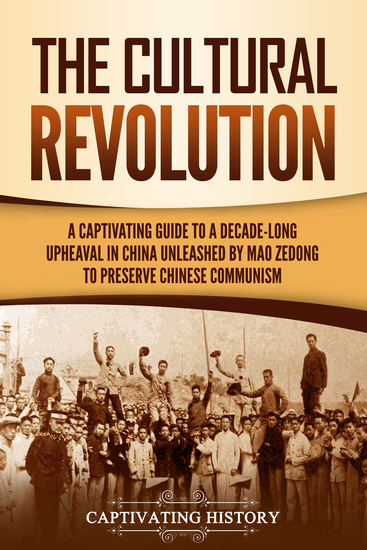
The Cultural Revolution - A Captivating Guide to a Decade-Long Upheaval in China Unleashed by Mao Zedong to Preserve Chinese Communism - cover

The Cultural Revolution - A Captivating Guide to a Decade-Long Upheaval in China Unleashed by Mao Zedong to Preserve Chinese Communism

Captivating History

Maison d'édition: Captivating History

  • 0
  • 0
  • 0

Synopsis

If you want to discover the captivating history of the Cultural Revolution, then keep reading...

The Cultural Revolution, known in full as the "Great Proletarian Cultural Revolution," was launched by Mao Zedong, the chairman of the Communist Party of China, as a means of quashing capitalism in China. He wanted to ensure that the desire for a communist government would remain strong in the country long after his death. Like other previous leaders who attempted to continue to rule after their death, his attempt did not work out quite the way he had planned. Over the course of a decade, from the summer of 1966 to 1976, Mao Zedong implemented a number of changes that have led him to be known as one of the most brutal tyrants of the modern age. It is estimated that between 500,000 to two million Chinese people, although numbers can go as high as twenty million, died as a direct result of Zedong's Cultural Revolution. It also resulted in millions of people being imprisoned, displaced, and tortured in an attempt to cement Mao Zedong's reputation as the leader of the communist world.
In The Cultural Revolution:  A Captivating Guide to a Decade-Long Upheaval in China Unleashed by Mao Zedong to Preserve Chinese Communism, you will discover topics such as:

-  Mao Zedong's Early Life, Rise to Power, and the Government Upheaval That Changed China during the First Half of the 20th Century 
-  The Suspicion Behind the United Face 
-  The Five-Year Plan, the Great Leap Forward, and the Events Leading to the Cultural Revolution 
-  fighting the Capitalism of the West 
-  The Introduction of Revolution 
-  The Red Guards 
-  July 20th Incident 
-  Border Clashes with the Communist Soviets 
-  Lin Biao – The Successor and Opponent 
-  Health Issues and Slipping Grip on the Revolution 
-  The 10th Congress and the Shifting of Power 
-  Mass Killings in China and Devastation in Northern China 
-  End of the Cultural Revolution 
-  Lasting Effects 
-  And much, much more! 
 So if you want to learn more about the Cultural Revolution, scroll up and click the "add to cart" button! 
Disponible depuis: 17/02/2024.
Longueur d'impression: 115 pages.

D'autres livres qui pourraient vous intéresser

  • Philosophy Unchained - Developments in Post-Soviet Philosophical Thought With a foreword by Christopher Donohue - cover

    Philosophy Unchained -...

    Mykhailo Minakov

    • 0
    • 0
    • 0
    The book analyzes the philosophical enterprise over the last thirty to forty years in Belarus, Georgia, Latvia, Lithuania, Moldova, Russia, Ukraine, and Uzbekistan.
    Voir livre
  • Second Inaugural Address - cover

    Second Inaugural Address

    Ronald Reagan

    • 0
    • 0
    • 0
    Because of extreme cold weather, Chief Justice Warren Burger administered the official oath of office in the White House on January 20, 1985. A public administration of the oath of office and the inaugural address were delayed until January 21, 1985, in the Capitol Rotunda.  
    On the 50th inauguration since George Washington’s, Reagan marvels at America’s growth and inventions, including journeying to the moon and back. “There are no limits to growth and human progress when men and women are free to follow their dreams.” Our values of faith, family, work, and neighborhood were restored “when our economy was finally freed from government’s grip”.  
    America supports "individual liberty, self-government, and free enterprise throughout the world…” We deal best with great challenges when we come “together not as Democrats or Republicans, but as Americans united in a common cause.”  
    “We must never again abuse the trust of working men and women by sending their earnings on a futile chase after the spiraling demands of a bloated Federal Establishment.” “Freedom and incentives unleash the drive and entrepreneurial genius that are the core of human progress.” 
    “We must act now to protect future generations from government's desire to spend its citizens' money and tax them into servitude when the bills come due.” Though “our heritage is one of blood lines from every corner of the Earth, we are all Americans, pledged to carry on this last, best hope of man on Earth.” 
    Rather than relying on mutual assured destruction, we need “a security shield that will destroy nuclear missiles before they reach their target” and “render nuclear weapons obsolete.”  
    We are “one people under God, dedicated to the dream of freedom that He has placed in the human heart, called upon now to pass that dream on to a waiting and hopeful world.” 
    Audio recording courtesy of the Ronald Reagan Presidential Library. 
    AspenLeafMedia.com
    Voir livre
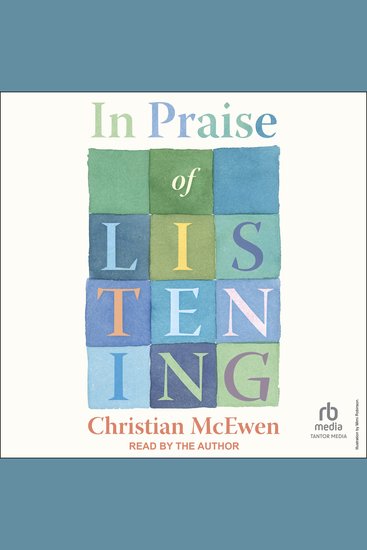
  • In Praise of Listening - A Gathering of Stories - cover

    In Praise of Listening - A...

    Christian McEwen

    • 0
    • 0
    • 0
    In her latest book, In Praise of Listening, Christian McEwen reflects on listening (silence, music, nature, prayer) in a series of thoughtful chapters, each one focused on a different theme. When an athlete speaks of "listening to his body," or a gardener describes herself as "listening to the land," when writers and artists explain that they are "listening" to their work-in-progress, they are using the word as she chooses to use it here—as an extended metaphor for openness and receptivity, rippling out from the self-centered human to the farthest reaches of the non-human world. 


    In Praise of Listening is a kind of sister or first cousin to McEwen's earlier, timely, and very popular, World Enough & Time, with the same emphasis on creativity and slowing down. As McEwen says: Most of us think of listening in fairly literal fashion: human beings listening (or not listening) to one another; the pleasure of attending to a familiar piece of music. But listening can have a far broader and more capacious meaning, moving out beyond the small apparatus of the ears to the hands or belly or enveloping spirit/mind.
    Voir livre
  • Khalsa Butt Na Manne Koi Part- 2 - (ਖਾਲਸਾ ਬੁੱਤ ਨਾ ਮਾਨੌ ਕੋਇ -2) - cover

    Khalsa Butt Na Manne Koi Part- 2...

    Edited by: Parmjeet Singh Gazi,...

    • 0
    • 0
    • 0
    Book: Khalsa Butt Na Manne Koi Part-2 
    Edited By: Parmjeet Singh Gazi, Ravinderpal Singh 
    Khalsa But Na Maane Koi Part- 2 is a thoughtful and important book that explains why idol worship is not allowed in Sikhism. The book includes a collection of articles written by different Sikh writers and scholars. These articles talk about how Sikh history, teachings of the Gurus, and Gurbani clearly say that Sikhs should not use statues or pictures for worship. 
    Khalsa But Na Maane Koi Part- 2 gives answers to new ideas that try to bring idol worship into the Sikh community. The writers use strong examples from Sikh scriptures and history to explain why such practices go against Sikh beliefs. The book is edited by Parmjeet Singh Gazi and Ravinderpal Singh, who have carefully chosen articles that are full of useful information and references. 
    The main message of this book is to stay true to Sikh values and to avoid any practice that changes the original path shown by the Gurus. The book helps readers understand the difference between true Sikh practice and ideas that have come from outside.If you want to learn more about Sikh beliefs or understand why idol worship is not part of Sikhism, this book is a great book to read. It is simple, clear, and based on facts. Get your copy and reconnect with the true teachings of Sikhism.
    Voir livre
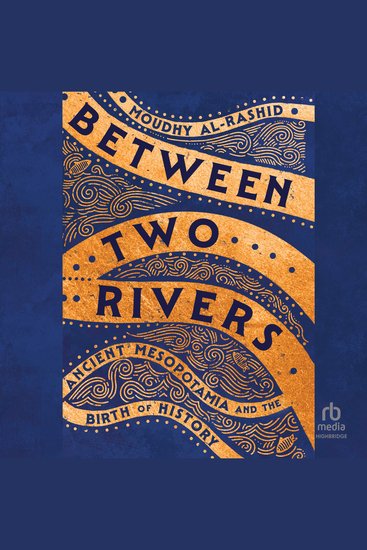
  • Between Two Rivers - Ancient Mesopotamia and the Birth of History - cover

    Between Two Rivers - Ancient...

    Moudhy Al-Rashid

    • 0
    • 0
    • 0
    Thousands of years ago, in a part of the world we now call ancient Mesopotamia, people began writing things down for the very first time. 


    What they left behind, in a vast region between the Tigris and Euphrates rivers, preserves leaps in human ingenuity. But they also capture breathtakingly intimate, raw, and relatable moments, like a dog's paw prints as it accidentally stepped into fresh clay, or the imprint of a child's teeth. 


    In Between Two Rivers, historian Dr. Moudhy Al-Rashid reveals what these ancient people chose to record about their lives. We find a lullaby to soothe a baby, countless receipts for beer, and the messy writing of preschoolers. We meet an enslaved person negotiating their freedom, an astronomer tracing the movement of the planets, a princess who may have created the world's first museum, and a working mother struggling with "the juggle" in 1900 BCE. 


    Millennia ago, Mesopotamians saw the world's first cities, the first writing system, early seeds of agriculture, and groundbreaking developments in medicine and astronomy. With breathtaking intimacy and grace, Al-Rashid brings their lives―with all their anxieties, aspirations, and intimacies―vividly close to our own.
    Voir livre
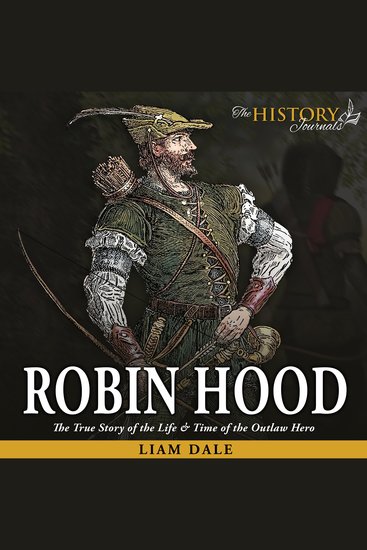
  • Robin Hood: The True Story of the Life & Time of the Outlaw Hero - cover

    Robin Hood: The True Story of...

    Liam Dale

    • 0
    • 0
    • 0
    If I asked you how many Robin Hoods you could name, what would the list be like? 
     
    I’m sure you’d reel off a whole host of famous actors, like Errol Flynn, Douglas Fairbanks, Kevin Costner, Michael Praed, Sean Connery, and John Cleese, to name but six. All of these men have played the role of Robin Hood in various television and movie adaptations of the famous story. 
     
    But that’s not what I meant. 
     
    I’m talking about Robin Hood himself; the ever popular and ever noble outlaw hero who robbed from the rich and gave to the poor, with his trusty bow and arrow as his weapon of choice. The leader of a band of like-minded outlaws, christened the Merry Men (‘merry’ – in this instance – derives from an Anglo-Saxon word meaning ‘illustrious, famous, great, mighty’, etc. In the same sense, Hood means ‘hoodlum, thief, thug, criminal’). Robin Hood was a champion for justice, fighting against the oppression of the evil Sheriff of Nottingham and his right-hand man Guy of Gisbourne, all under the watchful eye of the wicked Prince John (who had been placed on the throne as a substitute monarch whilst his brother, King Richard The Lionheart, fought in the Crusades). 
     
    Of course, that was only one Robin Hood. Very much like the various incarnations that have appeared in classic novels, Hollywood movies, television series, radio serials and theatrical plays, Robin Hood was more than one man.
    Voir livre