Join us on a literary world trip!
Add this book to bookshelf
Grey
Write a new comment Default profile 50px
Grey
Subscribe to read the full book or read the first pages for free!
All characters reduced
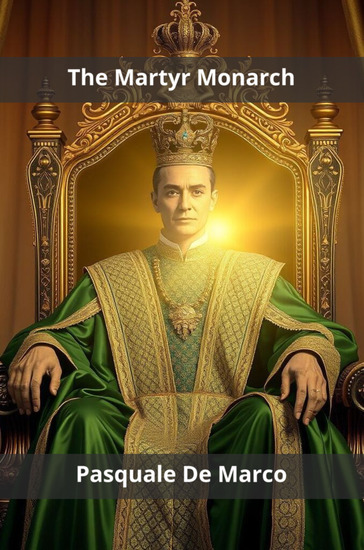
The Martyr Monarch - cover

The Martyr Monarch

Pasquale De Marco

Publisher: Publishdrive

  • 0
  • 0
  • 0

Summary

Prepare to be enthralled by the captivating saga of King Henry VI, a monarch whose reign was marked by both triumph and tragedy, and whose era witnessed the tumultuous Wars of the Roses. This meticulously researched historical narrative takes you on a captivating journey through the intricate web of events that shaped England's destiny during this pivotal period.

Within these pages, you'll encounter a cast of enigmatic characters, from the ambitious Richard, Duke of York, to the enigmatic Earl of Warwick, the "Kingmaker," whose machinations swayed the balance of power between rival factions. Witness the rise and fall of monarchs, the clash of noble ambitions, and the unwavering resilience of the English people as they navigate the treacherous waters of a nation divided.

From the mysterious prophecy that foretold Henry VI's troubled reign to the bloody battles that tore the kingdom apart, this book delves into the forces that drove this era of turmoil, shedding light on the key players, pivotal battles, and profound consequences that shaped the course of English history.

Through vivid storytelling and meticulous research, this book brings to life the vibrant tapestry of medieval England, a time of chivalry, intrigue, and profound change. As you traverse this tumultuous period, you'll witness the birth of the Tudor dynasty, the end of the Plantagenet line, and the dawn of a new era in English history.

Join us on this historical journey as we explore the captivating tale of Henry VI, a monarch whose reign was marked by both triumph and tragedy. Through the lens of this pivotal era, we'll gain insights into the complexities of power, the resilience of the human spirit, and the enduring legacy of a king whose reign left an indelible mark on the history of England.

Immerse yourself in the rich tapestry of medieval England and unveil the secrets of a bygone era. This captivating book is a must-read for anyone fascinated by English history, the Wars of the Roses, or the enduring legacy of King Henry VI.


If you like this book, write a review!
Available since: 06/02/2025.
Print length: 156 pages.


Other books that might interest you

  • Rare Recording of Carl Jung A - Volume 3 - cover

    Rare Recording of Carl Jung A -...

    Carl Jung

    • 0
    • 0
    • 0
    Carl Jung (1875-1961) was an influential psychologist and author who established the field of analytical psychology. Jung is known for his theorizing about the human unconscious and its relationship to behavior. This recording is part one of a public lecture Jung gave on the concept of synchronicity.
    Show book
  • Living Room Revolution - A Handbook for Conversation Community and the Common Good - cover

    Living Room Revolution - A...

    Cecile Andrews

    • 0
    • 1
    • 0
    The author of The Circle of Simplicity “joyfully invites us to discover a robust and real personal expansion with each other as we remake our society” (Mark Lakeman, cofounder, The City Repair Project). 
     
    Every man for himself! For too long we have lived in a competitive, consumer-oriented culture, destroying the well-being of people and the planet. We believe that money brings happiness, yet all too often, the opposite is true. The pursuit of wealth at any cost corrupts our values and diminishes our lives. The resulting inequality breaks down social cohesion and generates envy, bitterness, and resentment. Greed breeds more greed. 
     
    Living Room Revolution refutes the notion that selfishness is at the root of human nature. Research shows that people—given the right circumstances—can be caring, nurturing and collaborative. Presented with the opportunity, they gravitate toward actions and policies embodying empathy, fairness, and trust instead of competition, fear, and greed. The regeneration of social ties and the sense of caring and purpose that comes from creating community drive this essential transformation. 
     
    At the heart of this movement is the ancient art of conversation. Living Room Revolution provides a practical toolkit of concrete strategies to facilitate personal and social change by bringing people together in community and conversation. 
     
    The heart of happiness is joining with others in good talk and laughter. Each person can make a difference, and it can all start in your own living room! 
     
    “Small groups. Study circles. Stop ’n chats. House parties. Movie nights. Online sharing. Bring people together, and you never know what kind of fuse you’ll ignite for change.” —Wanda Urbanska, author of The Heart of Simple Living
    Show book
  • Start of World War II in the Pacific Theater The: The History of the Attack on Pearl Harbor the Doolittle Raid and the Philippines Campaign of 1941-42 - cover

    Start of World War II in the...

    Editors Charles River

    • 0
    • 0
    • 0
    All Americans are familiar with the “day that will live in infamy.” At 9:30 a.m. on Sunday, December 7, 1941, Pearl Harbor, the advanced base of the United States Navy’s Pacific Fleet, was ablaze. It had been smashed by aircraft launched by the carriers of the Imperial Japanese Navy. All eight battleships had been sunk or badly damaged, 350 aircraft had been knocked out, and over 2,000 Americans lay dead. Indelible images of the USS Arizona exploding and the USS Oklahoma capsizing and floating upside down have been ingrained in the American conscience ever since. In less than an hour and a half the Japanese had almost wiped out America’s entire naval presence in the Pacific.  
    	Those who had decoded and seen the Japanese communications in early December 1941 would not be surprised when they heard about an attack on December 7, 1941. They would, however, be astonished when they heard where that attack took place. Posted on the other side of the world, it was early on the morning of December 8 in the Philippines when American general Douglas MacArthur received news of the Japanese attack on Pearl Harbor hours earlier. With that, it could only be a matter of time before the Japanese attacked the Philippines. 
    	The Americans would turn the war in the Pacific around in the middle of 1942, but in the wake of Pearl Harbor and the Japanese invasion of the Philippines, the country was in desperate need of a morale boost, and it would come in the form of the Doolittle Raid. In part to show that the Japanese were not invincible, and in part to reassure the American public that the nation would not lose the war, the Doolittle Raid included both Army and Navy units that launched 16 land-based medium bombers from an aircraft carrier, a feat that was the first of its kind but also one involving a great deal of risk.
    Show book
  • Conduct of Life volume 3 - cover

    Conduct of Life volume 3

    Moses Almosnino, Walter Hilliger

    • 0
    • 0
    • 0
    The major work of Rabbi Moses Almosnino (1515-1580), “Conduct of Life,” remains to this day an essential reference in classical Judeo-Spanish literature, now finally available in English in its first translation. First published in Ladino in 1564 as, Sefer Hanhagat hahayim and in 1729 as “Regimiento de la vida”, this three-volume edition is part of the prestigious collection Veritas è terra orietur. The work aims to disseminate the timeless teachings of ethics, in the words of the author: “In all that has been said, my intention is only to make you understand how the one who follows the path of virtue and customs of practising good and pure knowledge since childhood, lives a happy and fulfilled life (Volume 1, chapter 2)” The third volume deals with justice (Volume 3, chapters 1-3) and friendship (chapters 4-8 and 13), love (chapter 9), the five intellectual virtues: understanding, science, wisdom, prudence, and art (chapter 10-11), and the learning of sciences as a path to virtue (chapter 12). This work presents itself as a pedagogical endeavor, intended to provide advice for leading a virtuous life.“Conduct of Life” draws heavily from the Nicomachean Ethics but transcends this source by situating itself at the universal intersection of several traditions: Greco-Arabic philosophy, Judeo-Christian scholasticism, classical Sephardic Judaism, and medieval Jewish thought. Thus, this work contributes to peace and intercultural understanding among peoples.
    Show book
  • You’re on Fire It’s Fine - Effective Strategies for Parenting Teens with Self-Destructive Behaviors - cover

    You’re on Fire It’s Fine -...

    Katie K. May

    • 0
    • 0
    • 0
    Every teen can lead a life they love. Even yours.Yelling, pleading, enforcing strict rules, and giving in have proven ineffective. You’ve tried it all—along with tons of treatments and therapies—with no improvement.Katie K. May knows what you’re going through. She also knows what your teen is going through because she lived it. You’re on Fire, It’s Fine is more than a book; it’s a comprehensive approach for parents of teens overwhelmed by intense emotions.Discover how to see the world from your teen’s perspective while decreasing your own feelings of frustration and fear. Learn to stop emotional escalation and create a supportive home environment. Gain practical strategies to assist your teen in managing emotions effectively, preventing them from escalating into problematic behaviors. You're on Fire, It’s Fine guides you in building a system that works for your whole family, setting every member up for lifelong success.
    Show book
  • Matisse at War - cover

    Matisse at War

    Christopher C. Gorham

    • 0
    • 0
    • 0
    In 1940, with the Nazis sweeping through France, Henri Matisse found himself at a personal and artistic crossroads. His marriage had ended, he was gravely ill, and after decades at the forefront of modern art, he was beset by doubt. As scores of famous figures escaped the country, Matisse took refuge in Nice, with his companion, Lydia. By defiantly remaining, Matisse was a source of inspiration for his nation. 


    While enemy agents and Resistance fighters played cat-and-mouse in the alleyways of Nice, Matisse's son, Jean, engaged in sabotage efforts with the Allies. In Paris, under the swastika, Matisse's estranged wife worked for the Communist underground. His daughter, Marguerite, active in the French Resistance, was arrested and tortured by the Gestapo, sentenced to Ravensbruck concentration camp—and miraculously escaped when her train was halted by Allied bombs. His younger son, Pierre helped Jewish artists escape to New York; even his grandson risked his life by defying the Germans and their Vichy collaborators. Amidst this chaos, Matisse responded to the dark days of war by inventing a dazzling new paper technique that led to some of his most iconic pieces, including The Fall of Icarus, his profile of Charles De Gaulle, Monsieur Loyal, and his groundbreaking cut-out book, Jazz. His wartime works were acts of resistance, subtly patriotic, and daringly new.
    Show book