
Join us on a literary world trip!
Add this book to bookshelf
Grey
Write a new comment Default profile 50px
Grey
Subscribe to read the full book or read the first pages for free!
All characters reduced
The Legacy of Alexander - Macedonia's Enduring Influence - cover

The Legacy of Alexander - Macedonia's Enduring Influence

Pasquale De Marco

Publisher: Publishdrive

  • 0
  • 0
  • 0

Summary

Embark on a captivating journey through Macedonia's rich and multifaceted history in this comprehensive guide. From its ancient origins to its modern aspirations, this book delves into the forces that shaped this Balkan nation's destiny.

In the ancient world, Macedonia rose to prominence under the leadership of Philip II and his son, Alexander the Great. Their military prowess and strategic acumen transformed Macedonia into a dominant power, leaving an indelible mark on the course of history. The Hellenistic era witnessed the spread of Greek culture and influence across the Mediterranean, leaving a lasting legacy in Macedonia.

However, the Roman conquest brought about a shift in power dynamics, incorporating Macedonia into the vast Roman Empire. The ensuing centuries saw invasions from Slavs, Bulgarians, and the Ottoman Empire, each leaving their unique imprint on Macedonia's social, cultural, and political fabric.

The 19th century marked a turning point in Macedonia's history, as nationalism took root and the quest for independence gained momentum. The Balkan Wars and World War I brought turmoil and division, but the resilience of the Macedonian people shone through. The Socialist Republic of Macedonia emerged as part of the Yugoslav Federation, but the desire for self-determination persisted.

Today, the Republic of North Macedonia stands as a sovereign state, navigating the challenges of economic development, political stability, and regional cooperation. Its rich cultural heritage, diverse ethnic groups, and stunning natural landscapes offer a glimpse into the resilience and beauty of this Balkan nation.

This book takes you on an immersive journey through Macedonia's past, exploring the intricacies of its history and the enduring legacy of its people. With vivid storytelling and meticulous research, it unravels the forces that shaped Macedonia's destiny, shedding light on its ancient origins, medieval struggles, and modern aspirations.


If you like this book, write a review!
Available since: 06/02/2025.
Print length: 163 pages.

Other books that might interest you

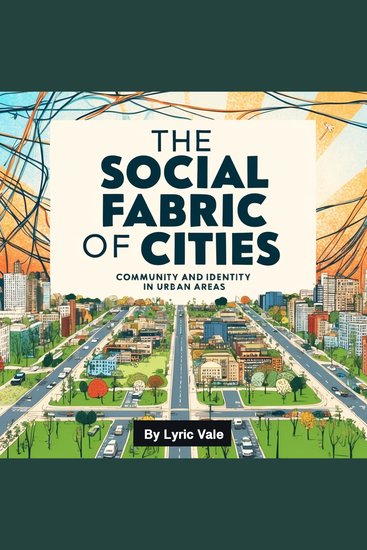
  • The Social Fabric of Cities - Community and Identity in Urban Areas - cover

    The Social Fabric of Cities -...

    Lyric Vale

    • 0
    • 0
    • 0
    Cities are more than just a collection of buildings, streets, and infrastructure; they are living, breathing entities defined by the intricate web of human connections that form their foundation. The social fabric of a city—the dynamic interplay of relationships, cultures, and shared experiences—plays a crucial role in shaping not only the identity of urban areas but also the lives of the individuals who inhabit them. Understanding this essence of urban life requires delving into the complexities of community and identity, two pillars that anchor the urban experience. 
    Urban life is characterized by a unique blend of diversity and interconnectedness. In cities, people from various backgrounds come together, bringing with them distinct cultures, traditions, and perspectives. This convergence fosters opportunities for collaboration, creativity, and innovation, but it also presents challenges in the form of tensions, misunderstandings, and inequities. Despite these challenges, cities often serve as melting pots where differences are not just tolerated but celebrated, giving rise to vibrant communities that redefine what it means to coexist. 
    The identity of a city emerges not only from its physical attributes—its skyline, landmarks, and neighborhoods—but also from the shared narratives of its residents. These narratives are shaped by the history, struggles, and triumphs of the community. From the bustling marketplaces that echo with the hum of daily life to the quiet parks that offer respite amidst the chaos, every corner of a city tells a story. These stories intertwine, creating a collective identity that is both fluid and enduring.
    Show book
  • Securely Attached - How Understanding Childhood Trauma Will Transform Your Parenting-A Handbook for Adoptive and Foster Parents - cover

    Securely Attached - How...

    Kristin Berry, Mike Berry

    • 0
    • 0
    • 0
    Has Trauma Affected the Child You’re Caring For?Just as you prepared your home to welcome a new child, it is important to prepare your heart and mind—especially if the child has suffered from a background of trauma. Perhaps your invitation for love is met with hostility, and you find that this new member of your family rejects connection. If so, then it’s critical to acknowledge the effects of trauma on a child’s ability to attach.Mike and Kristin Berry realized this when they became adoptive and foster parents. In their twenty-year marriage, they have had the joy of adopting eight children and fostering twenty-three. They now offer guidance from their own journey to others parenting a child who has experienced past trauma. In Securely Attached, they offer practical insights that are supported by therapeutic and medical facts, so all parents can provide best for the children in their care. You’ll learn:How trauma changes the brainHow to identify trauma-induced behaviorsHow to identify attachment disordersHow to advocate for your child in the community. 
    Get the help you need to better care for the children in your home. Discover how you can create a family and home that is safe and supportive so your children can grow to trust and become securely attached.
    Show book
  • Women Holding Things & Still Life with Remorse - cover

    Women Holding Things & Still...

    Maria Kalman

    • 0
    • 0
    • 0
    From the critically acclaimed artist, designer, and author of the bestsellers The Principles of Uncertainty and My Favorite Things comes a collection of moving meditations on the beauty and complexity of women’s lives and roles, revealed in the things they hold, and on remorse, joy, ancestry, and memory. 
    Women Holding Things includes thoughtful and intimate anecdotes, recollections, and ruminations about portraits of women, both ordinary and famous. These women hold a range of objects, from the mundane—balloons, a cup, a whisk, a chicken, a hat—to the abstract—dreams and disappointments, sorrow and regret, joy and love. Kalman considers the many things that fit physically and metaphorically between women’s hands: We see a woman hold a book, hold shears, hold children, hold a grudge, hold up, hold her own. In telling their stories, Kalman lays bare the essence of women’s lives—their tenacity, courage, vulnerability, hope, and pain. Ultimately, she reveals that many of the things we hold dear—as well as those that burden or haunt us—remain constant and connect us from generation to generation.  
    Maira Kalman’s most autobiographical and intimate work to date, Still Life with Remorse is a beautiful collection of deeply personal stories. Tracing her family’s story from her grandfather’s birth in Belarus and emigration to Tel Aviv—where she was born—Maira considers her unique family history, illuminating the complex relationship between recollection, regret, happiness, and heritage. In addition to vignettes exploring her Israeli and Jewish roots, Kalman includes short stories about other great artists, writers, and composers. Through these narratives, Kalman uses her signature wit and tenderness to reveal how family history plays an influential role in all of our work, lives, and perspectives. A feat of storytelling and vulnerability, Still Life with Remorse explores the profound hidden in the quotidian, and illuminates the powerful universal truths in our most personal family stories.
    Show book
  • Blackmail - Using Threats of Revealing Damaging Information - cover

    Blackmail - Using Threats of...

    Cito Harder

    • 0
    • 0
    • 0
    Blackmail is a crime rooted in power, fear, and manipulation. At its core, it relies on the psychological leverage one person holds over another, using threats of exposing damaging information to force compliance. Understanding the psychology of blackmail requires examining both the mindset of the blackmailer and the emotional turmoil experienced by the victim. Unlike outright theft or violence, blackmail is a more insidious form of coercion, exploiting secrets, shame, and social consequences to exert control. 
    The blackmailer operates from a position of perceived dominance. They recognize that their victim has something to lose—be it their reputation, career, relationships, or financial stability. The effectiveness of blackmail depends on the victim’s fear of exposure and their willingness to go to great lengths to avoid it. Many blackmailers justify their actions by believing they are simply taking advantage of an opportunity rather than committing an outright crime. They may rationalize their behavior as a means to an end, whether for financial gain, revenge, or power. Some blackmailers thrive on control, deriving psychological satisfaction from watching their victims squirm under pressure. 
    On the other side, the victim experiences a profound psychological burden. Fear and anxiety consume their thoughts as they weigh the consequences of giving in to the blackmailer’s demands versus resisting them. The secrecy surrounding blackmail can make victims feel trapped and isolated, preventing them from seeking help. Guilt and shame often play a role, especially if the information being used against them is tied to personal failings or socially unacceptable behavior. Even when victims know they are being manipulated, the sheer terror of exposure can push them into compliance, making blackmail an effective tool of coercion.
    Show book
  • Wings of Justice - cover

    Wings of Justice

    Davis Truman

    • 0
    • 0
    • 0
    Soar into the untold story of the heroes who defied gravity and racism. 
    In Wings of Justice, bestselling author Davis Truman delivers a gripping, emotionally charged tribute to the legendary Tuskegee Airmen, America’s first Black military pilots, who not only fought against the Axis powers during World War II but also challenged the deep-rooted injustice of segregation at home. 
    With vivid storytelling and powerful historical insight, this book follows the Airmen from the segregated airfields of Tuskegee, Alabama, to the skies over war-torn Europe. As they battled enemies abroad and prejudice within the ranks, these brave men rewrote the narrative of American heroism. 
    More than a story of war, this is a story of triumph, of courage, resilience, and the fight for equality. Wings of Justice will leave you inspired, enraged, and ultimately hopeful. It’s a must-read for anyone who believes in the power of history to shape a more just future. 
    History remembered. Justice reclaimed. Heroes are never forgotten.
    Show book
  • Germany Between the World Wars: The History and Legacy of the Weimar Republic and Nazi Germany in the Interwar Period - cover

    Germany Between the World Wars:...

    Editors Charles River

    • 0
    • 0
    • 0
    The Weimar Republic has become a byword for a failed, tragic, political experiment. The official period of its existence, 1919-1933, marked the inter-war years in Germany and their related uncertainty, chaos and the state’s ultimate collapse. Historians have found the roots of Nazism embedded in the Weimar years and that in the final analysis, Weimar politicians voluntarily handed over power to the man who wrought destruction on an epic scale, Adolf Hitler. Yet the Weimar era encapsulated a number of trends and fissures within German society, as well as the international community. The Weimar Republic was a prisoner of events and in the long run had little power to shape them. Historians are fond of interpreting the past as a tension between human agency, that is to say decision-making, and structural developments that evade individual choices. Both these interpretations are crucial when examining the tumultuous years of Germany’s Weimar Republic. 
    The early 1930s were a tumultuous period for German politics, even in comparison to the ongoing transition to the modern era that caused various forms of chaos throughout the rest of the world. In the United States, reliance on the outdated gold standard and an absurdly parsimonious monetary policy helped bring about the Great Depression. Meanwhile, the Empire of Japan began its ultimately fatal adventurism with the invasion of Manchuria, alienating the rest of the world with the atrocities it committed.  
    It was in Germany, however, that the strongest seeds of future tragedy were sown. The struggling Weimar Republic had become a breeding ground for extremist politics, including two opposed and powerful authoritarian entities: the right-wing National Socialists and the left-wing KPD Communist Party. As the 1930s dawned, these two totalitarian groups held one another in a temporary stalemate, enabling the fragile ghost of democracy to continue a largely illusory survival for a few more years.
    Show book