Join us on a literary world trip!
Add this book to bookshelf
Grey
Write a new comment Default profile 50px
Grey
Subscribe to read the full book or read the first pages for free!
All characters reduced
The Essential Classics - A Compendium of Timeless Literary Treasures - cover

The Essential Classics - A Compendium of Timeless Literary Treasures

Pasquale De Marco

Publisher: Publishdrive

  • 0
  • 0
  • 0

Summary

Embark on a literary odyssey with "The Essential Classics: A Compendium of Timeless Literary Treasures," a captivating journey through the world's most beloved and influential works of literature. Within these pages, you'll find a carefully curated selection of great books that have stood the test of time, offering profound insights into the human condition and the intricacies of the world we inhabit.

From ancient epics to modern masterpieces, from poetry to drama, this comprehensive volume brings together literary gems from across cultures and centuries. Each chapter delves into a specific genre or theme, exploring the enduring legacy of classic literature and its relevance to our contemporary world.

Discover the power of storytelling as you encounter unforgettable characters and intricate plots that mirror our own struggles, hopes, and dreams. Through the skillful use of language, imagery, and symbolism, these great books evoke a wide range of emotions, challenging our assumptions, expanding our understanding, and leaving an indelible mark on our souls.

More than just a collection of great works, "The Essential Classics" is an invitation to a transformative literary experience. By engaging with these timeless treasures, you'll embark on a journey of self-discovery and enlightenment, reflecting on your own life, values, and beliefs. These books have the power to challenge your perspective, inspire personal growth, and ignite a passion for lifelong learning.

As you delve into the pages of "The Essential Classics," you'll join a global community of readers who have been captivated by the power of great literature. These books have the ability to connect us across time and space, fostering a deeper understanding of ourselves, our world, and our place in it.

With its insightful commentary and thought-provoking essays, "The Essential Classics" is the perfect companion for book clubs, literature classes, and anyone seeking to explore the richness and diversity of the literary world. Immerse yourself in the timeless wisdom and beauty of these great works and embark on a journey that will stay with you long after you finish the final page.


If you like this book, write a review!
Available since: 06/02/2025.
Print length: 161 pages.
Other books that might interest you

  • Kaisa Marna Hoey - cover

    Kaisa Marna Hoey

    Meet Anmol

    • 0
    • 0
    • 0
    Kaisa Marna Hoey by Meet Anmol explores the deep questions of life and death. Through reflective writing, the author seeks to answer timeless questions like: Who am I? Where am I headed? Who is God? Where can I find God? What is the right way to live? This book invites readers on a spiritual journey of self-discovery and inner truth.
    Show book
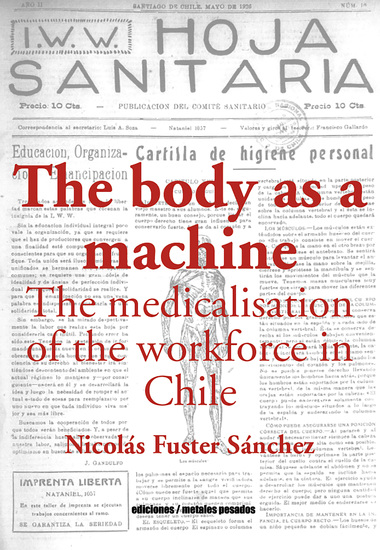
  • The body as a machine - The medicalisation of the workforce in Chile - cover

    The body as a machine - The...

    Nicolás Fuster Sanchez

    • 0
    • 0
    • 0
    The book "The body as a machine" explores the historical process of medicalisation in Chilean society, mainly focusing on the labour force. It highlights the transformation of medicine from a private sphere concerned with individual care to a social phenomenon encompassing various collective dimensions. The book argues that the rise of the liberal oligarchic state, rural-urban migration, and the emergence of a professional medical elite contributed to the socialisation of medicine in Chile. This process involved the standardisation and regulation of the population through medical interventions and establishing a comprehensive healthcare system.
    Show book
  • Tech Titans: The Battle for Future Supremacy - "Dive into Tech Titans! Experience captivating audio lessons that empower your journey to tech supremacy!" - cover

    Tech Titans: The Battle for...

    Lachlan Draycott

    • 0
    • 0
    • 0
    Tech Titans: The Battle for Future Supremacy 
    ⭐⭐ Simplified Guide & Explanations Included ⭐⭐   
    Are you eager to advance in your career and enhance your knowledge in order to navigate the dynamic world of technology in 2024-2025? 
    Searching for a comprehensive resource that encompasses everything you need to understand the strategies shaping tomorrow's technology landscape? 
    Look no further! 
    This guide serves as your essential companion for deepening your insights, applying your expertise, and engaging in practical exercises. With it, you're set for success. 
    Updated to reflect the latest trends and developments for 2024-2025. 
    Key features of this enhanced guide:   
    - In-depth knowledge about the evolving tech landscape for 2024-2025   
    - Comprehensive explanation of major technological advancements   
    - Effective strategies for strategic planning and execution   
    Our guide stands out due to its thorough coverage, which is crucial for your understanding of the evolving landscape. Topics are thoroughly explored with clarity and precision. 
    Please note that this guide is not affiliated with any official technology entity and serves purely as an independent resource for your benefit. 
    Crafted with a clear structure and accessible language, our guide ensures smooth transitions between subjects. Say goodbye to complicated jargon and embrace clear, concise, and technically accurate content. 
    So, why wait? Click the BUY NOW button, secure your guide, and embark on your journey to mastering tomorrow's technology landscape today!
    Show book
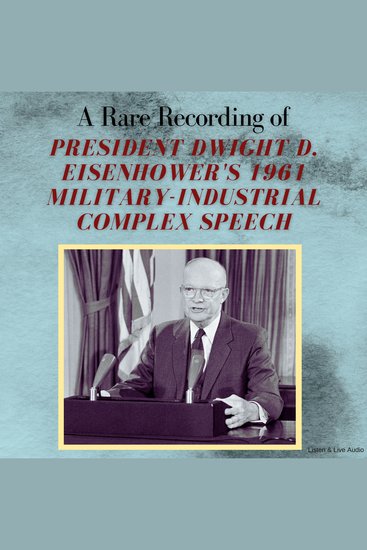
  • A Rare Recording of President Dwight D Eisenhower's 1961 Military-Industrial Complex Speech - cover

    A Rare Recording of President...

    President Dwight D. Eisenhower

    • 0
    • 0
    • 0
    On January 17, 1961, President Dwight Eisenhower delivered his political farewell to the American people on national television from the Oval Office of the White House. Those who expected the military leader and hero of World War II to depart his Presidency with a nostalgic, "old soldier" speech like Gen. Douglas MacArthur's, were surprised at his strong warnings about the dangers of the "military-industrial complex." As President of the United States for two terms, Eisenhower had slowed the push for increased defense spending despite pressure to build more military equipment during the Cold War’s arms race. Nonetheless, the American military services and the defense industry had expanded a great deal in the 1950s. Eisenhower thought this growth was needed to counter the Soviet Union, but it confounded him. Though he did not say so explicitly, his standing as a military leader helped give him the credibility to stand up to the pressures of this new, powerful interest group. He eventually described it as a necessary evil. The following is a transcript of the speech: 
     
    "Good Evening My Fellow Americans: 
     
    First, I should like to express my gratitude to the radio and television networks for the opportunities they have given me over the years to bring reports and messages to our nation. My special thanks go to them for the opportunity of addressing you this evening. 
     
    Three days from now, after half a century in the service of our country, I shall lay down the responsibilities of office as, in traditional and solemn ceremony, the authority of the Presidency is vested in my successor. 
     
    This evening I come to you with a message of leave-taking and farewell, and to share a few final thoughts with you, my countrymen. 
     
    Like every other citizen, I wish the new President, and all who will labor with him, Godspeed. I pray that the coming years will be blessed with peace and prosperity for all...
    Show book
  • Mahatma Gandhi - The Most Famous Political Activist of India - cover

    Mahatma Gandhi - The Most Famous...

    Kelly Mass

    • 0
    • 0
    • 0
    Mohandas Karamchand Gandhi was an Indian attorney, anti-colonial patriot, and political ethicist who used nonviolent resistance to lead the triumphant struggle for India's independence from British rule, motivating civil liberties and liberty movements around the globe. The epithet Mahtm (which means "great-souled" or "age-old" in Sanskrit) was at first appointed to him in South Africa in the year 1914 and is now used all across the world. 
    Gandhi was born into a Hindu family in seaside Gujarat and studied law at the Inner Temple in London. 
    In the year 1893, he came to South Africa to represent an Indian business owner in a case after 2 years in India, where he was not able to establish a rewarding law practice. 
    He spent the next 21 years of his life in South Africa. Gandhi raised his family here and was the first to use nonviolent resistance in a civil liberties struggle. 
    He went back to India in the year 1915, at the age of 45. He started setting in motion peasants, farmers, and city workers to fight oppression and high land taxes. Gandhi led statewide projects to reduce poverty, promote women's rights, build spiritual and ethnic amity, get rid of untouchability, and, above all, accomplish swaraj, or self-rule, after presuming management of the Indian National Congress in the year 1921. 
    Gandhi has meant much for the peace, the independence, and the culture of India, as well as his acts of non-violent resistance that have influenced the world. Let’s take a look at what else he did.
    Show book
  • Cynicism - Ancient Wisdom for a Modern World - cover

    Cynicism - Ancient Wisdom for a...

    Hector Davidson

    • 0
    • 0
    • 0
    Cynicism, as a philosophical movement, originated in ancient Greece during the 4th century BCE. It emerged in response to the growing complexity of Greek social and political life, which many perceived as rife with corruption and moral decay. The movement sought to critique and challenge these structures through a radical reevaluation of values. The term "Cynicism" itself derives from the Greek word kynikos, meaning "dog-like," a reflection of the movement's provocative and unconventional practices, often likened to the traits of a dog—independent, shameless, and straightforward. 
    The seeds of Cynicism were planted by Antisthenes, a devoted student of Socrates. Rejecting the materialism and social constructs of his time, Antisthenes advocated for a life rooted in virtue as the highest good. He proposed that virtue was attainable through rigorous self-discipline and liberation from societal expectations. In his view, wealth, power, and social status were distractions that led individuals away from true happiness. Antisthenes' emphasis on asceticism laid the groundwork for Cynicism's core principles. 
    Diogenes of Sinope, the most iconic figure in Cynicism, brought the philosophy to life through his dramatic and often confrontational actions. Renowned for his extreme asceticism, he discarded conventional comforts and famously lived in a large ceramic jar, owning only a few possessions. Diogenes used his lifestyle as a form of social critique, questioning the moral foundations of his contemporaries. His legendary act of walking through the city with a lit lantern during the day, claiming to search for an honest man, remains a potent symbol of his scorn for societal hypocrisy and moral pretense. Diogenes embodied the Cynic ideal: a life of radical honesty, self-sufficiency, and rejection of superficial values.
    Show book