Join us on a literary world trip!
Add this book to bookshelf
Grey
Write a new comment Default profile 50px
Grey
Subscribe to read the full book or read the first pages for free!
All characters reduced
The End of Affirmative Action - Making America Colorblind Again - cover

The End of Affirmative Action - Making America Colorblind Again

Pasquale De Marco

Publisher: Publishdrive

  • 0
  • 0
  • 0

Summary

In this groundbreaking book, we make a compelling case against affirmative action, arguing that it is a failed policy that has actually harmed the very people it was intended to help.

Affirmative action is based on the assumption that certain groups of people are inherently disadvantaged and therefore deserve preferential treatment. This assumption is not only false, but it is also harmful. It sends the message that members of these groups are not capable of succeeding on their own and that they need special help in order to get ahead. This is a demeaning and demoralizing message that has no place in a free and just society.

Affirmative action also harms the very people it is intended to help. By giving preferential treatment to members of certain groups, affirmative action creates a system in which these groups are constantly being compared to others. This leads to a sense of resentment and division, and it undermines the goal of creating a truly unified society.

In addition to being unfair and harmful, affirmative action is also unnecessary. There is no evidence that affirmative action has actually helped to level the playing field for historically disadvantaged groups. In fact, there is evidence that it has actually made things worse. For example, a study by the National Bureau of Economic Research found that affirmative action programs in higher education have led to a decline in the quality of education for all students.

We believe that colorblind justice is the only way to achieve a truly just and equal society. Colorblind justice means judging individuals solely on their merits, without regard to their race, gender, or other group affiliation. This is the only way to ensure that everyone has a fair shot at success.

This book is a call to action for all Americans who believe in colorblind justice. We must work together to end affirmative action and create a society in which everyone is judged solely on their merits.


If you like this book, write a review!
Available since: 06/02/2025.
Print length: 161 pages.

Other books that might interest you

  • Is Thought Detrimental? - Gstaad 1965 - Small Group Discussion 1 - cover

    Is Thought Detrimental? - Gstaad...

    Jiddu Krishnamurti

    • 0
    • 0
    • 0
    "Is thought detrimental? - 15 August 1965  
    • Why does one seek pleasure? 
    • Can the mind only face facts and not thought? 
    • Why have I never said, ‘Thought is poison,’ to myself? 
    • Meeting something one doesn’t know, facing something which has no answer. 
    • Acting without knowing. 
    • What is a state of mind which is silent? 
    • Time is detrimental. 
    • Are we twisting everything to our core of pleasure?"
    Show book
  • Address Unknown by Kathrine Kressmann Taylor (Book Analysis) - Detailed Summary Analysis and Reading Guide - cover

    Address Unknown by Kathrine...

    Bright Summaries

    • 0
    • 0
    • 0
    Unlock the more straightforward side of Address Unknown with this concise and insightful summary and analysis!This engaging summary presents an analysis of Address Unknown by Kathrine Kressmann Taylor, the compelling tale of a friendship that is lost at the hands of Nazi Germany. It is told in the form of letters written between the two characters, Max and Martin, and shows how Nazism undermines and ruins their relationship, leading to a very tragic end. The book was written released during World War II and Hitler confiscated the Dutch translation, as well as banning the book entirely in Germany. Nonetheless, the novel continued to gain recognition following Hitler's defeat, and has since been translated into 20 languages, as well as being adapted for television, stage and cinema.Find out everything you need to know about Address Unknown in a fraction of the time!This in-depth and informative reading guide brings you: • A complete plot summary • Character studies • Key themes and symbolsWhy choose BrightSummaries.com?Available in print and digital format, our publications are designed to accompany you in your reading journey. The clear and concise style makes for easy understanding, providing the perfect opportunity to improve your literary knowledge in no time.See the very best of literature in a whole new light with BrightSummaries.com!
    Show book
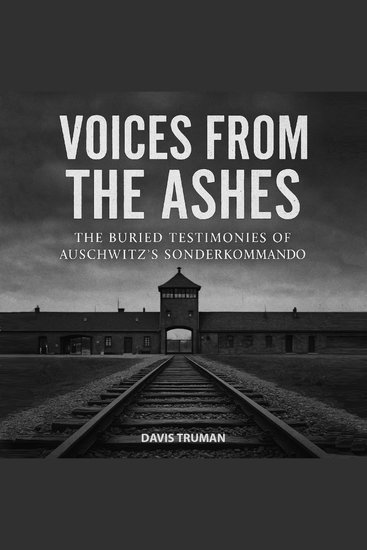
  • Voices From The Ashes - The Buried Testimonies of Auschwitz's Sonderkommando - cover

    Voices From The Ashes - The...

    Davis Truman

    • 0
    • 0
    • 0
    Buried in the soil of Auschwitz lay fragments of voices the Nazis tried to silence forever. They belonged to the Sonderkommando, Jewish prisoners forced into the darkest role of all: to witness and endure the machinery of mass murder. Knowing they would not survive, some risked everything to leave behind their words, their truths, and their warnings for the future. 
    Voices From The Ashes unveils these extraordinary clandestine writings, preserved against time and oblivion. With raw honesty and unbearable clarity, they recount not only the brutality of the camp but also the unbroken will to testify, an act of defiance stronger than death itself. 
    Both harrowing and profoundly human, this book does more than preserve history—it restores the dignity of the silenced, carrying their words across generations. It is a testament to resilience, memory, and the unyielding demand that the world must never forget. 
    Perfect for readers of Holocaust history, survivor testimony, and those drawn to the enduring power of the human spirit, Voices From The Ashes stands as both a memorial and a warning, an urgent reminder carved out of silence and buried in ashes.
    Show book
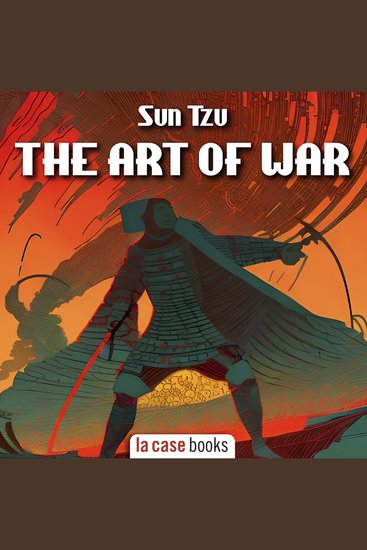
  • Sun Tzu - The Art of War - cover

    Sun Tzu - The Art of War

    Sun Tzu

    • 0
    • 0
    • 0
    Unlock the strategic brilliance of The Art of War by Sun Tzu, a timeless guide to mastering conflict and achieving success. 
     
    This audiobook presents profound lessons on strategy, leadership, and decision-making that extend far beyond the battlefield. 
     
    Whether you're navigating challenges in business, personal life, or competitive environments, Sun Tzu's teachings offer clarity and wisdom to help you triumph. 
     
    This classic work remains an essential resource for anyone seeking to understand the art of strategy and the path to victory.
    Show book
  • The Prophet - cover

    The Prophet

    Kahlil Gibran

    • 0
    • 0
    • 0
    The Prophet is a book beloved by millions for 100 years. The Prophet is a book of 26 prose poetry fables written in English by the Lebanese-American poet and writer Kahlil Gibran. It is Gibran's best-known work.
    The prophet Al Mustafa has lived in the city of Orphalese for 12 years and is about to board a ship that will carry him home. He is stopped by a group of people with whom he discusses topics such as life and the human condition. The book is divided into chapters dealing with love, marriage, children, giving, eating and drinking, work, joy and sorrow, houses, clothes, buying and selling, crime and punishment, laws, freedom, reason and passion, pain, self-knowledge, teaching, friendship, talking, time, good and evil, prayer, pleasure, beauty, religion, and death.
    Although published in 1923, the book contains universal wisdom that still rings true to this day and makes an excellent audiobook.
    Show book
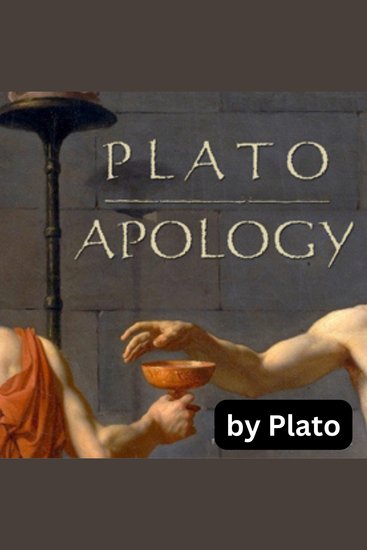
  • Plato: Apology - cover

    Plato: Apology

    Plato

    • 0
    • 0
    • 0
    The Apology is Plato's version of the speech given by Socrates as he defended himself in 399 BC against the charges of "corrupting the young, and by not believing in the gods in whom the city believes, but in other daimonia that are novel" . "Apology" here has its earlier meaning of speaking in defense of a cause or of one's beliefs or actions. The general term apology, in context to literature, defends a world from attack (opposite of satire-which attacks the world).the text is written in the first person from Socrates' point of view, as though it were Socrates' actual speech at the trial. During the course of the speech, Socrates twice mentions Plato as being present. There is, however, no real way of knowing how closely Socrates' words in the Apology match those of Socrates at the actual trial, even if it was Plato's intention to be accurate in this respect 
    Show book