Join us on a literary world trip!
Add this book to bookshelf
Grey
Write a new comment Default profile 50px
Grey
Subscribe to read the full book or read the first pages for free!
All characters reduced
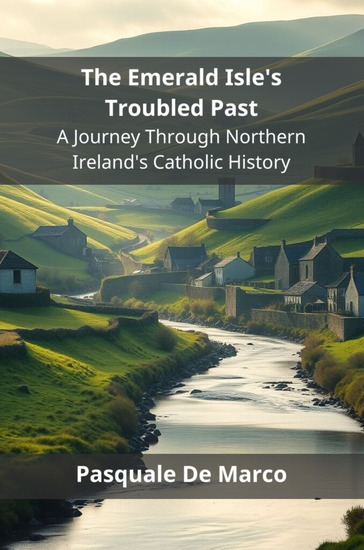
The Emerald Isle's Troubled Past - A Journey Through Northern Ireland's Catholic History - cover

The Emerald Isle's Troubled Past - A Journey Through Northern Ireland's Catholic History

Pasquale De Marco

Publisher: Publishdrive

  • 0
  • 0
  • 0

Summary

Journey into the depths of Northern Ireland's Catholic history in The Emerald Isle's Troubled Past, an enthralling exploration of faith, identity, and resilience. This comprehensive narrative delves into the heart of a region marked by centuries of conflict and division, shedding light on the experiences, struggles, and triumphs of the Catholic community.

From the earliest arrival of Christianity to the enduring legacy of the Troubles, this book traces the intricate tapestry of events that have shaped the Catholic experience in Northern Ireland. It challenges long-held beliefs and uncovers the complexities that lie beneath the surface of this troubled past, offering a fresh perspective on a region often misunderstood.

Delve into the intricate relationship between religion and politics, witnessing the fault lines that have divided communities and the efforts undertaken to bridge these divides. Explore the devastating impact of the Troubles, a period of intense conflict that left deep wounds and scars on the region's psyche. Grapple with the challenges of dealing with the past, the complexities of truth and reconciliation, and the ongoing quest for a lasting and meaningful peace.

Meet a cast of unforgettable characters, from historical figures who played pivotal roles in shaping events to ordinary individuals whose lives were indelibly marked by the tumultuous times they lived in. Their stories, both heartbreaking and inspiring, offer a poignant reminder of the human cost of conflict and the enduring power of the human spirit.

The Emerald Isle's Troubled Past is not just a historical account; it is an invitation to delve into the complexities of Northern Ireland's Catholic history, to challenge preconceived notions, and to foster a deeper understanding of the forces that have shaped this enigmatic region. It is a narrative that resonates with themes of resilience, hope, and the enduring quest for peace and reconciliation.

Unravel the layers of Northern Ireland's Catholic history in this thought-provoking and deeply moving narrative. The Emerald Isle's Troubled Past is a must-read for anyone seeking a deeper understanding of this fascinating and often misunderstood region.


If you like this book, write a review!
Available since: 06/02/2025.
Print length: 162 pages.
Other books that might interest you

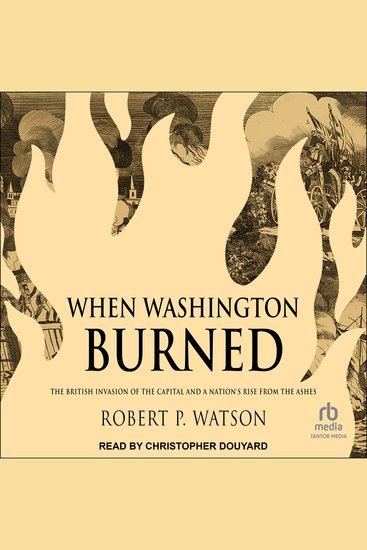
  • When Washington Burned - The British Invasion of the Capital and a Nation's Rise from the Ashes - cover

    When Washington Burned - The...

    Robert P. Watson

    • 0
    • 0
    • 0
    Perhaps no other single day in United States history was as threatening to the survival of the nation as August 24, 1814, when British forces captured Washington, DC. This unique moment might have significantly altered the nation's path forward, but the event and the reasons why it happened are little remembered by most Americans. 


    When Washington Burned narrates and examines the British campaign and American missteps that led to the fall of Washington during the War of 1812. Watson analyzes the actions of key figures on both sides, such as President James Madison and General William Winder on the United States side and Rear Admiral George Cockburn and Major General Robert Ross on the British side. He pinpoints the reasons the campaign was such a disaster for the United States but also tells the redeeming stories of the courageous young clerks and the bold first lady, Dolley Madison, who risked their lives to save priceless artifacts and documents from the flames, including the Constitution. The British invasion was repulsed over the coming weeks and months, and the United States ultimately emerged stronger. 


    General listeners interested in the history of Washington, United States history, and military history will be fascinated by this book.
    Show book
  • Lying - Communicating False Information Deliberately - cover

    Lying - Communicating False...

    Cito Harder

    • 0
    • 0
    • 0
    Lying, the deliberate act of communicating false information, has been a part of human behavior for centuries. It is a complex and multifaceted phenomenon that plays a role in many aspects of life, from personal relationships to politics, business, and beyond. While most people recognize lying as morally wrong, it remains a pervasive and unavoidable part of the human experience. This chapter will explore the nature of lying, the different types of lies, and why people engage in this behavior. 
    At its core, lying involves providing information that the speaker knows to be false, with the intent to deceive the listener. Unlike mistakes or misunderstandings, lies are intentional and often involve a conscious decision to mislead. Lying can take many forms, ranging from small, seemingly harmless "white lies" to more harmful and deliberate fabrications designed to achieve personal gain or avoid consequences. While some lies may appear trivial, others can have significant consequences, leading to broken trust, damaged relationships, or even harm to others. 
    The act of lying is not limited to individuals but can also be embedded in larger societal and cultural practices. From politicians who manipulate public opinion to corporations that mislead consumers about the quality of their products, deception is often employed as a tool to achieve power, influence, or financial success. Understanding the motivations behind lying is key to understanding its prevalence and persistence in society. People lie for various reasons: to protect themselves, to avoid punishment, to gain an advantage, or to spare others' feelings. The reasons behind a lie often depend on the context and the perceived consequences of telling the truth.
    Show book
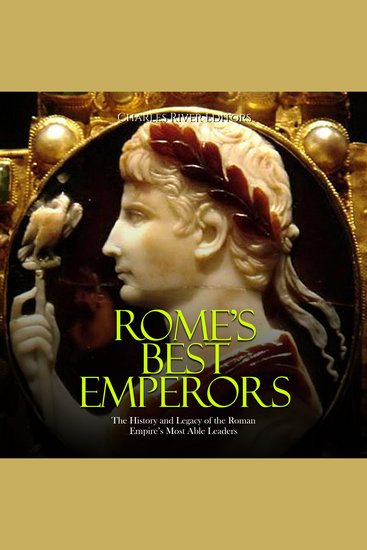
  • Rome’s Best Emperors: The History and Legacy of the Roman Empire’s Most Able Leaders - cover

    Rome’s Best Emperors: The...

    Editors Charles River

    • 0
    • 0
    • 0
    The importance of Gaius Julius Caesar Augustus (or as he was known from birth, Gaius Octavius “Octavian” Thurinus) to the course of Western history is hard to overstate. His life, his rise to power, his political, and his social and military achievements all laid the foundations for the creation of an empire which would endure for almost five centuries, and whose traditions, laws, architecture and art continue to influence much of Europe and the world today. Octavian was the first true Roman Emperor, and the first man since the Etruscan Tarquins five centuries earlier to establish a successful hereditary ruling dynasty in what had been a proud Republic for over half a millennium. He was a canny strategist, an excellent orator, a fine writer, a generous patron of the arts and enthusiastic promoter of public works, but above all he was a master politician. Octavian’s great-uncle (and adoptive father) Julius Caesar was a great general, and his rival Mark Antony was a great soldier, but as a politician Octavian outmatched them all. He still stands in bronze on Rome’s Via dei Fori Imperiali to this day, along with the likes of Caesar, Hadrian, Trajan and Marcus Aurelius, and he is forever immortalized in all Western calendars as the patron of the month of August, which was dedicated to him when he was deified, following his death, as Divus Augustus.  
    	“The Five Good Emperors,” a reference to the five emperors who ruled the Roman Empire between 96 and 180 CE (Nerva, Trajan, Hadrian, Antoninus Pius, and Marcus Aurelius), was a term first coined by Machiavelli and later adopted and popularized by historian Edward Gibbon, who said that under these men, the Roman Empire “was governed by absolute power under the guidance of wisdom and virtue.” This period of 84 years is generally regarded as the high point of the Roman Empire, at least after Augustus.
    Show book
  • Change of Plans - cover

    Change of Plans

    Lisa Oliver

    • 0
    • 0
    • 0
    Alpha and Omega series spin off 
    Detective Sully Roberts spent his life living a lie but when his best friend Zander mated with Terry, Sully was thrown into a world where wolf shifters looked human and true mates were real. Of course, as a human he never expected to find a mate. Zander explained they were rare and while he dreamed of finding someone to call his own, he’d settle for getting his father off his back. In the meantime, Sully was doing his best to climb out of the closet; not easy, even with new friends by his side. 
    Gunnery Sergeant Quentin Thorne, Q to his friends, lived for the armed forces. After spending eight years in the Marines, he was on leave pondering his re-enlistment. Something was holding him back and it wasn’t just his wolf. Deciding to visit his brother Richard, he’d barely got off the plane, when he was assailed with a scent he hadn’t known he was waiting for. 
    Two career men; one bite would change everything. But not everyone accepts their union. When a fire breaks out and Sully is wounded both men have to seriously consider a change of plans. 
    Note: This short story is a spin off from Dancing Around the Cop, book two in the Alpha and Omega series. While it can be read as a standalone, you will understand more about the secondary characters if you have read that book first. 
    This book is an M/M true mate romance. It depicts intimate scenes between males. 
    Show book
  • Cultivating Mentors - Sharing Wisdom in Christian Higher Education - cover

    Cultivating Mentors - Sharing...

    Todd C. Ream, Jerry Pattengale,...

    • 0
    • 0
    • 0
    Many colleges and universities informally highlight the value of mentoring among academic professionals. Yet scholars often lack clear definitions, goals, practices, and commitments that help them actually reap the benefits mentoring offers. As new faculty members from younger generations continue to face evolving challenges while also reshaping institutions, their ability to connect with more experienced mentors is critical to their vocations—and to the future of higher education.
    In Cultivating Mentors, a distinguished group of contributors explores the practice of mentoring in Christian higher education. Drawing on traditional theological understandings of the mentee-mentor relationship, they consider what goals should define such relationships and what practices make their cultivation possible among educators. With special attention to generational dynamics, they discuss how mentoring can help institutions navigate generational faculty transitions and cultivate rising leaders. Contributors include:
    
    - David Kinnaman
    - Tim Clydesdale
    - Margaret Diddams
    - Edgardo Colón-Emeric
    - Rebecca C. Hong
    - Tim Elmore
    - Beck A. Taylor
    - Stacy A. Hammons
    This book offers valuable insights and practical recommendations for faculty members, administrators, and policy makers. Whether pursuing their vocation in Christian or secular institutions, Christian scholars will benefit from the sharing of wisdom mapped out in Cultivating Mentors.
    Show book
  • Abraham Lincoln - The Dark Side What History Didn’t Tell You - cover

    Abraham Lincoln - The Dark Side...

    Cyril Taylor-Carr

    • 0
    • 0
    • 0
    Lincoln's connection to black history may go much further than his role in slavery. In the 2001 book 'Black People and Their Place in History', historian Leroy Vaughn, alleges that Lincoln’s father was African American and his mother had Ethiopian ethnicity, both of which may have explained his “very dark skin and coarse hair.” The fact is his rivals campaigned using propaganda that depicted Lincoln as “Abraham Africanus the First,” an African man. 
     
    It is claimed that Abraham Lincoln, who became America’s 16th President in 1860, was a Melungeon; a person of European, African-American and Native American ancestry. 
    But beyond even that thoughtful historical proposition the late scholar Lerone Bennet Jr. sees America's most beloved president in a very different light to how he has been portrayed throughout time. Bennet hit a nerve in his research and writing on Lincoln. His book, 'Forced into Glory: Abraham Lincoln's White Dream', questions Lincoln's role as the "Great Emancipator". The work was described by one reviewer as a "flawed mirror." It was further criticized by historians of the Civil War period as faulty. 
     
    In his introduction, Bennett wrote: 
    "The idea of the book is simple: Everything you think you know about Lincoln and race is wrong. Every schoolchild, for example, knows the story of "the great emancipator" who freed Negroes with a stroke of the pen out of the goodness of his heart. The real Lincoln ... was a conservative politician who said repeatedly that he believed in white supremacy. Not only that: He opposed the basic principle of the Emancipation Proclamation until his death and was literally forced – Count Adam Gurowski said he was literally whipped – "into the glory of having issued the Emancipation Proclamation," which Lincoln drafted in such a way that it did not in and of itself free a single slave."
    Show book