Join us on a literary world trip!
Add this book to bookshelf
Grey
Write a new comment Default profile 50px
Grey
Subscribe to read the full book or read the first pages for free!
All characters reduced
The Digital Tapestry - Exploring the Philosophy of Information - cover

The Digital Tapestry - Exploring the Philosophy of Information

Pasquale De Marco

Publisher: Publishdrive

  • 0
  • 0
  • 0

Summary

In the digital age, computing has become an essential part of our lives. From the way we communicate to the way we do business, from the way we learn to the way we entertain ourselves, computing has transformed our world in ways that were unimaginable just a few decades ago.

But what exactly is computing? And what are the philosophical implications of this new technology?

In this thought-provoking book, we explore the relationship between philosophy and computing, examining the ways in which computing has changed our understanding of the world and our place in it. We consider the nature of information itself, the different types of computing devices, and the limits of our ability to process and understand information. We also examine the impact of computing on society, the ethical implications of these changes, and the future of computing.

This book is essential reading for anyone who wants to understand the profound impact of computing on our world. Whether you are a philosopher, a computer scientist, or simply someone who is interested in the role of technology in society, this book will challenge your assumptions and open your eyes to new ways of thinking about the digital age.

In this book, you will learn about:

* The history of computing
* The different types of computing devices
* The nature of information
* The limits of computing
* The impact of computing on society
* The ethical implications of computing
* The future of computing

With its clear and engaging writing style, this book is accessible to readers of all backgrounds. It is a must-read for anyone who wants to understand the digital age and its implications for our future.


If you like this book, write a review!
Available since: 06/02/2025.
Print length: 165 pages.

Other books that might interest you

  • The Eagle in the Mirror - cover

    The Eagle in the Mirror

    Jesse Fink

    • 0
    • 0
    • 0
    The longest serving spy for the Secret Intelligence Service (MI6), Charles Howard "Dick" Ellis came to New York at the beginning of World War II as deputy to William Stephenson at British Security Coordination (BSC) and helped set up for William Donovan the Office of Strategic Services (OSS), what would eventually evolve into the Central Intelligence Agency (CIA). 


    Ellis allegedly received prior warning of the Japanese attack on Pearl Harbor and, through the conduit of Stephenson, relayed that warning to President Franklin D. Roosevelt. After World War II, Ellis was awarded the Legion of Merit by President Harry S. Truman. 


    But in the 1980s espionage writer Chapman Pincher and retired Security Service (MI5) intelligence officer Peter Wright posthumously accused Ellis of having operated as a "triple agent" for Nazi Germany and the Soviet Union. 


    In 1965, while under interrogation in London, Ellis had allegedly made a confession that he had supplied information to the Nazis prior to the war. However, Pincher's and Wright's accusations against Ellis have never been comprehensively proven. Was Ellis guilty or was an innocent man framed? Did he take the fall for someone else?
    Show book
  • Gaza Faces History - cover

    Gaza Faces History

    Enzo Traverso

    • 0
    • 0
    • 0
    Is the destruction of Gaza only a consequence of the October 7, 2023 attack, or is it also the outcome of a long process of dispossession and eradication? Do Palestinians have the right to resist the occupation? Is talking about genocide anti-Semitism? Enzo Traverso goes to the root of the Israeli–Palestinian conflict by calling history into question and offers a critical interpretation that overturns the one-sided perspective from which we have become accustomed to observing what is happening in Gaza. 


    Israel is usually described as a democratic island in the middle of an obscurantist ocean, and Hamas as a movement inspired by bloodthirsty fanaticism. The destruction of Gaza is reminiscent of the golden age of colonialism, when the West perpetrated genocides in Asia and Africa in the name of its civilizing mission. But if a genocidal war is unleashed in the name of fighting anti-Semitism, it is our own ethical values and political norms that are tarnished: the assumptions of our moral conscience risk being turned upside down. The October 7 attack was terrifying, but it must be analyzed and not just condemned. And we must do so by summoning all the critical tools of historical research. In that case, neither American weapons nor Western media, nor the distorted and outraged memory of the Holocaust will be able to redeem it.
    Show book
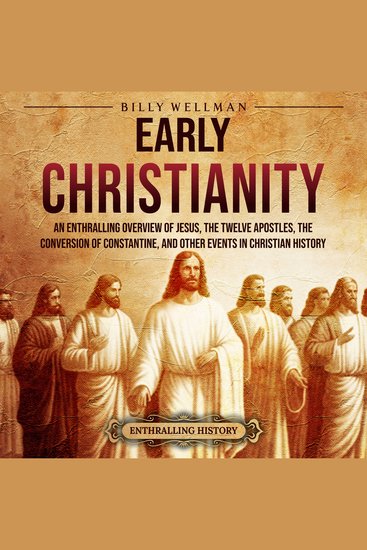
  • Early Christianity: An Enthralling Overview of Jesus the Twelve Apostles the Conversion of Constantine and Other Events in Christian History - cover

    Early Christianity: An...

    Billy Wellman

    • 0
    • 0
    • 0
    Did you know that Christianity has gone through many changes since its origin? 
    Over two thousand years ago, a Jewish man was born into a society in turmoil. It is impossible to tell the story of Christianity without understanding the man behind it. What were the lives of Jesus and his followers like? How were their words so impactful that they changed history and affected the lives of billions of people over the course of two thousand years? 
    Throughout the centuries, Christianity underwent a series of evolutions that engulfed many cultural traditions and ideas into its fold. But with such a wide variety of beliefs throughout Christendom, where did they all stem from, and how did they change over time? 
    In this audiobook, we will look at the time of Jesus from a historical viewpoint and also find out the truth about Christianity and what revolutionary changes occurred in the first few centuries AD. 
    You may be surprised to discover the truth about the following:Why the first-century Jews were so eagerly waiting for a savior and how they knew when he would arrive;Jesus’ origins and the historical and biblical events surrounding his birth;The heartbreaking terror that Jesus’ parents faced in his early years and the drastic life decision they were guided to make;Some of the compelling words Jesus spoke and why they drew so many people to him;The ideas that laid the foundation for Christianity;How the apostles and disciples carried on with their work after Jesus’ death and organized the first Christian congregations;What life was like for the early disciples; 
    You will also find a bonus chapter on how Christianity influenced art and had an impact on many creative minds. 
    Scroll up and click “add to cart” to find out the real history of early Christianity!
    Show book
  • Someone to Love - cover

    Someone to Love

    Robert Lewis

    • 0
    • 0
    • 0
    Dennis Childres enjoys his freedom. He has his own house, works his own hours, and stars in taboo gay sex scenes for the company he and his best friend own. From the outside, Dennis has it all. But deep down, he isn’t happy. Even tailored to his personal taste, the porn star's life is missing something ... or maybe someone. He wants a person to love and he's willing to search anywhere to find them. 
    What Dennis doesn't know is that lurking in a strange corner of the internet, there is someone who loves him. Someone who would do anything for him. Even kill. 
    Certain the adult film actor is the only one who can purge the evil from his soul, this stalker is poised to take his strange obsession from behind the computer and straight into Dennis' perfect world. Will the hopeless romantic discover the truth about his super fan in time or will his lustful quest to find the ideal man become a fight for his life? 
    Reader Advisory: Someone to Love is a thrilling, action-packed adventure which contains graphic depictions of sex, abuse, drug use, and simulated incest.
    Show book
  • Liberalism: Book Summary & Analysis - cover

    Liberalism: Book Summary & Analysis

    Briefly Summaries

    • 0
    • 0
    • 0
    This is a concise summary and analysis of Liberalism, by Ludwig von Mises.
     
    It is not the original book and is not affiliated with or endorsed by Ludwig von Mises.
    Ideal those seeking a quick and insightful overview.
     
    This influential work presents a compelling argument for the principles of classical liberalism, exploring how individual freedom, free markets, and limited government can foster social harmony and economic progress. The book examines the foundations of a liberal society, advocating for personal responsibility, voluntary cooperation, and respect for private property. With clear reasoning and historical insights, it challenges collectivist ideologies and underscores the importance of liberty in achieving human flourishing.
    Show book
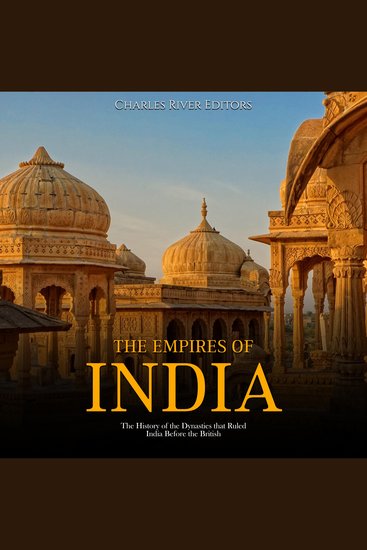
  • Empires of India The: The History of the Dynasties that Ruled India Before the British - cover

    Empires of India The: The...

    Editors Charles River

    • 0
    • 0
    • 0
    When one thinks of the world’s first cities, Sumer, Memphis, and Babylon are some of the first to come to mind, but if the focus then shifts to India, then Harappa and Mohenjo-daro will likely come up. These cities owe their existence to India’s oldest civilization, known as the Indus Valley Civilization or the Harappan Civilization, which was contemporary with ancient Mesopotamia and ancient Egypt and had extensive contacts with the former, making it one of the most important early civilizations in the world. 
    The dynasty that came to power in the late 4th century BCE is known today as the Mauryan Dynasty, and although the ruling family was short-lived and their power was ephemeral, its influence resonated for several subsequent centuries and spread as far east as China and into the Hellenistic west.  
    Bactria was the seat of several different kingdoms during the course of many centuries, but none were as successful as the Kushan Empire, the dominant political entity in Central Asia from the early 2nd century BCE until the early 3rd century CE, during which time the Kushan rulers played a major role in the first iteration of the trade networks known collectively as the Silk Road. 
    From 1206 to 1526, the Delhi Sultanate controlled all of northern India and, during its apogee of power, nearly all of the Sub-Continent, making it one of the most impressive empires not only in India’s long history, but also in the history of Islam. The Delhi Sultanate was comprised of five dynasties that expanded their borders, and Islam, at sword point, but also through diplomacy and trade.  
    The Mughals, a group with Turkish and Mongolian roots, adopted elements of Islamic culture and meshed them with native Indian culture and even Western European culture. When the British conquered India in the mid-19th century, they had the benefit of inheriting the Mughal system, a suitable template for rule over a land as vast and diverse as India.
    Show book