Join us on a literary world trip!
Add this book to bookshelf
Grey
Write a new comment Default profile 50px
Grey
Subscribe to read the full book or read the first pages for free!
All characters reduced
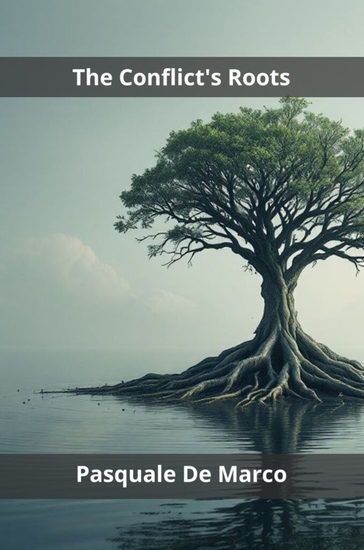
The Conflict's Roots - cover

The Conflict's Roots

Pasquale De Marco

Publisher: Publishdrive

  • 0
  • 0
  • 0

Summary

The Cold War, a period of intense rivalry and tension between the United States and the Soviet Union, profoundly shaped the world from the late 1940s to the early 1990s. This book provides a comprehensive analysis of this pivotal period in history, exploring its origins, events, and consequences.

We delve into the factors that led to the rise of the Cold War, including the ideological divide between capitalism and communism, the aftermath of World War II, and the emergence of the United States and the Soviet Union as global powers. We examine the major events of the Cold War, such as the Berlin Crisis, the Cuban Missile Crisis, the Vietnam War, and the Space Race, which brought the world to the brink of nuclear war and reshaped the global balance of power.

We also investigate the Cold War's impact on various aspects of society, including politics, economics, culture, and science. The Cold War fueled a global arms race, spurred technological advancements, and influenced everything from popular culture to the arts.

Furthermore, we explore the legacy of the Cold War and its implications for the 21st century. The end of the Cold War ushered in a new era of globalization, but it also left behind a number of challenges, including nuclear proliferation, regional conflicts, and economic inequality.

This book is an essential resource for anyone interested in international relations, history, or the contemporary world. With its comprehensive analysis and engaging narrative, it provides valuable insights into one of the most significant conflicts in modern history.

**Key Features:**

* A comprehensive overview of the Cold War, from its origins to its legacy.
* In-depth analysis of major events, such as the Berlin Crisis, the Cuban Missile Crisis, and the Vietnam War.
* Examination of the Cold War's impact on politics, economics, culture, and science.
* Exploration of the Cold War's legacy and its implications for the 21st century.

**Target Audience:**

* Students and scholars of international relations, history, and political science.
* General readers interested in the Cold War and its impact on the world.


If you like this book, write a review!
Available since: 06/02/2025.
Print length: 158 pages.


Other books that might interest you

  • Rewire Your Nervous System - Unlock Lasting Calm Overcome Anxiety and Reclaim Your Life with Proven Mind-Body Techniques - cover

    Rewire Your Nervous System -...

    Dr. Anya Serenity

    • 0
    • 0
    • 0
    Are stress and anxiety running your life? Do you feel trapped in a cycle of overwhelm, longing for lasting peace? 
    In Rewire Your Nervous System, Dr. Anya Serenity, your expert guide in mind-body wellness, unveils a powerful path to unlock lasting calm and reclaim your life. This practical guide cuts through complex science to deliver proven techniques that empower you to understand and reprogram your nervous system for resilience. 
    Discover how to move beyond constant stress, overcome anxiety, and cultivate a tranquil inner state. Learn actionable strategies to regulate your emotions, soothe your nervous system, and step into a life of joy and empowerment. 
    Perfect for those seeking a holistic approach to well-being and freedom from chronic stress, Rewire Your Nervous System offers the tools you need to thrive. 
    Ready to take control and find your calm? Purchase your copy today and begin your journey to a more peaceful you!
    Show book
  • Maa Anand Sheela on Chances - cover

    Maa Anand Sheela on Chances

    Rekha Balakrishna

    • 0
    • 0
    • 0
    I have been given more than a million chances in life, says controversy's favorite child Ma Anand Sheela
    Show book
  • Gilded Age Revealed - Untold Stories of Opulent Mansions Scandalous Power Plays and Groundbreaking Inventions Unveiled in a Matter of Days - cover

    Gilded Age Revealed - Untold...

    Lennon Publishing

    • 0
    • 0
    • 0
    Step into a world of glittering wealth, rising tensions, and bold transformation. 
    The Gilded Age was more than just pearls and palaces. It was a time of secret deals, daring innovation, and quiet rebellion. This captivating volume pulls back the curtain on the real stories behind the elegance, revealing the people and power struggles that shaped modern America. 
    Inside, you'll discover:How a single invention lit up cities and launched an industrial revolutionWhy the nation's richest families carefully arranged marriages like business mergersThe forgotten names behind key reforms, strikes, and movementsWhat really happened inside America's grandest mansions and who paid the price for their luxuryThe battles between press barons, railroad kings, and political machinesHow women's roles shifted from social ornaments to emerging change-makersThe cultural undercurrent of art, architecture, and rising immigrant voices 
    This extended edition includes a special bonus feature with authentic 1890s recipes, vintage cocktails, and a curated playlist of parlor and ragtime music so you can truly step into the spirit of the age. 
    Whether you're fascinated by history's hidden corners or simply want to understand the forces that built the modern world, Gilded Age Revealed: Untold Stories of Opulent Mansions, Scandalous Power Plays, and Groundbreaking Inventions Unveiled in a Matter of Days offers an unforgettable journey into America's most opulent and complex era.
    Show book
  • Vergil - The Poets Life - cover

    Vergil - The Poets Life

    Sarah Ruden

    • 0
    • 0
    • 0
    A biography of Vergil, Rome’s greatest poet, by the acclaimed translator of the Aeneid 
     
    The Aeneid stands as a towering work of Classical Roman literature and a gripping dramatization of the best and worst of human nature. In the process of creating this epic poem, Vergil (70–19 BCE) became the world’s first media celebrity, a living legend. 
     
    But the real Vergil is a shadowy figure; we know that he was born into a modest rural family, that he led a private and solitary life, and that, in spite of poor health and unusual emotional vulnerabilities, he worked tirelessly to achieve exquisite new effects in verse. Vergil’s most famous work, the Aeneid, was commissioned by the emperor Augustus, who published the epic despite Vergil’s dying wish that it be destroyed. 
     
    Sarah Ruden, widely praised for her translation of the Aeneid, uses evidence from Roman life and history alongside Vergil’s own writings to make careful deductions to reconstruct his life. Through her intimate knowledge of Vergil’s work, she brings to life a poet who was committed to creating something astonishingly new and memorable, even at great personal cost.
    Show book
  • The Spice Ports - Mapping the Origins of the Global Sea Trade - cover

    The Spice Ports - Mapping the...

    Nicholas Nugent

    • 0
    • 0
    • 0
    We may think of "globalism" as a recent development but its origins date back to the fifteenth century and beyond, when seafarers pioneered routes across the oceans with the objectives of exploration, trade, and profit. These voyages only became possible after certain technical innovations—improvements in ship design, compasses, and mapping—enabled navigation across unprecedented distances. The mariners' embarkation points were the vibrant ports of the West—Venice, Amsterdam, Lisbon—and their destinations the exotic ports of the East—Malacca, Goa, Bombay—where they tracked down the elusive spices, so much in demand by Western palates. 


    This development of maritime communication brought benefits apart from culinary delights: the spread of ideas on art, literature, and science. But it was not necessarily beneficial for everyone concerned: colonial ambitions were often disastrous for local populations, who were frequently exploited as slave plantation labor. 


    This wide-ranging account of a fascinating period of global history uses original maps and contemporary artists' views to tell the story of how each port developed individually while also encouraging us to consider contrasting points of view of the benefits and the damages of the maritime spice trade.
    Show book
  • Jewish Language and Literature - The Impact of Yiddish Hebrew and Other Languages - cover

    Jewish Language and Literature -...

    Joseph Arston

    • 0
    • 0
    • 0
    The origins of Jewish language and literature are deeply intertwined with the history of the Jewish people, shaped by centuries of cultural exchange, migration, and adaptation. At the heart of Jewish literary tradition lies the Hebrew language, whose roots stretch back to the ancient world. Hebrew, as the language of the Bible, forms the foundation of Jewish thought, identity, and religious practice. The earliest examples of Hebrew literature can be found in the sacred texts of the Torah, where the stories, laws, and teachings of the Jewish people are recorded. These texts, passed down through generations, have remained central to Jewish life and continue to be a source of literary and theological inspiration. 
    In addition to Hebrew, other languages played an important role in the development of Jewish language and literature. Aramaic, a Semitic language closely related to Hebrew, became widespread during the Babylonian exile and remained influential for centuries. Aramaic is the language of significant portions of the Talmud and other rabbinic writings, shaping Jewish legal and philosophical thought. Over time, Jewish communities across the globe adopted the languages of the regions they inhabited, which further contributed to the diversity of Jewish literary expression. 
    The emergence of Yiddish, a language born in the Jewish communities of Eastern Europe, marked a significant shift in Jewish linguistic and literary culture. Yiddish, a Germanic language enriched with Hebrew, Aramaic, and Slavic elements, became the vernacular of millions of Ashkenazi Jews. It allowed for the creation of a vibrant body of literature, including plays, novels, and poetry, that expressed the daily lives, struggles, and aspirations of Jewish communities. Yiddish literature flourished in the 19th and early 20th centuries, with writers such as Sholem Aleichem, Isaac Bashevis Singer, and I.L. Peretz capturing the complexities of Jewish life through their works.
    Show book