Join us on a literary world trip!
Add this book to bookshelf
Grey
Write a new comment Default profile 50px
Grey
Subscribe to read the full book or read the first pages for free!
All characters reduced
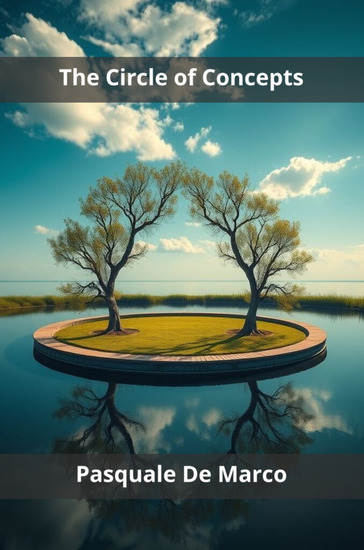
The Circle of Concepts - cover

The Circle of Concepts

Pasquale De Marco

Publisher: Publishdrive

  • 0
  • 0
  • 0

Summary

In a world divided by political ideologies, "The Circle of Concepts: Understanding Liberalism and Conservatism" emerges as an illuminating guide to navigate the complex landscape of political thought. This comprehensive book delves into the core principles, historical roots, and philosophical foundations of liberalism and conservatism, providing readers with a deeper understanding of these influential ideologies.

With thought-provoking analysis and accessible language, "The Circle of Concepts" unravels the intricate tapestry of liberalism and conservatism. It explores the great debates that have shaped these ideologies, from the role of government and social issues to economic inequality and foreign policy. The book also examines the impact of liberalism and conservatism on society, tracing their influence on historical events, political movements, and cultural shifts.

More than just a theoretical exploration, "The Circle of Concepts" examines the practical implications of liberalism and conservatism in action. It delves into the policies and programs that have been implemented under liberal and conservative governments, highlighting their successes and failures. The book also investigates the challenges facing these ideologies in the 21st century, including the rise of populism, the impact of globalization, and the urgency of climate change.

With a keen eye for detail and a commitment to intellectual rigor, "The Circle of Concepts" offers a comprehensive overview of liberalism and conservatism. It is an indispensable resource for students, scholars, and anyone seeking to understand the forces that shape our political landscape. Whether you identify as a liberal, a conservative, or something in between, this book provides the tools to engage in informed and nuanced discussions about the future of our society.

"The Circle of Concepts" is more than just a book; it is an invitation to think critically about the world around us. It challenges readers to question their assumptions, consider different perspectives, and appreciate the complexity of political thought. By fostering a deeper understanding of liberalism and conservatism, this book empowers readers to become more informed and engaged citizens, capable of navigating the ever-changing landscape of politics with knowledge and empathy.


If you like this book, write a review!
Available since: 06/02/2025.
Print length: 168 pages.

Other books that might interest you

  • The Illicit Global Economy - What Everyone Needs To Know(r) - cover

    The Illicit Global Economy -...

    Peter Andreas

    • 0
    • 0
    • 0
    The illicit global economy encompasses cross-border flows of goods, people, money, and information unauthorized by either the sending or receiving country. Typically, this means flows that are prohibited, regulated, stolen, or counterfeit. Some of these flows are obscure or mostly a law enforcement nuisance, but others receive enormous policy and media attention. Still others have severe environmental impacts and security implications. Collectively, these flows reflect the illicit side of the global economy.The Illicit Global Economy: What Everyone Needs to Know® answers the key questions about how illicit global markets are structured and operate, how they intersect with state institutions and practices, how they interact with the legal economy, and how they shape and are shaped by domestic and international politics. This pithy yet authoritative primer helps listeners make sense of a crucial part of the global economy that is too often either neglected or distorted. In this regard, an underlying theme in the book is the need for a more historically informed critical perspective that challenges the many myths and misconceptions about the illicit global economy that are all-too-prevalent in contemporary media accounts, Hollywood depictions, popular books, and policy debates.
    Show book
  • Geopolitics and Democracy - The Western Liberal Order from Foundation to Fracture - cover

    Geopolitics and Democracy - The...

    Brian Burgoon, Peter Trubowitz

    • 0
    • 0
    • 0
    A large, widening gap has opened between Western democracies' international ambitions and their domestic political capacity to support them. On issues ranging from immigration and international trade to national security, new political parties on the left and the right are rejecting the core foreign policy principles that Western governments have championed for over half a century. In Geopolitics and Democracy, Peter Trubowitz and Brian Burgoon provide a powerful new explanation for the rise of anti-globalism in the West. 


    Trubowitz and Burgoon show that support for globalism has been receding for thirty years in Western parties and legislatures. They trace the anti-globalist backlash to foreign policy decisions that mainstream parties and party elites made after the end of the Cold War. These decisions sought to globalize markets and pool sovereignty at the supranational level while applying neoliberal reforms to social protections and guarantees at home. 


    Geopolitics and Democracy reveals how domestic support for international engagement during the long East-West geopolitical contest was contingent upon social protections within Western democracies. In the absence of a renewed commitment to those social purposes, Western democracies will struggle to find a collective grand strategy that their domestic publics will support.
    Show book
  • Liberal White Supremacy - How Progressives Silence Racial and Class Oppression - cover

    Liberal White Supremacy - How...

    Angie Beeman

    • 0
    • 0
    • 0
    In Liberal White Supremacy, Angie Beeman argues that white supremacy is maintained not only by right-wing conservatives or stereotypically uneducated working-class racial bigots but also by progressives who operate from a liberal ideology of color-blindness, racism-evasiveness, and class elitism. This distinction provides insight on divisions among progressives at the local level, in community organizations, and at the national level, in the Democratic Party. By distinguishing between liberal and radical approaches to racism, class oppression, capitalism, and social movement tactics, Beeman shows how progressives continue to be limited by liberal ideology and perpetuate rather than dismantle white supremacy, all while claiming to be antiracist. 


    She conceptualizes this self-serving process as "liberal white supremacy," the tendency for liberal European Americans to constantly place themselves in the superior moral position in a way that reinforces inequality. Beeman advances what she calls action-oriented and racism-centered intersectional approaches as alternatives to progressive organizational strategies that either downplay racism in favor of a class-centered approach or take a talk-centered approach to racism without developing explicit actions to challenge it.
    Show book
  • American Epic - Reading the US Constitution - cover

    American Epic - Reading the US...

    Garrett Epps

    • 0
    • 0
    • 0
    In 1987, E. L. Doctorow celebrated the Constitution's bicentennial by reading it. "It is five thousand words long but reads like fifty thousand," he said. Distinguished legal scholar Garrett Epps disagrees. It's about 7,500 words. And Doctorow "missed a good deal of high rhetoric, many literary tropes, and even a trace of, if not wit, at least irony," he writes. 


    In American Epic, Epps takes us through a complete reading of the Constitution to achieve an appreciation of its power and a holistic understanding of what it says. In this book he seeks not to provide a definitive interpretation, but to listen to the language and ponder its meaning. He draws on four modes of reading: scriptural, legal, lyric, and epic. The Constitution's first three words, for example, sound spiritual—but Epps finds them to be more aspirational than prayer-like. He turns the Second Amendment into a poem to illuminate its ambiguity. He notices oddities and omissions. The Constitution lays out rules for presidential appointment of officers, for example, but not removal. Should the Senate approve each firing? Can it withdraw its "advice and consent" and force a resignation? And he challenges himself, as seen in his surprising discussion of the Defense of Marriage Act (DOMA) in light of Article 4, which orders states to give "full faith and credit" to the acts of other states.
    Show book
  • Who Cleans the Park? - Public Work and Urban Governance in New York City - cover

    Who Cleans the Park? - Public...

    John Krinsky, Maud Simonet

    • 0
    • 0
    • 0
    America’s public parks are in a golden age. Hundreds of millions of dollars—both public and private—fund urban jewels like Manhattan’s Central Park. Keeping the polish on landmark parks and in neighborhood playgrounds alike means that the trash must be picked up, benches painted, equipment tested, and leaves raked. Bringing this often-invisible work into view, however, raises profound questions for citizens of cities. In Who Cleans the Park? John Krinsky and Maud Simonet explain that the work of maintaining parks has intersected with broader trends in welfare reform, civic engagement, criminal justice, and the rise of public-private partnerships. Welfare-to-work trainees, volunteers, unionized city workers (sometimes working outside their official job descriptions), staff of nonprofit park “conservancies,” and people sentenced to community service are just a few of the groups who routinely maintain parks. With public services no longer being provided primarily by public workers, Krinsky and Simonet argue, the nature of public work must be reevaluated. Based on four years of fieldwork in New York City, Who Cleans the Park? looks at the transformation of public parks from the ground up. Beginning with studying changes in the workplace, progressing through the public-private partnerships that help maintain the parks, and culminating in an investigation of a park’s contribution to urban real-estate values, the book unearths a new urban order based on nonprofit partnerships and a rhetoric of responsible citizenship, which at the same time promotes unpaid work, reinforces workers’ domination at the workplace, and increases the value of park-side property. Who Cleans the Park? asks difficult questions about who benefits from public work, ultimately forcing us to think anew about the way we govern ourselves, with implications well beyond the five boroughs.
    Show book
  • Utopia - cover

    Utopia

    Thomas Moore

    • 0
    • 0
    • 0
    Utopia (Libellus vere aureus, nec minus salutaris quam festivus, de optimo rei publicae statu deque nova insula Utopia, "A little, true book, both beneficial and enjoyable, about how things should be in the new island Utopia") is a work of fiction and socio-political satire by Thomas More (1478–1535), written in Latin and published in 1516. The book is a frame narrative primarily depicting a fictional island society and its religious, social, and political customs. Many aspects of More's description of Utopia are reminiscent of life in monasteries.
    Famous works of the author Thomas More: Published during More's life A Merry Jest, Utopia, Latin Poems, Letter to Brixius, Responsio ad Lutherum, A Dialogue Concerning Heresies, Supplication of Souls, Letter Against Frith, The Confutation of Tyndale's Answer, Apology, Debellation of Salem and Bizance, The Answer to a Poisoned Book.
    Show book