Join us on a literary world trip!
Add this book to bookshelf
Grey
Write a new comment Default profile 50px
Grey
Subscribe to read the full book or read the first pages for free!
All characters reduced
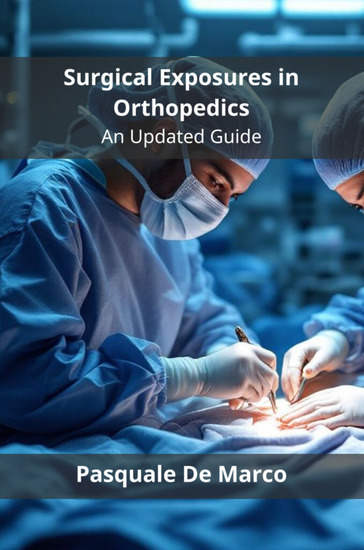
Surgical Exposures in Orthopedics - An Updated Guide - cover

Surgical Exposures in Orthopedics - An Updated Guide

Pasquale De Marco

Publisher: Publishdrive

  • 0
  • 0
  • 0

Summary

Step into the world of surgical exposures in orthopedics, a realm where precision, knowledge, and patient care converge. This comprehensive guide, meticulously crafted for orthopedic surgeons, residents, and medical students, embarks on a journey through the intricacies of surgical approaches, unveiling the secrets of successful patient outcomes.

With a strong emphasis on patient safety and minimizing surgical trauma, this book provides a roadmap for surgeons to navigate the complexities of surgical exposures with precision and confidence. It delves into the essential surgical anatomy, meticulously describing surgical landmarks, planes, muscles, fascia, neurovascular structures, and common surgical approaches.

Furthermore, this book recognizes the importance of minimizing surgical trauma and preserving tissue integrity. It offers invaluable guidance on atraumatic surgical techniques, meticulous dissection methods, and strategies for reducing postoperative pain and complications.

The journey through this book is not merely a theoretical exploration; it is an immersive experience that transports you into the operating room, allowing you to witness the intricacies of surgical decision-making and execution. With its comprehensive coverage of surgical exposures, this book serves as an indispensable resource for orthopedic surgeons seeking to expand their knowledge and refine their surgical skills.

As you embark on this journey, remember that surgical exposures are not just about incisions and retractors; they are about understanding the delicate balance between achieving surgical goals and preserving patient well-being. This book will guide you in mastering this balance, enabling you to provide exceptional care to your patients and achieve the best possible outcomes.

Key Features:

* Comprehensive coverage of surgical exposures in orthopedics
* Detailed descriptions of surgical anatomy and techniques
* Emphasis on patient safety and minimizing surgical trauma
* Invaluable guidance on atraumatic surgical techniques
* Immersive experience that transports readers into the operating room

This book is an essential resource for orthopedic surgeons, residents, and medical students seeking to master the art of surgical exposures and deliver exceptional patient care.


If you like this book, write a review!
Available since: 06/02/2025.
Print length: 171 pages.
Other books that might interest you

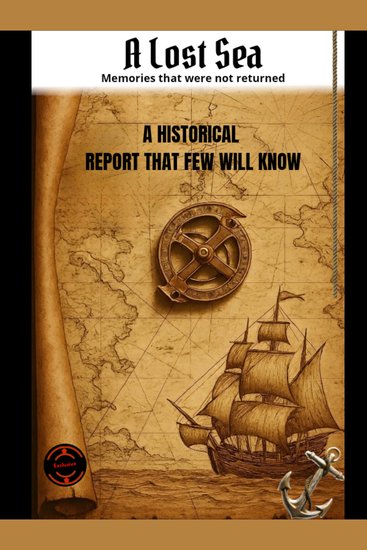
  • A Lost Sea - Memories That Were Never Returned - cover

    A Lost Sea - Memories That Were...

    Henrique Alves Antony

    • 0
    • 0
    • 0
    A Brief Manifesto on South American Identity 
    Have you ever wondered why seas around the world have names... but South America doesn't? 
    Amid forgotten maps, hushed histories and ignored identities, a disturbing question echoes through the waters of the South Atlantic. This is not just an e-book — it is an invitation to reflect on culture, memory and belonging. 
    This e-book is not intended to generalize in an attacking way, but rather to shed light on what has been hidden over the centuries — and which, in a certain way, continues to be silenced. 
    A deep analysis of the role of the sea in the formation of South American identity and integration. History, culture and politics connected by water.
    Show book
  • The Death Doula's Guide to Living Fully and Dying Prepared - An Essential Workbook to Help You Reflect Back Plan Ahead and Find Peace on Your Journey - cover

    The Death Doula's Guide to...

    Francesca Lynn Arnoldy

    • 0
    • 0
    • 0
    If you are preparing for the end of life—or simply looking to bring more meaning to the here and now—The Death Doula's Guide to Living Fully and Dying Prepared imparts valuable insight to nurture clarity and your internal strength on your journey. This workbook is a first-of-its-kind publication that invites you to process your life and legacy, create remembrance projects, build connections to vital supports, and draft informative wishes and plans for your last chapter. 


    Replete with centering techniques and thought-provoking prompts, this comprehensive workbook is a welcome invitation for anyone seeking a more intentional approach to living and dying. It provides a practical template for end-of-life planning focused on designing comforting experiences that feel personally affirming—with sensitivity to all belief systems, cultures, identities, and histories of lived experience. 


    Completing this workbook is a brave act of healthy preparedness, as it breaks down a complex and often overwhelming topic into manageable tasks. You will tap into deep truths and poignant memories as you work through the exercises, often feeling lighter and less burdened upon their completion. Most importantly, you'll find your best way to live fully and die prepared, by clarifying the fundamental ideals, priorities, and requests you want honored.
    Show book
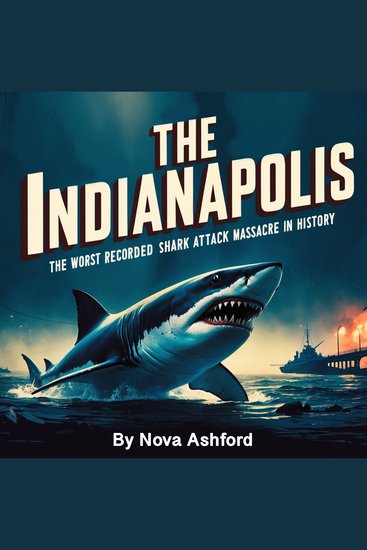
  • The Indianapolis - The Worst Recorded Shark Attack Massacre in History - cover

    The Indianapolis - The Worst...

    Nova Ashford

    • 0
    • 0
    • 0
    The USS Indianapolis was a Portland-class heavy cruiser of the United States Navy, commissioned in 1932, and it played a vital role in the Pacific theater during World War II. Its most significant and tragic moment came in 1945, during its final mission. The ship was tasked with delivering critical components for the atomic bomb that would later be dropped on Hiroshima, Japan. This mission, which involved transporting the bomb's uranium core to the island of Tinian, was classified, and few knew about the importance of the cargo aboard the ship. 
    After successfully completing its mission and delivering the components to Tinian on July 26, 1945, the Indianapolis set sail for the Philippines, where it would rendezvous with other ships in the Pacific fleet. The ship’s captain, Charles B. McVay III, had orders to take the cruiser directly to its next destination, avoiding the traditional convoy routes to reduce the risk of submarine attack. With the war nearing its end and Japan’s defeat imminent, the ship's journey seemed routine, and there was little concern about the potential dangers ahead. The USS Indianapolis was an experienced and battle-tested ship, having served in key naval engagements throughout the war, including the Battle of Leyte Gulf and the Battle of the Philippine Sea. 
    However, the absence of a convoy left the Indianapolis vulnerable. On the night of July 29, 1945, while traveling through the Philippine Sea, the ship was struck by two torpedoes fired by the Japanese submarine I-58. The attack tore through the hull, causing devastating damage. Within minutes, the ship began to sink, and the crew was thrown into chaos. Many of the crew members perished instantly, while others scrambled into the water, trying to escape the fiery wreckage of the ship. The survivors faced an unimaginable nightmare as they found themselves stranded in the open ocean, with little hope of immediate rescue.
    Show book
  • CIA Gateway Process: Time TravelOBE Astral Projection Lucid Dreaming & Sleep - Bedtime Talks Before Sleep - cover

    CIA Gateway Process: Time...

    Meditative Hearts

    • 0
    • 0
    • 0
    The CIA's Gateway Process is an intriguing exploration into the depths of human consciousness and its untapped potential. Developed during the Cold War era, this program utilizes advanced audio technologies to synchronize brainwave frequencies, enabling participants to access altered states of awareness. Through a combination of binaural beats, guided meditation, and specific breathing techniques, individuals can experience Out-of-Body Experiences (OBE), astral projection, lucid dreaming, and even the theoretical possibility of time travel. 
    The process begins with the induction of a deeply relaxed state, allowing the mind to transcend its usual limitations. As brainwave frequencies align, participants report experiencing heightened states of consciousness, where the boundaries of physical reality become permeable. This state facilitates profound insights, enhanced creativity, and the ability to explore dimensions beyond the ordinary waking experience. 
    Astral projection and OBEs involve the sensation of leaving one's physical body and traveling in a non-physical form to distant locations or other realms of existence. Lucid dreaming, another key aspect of the Gateway Process, empowers individuals to consciously navigate and manipulate their dream environments. 
    The Gateway Process represents a unique fusion of scientific inquiry and metaphysical exploration, offering a groundbreaking journey into the mysteries of the mind and the universe. It challenges conventional perceptions of reality, opening doors to extraordinary experiences and profound personal transformation.
    Show book
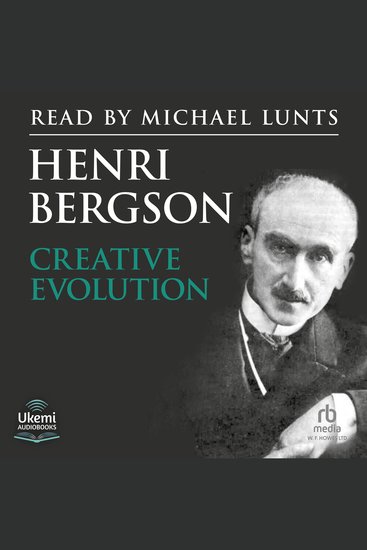
  • Creative Evolution - cover

    Creative Evolution

    Henri Bergson

    • 0
    • 0
    • 0
    Henri Bergson’s highly influential book, ‘Creative Evolution’ (‘Evolution Creatrice’, 1907) established a theory of evolution - called ‘Creative Evolution Theory’ - which gained a considerable following in the first half of the 20th Century. It also helped the author to win the Nobel Prize in 1927 for his work investigating the origins of biological information and divergence in the evolutionary process.  
     
    In this work, Bergson seeks an alternative explanation as to how new forms of life emerge compared to those prevailing at the time. This included both the ‘mechanistic’ or deterministic explanations of biological science on the one hand, and on the other the ‘finalist’ or strictly teleological explanation of those who believed in the hand of a ‘Creator’ or God, coordinating life in a divine plan. 
     
    Creative Evolution proposes a third explanation in what Bergson calls élan vital’ or ‘vital impetus’, a force that infuses all matter and drives it forward into an ever-changing and infinite variety of living forms. This appears as a vital impetus that can also be related to humanity’s own creative life force. Bergson’s book builds on his ‘Theory of Time’ as set forth in works such as ‘Matter and Memory’ and ‘Time and Free Will’.  In these works, and in the present volume, Bergson sees continuous ‘duration’ as real time, as opposed to the way in which time is divided up into measured units by the ‘organising’ mind of science. 
     
    Life, as we really experience it, is subject to constant change and our tendency to explain evolutionary change by looking only at ‘ends’ achieved rather than the processes by which they emerge, divorces us from the life force itself.  
     
    Instead, Bergson feels we need to reengage with our instincts as well as with our intelligence in order to understand the evolutionary process, as both co-exist to some extent within us, all forms of life having a common origin in that instinctual, innate knowledge of simpler life forms. Though these may be unconscious or semi-conscious, they are, in Bergson’s view, much more in touch with the ever-changing nature of real time than the analytical and rational knowledge of our species 
     
    As he writes:  “Our thought, in its purely logical form, is incapable of presenting the true nature of life, the full meaning of the evolutionary movement. Created by life, in definite circumstances, to act on definite things, how can it embrace life, of which it is only an emanation or an aspect?”  
     
    It is to attempt an answer to this question that ‘Creative Evolution’ directs its attention.
    Show book
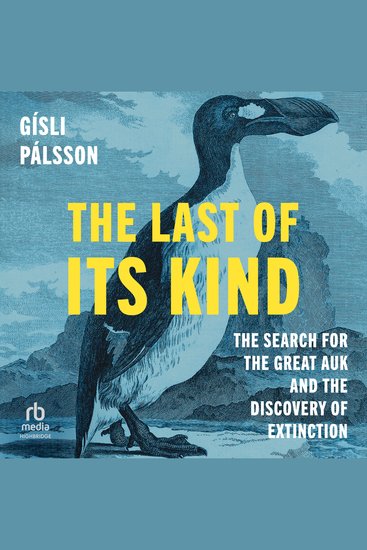
  • The Last of Its Kind - The Search for the Great Auk and the Discovery of Extinction - cover

    The Last of Its Kind - The...

    Gisli Palsson

    • 0
    • 0
    • 0
    The great auk is one of the most tragic and documented examples of extinction. A flightless bird that bred primarily on the remote islands of the North Atlantic, the last of its kind were killed in Iceland in 1844. Gísli Pálsson draws on firsthand accounts from the Icelanders who hunted the last great auks to bring to life a bygone age of Victorian scientific exploration while offering vital insights into the extinction of species. 


    Pálsson vividly recounts how British ornithologists John Wolley and Alfred Newton set out for Iceland to collect specimens only to discover that the great auks were already gone. At the time, the Victorian world viewed extinction as an impossibility or trivialized it as a natural phenomenon. Pálsson chronicles how Wolley and Newton documented the fate of the last birds through interviews with the men who killed them, and how the naturalists' Icelandic journey opened their eyes to the disappearance of species as a subject of scientific concern—and as something that could be caused by humans. 


    Blending a richly evocative narrative with rare, unpublished material as well as insights from ornithology, anthropology, and Pálsson's own North Atlantic travels, The Last of Its Kind reveals how the saga of the great auk opens a window onto the human causes of mass extinction.
    Show book