Join us on a literary world trip!
Add this book to bookshelf
Grey
Write a new comment Default profile 50px
Grey
Subscribe to read the full book or read the first pages for free!
All characters reduced
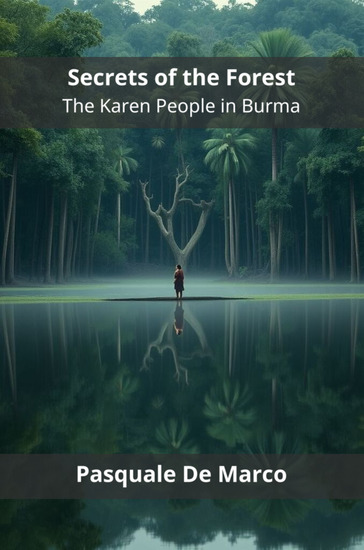
Secrets of the Forest - The Karen People in Burma - cover

Secrets of the Forest - The Karen People in Burma

Pasquale De Marco

Publisher: Publishdrive

  • 0
  • 0
  • 0

Summary

In the heart of Burma, where lush forests meet winding rivers, lies a story of resilience, resistance, and the enduring spirit of a people: the Karen. Embark on a journey into their hidden world, where ancient traditions intertwine with the complexities of modern conflict.

This book delves into the rich cultural tapestry of the Karen people, exploring their deep connection to nature, their vibrant music and dance, and the intricate patterns of their daily lives. Witness their unwavering determination to preserve their identity amidst decades of conflict, as they navigate the challenges of living in a war-torn land.

Through the eyes of those who have lived and fought on the front lines, we gain insights into the motivations, sacrifices, and unwavering spirit that drive the Karen's struggle for autonomy. Meet fearless warriors, wise elders, women playing vital roles in the rebellion, and children growing up amidst the uncertainties of war. Their stories paint a vivid portrait of a people's indomitable spirit.

Discover the Karen's profound connection to the natural world, a bond that has shaped their beliefs, traditions, and understanding of the universe. Explore the delicate balance between conservation and development, as they strive to protect their ancestral lands from the encroaching forces of modernity.

Witness the complexities of the Karen rebellion, gaining insights into the historical roots of the conflict, the challenges of maintaining unity amidst diverse ethnic groups, and the ongoing fight for justice and self-determination. Delve into the role of the international community, as they navigate the complexities of intervention and diplomacy.

This book is a testament to the strength of the human spirit, a testament to the power of culture and tradition in the face of adversity. It is a story of a people whose legacy is etched in the annals of history, a legacy of resilience, resistance, and the enduring hope for a brighter future.


If you like this book, write a review!
Available since: 06/02/2025.
Print length: 161 pages.

Other books that might interest you

  • The Mythology of the Aborigines - Dreamtime Stories from Australia - cover

    The Mythology of the Aborigines...

    Odessa Nightshade

    • 0
    • 0
    • 0
    Aboriginal mythology is one of the oldest and most enduring oral traditions in the world, deeply intertwined with the identity, spirituality, and way of life of Indigenous Australians. At the heart of this mythology is the concept of **Dreamtime**, the sacred era in which the land, people, and laws of existence were formed. Unlike Western myths, which often separate the past from the present, Dreamtime stories are timeless—continuing to shape and guide Aboriginal communities today.  
      
    One of the most profound aspects of Aboriginal mythology is its role in explaining the creation of the natural world. The Dreaming tells of powerful ancestral beings who shaped the land, created rivers and mountains, and gave life to animals and people. These stories are not just myths but sacred truths, passed down through generations as a way of preserving knowledge, laws, and cultural values. The **Rainbow Serpent**, for example, is a common figure in many Aboriginal cultures, often depicted as a creator spirit responsible for forming the land and waterways. Other tales speak of celestial beings, tricksters, and wise elders who teach important lessons about survival, respect, and harmony with nature.  
      
    Oral tradition is central to Aboriginal culture, ensuring that these sacred stories remain alive. Unlike written texts, Dreamtime stories are preserved through song, dance, rock art, and storytelling, allowing each generation to contribute to and maintain their significance. The stories are more than entertainment; they serve as maps for navigating the landscape, moral guides for behavior, and spiritual connections to the ancestors. They also emphasize a deep respect for the land, as many stories explain the sacred nature of particular sites, reinforcing the importance of environmental stewardship. 
    Show book
  • Paracelsus: A short biography - 5 Minutes: Short on time – long on info! - cover

    Paracelsus: A short biography -...

    5 Minutes, 5 Minute Biographies,...

    • 0
    • 0
    • 0
    Paracelsus, natural philosopher and healer: Life and work in a short biography! Everything you need to know, brief and concise. Infotainment, education and entertainment at its best!
    Show book
  • The Art Of War - The Classic Work With Comprehensive Annotations From The Greatest Chinese Commentators - cover

    The Art Of War - The Classic...

    Lionel Giles, Sun Tzu

    • 0
    • 0
    • 0
    There are many versions of this work in English, and it is included as a useful reflection once one has pondered Daoism’s key texts. The title is properly ‘'Sun Tzu's Military Method'. It was written at the time of the Dao and Zhuang Zi, several centuries before the Lieh Tzu. For fifteen hundred years, it was part of China’s canonical strategic anthology, which became known as the Seven Military Classics.In modern Anglophone culture it is often the only strategic text someone has read, supplanting and exceeding the previous dominant strategic text (von Clausewitz’s On War, 1832, tr. 1874). Leaders from Mao Zedong and Takeda Shingen to Võ Nguyên Giáp and Norman Schwarzkopf Jr. have explicitly acknowledged the book’s influence on them. This translation is notably the second major version of it in English. It follows a translation by Everard Ferguson Calthrop that Giles found deeply contemptible, as one can see from the introduction. It is important to note that most scholars do not consider the Art of War one of the classic Daoist texts. While it is a product and application of the philosophy, it is more of an exegetical monograph than a consideration of the philosophical underpinnings of Daoism. Much like the Zhuang Zi, it takes the core ideas and realizes them in specific practical situations. It does so with such certainty that many contest it as a ‘true’ Daoist work. As you will see from the discussions embedded elsewhere, the key Daoist texts value contradiction and paradox far too much to be as procedurally simple as the Art of War is.It is not clear that this criticism is fair, however. A much kinder perspective is that Daoism’s great failure is in its apparent lack of any utilitarian or social value. While Confucianism provides a balance, Sun Tzu’s work attempts to build a more practical version of Daoism than the key texts allow for.
    Show book
  • 1916-1923 Irish Revolution - cover

    1916-1923 Irish Revolution

    Legends of War

    • 0
    • 0
    • 0
    The Irish Revolution at the beginning of the twentieth century spawned the creation of the modern Irish state. This is a comprehensive framework of that revolution in its totality, taking into account the broad range of social, economic and political developments as well as the IRA's campaign of guerrilla warfare and the British response to it.  
    Drawing on such previously unpublished sources as the Irish Department of Defense's Military History Bureau, we paint a broad picture of the people and the key events in the Irish struggle for independence. We present much of the behind the scenes debate within the British Government in the prosecution of its policies in response to the revolt in Ireland. British official frustration provoked by the acceptance of the Anglo-Irish treaty by the majority of the Irish people and the independent institutions it sought to set in place is also explicitly chronicled.  
    New light is shed on the Anglo-Irish Treaty negotiations as well as on the divisions within Irish nationalism before and indeed afterwards which culminated in the Irish Civil War. The role of external forces including public opinion in the United States and British competing obligations at home and abroad are also covered. Considerable attention is given to the development of democratic government in the fledgling Irish Free State in the midst of domestic upheaval, and to the broader effort at nation building which followed after the Civil War.
    Show book
  • Symbolism of the Great Seal of the United States - cover

    Symbolism of the Great Seal of...

    M. Doreal

    • 0
    • 0
    • 0
    This message will be a revelation of great importance to every American interested in the ideals, hopes and aspirations of the founders of the United states. It will be found especially interesting to those who have wondered about the outcome of the present world conditions and the future of the American people. 
    To say that the early American founders did not dream of establishing a republic that would endure and eventually grow into the ideal state of the Golden Rule would not do them justice nor would it display an understanding of human nature.
    Show book
  • Freedom of Speech - Navigating the Balance Between Expression and Responsibility - cover

    Freedom of Speech - Navigating...

    Marcus Klein

    • 0
    • 0
    • 0
    Freedom of speech is a cornerstone of democratic societies, integral to the exercise of individual autonomy and the pursuit of truth. At its core, it is the right to express ideas, opinions, and beliefs without fear of government reprisal or censorship. This principle is enshrined in numerous legal documents, most notably the First Amendment to the U.S. Constitution, which guarantees "the freedom of speech, or of the press," protecting the individual’s right to speak openly in the public sphere. 
      
    The origins of free speech can be traced back to philosophical and political thinkers of the Enlightenment era, who emphasized the importance of reason, individual rights, and personal liberty. Thinkers such as John Locke, Voltaire, and John Stuart Mill argued that the free exchange of ideas was essential for the flourishing of society, allowing for the progress of knowledge, the correction of errors, and the protection of political freedom. These ideas laid the groundwork for the modern understanding of free expression as a fundamental human right. 
      
    However, the right to free speech is not absolute. Throughout history, the boundaries of this freedom have been tested by a wide range of societal, political, and ethical concerns. From the regulation of speech in times of war or national security threats to the ongoing debates over hate speech, defamation, and misinformation, societies have struggled to find a balance between protecting free expression and safeguarding the common good. This tension continues to shape the debate surrounding free speech, particularly in the context of emerging technologies like social media, which have transformed the landscape of communication.
    Show book