Join us on a literary world trip!
Add this book to bookshelf
Grey
Write a new comment Default profile 50px
Grey
Subscribe to read the full book or read the first pages for free!
All characters reduced
Rainbow in Us - cover

Rainbow in Us

Pasquale De Marco

Publisher: Publishdrive

  • 0
  • 0
  • 0

Summary

In a world where societal norms often overshadow the beauty of diversity, "Rainbow in Us" emerges as a beacon of enlightenment, shedding light on the kaleidoscope of gender and sexuality that exists both in the animal kingdom and within human societies. This thought-provoking book takes readers on an immersive journey, exploring the intricate tapestry of life's myriad expressions.

With eloquence and scientific rigor, the author weaves together a narrative that challenges traditional notions of gender and sexuality. Through captivating storytelling and compelling evidence, the book unveils the remarkable diversity of sexual and gender expressions found in nature, demonstrating that the spectrum of life extends far beyond binary constructs.

Delving into the depths of human experience, the book amplifies the voices of individuals whose identities defy societal expectations. Personal narratives and scientific insights intertwine, painting a vivid portrait of resilience, courage, and the indomitable spirit of those navigating the complexities of gender and sexuality. Their stories serve as a testament to the power of self-acceptance and the importance of creating inclusive spaces where all individuals can thrive.

Beyond personal narratives, the book delves into the intricate interplay between biology, culture, and society, examining how these forces shape our understanding of gender and sexuality. It explores the impact of societal norms, historical contexts, and the ever-changing landscape of human rights, shedding light on the challenges and triumphs experienced by those whose identities fall outside of traditional boundaries.

This book is not merely an academic exploration; it is a passionate call to action. It invites readers to embrace the beauty of diversity in all its forms, to unlearn biases, and to challenge societal norms that perpetuate discrimination. It urges us to work towards a world where every individual can live authentically and be celebrated for their unique contributions to the human tapestry.

Thought-provoking, enlightening, and deeply moving, "Rainbow in Us" is a must-read for anyone seeking a deeper understanding of gender and sexuality. It is a clarion call for inclusivity, a celebration of human diversity, and an inspiration to all who believe in a world where everyone belongs.


If you like this book, write a review!
Available since: 06/02/2025.
Print length: 166 pages.

Other books that might interest you

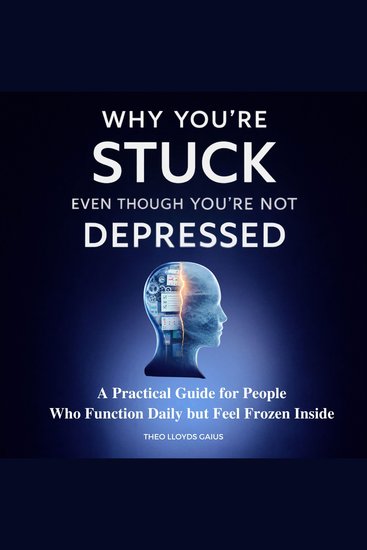
  • Why You're Stuck Even Though You're Not Depressed - A Practical Guide for People Who Function Daily but Feel Frozen Inside - cover

    Why You're Stuck Even Though...

    Theo Lloyds Gaius

    • 0
    • 0
    • 0
    This audiobook is narrated by an AI Voice. You go to work. You answer emails. You keep the house running and show up where people expect you to. From the outside, nothing looks wrong. But inside, something has gone quiet. You've been feeling frozen inside and going through the motions for weeks, maybe months, doing what needs to be done while the things that actually matter to you sit untouched. The project. The conversation. The decision. You think about them constantly. You just can't make yourself move toward them. 
     
     
    If you've been asking yourself why can't I do anything when I'm not even sad, you are not lazy, ungrateful, or unmotivated. You are stuck in a nervous system state that most self-help books never address. It is called functional freeze, and it happens when your body activates a protective shutdown response while keeping just enough energy online to maintain daily functioning. You can perform. You can cope. But you cannot move forward. And no amount of goal-setting, discipline, or motivational advice will fix it, because the problem was never motivation. The problem is that your nervous system has classified forward action as unsafe.
    Show book
  • How to Lose a War - The Story of America's Intervention in Afghanistan - cover

    How to Lose a War - The Story of...

    Amin Saikal

    • 0
    • 0
    • 0
    An incisive, authoritative account of the West's failures in Afghanistan, from 9/11 to the fall of Kabul 


    In 1958, Richard Nixon described Afghanistan as "unconquerable." On August 15, 2021, he was proven right. After twenty years of intervention, US and NATO forces retreated, enabling the Taliban to return to power. Tens of thousands were killed in the long, unwinnable war, and millions more were displaced—leaving the future of Afghanistan hanging in the balance. 


    Leading expert Amin Saikal traces the full story of America's intervention, from 9/11 to the present crisis. After an initial swift military strike, the US became embroiled in a drawn-out struggle to change Afghanistan but failed to achieve its aims. Saikal shows how this failure was underlined by protracted attempts to capture Osama bin Laden, an inability to secure a viable government via "democracy promotion" efforts, and lack of wider strategy in the "war on terror." 


    How to Lose a War offers an insightful account of one of the US's most significant foreign policy failures—and considers its dire consequences for the people of Afghanistan.
    Show book
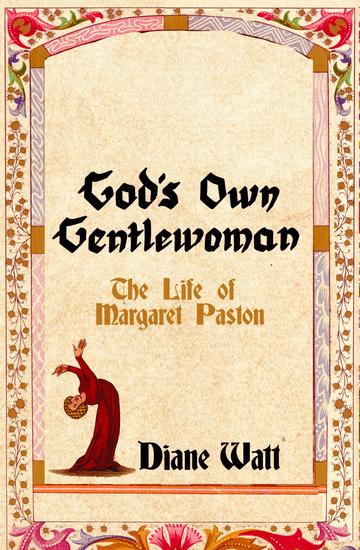
  • God's Own Gentlewoman - The Life of Margaret Paston - cover

    God's Own Gentlewoman - The Life...

    Diane Watt

    • 0
    • 0
    • 0
    The remarkable story of Margaret Paston, whose letters form the most extensive collection of personal writings by a medieval English woman.
    
    Drawing on what is the largest archive of medieval correspondence relating to a single family in the UK, God's Own Gentlewoman explores what everyday life was like during the turbulent decades at the height of the Wars of the Roses. From political conflicts and familial in-fighting; forbidden love affairs and clandestine marriages; bloody battles and sieges; fear of plague and sudden death; friendships and animosity; childbirth and child mortality, Margaret's letters provide us with unparalleled insight into all aspects of life in late medieval England.
    
    Diane Watt is a world expert on medieval women's writing, and God's Own Gentlewoman explores how Margaret's personal archive provides an insight into her activities, experiences, emotions and relationships and the life of a medieval woman who was at times absorbed by the mundane and domestic, but who also found herself caught up in the most extraordinary situations and events.
    Show book
  • Gardening Can Be Murder - How Poisonous Poppies Sinister Shovels and Grim Gardens Have Inspired Mystery Writers - cover

    Gardening Can Be Murder - How...

    Marta McDowell

    • 0
    • 0
    • 0
    This fun, engrossing book takes a look at the surprising influence that gardens and gardening have had on mystery novels and their authors. With their deadly plants, razor-sharp shears, shady corners, and ready-made burial sites, gardens make an ideal scene for the perfect murder. But the outsize influence that gardens and gardening have had on the mystery genre has been underappreciated. Now, Marta McDowell, a writer and gardener with a near-encyclopedic knowledge of the genre, illuminates the many ways in which our greatest mystery writers, from Edgar Allen Poe to authors on today’s bestseller lists, have found inspiration in the sinister side of gardens. From the cozy to the hardboiled, the literary to the pulp, and the classic to the contemporary, Gardening Can Be Murder is the first book to explore the mystery genre’s many surprising horticultural connections. Meet plant-obsessed detectives and spooky groundskeeper suspects, witness toxic teas served in foul play, and tour the gardens—both real and imagined—that have been the settings for fiction’s ghastliest misdeeds. A New York Times bestselling author herself, McDowell also introduces us to some of today’s top writers who consider gardening integral to their craft, assuring that horticultural themes will remain a staple of the genre for countless twisting plots to come.    “This book is dangerous. A veritable cornucopia of crime fiction and gardening lore, it faces the reader with multiple temptations—books to seek out, plants to obtain, garden tours to book.” —Vicki Lane, author of the Elizabeth Goodweather Appalachian Mysteries
    Show book
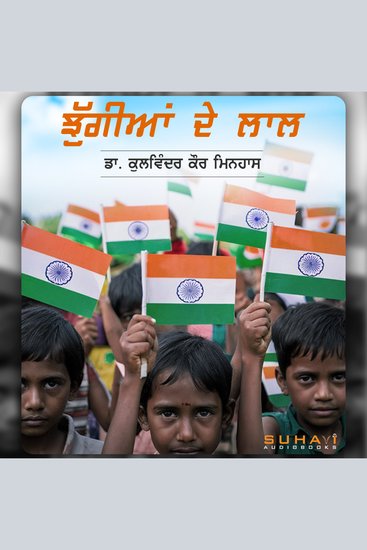
  • Jhugian De Lal - cover

    Jhugian De Lal

    Dr. Kulwinder Kaur Minhas

    • 0
    • 0
    • 0
    The book *"Jhugian De Lal"*, written by Dr. Kulwinder Kaur Minhas, narrates the challenges faced and the successes achieved in her philanthropic efforts. It highlights the struggles encountered while working for the betterment of underprivileged children living in slums and sheds light on initiatives aimed at connecting them with education.
    Show book
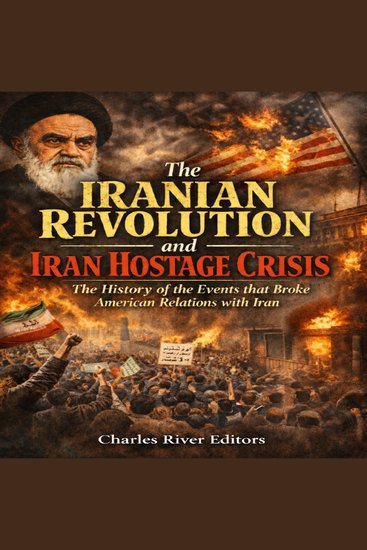
  • Iranian Revolution and Iran Hostage Crisis The: The History of the Events that Broke American Relations with Iran - cover

    Iranian Revolution and Iran...

    Charles River Editors

    • 0
    • 0
    • 0
    On February 1, 1979, amid great fanfare, exiled cleric Ayatollah Ruhollah Khomeini landed in Tehran. The return of the leader of the revolution to his home country was one of the final markers of the Iranian Revolution, a national phenomenon that had global implications. 
    The Iranian Revolution of 1979 has been described as an epochal event, the peak of 20th century Islamic revivalism and revitalization, and the key incident that continues to impact politics across Iran, the Middle East, and the even the world as a whole. As a phenomenon that led to the creation of the first modern Islamic Republic in the world, the revolution marked the victory of Islam over secular politics, and Iran quickly became the aspiring model for Islamic fundamentalists and revivalists across the globe, regardless of nationality, culture, or religious sect. When Ayatollah Khomeini was declared ruler in December 1979 and the judicial system originally modeled on that of the West was swiftly replaced by one purely based on Islamic law, much of the world was in shock that such a religiously driven revolution could succeed so quickly, especially when it had such sweeping consequences beyond the realm of religion. 
    The Iran Hostage Crisis marked a change in American identity both as individuals and a nation. Those born in earlier decades had relatively little understanding of radical Islam, and those born later could not conceive of a world without it. Some would say that the crisis was ultimately a good thing, in that it ushered Ronald Reagan into the White House and thus led to the fall of Communism, while others would say that it was a harbinger of doom and a demonstration that even as one geopolitical foe declined, another was on the rise. Some say America was singled out because it was seen as too strong, others because it was seen as too weak.
    Show book