Join us on a literary world trip!
Add this book to bookshelf
Grey
Write a new comment Default profile 50px
Grey
Subscribe to read the full book or read the first pages for free!
All characters reduced
Power Dynamics of Great Civilizations - cover

Power Dynamics of Great Civilizations

Pasquale De Marco

Publisher: Publishdrive

  • 0
  • 0
  • 0

Summary

In this captivating journey through history, we explore the rise, fall, and enduring legacies of the great civilizations that have shaped our world. From ancient Mesopotamia and Egypt to the global superpowers of today, we delve into the intricate power dynamics that have defined human civilization.

The book begins by examining the dawn of civilization, where empires emerged in Mesopotamia, Egypt, and the Indus Valley. We uncover the origins of cultural, technological, and political institutions that have stood the test of time. We marvel at architectural wonders, explore intellectual achievements, and trace the roots of mathematics, astronomy, and literature.

Our exploration continues through the Mediterranean Sea, where ancient Greece and Rome left an indelible mark on history. We delve into the philosophical inquiries of Socrates, the dramatic masterpieces of Sophocles, and the military prowess of the Romans. We witness the rise and fall of empires, the clash of cultures, and the enduring legacies of these ancient civilizations.

The Middle Ages bring both turmoil and transformation. The Byzantine Empire stands as a beacon of Christianity in the East, while the Islamic world flourishes under the caliphates. The Crusades ignite conflict between East and West, reshaping the religious and political landscapes. We explore the intellectual and artistic achievements of this period, including the rebirth of classical learning, the rise of humanism, and the Protestant Reformation.

The Age of Exploration marks a turning point, as European powers venture into uncharted waters, forever changing the global map. We follow intrepid explorers as they uncover new lands, encounter diverse cultures, and establish trade routes that connect the world. The Industrial Revolution brings about unprecedented technological advancements, transforming societies and economies.

In the modern era, we witness the rise and fall of empires, the emergence of superpowers, and the ongoing quest for global dominance. We examine the impact of colonialism, the challenges of globalization, and the ever-shifting balance of power. The book concludes with a thought-provoking exploration of the future of great civilizations, considering the rise of China, the changing global order, and the urgent need to address climate change and other global challenges.


If you like this book, write a review!
Available since: 06/02/2025.
Print length: 153 pages.
Other books that might interest you

  • Authoritarianism - A Very Short Introduction - cover

    Authoritarianism - A Very Short...

    James Loxton

    • 0
    • 0
    • 0
    Authoritarianism is one of the buzzwords of our age. But what is it exactly? This Very Short Introduction provides a comprehensive overview of the world of authoritarian regimes, including military, single-party, and personalist regimes. It considers how understandings of authoritarianism have evolved over time, as well as the curious fact that many authoritarian regimes today hold elections. Drawing on examples from Africa, Asia, Europe, Latin America, and the Middle East, James Loxton examines the life cycle of authoritarian regimes. How are they born? What challenges do they face during life? Why do they die? The author shows how factors such as natural resource wealth and cross-border collaboration can contribute to authoritarian durability. He also highlights the disturbing fact that even when authoritarian regimes collapse, voters often use their newfound democratic rights to send former authoritarian officials back to office.
    Show book
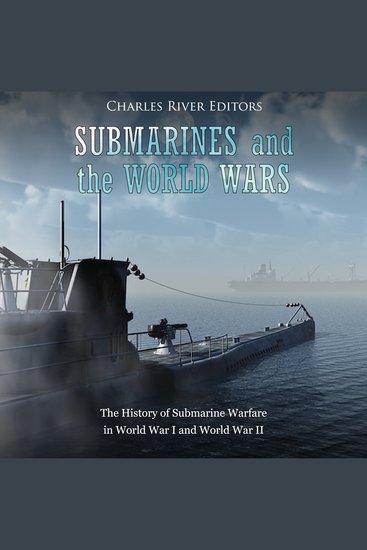
  • Submarines and the World Wars: The History of Submarine Warfare in World War I and World War II - cover

    Submarines and the World Wars:...

    Editors Charles River

    • 0
    • 0
    • 0
    During World War I, German U-boats operated solo except on one occasion. Initially, the British and nations supplying England with food and materiel scattered vessels singly across the ocean, making them vulnerable to the lone submarines. However, widespread late war re-adoption of the convoy system tipped the odds in the surface ships' favor, as one U-boat skipper described: “The oceans at once became bare and empty; for long periods at a time the U-boats, operating individually, would see nothing at all; and then suddenly up would loom a huge concourse of ships, thirty or fifty or more of them, surrounded by a strong escort of warships of all types.” 
    World War I proved the value of submarines, ensuring their widespread employment in the next conflict, and one critical innovation in World War II's Atlantic U-boat operations consisted of wolf-pack tactics, in which Admiral Karl Dönitz put great faith: “The greater the number of U-boats that could be brought simultaneously into the attack, the more favorable would become the opportunities offered to each individual attacker. 
    Meanwhile, submarines exercised a decisive impact on the outcome of the Pacific Theater in World War II. The U.S. submarine fleet, largely though not exclusively under the overall command of Vice Admiral Charles Lockwood, strangled the supply lines and shipping traffic of the Empire of Japan. Their commerce raiding crippled both Japan's ability to keep its frontline units supplied and to manufacture the weapons, vessels, and vehicles needed to successfully carry on the struggle. Though constituting only 1.6% of the total U.S. Navy’s tonnage in the Pacific, the submarine fleet inflicted massive losses on the Imperial Japanese Navy and Japan's crucial merchant marine. Submarines sank 55% of the merchant shipping lost, or approximately 1,300 vessels
    Show book
  • More Than IQ - cover

    More Than IQ

    Don Lawler

    • 0
    • 0
    • 0
    More Than IQ: Learn about EQ Edge and How Emotional Intelligence Can Have a Big Impact on Your Professional SuccessIntelligence quotient, or IQ, has long been considered a measure of a person's cognitive abilities and potential for success. However, in recent years, there has been a growing recognition that another form of intelligence, emotional intelligence, or EQ, is just as important, if not more so, in predicting success in life. In the workplace, individuals with high EQ tend to be more successful in their careers because they are able to effectively navigate social situations, form strong relationships with colleagues, and handle challenging emotions in a healthy and productive manner.In this audiobook, you will learn about emotional intelligence and all its impact to your professional success. We will explore the different facets of emotional intelligence and how they can help you excel in your career. You will learn how to build strong relationships, resolve conflicts, and make difficult decisions with confidence and grace.This audiobook will discuss the following topics:- Emotional Intelligence Basics- Elements of Emotional Intelligence- Emotional Intelligence and Traditional Intelligence- Emotional Intelligence Strong and Weak Competencies- Cognitive Intelligence and Emotional Intelligence in Organizational Behavior- Emotional Intelligence as a Factor of Professional Success- Emotional Intelligence, Burnout, and Job Insecurity- How Can Managers Use Emotional Intelligence- Emotional Intelligence in Groups- And many more!You can have the tools and strategies you need to harness the power of your emotions and achieve the professional success you deserve by downloading this audiobook. So scroll up and click “add to cart” now!
    Show book
  • PSAT Prowess: Transform Your Score with Simple Secrets - "Boost your PSAT performance! Unlock transformative audio lessons to supercharge your exam success" - cover

    PSAT Prowess: Transform Your...

    Cyrus Elmsworth

    • 0
    • 0
    • 0
    Audiobook Title: PSAT Prowess: Transform Your Score with Simple Secrets 
    ⭐⭐ Simplified Guide & Explanations Included ⭐⭐ 
    Are you aiming to advance your education and solidify your skills by successfully acing the PSAT? 
    Searching for a thorough guide that encompasses everything you need to excel in the PSAT? 
    Your quest ends here! 
    This guide acts as your go-to resource for enhancing your understanding, applying essential strategies, and engaging in practical exercises. With this, you're set for success. 
    Updated for the PSAT 2024-2025 Exam Structure. 
    Key features of this enhanced guide: 
    - In-depth insights into the PSAT 2024-2025 Certification 
    - Comprehensive breakdown of the PSAT format and requirements 
    - Effective strategies for exam preparation and problem-solving 
    Our guide stands out with its exhaustive coverage, which is crucial for your exam triumph. Concepts are explored in detail, ensuring you don't miss any critical points. 
    Please note that this guide is an independent resource and is not affiliated with any official PSAT organization. 
    Crafted with a clear structure and straightforward language, our PSAT Exam Guide 2024-2025 guarantees seamless transitions between topics. Say goodbye to complex terminology and embrace clear, precise, and technically accurate content. 
    So, why wait? Click the BUY NOW button, secure your guide, and embark on your journey to PSAT success! 
    Maximize your PSAT potential with effective strategies for successful outcomes!
    Show book
  • 5 Types of People Who Can Ruin Your Life - Identifying and Dealing with Narcissists Sociopaths and Other High-Conflict Personalities - cover

    5 Types of People Who Can Ruin...

    LCSW Esq. Bill Eddy

    • 0
    • 0
    • 0
    Some difficult people aren’t just hard to deal with—they’re dangerous. 
      
    Do you know someone whose moods swing wildly? Do they act unreasonably suspicious or antagonistic? Do they blame others for their own problems? 
      
    When a high-conflict person has one of five common personality disorders—borderline, narcissistic, paranoid, antisocial, or histrionic—they can lash out in risky extremes of emotion and aggression. And once an HCP decides to target you, they’re hard to shake. 
      
    But there are ways to protect yourself. Using empathy-driven conflict management techniques, Bill Eddy, a lawyer and therapist with extensive mediation experience, will teach you to: 
      
    • Spot warning signs of the five high-conflict personalities in others and in yourself.  
    • Manage relationships with HCPs at work and in your private life.  
    • Safely avoid or end dangerous and stressful interactions with HCPs. 
      
    Filled with expert advice and real-life anecdotes, 5 Types of People Who Can Ruin Your Life is an essential guide to helping you escape negative relationships, build healthy connections, and safeguard your reputation and personal life in the process. And if you have a high-conflict personality, this book will help you help yourself. 
      
    “[This] brilliant book on high-conflict personalities saves us from trusting the wrong people and making the worst relationship mistakes at work, at home, and in our lives. You need this information today!”—Randi Kreger, bestselling author of Stop Walking on Eggshells and The Essential Family Guide to Borderline Personality Disorder
    Show book
  • War Transformed - The Future of Twenty-First-Century Great Power Competition and Conflict - cover

    War Transformed - The Future of...

    Mick Ryan

    • 0
    • 0
    • 0
    War Transformed: The Future of Twenty-First-Century Great Power Competition and Conflict provides insights for those involved in the design of military strategy, and the forces that must execute that strategy. Emphasizing the impacts of technology, new era strategic competition, demography, and climate change, Mick Ryan uses historical and contemporary anecdotes to highlight key challenges faced by nations in a new era of great power rivalry. Just as previous industrial revolutions have advanced societies, the nascent fourth industrial revolution will have a similar impact on how humans fight, compete, and build military power in the twenty-first century. 


    War Transformed seeks to provide a preview of the shape of war and competition in the twenty-first century. Ryan examines both the shifting character of war and its enduring nature. He proposes important trends in warfare that will shape all aspects of human competition and conflict in the coming decades. 


    Competing and engaging in combat in this new era involves evolved strategies and warfighting concepts. As the competitive environment and potential battlefields continue to change, conceptions of combat, competition, and conflict must also evolve. Mick Ryan makes the case for transforming how Western military institutions view war in this century.
    Show book