Join us on a literary world trip!
Add this book to bookshelf
Grey
Write a new comment Default profile 50px
Grey
Subscribe to read the full book or read the first pages for free!
All characters reduced
On Being Eternal - cover

On Being Eternal

Pasquale De Marco

Publisher: Publishdrive

  • 0
  • 0
  • 0

Summary

What is eternity? Is it an endless stretch of time, a realm beyond time altogether, or something else entirely? This book invites you on a journey to explore the concept of eternity from a variety of perspectives, drawing on insights from philosophy, religion, science, and art.

Together, we will delve into the different ways in which eternity has been conceived throughout history, from the ancient Greeks to the present day. We will examine the nature of eternity itself, asking what it means for something to be eternal and how eternity differs from time.

We will then turn our attention to the implications of eternity for our understanding of the world and our place in it. What does it mean to live in a world that is eternal? How does eternity affect our understanding of life, death, and meaning? And what hope can eternity offer us in the face of the challenges and uncertainties of life?

This book is not just an intellectual exploration of eternity; it is also a personal invitation to reflect on the nature of your own existence and to consider the possibility of a life that transcends time. Whether you are a philosopher, a scientist, a theologian, an artist, or simply someone who is curious about the nature of reality, this book has something to offer you.

Join us on this journey into eternity, and discover the profound implications that eternity has for your life.


If you like this book, write a review!
Available since: 06/02/2025.
Print length: 147 pages.

Other books that might interest you

  • Cult Behavior - Psychological Techniques Used to Control and Manipulate Group Members - cover

    Cult Behavior - Psychological...

    Cito Harder

    • 0
    • 0
    • 0
    Cults have existed throughout history, often drawing in intelligent, well-meaning individuals who become deeply entangled in their belief systems. Despite the common misconception that only the weak or naive fall into cults, research shows that anyone can be susceptible under the right conditions. Cults use psychological techniques to manipulate and control their members, fostering dependence, obedience, and unwavering loyalty. Understanding the psychology behind cult behavior is key to recognizing and protecting oneself from such groups.  
    One of the defining characteristics of a cult is its ability to influence thought and behavior through intense social pressure. Cults typically create an environment where members feel an emotional and psychological connection that overrides rational thinking. This is often achieved by isolating individuals from outside influences, reinforcing a sense of exclusivity, and instilling the belief that the group holds the ultimate truth. Once a person begins to accept these ideas, they are more likely to dismiss opposing viewpoints, even in the face of clear evidence. 
    Another psychological mechanism that cults exploit is the human need for belonging and purpose. Many people who join cults are searching for meaning, security, or a sense of identity. Cults capitalize on these needs by offering a tight-knit community, a higher purpose, and a leader who presents themselves as wise, enlightened, or even divine. This emotional connection makes it difficult for members to question the group's motives, as doing so would threaten their newfound sense of belonging.
    Show book
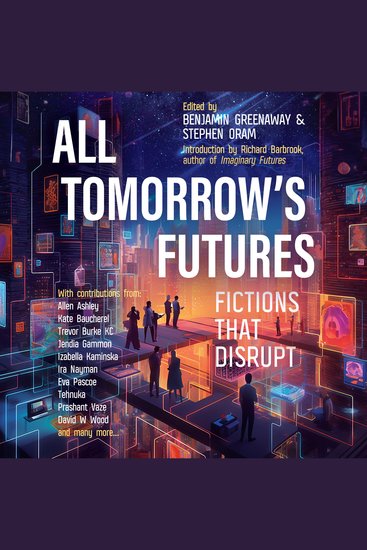
  • All Tomorrow's Futures - Fictions That Disrupt - cover

    All Tomorrow's Futures -...

    Benjamin Greenaway, Stephen...

    • 0
    • 0
    • 0
    Welcome to a journey through speculative fictions, where the possibilities of tomorrow are explored like never before. In a new collaborative approach, renowned experts, armed with their deep knowledge of justice, energy, digital money, longevity and learning, join forces with talented authors to weave narratives that transcend the future that you may currently believe is inevitable.  
    Situated in 'real-life' between accelerationism and scepticism, this volume of disruptions serves as a thought-provoking look into the potential consequences of scientific progress, technological development and societal evolution.  
    "What a wonderful and inspiring alternative to the so-called 'world-building' of today's science fiction industry. Here are some real lessons on how to speculate in ways that may actually open new potentials for human flourishing." Douglas Rushkoff, Team Human. 
    "This book offers an essential collaboration between domain experts, writers, and editors, fusing foresight and technological exploration to offer narratives both visionary and eerily plausible." Dr Helen Marshall, Director, WhatIF Lab, Queensland University. 
      
    "The stories and commentaries make us take a long hard look at the world we have ahead of us, knowing that the problems aren't with AI, climate, money, health, or knowledge. Rather, they come from our relationships with them. The lessons are aplenty, but more importantly, there is hope." Yen Ooi, 2023 Hugo Awards finalist and Director, London Science Fiction Research Community. 
    "This clever collection of speculative stories explores the possible futures that await us. Through a series of narratives that weave together technological, ethical and societal futures, we are also gifted great analysis and commentary from experts in their fields." Tracey Fellows, Futurist, Author of 'The Future Of You'.
    Show book
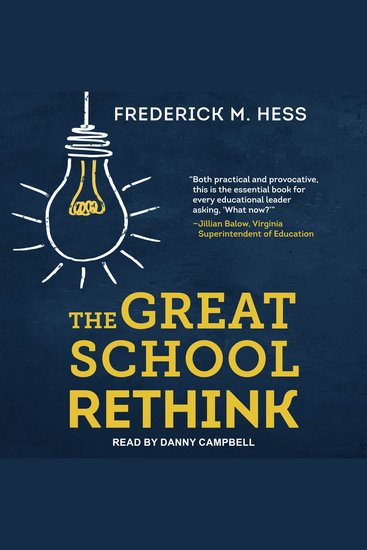
  • The Great School Rethink - cover

    The Great School Rethink

    Frederick M. Hess

    • 0
    • 0
    • 0
    In The Great School Rethink, education policy sentinel Frederick M. Hess offers a pithy and perceptive appraisal of American schooling and finds, in the uncertain period following pandemic disruption, an ideal moment to reimagine US education. Now is the time, he asserts, to ask hard questions about how schools use time and talent, how they work with parents, what they do with digital tools, and how they meet the needs of their communities. 


    As Hess explains, to rethink is to acknowledge the realities of the education system while opening one's mind to possibility. With characteristic verve and wit, Hess guides listeners through his rethink process, a versatile and easily implemented approach to identifying issues and brainstorming possible responses. He encourages listeners to explore what improvements might alleviate current pressures and frustrations, such as teacher shortages and burnout, declining student performance, and compromised learning time. Whether their goal is to achieve better student engagement, increase parent involvement, or implement personalized learning, listeners will develop the mindset to ask the right questions, to fully understand the problem that's being solved, and to evaluate the probable effectiveness of proposed solutions.
    Show book
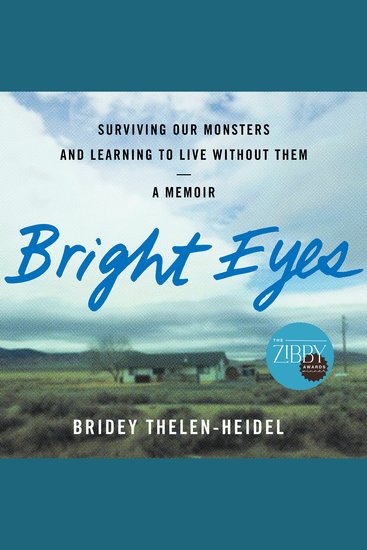
  • Bright Eyes-A Memoir - Surviving Our Monsters and Learning to Live Without Them - cover

    Bright Eyes-A Memoir - Surviving...

    Bridey Thelen-Heidel

    • 0
    • 0
    • 0
    Fans of Jennette McCurdy’s I’m Glad My Mom Died will root for Bridey Thelen-Heidel as she struggles to unshackle herself from her mother’s chaos in this triumphant debut memoir. 
    Bridey is tethered to her mom’s addiction to dangerous men who park their Harley-Davidsons in the house and kick holes in all their doors. Raised to be her mother’s keeper, rescuer, and punching bag, Bridey gets used to stuffing her life into black trash bags, hauling them between Alaska and California, and changing schools every time her mom moves in a new monster—or runs away from one. Desperately seeking the normal life she’s observed in sitcoms and her friends’ families, Bridey earns her way into a fancy, private college, where she tries to forget who she is—until her mom calls with a threat that drops Bridey to her knees. Watching doctors and police interrogate her mother at the hospital, Bridey realizes her mom has become a monster herself . . . and she doesn’t want to be saved. 
    But Bridey does. 
    Bright Eyes is about the indomitable spirit of a young girl forced to be brave, required to be resilient, and conditioned to be optimistic, and how she ultimately uses the same traits that helped her to survive her mother’s chaos to create her own happily-ever-after.
    Show book
  • Chasing Lewis's Monkeyflower - The Amazing Afterlife of the Lewis and Clark Expedition's Wild Plants - cover

    Chasing Lewis's Monkeyflower -...

    Elizabeth Adelman

    • 0
    • 0
    • 0
    A look at the Lewis and Clark Expedition and the plant specimens the great explorers gathered on their way—and of their amazing afterlife.Elizabeth Adelman's Chasing the Missing Monkeyflower is the two hundred-year saga of finding, losing, and finding the wild plants collected on America's first exploration west, the Lewis and Clark Expedition.Thomas Jefferson handpicked Meriwether Lewis to lead the expedition, gather notable specimens along the way, and then write the journals, with one volume to include science-worthy descriptions and classifications of the plants that Lewis collected and pressed to preserve. Not a botanist, Lewis needed help to write this part of the journals.Ambition, deceit, theft, wealth, debt, alcoholism, loss, suicide, serendipity, and stubborn persistence cross the plants' paths in Philadelphia, New York, and London. This is the first work detailing the places, practices, and times of a cavalcade of people who touched the plants. A fascinating chronicle of an unexplored byway of the great American story.
    Show book
  • The Shadow of Evil - The Ethical Dilemma of Nazi Medical Experiments Darwinism And Racial Purification - cover

    The Shadow of Evil - The Ethical...

    Davis Truman

    • 0
    • 0
    • 0
    The Nazi regime of Germany during World War II is known for its atrocities, including the systematic persecution and extermination of millions of Jews and other minorities. However, the unethical medical experiments conducted by Nazi doctors on prisoners are less widely known, which were rooted in the ideology of Darwinism and racial purification. These experiments involved subjecting prisoners to brutal and often deadly procedures in the name of scientific advancement and the supposed improvement of the Aryan race. The ethical implications of these experiments and how pseudoscientific theories of racial superiority justified them continue to raise important questions about the role of science and medicine in society and the need for ethical guidelines and oversight in research. This paper explores the ethical dilemmas presented by the Nazi medical experiments, the relationship between Darwinism and racial purification, and the ongoing implications of these issues for contemporary society.
    Show book