Join us on a literary world trip!
Add this book to bookshelf
Grey
Write a new comment Default profile 50px
Grey
Subscribe to read the full book or read the first pages for free!
All characters reduced
Multifaceted Identities - Navigating the Complexities of Race Ethnicity and Language - cover

Multifaceted Identities - Navigating the Complexities of Race Ethnicity and Language

Pasquale De Marco

Publisher: Publishdrive

  • 0
  • 0
  • 0

Summary

In this thought-provoking book, we delve into the intricate relationship between race, ethnicity, and language, exploring their profound impact on identity formation. Through a comprehensive analysis of historical, social, and cultural factors, we shed light on the ways in which these three elements intersect and shape our sense of self.

We begin by examining the concept of race, a socially constructed category that has had far-reaching consequences for individuals and societies. We trace the origins of racial classifications, exposing the myth of race and its devastating impact on human history. We also explore the concept of intersectionality, recognizing that race interacts with other aspects of identity, such as gender, class, and ethnicity, to create unique and complex experiences of discrimination and privilege.

Next, we turn our attention to ethnicity, a cultural heritage that binds individuals together through shared traditions, values, and beliefs. We explore the ways in which ethnic identity provides a sense of belonging and community, while acknowledging the challenges and conflicts that can arise when ethnic groups interact. We also examine the role of ethnicity in shaping cultural practices, languages, and artistic expressions.

Finally, we investigate the relationship between language and identity, recognizing language as a powerful tool for communication, expression, and identity construction. We explore the diversity of languages and dialects, highlighting their significance in shaping cultural identity and worldview. We also examine the politics of language, exploring how language can be used as a tool of power and control, and how language revitalization efforts can empower marginalized communities.

Throughout this book, we aim to provide readers with a comprehensive understanding of the complex interplay between race, ethnicity, and language in shaping identity. We hope to challenge preconceived notions, foster empathy and understanding, and inspire readers to embrace the beauty and richness of human diversity.

This book is essential reading for anyone interested in identity studies, race and ethnic relations, linguistics, and social justice. It is a valuable resource for students, scholars, policymakers, and anyone seeking a deeper understanding of the complexities of identity formation in a diverse and interconnected world.


If you like this book, write a review!
Available since: 06/02/2025.
Print length: 166 pages.


Other books that might interest you

  • A Rare Recording of Alexander Fleming - cover

    A Rare Recording of Alexander...

    Alexander Fleming

    • 0
    • 0
    • 0
    Sir Alexander Fleming (August 6, 1881 – March 11, 1955) was a Scottish biologist, pharmacologist and botanist. He wrote many articles on bacteriology, immunology, and chemotherapy. His best-known discoveries are the enzyme lysozyme in 1923 and the antibiotic substance penicillin from the mold Penicillium notatum in 1928, for which he shared the Nobel Prize in Physiology or Medicine in 1945 with Howard Florey and Ernst Boris Chain. The following is from a 1950 talk he gave on the development of antibiotics.
    Show book
  • What God Would Have Known - How Human Intellectual and Moral Development Undermines Christian Doctrine - cover

    What God Would Have Known - How...

    J. L. Schellenberg

    • 0
    • 0
    • 0
    Classical Christian ideas loom large in philosophy of religion today. But arguments against Christian doctrine have been neglected. J. L. Schellenberg's new book remedies this neglect. 


    The tide of human development, which the early Christians might have expected to corroborate their teaching, has in fact brought many results that run contrary to that teaching. Or at least it will be seen to have done so, says Schellenberg, when we think about the consequences of any God existent then being fully cognizant, when Christian doctrine was first formed, of all that we have laboriously learned since then. Newly discovered facts, not just about such things as evolution and the formation of the New Testament but also about mental illness, violent punishment, the relations between women and men, and the status of same-sex intimacy, suggest new arguments against the content of the Christian revelation when the prior understanding of the purported revealer is taken into account. 


    What God Would Have Known offers a thorough and incisive treatment of its subject that remains respectful and fair-minded throughout. It is not concerned with the overworked question of whether classical Christians believe irrationally, but with what overlooked arguments about human development show in relation to the truth or falsity of Christian claims about reality.
    Show book
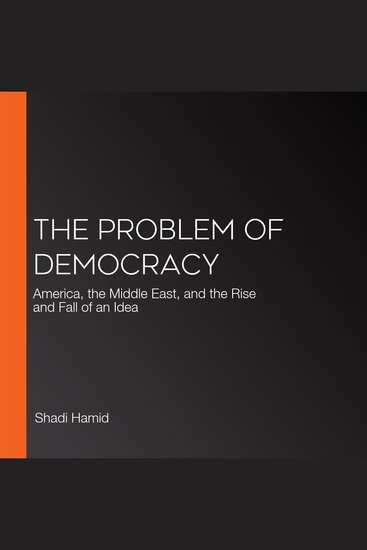
  • The Problem of Democracy - America the Middle East and the Rise and Fall of an Idea - cover

    The Problem of Democracy -...

    Shadi Hamid

    • 0
    • 0
    • 0
    What happens when democracy produces "bad" outcomes? Is democracy good because of its outcomes or despite them? This "democratic dilemma" is one of the most persistent, vexing problems for America abroad, particularly in the Middle East—we want democracy in theory but not necessarily in practice. 


    When Islamist parties rise to power through free elections, the United States has too often been ambivalent or opposed, preferring instead pliable dictators. With this legacy of democratic disrespect in mind, and drawing on new interviews with top American officials, Shadi Hamid explores universal questions of morality, power, and hypocrisy. Why has the United States failed so completely to live up to its own stated ideals in the Arab world? And is it possible for it to change? 


    In The Problem of Democracy, Hamid offers an ambitious reimagining of this ongoing debate and argues for "democratic minimalism" as a path to resolving democratic dilemmas in the Middle East and beyond. In the seemingly eternal tension between democracy and liberalism, recognized by the ancient Greeks and the American founders alike, it may be time to prioritize one over the other, rather than acting as if the two are intertwined when increasingly they are not.
    Show book
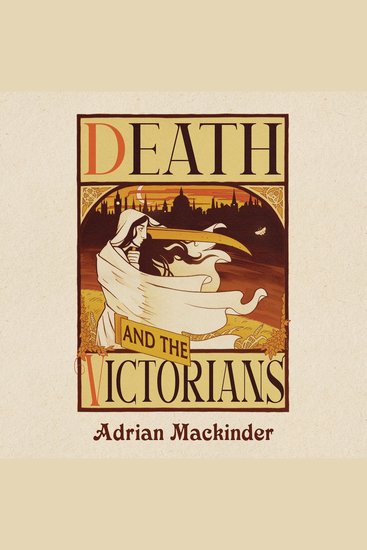
  • Death and the Victorians - A Dark Fascination - cover

    Death and the Victorians - A...

    Adrian Mackinder

    • 0
    • 0
    • 0
    From spooky stories and real-life ghost hunting, to shows about murder and serial killers, we are fascinated by death - and we owe these modern obsessions to the Victorian age.


    Death and the Victorians explores a period in history when the search for the truth about what lies beyond our mortal realm was matched only by the imagination and invention used to find it.


    Walk among London’s festering graveyards, where the dead were literally rising from the grave. Visit the Paris Morgue, where thousands flocked to view the spectacle of death every single day.


    Lift the veil on how spirits were invited into the home, secret societies taught ways to survive death, and the latest science and technology was applied to provide proof of the afterlife.


    Find out why the Victorian era is considered the golden age of the ghost story, exemplified by tales from the likes of Charles Dickens, Elizabeth Gaskell, Oscar Wilde and Henry James.


    Discover how the birth of the popular press nurtured our taste for murder and that Jack the Ripper was actually a work of pure Gothic horror fiction crafted by cynical Victorian newspapermen.


    Death and the Victorians exposes the darker side of the nineteenth century, a time when the living were inventing incredible ways to connect with the dead that endure to this day.
    Show book
  • Executive Functioning and Psychotherapy - The New Neuroscience of Adaptive Intelligence - cover

    Executive Functioning and...

    Louis Cozolino, Carly Trissler,...

    • 0
    • 0
    • 0
    A new model of executive functioning which illuminates the somatic, social, and emotional influences on how we make decisions. 
     
    Executive functioning (EF) can be defined as a person's ability to successfully navigate their physical, intellectual, and social worlds. Interest in EF is expanding within psychotherapy, but like many scientific concepts which are adapted to the consulting room, there is a great deal of confusion and misinformation surrounding EF within clinical and lay communities. 
     
    In this book, Louis Cozolino—a master of translating complex neuroscientific concepts into digestible, applicable literature for therapists and laypeople alike—is joined by experts Chloe Drulis and Carly Trissler to illuminate how our brains and minds successfully navigate the challenges of day—to—day life. The book offers a new, neurodynamic model of EF that explains the three main executive systems in the brain and the specific ways that they influence how we think, focus, and solve problems. This neurobiological framework highlights the interconnectedness of cognition, emotion, and relationships, providing readers with a deeper understanding of how humans function and strategies to improve outcomes in therapy, parenting, executive coaching, and personal development.
    Show book
  • Advanced English Conversations (1): Speak English Like a Native - More than 1000 common phrases and idioms presented through day-to-day handy dialogues - cover

    Advanced English Conversations...

    Robert Allans

    • 0
    • 0
    • 0
    You may have asked yourself whether there is some effective method that can make you speak English fluently, efficiently and with confidence. 
    Well, there is such a method! 
    Advanced English Conversations will first and foremost help you gain mastery and command of those tricky idioms and phrases that are so common in English. In this book you are going to be acquainted with 100 active dialogues that present the language functionally. In other words, you are going to learn exactly where and how to use the phrases effortlessly and with ease. All you need to do is to do the exercises below the dialogues and subsequently create similar dialogues on your own. This will integrate the phrases in your head in the form of a network. As a result, you are expected to master all the idioms and the phrases practically. 
    Advanced English Conversations is designed to make a difference in the field of acquiring English as a Second Language.
    Show book