Join us on a literary world trip!
Add this book to bookshelf
Grey
Write a new comment Default profile 50px
Grey
Subscribe to read the full book or read the first pages for free!
All characters reduced
Liberty Bound - cover

Liberty Bound

Pasquale De Marco

Publisher: Publishdrive

  • 0
  • 0
  • 0

Summary

In the annals of history, revolutions stand as pivotal moments that have reshaped societies and transformed the course of human civilization. This thought-provoking exploration delves into the intricate web of factors that ignite revolutionary fires, examining their profound impact on societies and envisioning the potential for future upheavals.

We journey through the fertile ground where revolutionary seeds are sown, analyzing the social, political, and economic forces that create the tinderbox for radical change. We explore the role of ideology, leadership, and mass mobilization in fueling the revolutionary flame, tracing the evolution of ideas and the strategies employed to galvanize the masses.

At the heart of every revolution lies a clash of ideologies, a battle of competing visions for society. We dissect the ideological underpinnings of revolutions, examining how they shape the goals, strategies, and outcomes of these transformative events. We investigate the power of propaganda and persuasion in shaping public opinion, exploring how leaders and movements craft narratives to mobilize support and delegitimize their opponents.

Beyond the political upheavals, revolutions are deeply personal experiences for those caught in their maelstrom. We shine a light on the human face of revolution, delving into the lives of ordinary individuals swept up in extraordinary events. We explore the sacrifices they make, the risks they take, and the hopes they harbor for a better future. We examine the psychological impact of revolution, the trauma, resilience, and transformation that individuals undergo in the midst of societal upheaval.

The legacy of revolutions is complex and multifaceted. We assess the immediate and long-term consequences of these transformative events, exploring their impact on political systems, social structures, and cultural norms. We investigate the challenges of post-revolutionary reconstruction, the struggle to build new societies on the ashes of the old, and the potential for counter-revolutions to reverse the gains achieved. We also consider the broader implications of revolutions, their role in shaping global politics, and their potential to inspire and influence other movements for change around the world.

This book is an essential guide to understanding the dynamics of revolution, offering a comprehensive analysis of their causes, processes, and consequences. It is a must-read for anyone seeking to unravel the complexities of these transformative events and gain a deeper appreciation for their profound impact on shaping our world.


If you like this book, write a review!
Available since: 06/02/2025.
Print length: 165 pages.
Other books that might interest you

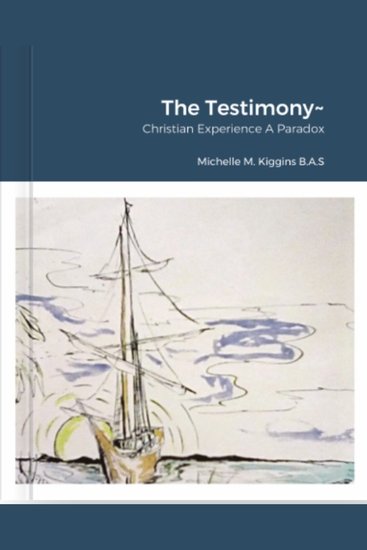
  • The Testimony~ Christian Experience A Paradox ©️ - Memoir - cover

    The Testimony~ Christian...

    Michelle M Kiggins

    • 0
    • 0
    • 0
    This book, penned "The Testimony, Christian Experience A Paradox" is a Memoir ~Otherwise a detailed accounting of the authors life. Within you'll follow a young girl through her her life where she reveals all her deep dark struggles through early childhood, adolescence & young adulthood. The stories are complex as you'll discover trauma, abuse, alcoholism, sexual abuse, traumatic accidents, brain injury, illness, domestic violence, religious beliefs and lack of a nurturing environment can and will affect an individuals ability to deal with life. Especially when it comes to trauma, emotional, intellectual and social growth. The Author implores the readers to create dialogue around the experiences shared in this short memoir. Please ask questions and make an effort to express ideas surrounding the delicate yet intrinsically important examples of the authors life as compared to child rearing and nurturing and environments parents may struggle with today. The information herin is not intended to harm, defame, slander or cause shame to anyone- rather create a steppingstone or a catalyst for change.
    Show book
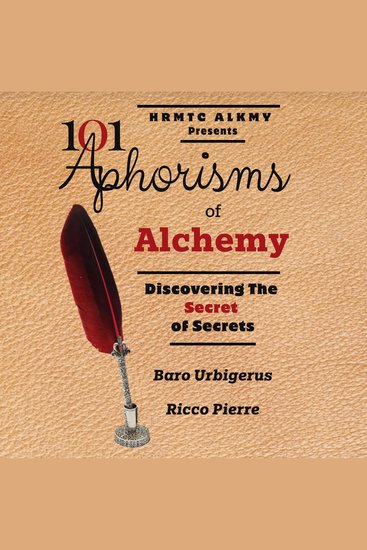
  • 101 Aphorisms of Alchemy - Discovering the Secret of Secrets - cover

    101 Aphorisms of Alchemy -...

    Baro Urbigerus, Ricco Pierre

    • 0
    • 0
    • 0
    First published in 1609, Aphorismi Urbigerani stands as a masterpiece of Western Alchemical wisdom. Containing 101 powerful aphorisms on the creation of the Grand Elixir (Circulatum majus) and an additional 31 aphorisms on the Vegetable Elixir (Circulatum minus), this timeless work unveils the hidden operations of the Alchemical Art. 
    This modernized edition carefully preserves and clarifies each aphorism, offering today’s seekers and scholars an accessible gateway into the original Hermetic mysteries. Complete with editorial notes, historical context, and guided introductions, this edition faithfully restores the original voice while building a living conversation between past and present.
    Show book
  • How America Secretly Injected Its Own Citizens With Plutonium and Lied for Fifty Years - Human Radiation Experiments the Manhattan Project and the Patients Who Were Never Told - cover

    How America Secretly Injected...

    Damian Kessler

    • 0
    • 0
    • 0
    This audiobook is narrated by an AI Voice. 
    Three months before plutonium fell on Nagasaki, it was already inside American bodies. Not soldiers. Not volunteers. Hospital patients, in beds, who had come in to be healed. 
     
    Eighteen of them were chosen because doctors believed they were dying anyway. That made them useful. A dying patient could be measured, and then, eventually, examined. One of them turned out not to have cancer at all. He had been misdiagnosed, he survived for another twenty years, and the experiment simply continued inside a living man who never learned it was happening. 
     
    That is one program. There were many. 
     
    Pregnant women at a university clinic drank a radioactive mixture handed to them as a vitamin drink. Boys at a state institution were enrolled in a “science club” that rewarded them with baseball tickets and fed them a radioactive breakfast. Prisoners were irradiated for the price of a few packs of cigarettes. Soldiers were marched toward atomic detonations. A radioactive cloud was released over farmland on purpose, to see what would happen. 
     
    The subjects were almost always the same kind of people: poor, sick, young, imprisoned, institutionalized. The powerless. 
     
    And the cover-up was not an accident of bureaucracy. A government memo spelled it out — this work was to stay secret, not for national security, but to protect the agency from embarrassment and from lawsuits. It worked. The files sat in an archive for half a century while the men who had been experimented on told the truth and were treated as confused. 
     
    The apology arrived in the nineteen nineties, decades after most of them were dead. 
     
    This is the full declassified history of the Cold War human radiation program, the medical ethics it destroyed, and the ordinary Americans who were turned into measurements. 
     
    The government did not just lie. For fifty years, it got away with it.
    Show book
  • Animals and the Greco-Roman World: The History of the Ways the Ancient Greeks and Romans Used Animals in Religion and Daily Life - cover

    Animals and the Greco-Roman...

    Editors Charles River

    • 0
    • 0
    • 0
    There were approximately 1,500 Greek city-states (poleis) in the Classical era, and sacrifices featured in every one of them. As such, animals were constantly involved in the core elements of Greek society and cults, and this centrality could be found in the numerous depictions of animals on coins and vases throughout Greece and Greek colonies. Greek thinkers and philosophers also endlessly debated issues relating to animals, which resulted in the Greeks acquiring formidable knowledge about the creatures with whom they came in contact. All the while, animals were important sources of food, companionship, and labor, and they also featured significantly in warfare. 
    Another use for foreign animals was in the preparation of medicines. Animals captured during military conflicts were considered spoils of war, suggesting their status was that of an object. On the other hand, reflecting the Greek ambiguity and ambivalence toward their status, various philosophical debates of the time indicate that animals could also be prosecuted for committing crimes and punished accordingly. It is also apparent that ancient Greeks knew a considerable amount about their animals, as various written works that survived often reflected the ethical and scientific debates surrounding them. 
    Other than the tale of the she-wolf with Romulus and Remus, the overriding images and stories of Roman animals that have come down through popular culture to modern times largely concern the vicious animal fights put on in the Colosseum, stories of Christians being thrown to the lions, and Hannibal's invasion of Italy with elephants. Indeed, the widely accepted view is that Romans were uncommonly brutal to their animals and had little empathy for them, and in terms of the Romans' scientific knowledge about animals, it appears much of it came to them from the Greeks.
    Show book
  • Jewels From The Indra Net - cover

    Jewels From The Indra Net

    Trevor Leggett

    • 0
    • 0
    • 0
    These pieces on Eastern methods of inner training and realisation are not intended as theoretical instruction or entertainment. They all point to actual practice in life and hint at deeper practice.The title of the book Jewels from the Indra Net refers to the fabled net of the god Indra of which the strands have a jewel of truth at each junction. The jewels reflect each other so that each one has deeper and deeper meanings in it.The pieces are from a variety of traditions, some of them being based on original translations of little known Sanskrit or Japanese texts. Others come from observation or personal experience and hopefully will reflect to the reader some further gleams from the Indra Net.The fundamental training is mind control and meditation which in the end have to become one pointed. Allusions to them will be found in several places and will be recognised by those who are approaching that level. Some longer pieces have been put at the beginning to give a survey of some main points.
    Show book
  • Equal to Mystery: In Search of Harold Sonny Ladoo - cover

    Equal to Mystery: In Search of...

    Christopher Laird

    • 0
    • 0
    • 0
    When the Trinidadian novelist, Harold Sonny Ladoo was found dead soon after the publication of his classic novel, No Pain Like This Body, for Christopher Laird, it became an obsession to try to discover the writer behind the work and what had brought about his untimely end. Equal to Mystery – words written by Ladoo – is the record of that pursuit.
    
    When, as the editor of a Trinidadian literary journal in the radical years of the early 1970s, Christopher Laird was sent Harold Sonny Ladoo's novel, No Pain Like This Body (1973) to review, he knew he was looking at something revolutionary in Caribbean fiction. It is a novel that has recently been republished as a Penguin Modern Classic. But the next news Laird heard of Ladoo was that he had returned to Trinidad from Canada and had been found dead – very probably murdered – in the canefields outside his family's village of McBean. Laird follows in the path of Ladoo to Canada, where he went to make a name for himself as a writer, and tracks him as a student and young married man through conversations with his widow and other family members. He looks in detail at his relationships with two Canadian writers, Dennis Lee and Peter Such, who supported his work, and in Lee's case published him. Here there is an acute account of their meetings across the line of race, of the mix of generous contact and elusive flight in their relationship. Above all, with access to Ladoo's unpublished material -- short stories and fragments of the vast body of fiction he announced he was writing -- Laird offers acute analysis of what is there, honest bafflement about just what Ladoo was up to, with a tragic sense of the talent that was lost through his untimely death.
    Show book