Join us on a literary world trip!
Add this book to bookshelf
Grey
Write a new comment Default profile 50px
Grey
Subscribe to read the full book or read the first pages for free!
All characters reduced
Interview Fundamentals - cover

Interview Fundamentals

Pasquale De Marco

Publisher: Publishdrive

  • 0
  • 0
  • 0

Summary

In a world awash with information and opinions, the ability to conduct effective interviews has become a critical skill for researchers, journalists, and professionals across various fields. Interviews offer a direct window into the minds and experiences of individuals, providing valuable insights into human behavior, social dynamics, and cultural practices.

"Interview Fundamentals: A Comprehensive Guide to Effective Interviewing" is an invaluable resource for anyone seeking to master the art and science of interviewing. This comprehensive guidebook delves into the intricacies of interview design, execution, and analysis, empowering readers with the knowledge and skills to conduct interviews that yield rich and meaningful data.

With a focus on practical application, this book provides step-by-step guidance on how to prepare for and conduct effective interviews. It explores various types of interviews, from structured to semi-structured and unstructured, and offers expert advice on selecting the most appropriate method for different research purposes.

The book also delves into the nuances of communication and rapport-building, emphasizing the importance of active listening, empathy, and cultural sensitivity. It provides strategies for establishing trust and rapport with interviewees, creating a conducive interview environment, and overcoming communication barriers.

Furthermore, the book offers comprehensive coverage of interview question design, highlighting the significance of crafting clear, concise, and unbiased questions that elicit meaningful responses. It explores different types of questions, their strengths and limitations, and provides guidance on sequencing and pacing questions to maintain a logical flow and keep participants engaged.

To ensure the validity and reliability of interview data, the book explores various qualitative data analysis methods, such as thematic analysis, grounded theory, and narrative analysis. It provides a step-by-step guide to organizing, coding, and interpreting interview transcripts, identifying patterns, and extracting key themes.

Ethical considerations are also thoroughly addressed in this book. It examines the ethical dilemmas that researchers may encounter, such as informed consent, confidentiality, power dynamics, and exploitation. The book offers practical guidance on how to navigate these challenges, protect participants' rights, and ensure the integrity of the research process.


If you like this book, write a review!
Available since: 06/02/2025.
Print length: 167 pages.

Other books that might interest you

  • Gracism - The Art of Inclusion - cover

    Gracism - The Art of Inclusion

    David A. Anderson

    • 0
    • 0
    • 0
    We can't ignore color, class, or culture. Instead, we must engage matters of race with a different posture and embrace radical inclusion of the marginalized.
    Now with David Heiliger, David A. Anderson revives the biblical model for showing special grace to others on the basis of ethnicity, class, or social distinction—one of gracism. Responding to ongoing problems of prejudice and injustice, the original seven sayings of the gracist now become eight with a new chapteralongside a revised conclusion.
    Take this opportunity to extend God's grace to people of all backgrounds in this edition of Gracism.
    Show book
  • Little Women Podcast: Red Flags In Laurie's Proposal - cover

    Little Women Podcast: Red Flags...

    Niina Pekkasdotter

    • 0
    • 0
    • 0
    He was charming. He was devoted. He grew up next door. 
    But was Laurie's proposal to Jo March truly the romantic gesture it appeared to be, or a masterclass in missing the point entirely? 
    In this episode of the Little Women Podcast, we revisit one of classic literature's most debated scenes through a modern lens. Louisa May Alcott's beloved novel gave us a young man full of feeling, but feelings aren't always enough, and the proposal that broke a thousand hearts may have been waving more warning signs than a Victorian parlour had room for. 
    "Loving someone isn't the same as knowing them. Laurie loved the idea of Jo, and when Jo refused to become it, he called it heartbreak." 
    From Laurie's sense of entitlement to his emotional volatility, from his inability to accept a "no" gracefully to the speed with which he rebounds, we unpack it all with warmth, wit, and just a little righteous indignation. Whether you're a long-time Alcott devotee or a first-time listener, this episode will change how you hear those famous words: "Jo, I love you." 
    Thoughtful, funny, and unapologetically feminist, this is the literary conversation you didn't know you needed. 
    There are certain things that Laurie says when he proposes that, for some reason, never get into the Little Women Cinema, but here is the question, if the viewers heard the actual dialogue, way fewer people would want Jo to end up with Laurie.
    Show book
  • Apocalypse of Mark - cover

    Apocalypse of Mark

    Caleb Deassis

    • 0
    • 0
    • 0
    The Apocalypse of Mark is a Christian book written in the ancient style of apocalyptic literature designed to read like a short narrative book one would find in the Bible, like Job, Ruth, or Esther. Narrator John Mark presents a linear retelling of the Biblical meta-narrative, heavily quoting from and alluding to the Biblical text. Beginning prior to creation and ending in the "new heavens and earth" incorporating enigmatic Biblical passages, it demonstrates how they are indispensable to the overall redemption story. The text also offers the reader hope by exposing the Gospel of Jesus as the central focus of God's relational plan. The text is packed with theological teachings and shows how they are all interconnected. The author began the project by trying to solve the question, "Where do demons come from?" Bolstered by years of research, he presents his findings in a creative and engaging narrative style.
    Show book
  • Is It Possible to Embrace Seniority with Optimism and Happiness? - cover

    Is It Possible to Embrace...

    PhD Morales-Pita

    • 0
    • 0
    • 0
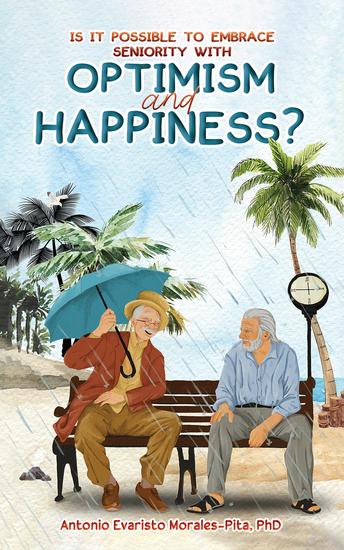
     Embrace the golden years with a renewed sense of vigor and understanding in this enlightening exploration of seniority. This book delves deep into the intricate relationship between optimism, health, and aging, drawing from both personal experiences and broad statistical insights. Learn how factors such as one's cultural background, specifically the rise of immigrant seniors in the U.S., shape the aging experience, contrasting them with the socio-politico-economic intricacies of Latin American countries. 
     Uncover the ever-evolving dynamics of senior care, from the intricacies of love relationships among older couples to the stark disparities between genders, both in health risks and societal expectations. This is juxtaposed against the author's empowering journey of proactive healthcare and wellness. Recognize the transformative power of systematic exercising in bolstering self-assurance, happiness, and most importantly, joy. With philosophical insights from the likes of Aristotle and more, discover how inner joy, consistent self-care, and embracing one's strengths and weaknesses play pivotal roles in enriching the experience of seniority. 
     This guide invites you on a journey of self-discovery, offering a fresh perspective on aging with a harmonious blend of optimism, health, and profound happiness. 
    Show book
  • Inca Empire The: An Enthralling Overview of the Incas Their Civilization in Ancient Peru and the Spanish Conquest - cover

    Inca Empire The: An Enthralling...

    Billy Wellman

    • 0
    • 0
    • 0
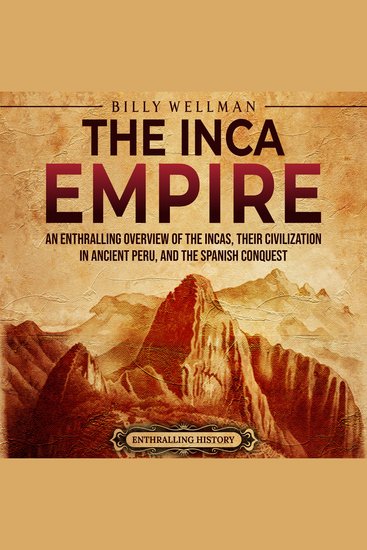
    Did you know that the Incas worshiped the mummies of their emperors? 
    For the Incas, death didn’t exist; it simply took the dead to a different plane of life. So, the mummies of their emperors were treated as people; they were given food and drink and even visited each other ceremoniously. They also owned country estates, which generated enough profits to keep them in the style to which they were accustomed. 
    This might sound like a curiosity, but this form of ancestor worship was central to the Inca culture and to the history of the Inca Empire, which stretched from Ecuador and Colombia in the north to Chile in the south. 
    Everyone has seen pictures of one of the Incas’ greatest achievements: the mountain-top wonder of Machu Picchu. But Inca history has always been told by the Spanish colonizers who conquered them since the Inca had no formal writing. Now, archaeology is giving us more information on how the Inca really lived, helping us differentiate real history from myth and propaganda. 
    In this audiobook, you will discover how the Inca created an expansive empire in just a century and why that civilization crumbled so fast once the Spanish arrived. 
    You’ll also discover the following:How the Inca civilization developed out of a number of preceding cultures in the Andes and Peruvian coast;How quickly the Incas were able to expand and why they needed to;How the empire was administered and how runners were able to take messages from one end of it to the other with remarkable speed;The amazing Inca infrastructure program, which included building roads through mountain ranges and across raging rivers;Why Inca cuisine included tasty guinea pigs and llama jerky;And so much more! 
    Scroll up and click the “add to cart” button to learn more about the fascinating Inca Empire!
    Show book
  • Moors The: The History of the Muslims Who Lived in North Africa and Europe during the Middle Ages - cover

    Moors The: The History of the...

    Editors Charles River

    • 0
    • 0
    • 0
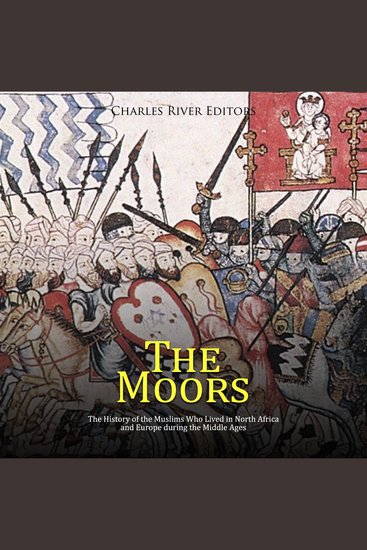
    The term Moor is a historical rather than an ethnic name. It is an invention of European Christians for the Islamic inhabitants of Maghreb (North Africa), Andalusia (Spain), Sicily and Malta, and was sometimes use to designate all Muslims. It is derived from Mauri, the Latin name for the Berbers who lived in the Roman province of Mauretania, which ranged across modern Algeria and Morocco. Saracen was another European term used to designate Muslims, though it usually referred to the Arabic peoples of the Middle East and derives from an ancient name for the Arabs, Sarakenoi. The Muslims of those regions no more refer to themselves by that term than those of North Africa call themselves Moors. Maghreb, or al-Maghreb, is a historical term used by Arabic Muslims for the territory of coastal North Africa from Alexandria to the Atlantic Coast. It means “The West” and is used in opposition to Mashrek, “The East,” used to refer to the lands of Islam in the Middle East and north-eastern Africa. The Berbers refer to the region in their own language as Tamazgha. In a limited, precise sense it can also refer to the Kingdom of Morocco, the proper name of which is al-Mamlakah al-Maghribiyyah, “Kingdom of the West.” 
    The history of the Spanish Peninsula is closely bound to that of the Moors. The term “Spain” was not in wide use until the region was united by the monarchs of Aragon and Castile, and the Moors called the lands they ruled in the Iberian Peninsula Al-Andalus, traditionally thought to be an Arabic transliteration of Vandal, the Germanic tribe which briefly ruled the region in the early fifth century. The English name Andalusia derives from the Spanish Andalucia, which is still used by Spain to name its southern region. Not surprisingly, three religions attempting to coexist during medieval times resulted in nearly incessant conflicts.
    Show book