Join us on a literary world trip!
Add this book to bookshelf
Grey
Write a new comment Default profile 50px
Grey
Subscribe to read the full book or read the first pages for free!
All characters reduced
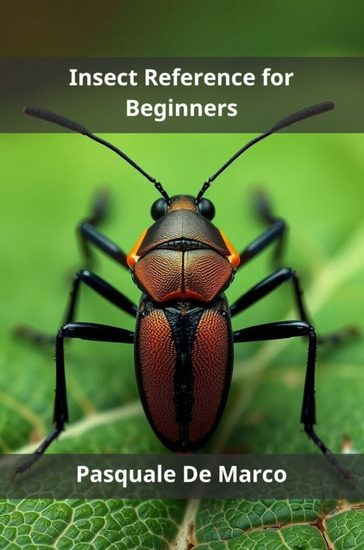
Insect Reference for Beginners - cover

Insect Reference for Beginners

Pasquale De Marco

Publisher: Publishdrive

  • 0
  • 0
  • 0

Summary

In this comprehensive and engaging guide, we embark on a fascinating journey into the world of insects, revealing their remarkable diversity, intricate adaptations, and profound ecological significance.

With over a million known species and countless more yet to be discovered, insects are the most diverse group of animals on Earth. They inhabit every conceivable corner of the globe, from the scorching deserts to the frigid polar regions, from the depths of the oceans to the highest mountain peaks.

From the tiniest springtails to the colossal Goliath beetles, insects exhibit an astounding array of physical and behavioral adaptations that allow them to thrive in a wide range of habitats and exploit a vast array of food sources. Their exoskeletons provide protection and support, their wings enable them to travel long distances, and their specialized mouthparts allow them to consume a wide variety of foods, from nectar and pollen to blood and wood.

Insects are also masters of social organization. From the complex societies of ants and termites to the cooperative hunting strategies of wasps and bees, insects have developed intricate social structures that allow them to work together and achieve remarkable feats.

Their ecological importance cannot be overstated. Insects are essential pollinators, playing a vital role in the reproduction of many plants, including a large number of food crops. They are also important decomposers, breaking down dead plants and animals and returning nutrients to the soil. Insects are also a vital food source for many other animals, including birds, reptiles, amphibians, and mammals.

Despite their importance, insects often face a barrage of threats, from habitat loss and degradation to the indiscriminate use of pesticides. It is crucial that we recognize the value of these tiny creatures and take steps to protect them and their habitats.

This book is an indispensable resource for anyone interested in learning more about the fascinating world of insects. With its captivating writing style, stunning photographs, and in-depth exploration of insect biology and behavior, this book is sure to enthrall readers of all ages.


If you like this book, write a review!
Available since: 06/02/2025.
Print length: 155 pages.
Other books that might interest you

  • The Fourth Coming - How God Mathematics Can Put the World to Rights - cover

    The Fourth Coming - How God...

    Francis Keith Robins

    • 0
    • 0
    • 0
    In a time of dire need, as climate change, conflict, and economic upheaval imperil our existence and our mental well-being deteriorates from not utilising our minds as God intended, Francis Keith Robins introduces a groundbreaking approach to saving humanity – reshaping our thought processes through mathematics.
     
    In his book, The Fourth Coming, Robins provides a detailed, step-by-step guide to unlocking our inherent mathematical potential. His vision is to create a society that is inclusive, equal, and peaceful – one that aligns with God’s desire for us. He advocates for a paradigm shift where shared mathematical models and systematic thinking supplant the ineffective classes of governments and institutions currently jeopardizing our planet. This revolutionary approach aims to alter the trajectory of human history in a manner that aligns with divine intentions. 
     
    Robins’ theories, described as a work of mathematical brilliance, offer a refreshingly simple yet profound solution to consciousness – which, as noted by ‘New Scientist’, remains one of the most elusive and significant mysteries in science and philosophy. Furthermore, he concludes that the introduction of religion by God was a response to 
    humanity’s failure to use their brains as He intended.
    Show book
  • Workbook: What Happened to You? - Conversations on Trauma Resilience and Healing - cover

    Workbook: What Happened to You?...

    Liam Daniels, Alice Moore

    • 0
    • 0
    • 0
    Note: This audiobook is included (for free) inside its respective print and e-book versions. 
    Workbook: What Happened to You? (Oprah Winfrey and Bruce Perry) 
    In a powerful and compelling conversation, Oprah and Dr. Perry discuss the importance of our past in shaping us and why asking “What’s wrong with you?” might be an unhelpful and misguided question. They propose shifting the focus to “What happened to you?” instead. This may seem simple, but it has been groundbreaking in changing the way we understand and think about trauma, which in turn has offered a significantly more optimistic approach to recovery. But this is just one of the core messages of Oprah and Dr. Perry’s book. Want to know what the other core messages are? 
    “Workbook: What Happened to You?” not only provides all the powerful ideas, practices, and concepts that Oprah and Dr. Perry discuss in their original book in a clear and concise format, but it also offers interactive exercises, reflective and thought-provoking questions, tools, resources for healing, and supplementary information; all designed to enrich your understanding and help you apply what you’ve read. 
    You will get:A powerful combination of storytelling and the latest research on neuroscience and traumatology.Shocking facts about trauma, information on different methods of treatment, and much more!An immersive experience that will bridge the gap between the book's teachings and your own life. 
    While it is beneficial to have read their original work, it’s not compulsory, as this workbook will provide you with all the information you need to engage with the topic and exercises. Don't miss out on the combined wisdom of these two giants. 
    Disclaimer: This is an unofficial, third-party workbook for Oprah Winfrey and Bruce Perry’s book “What Happened to You?”
    Show book
  • TV Lobotomy The Scientific Truth About the Effects of Television - cover

    TV Lobotomy The Scientific Truth...

    Michel Desmurget

    • 0
    • 0
    • 0
    "TV unleashes the imagination and feeds intelligence." • "A child deprived of TV risks social isolation." • "TV dumbs you down." • "TV makes you obese." It seems that everything—and its opposite—has already been said about TV. But what is it really? How can we distinguish between the radical "No TV" of some and the supposedly entertaining virtues touted by others? Michel Desmurget, a doctor in neuroscience, has sifted through and synthesized thousands of research articles published over the last fifty years in the most rigorous international journals. The conclusion is unequivocal—we must stop watching television for good, whatever the program. All content, even that meant to teach, can never come close to any other learning method. The data is clear—television viewing is detrimental to school performance. For a child in elementary school, for example, every hour spent daily watching television increases the likelihood that he or she will one day leave the school system without any qualifications. For specialists, there is no doubt that television has a negative influence, not only on intellectual development but also on behavior. Thus, certain eating disorders (anorexia, bulimia) are related to a frantic consumption of—television programs! In short, watching television has an impact on our life expectancy. However, the harmful impact of this risk is largely underestimated, because of the large sector of the public exposed to television (more than 85% of Western households have at least one television set), and because of a debate on the subject that has become inaudible and confused. Moreover, the results of the research initiated by the big media groups on the subject remain "proprietary," i.e., closed to the general public. Believing that we is facing a real public health problem, Michel Desmurget wants to act as a responsible scientist—with a clear, concise and rigorously referenced book, the message cannot go unnoticed. Michel Desmurget is a doctor of neuropsychology. He attended several major American universities (MIT, Emory, UCSF) and is now a research director at INSERM in cognitive neuroscience. He is particularly interested in the problems of brain organization and plasticity. He is the author of the book TV Lobotomy (Max Milo, 2022), which is based in part on his personal history. Exasperated by having to constantly justify the choice not to have television at home—and to prevent his children from having access to it—and not to be seen as a sociopath in the eyes of those around him, he has done a massive job to argue his point. 
    This audiobook is read by a synthesized voice.
    Show book
  • Human Psychology and Language Analysis - For Advancing Linguistic Artificial Intelligence - cover

    Human Psychology and Language...

    Allen Young

    • 0
    • 0
    • 0
    Humans use their languages to communicate for their successes in the survival, social, economic, sexual, political, competitive, collaborative, creative, and procreative human endeavors. 
    In this book, Allen Young, the transhumanistic Asian-American man, specifies how the psychological human linguistic capabilities should be used in advancing linguistic artificial intelligence.
    Show book
  • Edge Computing for Beginners - Simple Guide to Industry Applications and Future Trends - cover

    Edge Computing for Beginners -...

    Saimon Carrie

    • 0
    • 0
    • 0
    Embark on a journey into the cutting-edge world of edge computing with this comprehensive guide. "Edge Computing: Simple Guide to Industry Applications and Future Trends" offers a deep dive into the revolutionary paradigm shift transforming the landscape of computing. 
    In Chapter 1, readers explore a myriad of industry applications and case studies, discovering how edge computing is reshaping healthcare, manufacturing, smart cities, and retail. From remote patient monitoring to predictive maintenance and personalized shopping experiences, learn how edge computing is driving innovation and efficiency across diverse sectors. 
    Chapter 2 takes readers on a journey into the future, exploring emerging trends and technologies shaping the evolution of edge computing. Dive into the integration of edge computing and IoT, the automation of edge workflows, and the critical importance of edge security. Prepare to be fascinated by the exploration of edge computing's role in space, from satellite operations to Mars exploration. 
    In Chapter 3, readers are equipped with the tools and resources to embark on their own edge computing journey. Learn how to build your edge computing lab, engage in hands-on projects, and discover valuable learning resources. Join the vibrant edge computing community through conferences, meetups, and hackathons, and become part of the forefront of innovation in this dynamic field. 
    "Edge Computing: Simple Guide to Industry Applications and Future Trends. Part 2" concludes with reflections on the future of edge computing, inviting readers to embrace the opportunities and challenges ahead.  
     
    Show book
  • Your Pelvic Floor Sucks - But It Doesn't Have To: A Whole Body Guide to a Better Pelvic Floor - cover

    Your Pelvic Floor Sucks - But It...

    DC Lindsay S. Mumma

    • 0
    • 0
    • 0
    Does your pelvic floor suck? Quick answer: Your pelvic floor actually does suck. Most people recognize a kegel exercise. So yes, your pelvic floor sucks, but did you know it does a lot more than that? At least one in four women has some amount of pelvic floor dysfunction and most are being told it's a normal part of having kids or aging. 
    But Dr. Lindsay Mumma disagrees and thinks you should, too. She outlines an evidence-informed approach for improving pelvic floor function that is nerdy but approachable. With ready-to-implement practices, exercises, and explorations, this book is a comprehensive guide to addressing a variety of pelvic floor dysfunctions (including some you probably didn't know about). 
    In this book, you will learn:What the pelvic floor is and does.How the whole body impacts the pelvic floor.Common treatments for pelvic floor dysfunction (and whether or not they work).Exercises to improve pelvic floor function, and how to approach care for your pelvic floor. 
    This book is for anyone who wants to know more about their pelvic floor and how to actually take care of it. With her experience and knowledge, Dr. Mumma wants to help you achieve better pelvic floor function so that your pelvic floor doesn’t suck.
    Show book