Join us on a literary world trip!
Add this book to bookshelf
Grey
Write a new comment Default profile 50px
Grey
Subscribe to read the full book or read the first pages for free!
All characters reduced
Highway Journeys - Exploring the Roads Less Traveled - cover

Highway Journeys - Exploring the Roads Less Traveled

Pasquale De Marco

Publisher: Publishdrive

  • 0
  • 0
  • 0

Summary

In "Highway Journeys: Exploring the Roads Less Traveled," embark on a captivating expedition into the world of highway engineering, where innovation meets infrastructure and imagination meets reality. This comprehensive guide takes you beyond the surface of asphalt and concrete, delving into the intricate web of design, construction, maintenance, and sustainability that underpins our vast network of roads.

Through a blend of informative insights, captivating stories, and thought-provoking discussions, this book offers a comprehensive and engaging exploration of the world of highways. Unravel the mysteries of highway engineering as you explore a diverse range of topics that shape the landscape of our transportation systems.

Discover the fascinating stories behind iconic bridges, witness the transformation of road surfaces, and explore the intersection of technology and transportation. Gain insights into the strategies employed to enhance safety, reduce congestion, and promote sustainability. Be inspired by the visionaries who are shaping the highways of tomorrow.

Whether you are a student of engineering, a professional in the field, or simply a curious traveler, "Highway Journeys" will captivate your imagination and deepen your understanding of the roads that connect us all. It is a tribute to the men and women who dedicate their lives to building and maintaining the infrastructure that keeps our world moving forward.

So fasten your seatbelt, open your mind, and embark on a journey that will take you beyond the familiar routes, revealing the hidden wonders and untold stories of the roads less traveled. Welcome to "Highway Journeys: Exploring the Roads Less Traveled."


If you like this book, write a review!
Available since: 06/02/2025.
Print length: 182 pages.


Other books that might interest you

  • The First-Time Gardener - Winter Edition - cover

    The First-Time Gardener - Winter...

    Well-Being Publishing

    • 0
    • 0
    • 0
    Transform your winter into a flourishing garden oasis with "The First-Time Gardener: Winter Edition." Learn to navigate your winter climate, fortify soil, and select winter-friendly plants. Discover innovative techniques for mulching, insulation, and frost protection. Bring nature indoors and master dynamic propagation and planting strategies. From watering to pest management, this guide ensures a bountiful winter harvest. Anticipate seasonal transitions and indulge in personal success stories. Make this winter your greenest yet with expert advice and unconventional gardening methods.
    Show book
  • Companion Planting - Enhancing Growth and Flavor - cover

    Companion Planting - Enhancing...

    Gertrude Harris

    • 0
    • 0
    • 0
    Companion planting is an age-old gardening technique that harnesses the natural relationships between plants to enhance growth, improve flavor, and reduce the need for chemical fertilizers and pesticides. Whether practiced by indigenous farmers through the Three Sisters method or by modern organic gardeners, this approach emphasizes balance and biodiversity in the garden. 
      
    At its core, companion planting is about understanding how plants interact with each other and their environment. Some plants release chemicals that deter pests, while others attract pollinators or beneficial insects. Certain crops improve soil conditions by fixing nitrogen or suppressing weeds. When planted together strategically, these plants create a mutually beneficial ecosystem that promotes healthier growth and increased yields. 
      
    Beyond the practical benefits, companion planting enhances the flavors of many fruits, vegetables, and herbs. Gardeners have long observed that basil planted near tomatoes intensifies their taste, while marigolds deter nematodes that can damage plant roots. These small yet powerful interactions reveal the intricate relationships that exist within nature and how we can use them to our advantage.
    Show book
  • Adele and the Whispering Garden - cover

    Adele and the Whispering Garden

    Polly Richards

    • 0
    • 0
    • 0
    Discover the enchanting world of Adele and her magical garden in this heartwarming audiobook experience. Let the soothing voice of Irinka Reade bring to life the charming tale of a young girl who uncovers the secrets of a whispering garden, where plants have voices, and each flower holds a story.Perfect for families who love gardening, nature, and the outdoors, Adele and the Whispering Garden not only entertains but also teaches children how to nurture and respect the earth. Join Adele as she learns valuable lessons about growing food organically, spending time outside, and the joy of caring for the environment.Whether you're on a road trip, relaxing at home, or enjoying time in the garden, this audiobook offers a delightful escape into nature's wonders. Ideal for children aged 6-13, teachers, and parents looking to inspire a new generation of eco-conscious gardeners.Download Adele and the Whispering Garden now and let the magic of the garden bloom in your ears!
    Show book
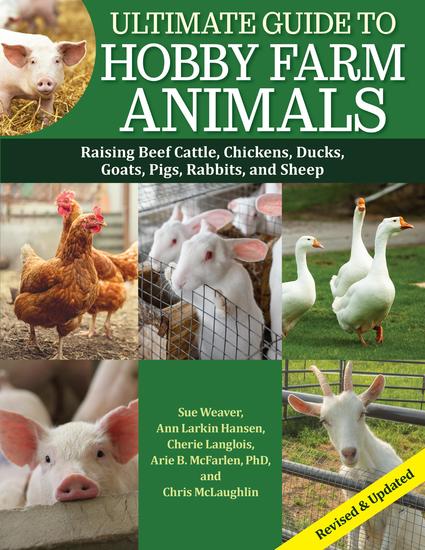
  • Ultimate Guide to Hobby Farm Animals - Raising Beef Cattle Chickens Ducks Goats Pigs Rabbits and Sheep - cover

    Ultimate Guide to Hobby Farm...

    Sue Weaver, Chris McLaughlin,...

    • 0
    • 0
    • 0
    A single, information-packed volume with everything a hobby farmer needs to know about farm animals, this newly updated and comprehensive manual to selecting, caring for, and breeding livestock brings forth the expertise of five hobby farmers, each of whom has real-life on-the-farm experience with the animals discussed. Whether you're contemplating adding a small herd of sheep or goats to your existing hobby farm or you've always wondered about the benefits of raising angora rabbits or Muscovy ducks, this must-have resource provides the kind of guidance you need to begin a herd or flock and expand your pens and fencing. With exhaustive detail, the authors offer complete coverage of chickens, ducks, goats, sheep, cattle, pigs, and rabbits, including the housing, healthcare, special needs, advantages, and challenges of each. Also provided are strategies for marketing and selling your animals' meat, milk, eggs, fleece, or feathers, plus overviews on the animals' history, their behavioral traits, personal anecdotes, and more. New to this edition is updated information across all topics for the most complete and up-to-date insight in hobby farming, from shelter, care, health, and medicine to nutrition, behavior, marketing, and profit.
    Show book
  • Osman I - Biography of the Founder of the Ottoman Dynasty - cover

    Osman I - Biography of the...

    Kelly Mass

    • 0
    • 0
    • 0
    Osman I, also known as Osman Ghazi, was the founder of the Ottoman dynasty and the ruler of the Kayi tribe, a key figure in the creation of one of history's most influential empires. The state he established, originally called the Ottoman Beylik or Emirate, grew from a small Turkmen principality in the late thirteenth century into a global power, dominating much of Southeastern Europe, Western Asia, and North Africa for centuries. While the empire he founded lasted until the end of World War I, the man himself remains shrouded in mystery. 
    Due to the scarcity of historical records from Osman’s lifetime, much of what is known about him is based on oral traditions and legends that developed long after his death. There are no known contemporary written sources from his reign, and the Ottomans themselves did not document his life until the fifteenth century, over a hundred years after he passed away. This gap in documentation has made it difficult for historians to separate fact from fiction, with some scholars even describing the period of Osman's life as a "black hole" of historical knowledge, unable to be reconstructed with certainty. 
    The traditional accounts of Osman’s ancestry trace his lineage to the Oghuz Turks, specifically the Kay tribe. However, many historians believe that the stories surrounding his ancestry were fabricated later to legitimize the Ottoman dynasty’s rule. These narratives were likely developed as the dynasty sought to strengthen its claim to power and emphasize its noble heritage.
    Show book
  • Egyptian Monuments and Their Mysteries - Exploring the Wonders of the Past - cover

    Egyptian Monuments and Their...

    Omar Khalil

    • 0
    • 0
    • 0
    The origins of ancient Egyptian civilization can be traced back to the unification of Upper and Lower Egypt around 3100 BCE. This pivotal event, credited to the legendary Pharaoh Narmer (also known as Menes), set the stage for one of the most enduring and influential cultures in human history. The unification marked the beginning of the Early Dynastic Period, a time when Egypt's first pharaohs established the framework for the country’s political, religious, and social systems. 
    The Early Dynastic Period laid the foundation for the powerful centralized government that would come to define Egypt. The kings of this era solidified their authority by consolidating control over both the Upper and Lower Nile Valleys, establishing cities and building monumental architecture, such as the earliest royal tombs. This period was characterized by the development of hieroglyphic writing, which enabled the preservation of royal decrees, religious texts, and monumental inscriptions. 
    As Egypt's civilization evolved, it entered the Old Kingdom period, often referred to as the "Age of the Pyramids." During this time, Egypt reached its peak in terms of architectural achievements, most notably the construction of the Great Pyramids at Giza. The Old Kingdom saw the consolidation of the pharaohs’ divine status as intermediaries between the gods and the people. The power of the pharaohs was reinforced by their role in overseeing monumental construction projects and religious rituals that were believed to sustain cosmic order.
    Show book