Join us on a literary world trip!
Add this book to bookshelf
Grey
Write a new comment Default profile 50px
Grey
Subscribe to read the full book or read the first pages for free!
All characters reduced
Guardians of the Endless Waters - cover

Guardians of the Endless Waters

Pasquale De Marco

Publisher: Publishdrive

  • 0
  • 0
  • 0

Summary

Journey through the pages of Guardians of the Endless Waters and discover the captivating story of the USS Michigan, an iron-clad guardian of the Great Lakes. From its launch in 1843 to its final voyage decades later, the Michigan played a pivotal role in shaping the destiny of a nation.

Witness the Michigan's transformation from a symbol of American ingenuity to a steadfast sentinel during the Civil War. Follow the crew's heroic exploits as they patrolled the vast expanse of the inland seas, rescuing ships in distress, quelling civil disturbances, and enforcing the law.

Immerse yourself in the rich tapestry of life aboard the Michigan, where sailors, engineers, and officers from all walks of life forged an unbreakable bond of duty and honor. Experience the challenges and triumphs of their daily lives as they navigated treacherous storms, faced the perils of battle, and left an indelible mark on history.

Through the Michigan's logbooks, uncover the untold stories of the Great Lakes region, a frontier transformed into a thriving hub of commerce and industry. Witness the rise of cities, the birth of industries, and the unfolding of events that shaped the destiny of the region.

Guardians of the Endless Waters is more than just a tale of battles won and storms weathered. It is a narrative of resilience, innovation, and the indomitable spirit of those who served aboard the Michigan. It is a tribute to the power of human ingenuity, a testament to the strength of American resolve, and a celebration of the enduring legacy of a ship that forever holds a place in the annals of American naval history.

Join us on this captivating journey through time as we explore the Michigan's remarkable legacy, a guardian of the endless waters, a symbol of American strength, and a source of inspiration for generations to come.


If you like this book, write a review!
Available since: 06/02/2025.
Print length: 159 pages.
Other books that might interest you

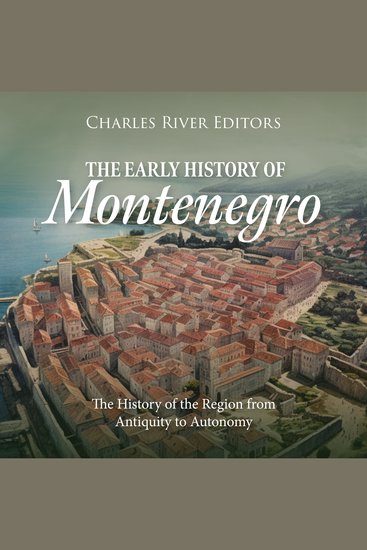
  • Early History of Montenegro The: The History of the Region from Antiquity to Autonomy - cover

    Early History of Montenegro The:...

    Editors Charles River

    • 0
    • 0
    • 0
    Much has been written about Western intervention during the breakup of Yugoslavia, and whether it made matters worse, prevented worse atrocities, or was simply ineffective. In early 1992, however, what was clear was that Europe was hopelessly divided over the best course of action to take towards Yugoslavia, and after several years of fighting, the Bosnian War was one of the most violent conflagrations in Europe since the end of World War II. 
    That war had been the byproduct of centuries of tensions in the Balkans, and an attempt in the wake of World War I to redraw the political boundaries of Europe and the Middle East. That included forming the Kingdom of Yugoslavia, initially known as the Kingdom of Serbs, Croats and Slovenes, a particularly fragile enterprise, and there was almost constant tension between the majority Serbs and the other Yugoslav nationalities, especially the Croats. As a result, the Kingdom was a land of political assassinations, underground terrorist organizations, and ethnic animosities. In 1929, King Alexander I suspended democracy and ruled as a dictator until he himself was assassinated in 1934. 
    Depending on the source, many authors have focused on different catalysts for Yugoslavia’s demise, but Vesna Drapac may have succinctly summed the situation up when he wrote that by the end, the state “lacked a reason to exist.” There is certainly something in this sentiment, but the disintegration came at an enormous cost. 
    Given what happened in Yugoslavia, it should be little surprise the area that eventually became the modern nation of Montenegro has had a turbulent history for millennia, with shifting borders, different degrees of autonomy, and various conflicts occurring within it.
    Show book
  • Summary of Barry Goldwater's The Conscience of a Conservative - cover

    Summary of Barry Goldwater's The...

    Falcon Press

    • 0
    • 0
    • 0
    Buy now to get the main key ideas from Barry Goldwater's The Conscience of a Conservative 
      
    The Conscience of a Conservative (1960) by Barry Goldwater defines the basis of the American conservative spirit. Goldwater’s manifesto, which reinvigorated the conservative movement in the 1960s, details its stance on vital issues such as education, farming, labor unions, states’ and civil rights, taxes, and most importantly freedom. It also offers conservative solutions to the political, economic, and social problems that plague America. Goldwater’s book is an essential read for anyone looking to understand the roots of the conservative movement in the USA.
    Show book
  • A Treatise of Human Nature Book 3 - cover

    A Treatise of Human Nature Book 3

    David Hume

    • 0
    • 0
    • 0
    The Treatise is a classic statement of philosophical empiricism, skepticism, and naturalism. In the introduction Hume presents the idea of placing all science and philosophy on a novel foundation: namely, an empirical investigation into human nature.
    Show book
  • The Estates-General - Impact on the French Revolution - cover

    The Estates-General - Impact on...

    Amara Blackwood

    • 0
    • 0
    • 0
    The Estates-General was a fundamental institution in France before the Revolution, deeply rooted in the country’s medieval past. It played a crucial role in shaping the power dynamics between the monarchy, the nobility, the clergy, and the common people. To understand its significance, it is essential to explore the feudal system, the structure of the three estates, and how previous assemblies influenced its development. 
    France’s political and social system before the Revolution was built upon a rigid hierarchy known as the Ancien Régime. At the top sat the king, whose authority was believed to be divinely ordained. Below him were three distinct social classes, or “estates.” The First Estate consisted of the clergy, who controlled vast amounts of land and held considerable influence over religious and moral matters. The Second Estate was composed of the nobility, a privileged class that enjoyed exemptions from many taxes and held key positions in the military and government. The Third Estate, the largest and most diverse, included commoners ranging from wealthy merchants to poor peasants. This estate bore the brunt of taxation and had little political power, despite representing the majority of the population. 
    The Estates-General was an assembly designed to bring representatives from all three estates together to advise the king on financial and political matters. However, unlike England’s Parliament, it did not function as a legislative body with regular meetings. Instead, it was convened only at the discretion of the monarch, typically in times of crisis. This irregularity in its use meant that its influence remained limited, as kings preferred to rule without its interference. Nevertheless, the Estates-General provided a forum where grievances could be voiced, and it occasionally pressured the monarchy into making concessions.
    Show book
  • Letters from a Father to His Daughter - cover

    Letters from a Father to His...

    jawaharlal Nehru

    • 0
    • 0
    • 0
    Letters from a Father to His Daughter is a collection of letters written by the former Prime Minister of Inidia, Jawaharlal Nehru, to his daughter, Indira Gandhi, during the period when he was imprisoned. Heartfelt and moving, Nehru imparts knowledge on various subjects to young Indira, who was around 10 years old at the time.
    The letters cover everything from history and science to philosophy and the natural world. Nehru introduces Indira to the great figures of history, including ancient civilizations and leaders from various cultures, and explains the concepts of freedom, justice, and democracy. He also shares his love for nature, describing the beauty of the world around him, and encourages Indira to think critically, ask questions, and embrace learning.
    Show book
  • Becoming Baba Yaga - Trickster Feminist and Witch of the Woods - cover

    Becoming Baba Yaga - Trickster...

    Kris Spisak, GennaRose Nethercott

    • 0
    • 0
    • 0
    When darkness, fear, and instability inundate our daily lives, folktale figures like Baba Yaga speak to the dichotomy of our existence—the hope and the horror, the magic and the mundane. At once an old hag and an enchantress, a demon and wish granter, a feminist and nothing more than a fairytale, Baba Yaga is an endlessly complex folktale character. 


    Becoming Baba Yaga provides an in-depth look at the Baba Yaga mythos and history through Slavic folklore. Filled with historical and cultural context, analyses, and the stories themselves that add depth to the conversation. A comprehensive resource for anyone hoping to learn more about this ambiguous character and how her multifaceted presence still ripples through the present day, Becoming Baba Yaga is as thoughtful as it is illuminating. 


    Spisak explores Baba Yaga's connection to nature as an Earth goddess and as an herbalist. She also delves into the Shadow Self and Baba Yaga's aspect as a trickster and places her in a modern context as not merely a witch of the woods but also as an archetype and force for finding your own path. Becoming Baba Yaga shares how she is both a force for good as much as evil and a feminist before her time.
    Show book