Join us on a literary world trip!
Add this book to bookshelf
Grey
Write a new comment Default profile 50px
Grey
Subscribe to read the full book or read the first pages for free!
All characters reduced
Gothic Insipirations - The Romantic Roots of the Grotesque - cover

Gothic Insipirations - The Romantic Roots of the Grotesque

Pasquale De Marco

Publisher: Publishdrive

  • 0
  • 0
  • 0

Summary

In the realm of literature, where shadows dance and darkness captivates, there lies a tale of two genres intertwined: Gothic Insipirations: The Romantic Roots of the Grotesque. This book embarks on a literary journey, exploring the profound influence that the Gothic exerted on the Romantic era, shaping its aesthetics, themes, and imagination.

Gothic literature, with its penchant for the macabre, the supernatural, and the grotesque, provided a fertile ground for Romantic writers to explore the darker recesses of the human psyche. They found in Gothic literature a mirror reflecting their own preoccupation with the irrational, the mysterious, and the sublime. In this literary landscape, they could conjure worlds where the boundaries between reality and imagination blurred, where the natural and the supernatural collided, and where the human spirit confronted its own mortality.

Romanticism, in turn, breathed new life into the Gothic genre, elevating it from mere sensationalism to a form of high art. Romantic writers such as Mary Shelley, Nathaniel Hawthorne, and Edgar Allan Poe embraced the Gothic aesthetic, transforming it into a vehicle for exploring profound themes of love, loss, and the human condition. They used Gothic tropes and imagery to create haunting and atmospheric tales that resonated with the Romantic sensibility, capturing the essence of an era that yearned for the extraordinary and the sublime.

The Gothic and Romanticism shared a common fascination with the power of the imagination. Romantic writers saw the imagination as a gateway to the realm of the supernatural, a faculty that could transcend the limitations of reason and unlock the mysteries of the universe. They believed that the imagination could transport them to otherworldly realms, allowing them to experience the sublime and the terrifying.

The Gothic and Romanticism also shared a preoccupation with the individual. Both movements placed the individual at the center of their narratives, exploring the complexities of human emotion and the struggles of the individual against the forces of fate and society. Gothic literature provided Romantic writers with a means to explore the darker aspects of the human psyche, delving into the depths of madness, obsession, and despair.

Gothic Insipirations: The Romantic Roots of the Grotesque delves into this intricate relationship, examining the ways in which these two genres intertwined and influenced each other. It explores the Gothic elements that permeated Romantic literature, the ways in which Romantic writers transformed the Gothic genre, and the enduring legacy of this literary union. This book is an essential read for anyone interested in the Gothic, Romanticism, or the complex interplay between literature and the human psyche.


If you like this book, write a review!
Available since: 06/02/2025.
Print length: 163 pages.

Other books that might interest you

  • French Revolution The - Thomas Carlyle - cover

    French Revolution The - Thomas...

    Thomas Carlyle

    • 0
    • 0
    • 0
    "The French Revolution" by Thomas Carlyle is a classic historical work that chronicles the events leading up to and during the French Revolution. Written in 1837, Carlyle's account is known for its vivid and passionate style, and for its ability to bring to life the key figures and events of the revolution. 
    The book begins with an analysis of the state of France in the late 18th century, and the social and economic conditions that contributed to the revolution. It then goes on to provide a detailed account of the revolution itself, including the storming of the Bastille, the Reign of Terror, and the rise of Napoleon Bonaparte. 
    Throughout the book, Carlyle emphasizes the role of individual actors and their personal struggles and motivations, rather than simply analyzing the structural forces at play. He also reflects on the broader philosophical and moral questions raised by the revolution, such as the nature of power, the relationship between the individual and the state, and the struggle for liberty. 
    Overall, "The French Revolution" is a powerful and engaging work of history that offers a unique perspective on one of the most significant events of modern times.
    Show book
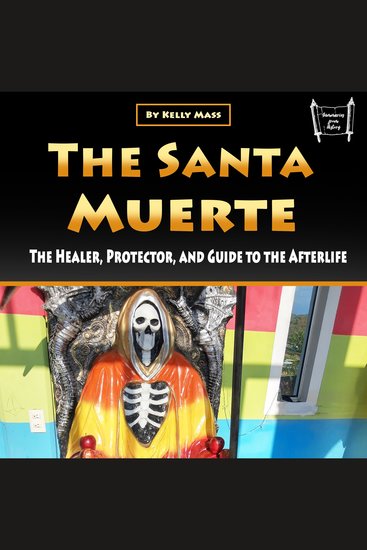
  • The Santa Muerte - The Healer Protector and Guide to the Afterlife - cover

    The Santa Muerte - The Healer...

    Kelly Mass

    • 0
    • 0
    • 0
    The cult image, female divine being, and folk saint Nuestra Seora de la Santa Muerte (Spanish meaning: Our Woman of the Holy Death) is a cult image, female divine being, and folk saint in Mexican Neopaganism and folk Catholicism. 
    Her worshippers relate her with healing, security, and safe delivery to the afterlife simply because she's a personification of death. In spite of condemnation from Catholic Church leaders and, more just recently, evangelical movements, her following has grown substantially since the start of the twenty-first century. 
    Santa Muerte, who was initially portrayed as a male character, is now generally illustrated as a skeletal female figure dressed in a long cape and clutching several things, most typically a scythe and a world. 
    Let’s take a look at what she means or meant to people in Mexico, and what we can learn about it.
    Show book
  • Living Disability - Building Accessible Futures for Everybody - cover

    Living Disability - Building...

    Emily Macrae

    • 0
    • 0
    • 0
    How can we build more accessible cities? Living Disability brings together vibrant perspectives on disability justice and urban systems.
    		 
    A musician and snow removal expert, a queer curator, a public pool aficionado, and a journalist turned city councillor — these are just some of the disabled writers exploring disability justice, analyzing urban systems, and proposing more equitable approaches to city building in this anthology. Essays and interviews push the conversation about accessibility beyond policy papers and compliance checklists to show how disabled people are already creating more inclusive spaces in cities of all sizes.
    		 
    Living Disability is universal in scope but intimate and local in focus, grounded in personal struggles and celebrations. Decisions about public transit, affordable housing, and park design all disproportionately impact disabled communities; by sharing stories and strategies, contributors consider the ways disabled thinkers and doers are embracing overlooked aspects of urban design and tackling the toughest problems facing cities. Each chapter provides context to welcome both disabled and non-disabled readers into conversations about the future of inclusion so that all readers can develop their own understanding of what accessible cities look and feel like. This book appeals to city builders of all stripes committed to learning from and working with underrepresented communities. It equips architects, designers, community leaders, innovators, and citizens with the key concepts they need to collaborate with rather than care for disabled neighbors.
    		 
    “Living Disability is at once hopeful and infuriating, solemn and joyous. The stories shared within these pages point to both the past and future simultaneously — illuminating the struggles and joys and history of disabled life, while putting access barriers on blast in a way that is more necessary than ever. The deep, rich work of this collection lies in its embrace of complexity, community, grief, and also its belief in the capacity of our world (read: us) to change. May these stories touch your heart, kindle the flame of your anger, and move you forward into fighting for the better world we all deserve.” — Amanda Leduc, author of Disfigured: On Fairy Tales, Disability, and Making Space
    Show book
  • Memoirs of Hadrian by Marguerite Yourcenar (Book Analysis) - Detailed Summary Analysis and Reading Guide - cover

    Memoirs of Hadrian by Marguerite...

    Bright Summaries

    • 0
    • 0
    • 0
    Unlock the more straightforward side of Memoirs of Hadrian with this concise and insightful summary and analysis!This engaging summary presents an analysis of Memoirs of Hadrian by Marguerite Yourcenar, a stunning fictional autobiography of the Roman emperor Hadrian. Written in the form of a letter from the dying Hadrian to his young successor Marcus Aurelius, it is both a chronicle of the emperor's rise to power and his efforts to bring peace to his empire, and a meditation on the legacy he is leaving behind. The novel was selected as one of the Bokklubben World Library's 100 Best Books in the History of Literature, and has featured on the list for nearly 15 years. It remains the best-known work by Marguerite Yourcenar, who won the prestigious Prix Femina for the novel and was awarded the Erasmus Prize in 1983. She was also the first woman elected to the Académie Française.Find out everything you need to know about Memoirs of Hadrian in a fraction of the time!This in-depth and informative reading guide brings you:• A complete plot summary• Character studies• Key themes and symbols• Questions for further reflectionWhy choose BrightSummaries.com?Available in print and digital format, our publications are designed to accompany you in your reading journey. The clear and concise style makes for easy understanding, providing the perfect opportunity to improve your literary knowledge in no time.See the very best of literature in a whole new light with BrightSummaries.com!
    Show book
  • The Civic Brand - The Power & Responsibility of Place - cover

    The Civic Brand - The Power &...

    Ryan Short

    • 0
    • 0
    • 0
    The Civic Brand: The Power & Responsibility of Place is a bold and practical book that challenges conventional thinking about city-building, tourism, economic development, and community engagement. Author Ryan Short introduces a new framework for shaping more resilient, equitable, and loveable places that is rooted in identity, values, and a triple bottom line. 
    Drawing from years of experience working with cities, counties, and regions across the country, Ryan Short shows how fragmented efforts, siloed departments, and surface-level branding have left communities struggling to grow with intention or preserve what makes them special. The Civic Brand reveals how place branding, when done right, isn’t just logos or slogans, but about uniting people, guiding policy, and building shared civic pride. Blending strategic insight with vivid, often entertaining stories from the field, this book brings to life the challenges and triumphs of real places navigating growth, decline, and identity. 
    Whether facing overtourism or decline, rapid growth or disinvestment, division or disengagement, this book offers a bold path forward. It’s a call to city leaders, planners, business owners, developers, and residents alike to recognize their role in shaping place and to do so with purpose. 
    The Civic Brand is more than a book, it’s a movement to reimagine how we care for the places we call home.
    Show book
  • The Dispossessed Generation - Youth in the Middle East and North Africa - cover

    The Dispossessed Generation -...

    Jörg Gertel, David Kreuer,...

    • 0
    • 0
    • 0
    The Arab uprisings of the early 2010s raised hopes for the development of more democratic structures and better living conditions for millions in the region. Instead, they were followed by authoritarian backlash, civil wars, economic collapse and food and energy insecurity.
    
    
    Young people are often the ones hit hardest by the conjunction of these problems. How do they cope with insecurities and growing uncertainties, and what drives them to pursue their own dreams in spite of being disenfranchised?
    
    The Dispossessed Generation is the most comprehensive, in-depth study of young people in the MENA region to date, providing invaluable insights into their self-perceptions and life chances. In this volume, an interdisciplinary team of researchers assess a survey of 12,000 sixteen- to thirty-year-olds from Algeria, Egypt, Iraq, Jordan, Lebanon, Libya, Morocco, Palestine, Sudan, Syria, Tunisia and Yemen. They illuminate the extent to which young people engage with their societies and mine new opportunities from a multiplicity of crises.
    Show book