Join us on a literary world trip!
Add this book to bookshelf
Grey
Write a new comment Default profile 50px
Grey
Subscribe to read the full book or read the first pages for free!
All characters reduced
Global Languages - Unraveling the Nuances - cover

Global Languages - Unraveling the Nuances

Pasquale De Marco

Publisher: Publishdrive

  • 0
  • 0
  • 0

Summary

In this captivating exploration of global languages, we embark on a linguistic voyage that unveils the rich tapestry of human communication. From the nuances of accents and dialects to the intricacies of grammar and vocabulary, we delve into the fascinating world of language, revealing the profound impact it has on our lives.

Through the lens of linguistics, we discover how language shapes our perception of the world, influences our cultural identities, and connects us to others across borders and generations. We explore the challenges and rewards of multilingualism, celebrating the ability of individuals to navigate multiple languages and embrace the beauty of diverse linguistic expression.

The book also addresses the pressing need to preserve endangered languages, highlighting the importance of safeguarding linguistic heritage and promoting linguistic diversity. We examine the role of technology in both revitalizing endangered languages and transforming the way we communicate in an increasingly interconnected world.

With vivid examples and engaging narratives, this book brings to life the complexities of global languages, shedding light on their historical evolution, social significance, and enduring power. It invites readers to appreciate the beauty and diversity of human expression, fostering a deeper understanding of the human experience and promoting cross-cultural dialogue.

Whether you are a language enthusiast, a student of linguistics, or simply someone curious about the world's languages, this book offers a captivating journey into the realm of global communication. Prepare to be amazed by the intricacies of language and inspired by the power it holds to shape our lives and connect us to each other.


If you like this book, write a review!
Available since: 06/02/2025.
Print length: 162 pages.

Other books that might interest you

  • Fight for North America The: The History of the European Rivalries and Conflicts Before the American Revolution - cover

    Fight for North America The: The...

    Charles River Editors

    • 0
    • 0
    • 0
    Jamestown is remembered today because the settlement did survive through the hardships and go on to serve as the capital of the English colony for much of the 17th century. Likewise, the English would forge a settlement in Massachusetts Bay that also maintained tenuous relations with nearby natives. But while conflicts between settlers and natives remain well known, some of the European conflicts in North America have been overlooked, including England’s competitions with Spain and the Netherlands. When the West India Company, which presided over Dutch trade in the Americas, was created in 1621, a little settlement at the tip of Manhattan began to both grow and falter. When Willem Kieft arrived as director in 1638, it was already a sort of den of iniquity, full of “mischief and perversity,” where residents were given over to smoking and drinking grog and beer. Under Kieft’s reign, more land was acquired mostly through bloody, all-but-exterminating wars with the Native American population, whose numbers also dwindled at the hands of European-borne diseases.  
    	On September 13, 1759, a battle was fought on the Plains of Abraham outside the old city of Quebec that was one of the turning point battles in world history. Thanks to the British victory and the events that followed, Canada went from being a colony of France (New France) to being a colony of Great Britain, which permanently changed Canadian history. In many ways, the outcome of the battle brought about several American attempts to seize Canada during the Revolutionary War and War of 1812, and ultimately it ensured that when Canada became an independent country, it was part of the British Commonwealth with an Anglophone majority and a Francophone minority. Frictions over cultural and political issues between the English Canadians and the Québécois, dating back to the battle, continue to impact the state of affairs in Canada today.  
    Show book
  • Beyond Ethnic Loneliness - The Pain of Marginalization and the Path to Belonging - cover

    Beyond Ethnic Loneliness - The...

    Prasanta Verma

    • 0
    • 0
    • 0
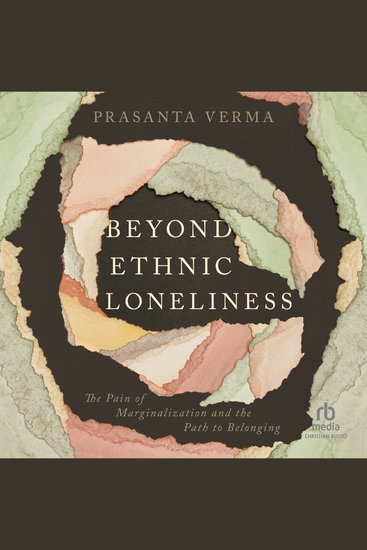
    "So what are you? Go back where you belong!" 


    Majority white American culture has historically marginalized people of color, who at times feel invisible and alienated and at other times are traumatized by oppression and public discrimination. This reality leads to a particular kind of aloneness: ethnic and racial loneliness. 


    An Indian American immigrant who grew up in white Southern culture, Prasanta Verma names and sheds light on the realities of ethnic loneliness. She unpacks the exhausting effects of cultural isolation, the dynamics of marginalization, and the weight of being other. In the midst of disconnection and erasure, she points to the longing to belong, the need to share our stories, and the hope of finding safe friendships and community. Our places of exile can become places where we find belonging—to ourselves, to others, and to God.
    Show book
  • Turkish Made Easy - Beginner - Volume 2 of 3 - cover

    Turkish Made Easy - Beginner -...

    Lingo Wave

    • 0
    • 0
    • 0
    We broke our new series on learning Turkish down into different learning stages. Start with the "Lower Beginner" books followed by the "Beginner" and "Upper Beginner" books. Next, progress to the "Intermediate" series, then test and reinforce your knowledge with the "Conversations" series. 
    This audiobook is divided into units.While it provides different learning patterns and accommodates various needs, this audiobook focuses on helping you improve your ability to understand, speak, and memorise Turkish.  
    In Unit 1 you will hear Turkish decoded with each syllable spoken very slowly and clearly with repetition. Immediately before each sentence is spoken, you will hear the translation, so you will always understand what is being said. 
    Unit 2 focuses solely on increasing your listening ability, which will improve your abilities to engage in dialogue with a native Turkish speaker. This chapter requires you to listen very carefully to nuances in the language. 
    By Unit 3 you will already notice progress in your abilities to speak and understand Turkish. The spoken translation is followed by two repetitions in Turkish at a completely natural speed. While you are learning to process naturally spoken Turkish, Units 3 and 4 will help you memorise new vocabulary and full sentences. 
    In Unit 5 you can test yourself on how much you have learned. If you are having difficulties, we suggest you revisit the listening, speaking, or memorisation section of Units 1, 2 3 or 4, according to what you need more help with. 
    Topics covered in this book: 
    1. Asking about family 
    2. Asking about relationship status 
    3. Expressing frequency 
    4. Talking about spare time activities and hobbies 
    5. Using quantifiers/determiners 
    6. Talking about preference 
    7. Talking about abilities 
    8. Talking about location of places 
    9. Describing appearance 
    10. Talking about personality 
    ...
    Show book
  • Battle of Tsushima The: The History and Legacy of the Decisive Naval Battle that Ended the Russo-Japanese War - cover

    Battle of Tsushima The: The...

    Editors Charles River

    • 0
    • 0
    • 0
    By the end of the 19th century, the Russian Empire seemed to be at the zenith of its power and reach. It was the largest country in the world, stretching from the Black Sea on the eastern edge of Europe to the Bering Straits in the extreme east of Asia. Even by rail, it took over ten days to travel from one side of the country to the other. Its standing army of over 1.3 million men was the largest in the world, and the “Russian Steamroller” was regarded as one of the most potent military forces available to any ruler. 
    	The sudden and unexpected rise of Japanese influence in the region was opposed by Russia, Germany, and France, who threatened war with Japan unless the terms that ended the war were changed. Reluctantly, the Japanese agreed to withdraw from Manchuria, but they never forgot or forgave what they saw as the way in which the unwarranted European influence was used against them.  
    	Japanese suspicions were reinforced when Russia subsequently concluded a treaty of alliance with China and forced the tottering regime to grant a lease of the Liaodong peninsula to Russia. Russian troops occupied Port Arthur and began to build massive fortifications around the city. The port was linked to Russia by a new railroad that connected to the Trans-Siberian Railroad at the Chinese city of Harbin. Russia also insisted on the right to use its troops to defend the new railroad throughout its length in China. Although the terms by which Russia leased the port from China were temporary, it was clear that Port Arthur was intended to become Russia’s new warm-water port on the Pacific.  
    	To most observers, it seemed clear that Japan and Russia were destined to come into conflict in Korea and Manchuria. Both empires were set on expansion, and both saw these areas as important. However, Russia’s vastly larger population, army, and navy seemed to make it inevitable that Japan would lose if the conflict escalated into war.
    Show book
  • The Indian Mosaic - Successes Struggles and Solution - cover

    The Indian Mosaic - Successes...

    Sandeep Chavan

    • 0
    • 0
    • 0
    In "The Indian Mosaic: Successes, Struggles, and Solutions," author Sandeep Chavan takes readers on an enlightening journey through the vibrant tapestry of modern India. This comprehensive exploration delves into the nation's rich cultural heritage, its dynamic economy, and the social transformations shaping its future. 
    From the bustling streets of urban centers to the serene landscapes of rural communities, Chavan paints a vivid picture of India’s diversity, celebrating its achievements while candidly addressing the challenges that persist. The book navigates through key themes such as technological advancements, educational reforms, environmental concerns, and the empowerment of youth, offering a balanced perspective that reflects both hope and realism. 
    As India stands on the brink of its centenary of independence, this book serves as a timely reflection on the path forward. Chavan articulates a compelling vision for the future, emphasizing sustainability, inclusivity, and collaborative efforts between government, civil society, and the private sector. 
    "The Indian Mosaic" is not just a chronicle of a nation; it is a call to action for all Indians—both at home and abroad—to engage in the ongoing dialogue about their country’s trajectory. It invites readers to reflect on their roles in shaping India’s destiny and inspires a collective commitment to nation-building. 
    Whether you are an Indian citizen, a member of the diaspora, or simply someone interested in understanding the complexities of a rapidly evolving nation, this book provides valuable insights and thought-provoking narratives that resonate across borders. Discover the multifaceted identity of India through the eyes of a passionate educator and thinker, and join the journey towards a brighter, more equitable future.
    Show book
  • History of Marathas EP14 - Nanasaheb Peshwa - cover

    History of Marathas EP14 -...

    Vikrant Pande

    • 0
    • 0
    • 0
    Nanasaheb had taken the Marathas to the largest extent possible. In south, the Peshwa had won against the Nizam. So there was no challenge there. While Delhi was the capital of the Mughal empire, the power seat was Pune. In 1758 it felt as if the Marathas could hold their power over Punjab sitting in Pune, 1500 kms away. This was a mistake in hindsight. To hold power in the country one had to take charge of the throne at Delhi which the Marathas were unwilling to do allowing the Mughal emperor to rule. If only the Marathas had taken charge of Delhi, history would have been different.
    Show book