Join us on a literary world trip!
Add this book to bookshelf
Grey
Write a new comment Default profile 50px
Grey
Subscribe to read the full book or read the first pages for free!
All characters reduced
Genocide - The Ultimate Form of Intolerance - cover

Genocide - The Ultimate Form of Intolerance

Pasquale De Marco

Publisher: Publishdrive

  • 0
  • 0
  • 0

Summary

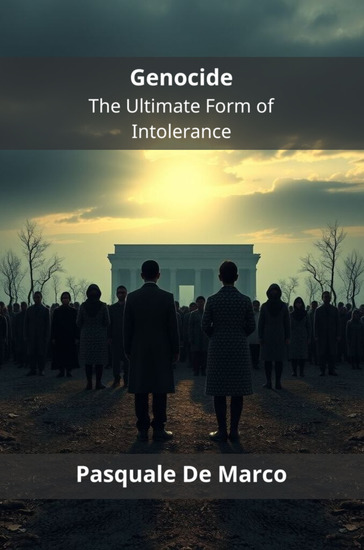
In the annals of human history, genocide stands as a chilling testament to the depths of human depravity. This book confronts the profound evil of genocide, delving into its insidious nature and the devastating consequences it wreaks upon humanity.

With meticulous research and rigorous analysis, this comprehensive exploration unravels the complex tapestry of genocide, examining historical examples, psychological and sociological factors, and the legal and political frameworks surrounding this heinous crime.

Journey through the dark chapters of human history, bearing witness to the horrors inflicted upon countless innocent lives. From the Holocaust's systematic extermination of Jews to the Rwandan Genocide's brutal ethnic cleansing, confront the chilling reality of genocide's devastating legacy.

Delve into the psychology of genocide, exploring the minds of perpetrators, victims, and bystanders. Unravel the complex motivations and dynamics that drive this abhorrent crime. Examine the role of trauma and resilience in shaping the experiences of those caught in the maelstrom of genocide.

Investigate the sociological factors that contribute to genocide, examining the role of social inequality, social institutions, and social movements in creating the conditions for mass atrocities. Explore the complex interplay of culture and religion in fueling the fires of intolerance and hatred.

This book is a stark reminder of humanity's capacity for profound evil, yet it also offers a beacon of hope. By understanding the anatomy of genocide, we can work towards preventing future atrocities and building a world where tolerance, empathy, and human dignity prevail.


If you like this book, write a review!
Available since: 06/02/2025.
Print length: 156 pages.

Other books that might interest you

  • Winston Churchill - His Finest Hour - The Winning of World War II - cover

    Winston Churchill - His Finest...

    Liam Dale

    • 0
    • 0
    • 0
    Would you like to delve deeper into the life of Winston Churchill without tackling lengthy biographies? Join The History Journals for an hour-long historical journey focused on his role during World War II. 
     
    After guiding the nation through five tumultuous years of World War II, Winston Churchill faced weariness and uncertainty about Britain's post-war future. What were his thoughts? The seasoned leader harbored concerns that the British Empire, exhausted and financially strained from prolonged conflict, might be overshadowed by its more potent American and Russian allies as the war neared its conclusion. Churchill had devoted his all to King and country, and while an Allied victory promised to be his crowning achievement, he remained prudent. Astonishingly, his continued tenure as the nation's Prime Minister was far from guaranteed. 
     
    Discover: 
    - Churchill's apprehensions regarding Stalin and post-war Russia's influence 
    - The significance of the Okinawa battle in the European war's outcome 
    - Global awareness of multiple concentration camp atrocities 
    - The transition following FDR's funeral and Harry S. Truman's international emergence 
    - The fierce battle and capture of Berlin 
    - VE Day and the recognition of Winston's selfless service to a grateful nation.
    Show book
  • Black in White Space - The Enduring Impact of Color in Everyday Life - cover

    Black in White Space - The...

    Elijah Anderson

    • 0
    • 0
    • 0
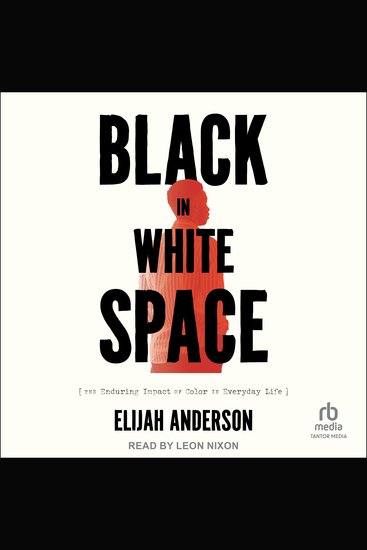
    A birder strolling in Central Park. A college student lounging on a university quad. Two men sitting in a coffee shop. Perfectly ordinary actions in ordinary settings—and yet, they sparked jarring and inflammatory responses that involved the police and attracted national media coverage. Why? In essence, Elijah Anderson would argue, because these were Black people existing in white spaces. 


    In Black in White Space, Anderson brings his immense knowledge and ethnography to bear in this timely study of the racial barriers that are still firmly entrenched in our society at every class level. He focuses in on symbolic racism, a new form of racism in America caused by the stubbornly powerful stereotype of the ghetto embedded in the white imagination, which subconsciously connects all Black people with crime and poverty regardless of their social or economic position. White people typically avoid Black space, but Black people are required to navigate the "white space" as a condition of their existence. 


    An unwavering truthteller in our national conversation on race, Anderson has shared intimate and sharp insights into Black life for decades. Vital and eye-opening, Black in White Space will be a must-listen for anyone hoping to understand the lived realities of Black people and the structural underpinnings of racism in America.
    Show book
  • The Death Doula's Guide to Living Fully and Dying Prepared - An Essential Workbook to Help You Reflect Back Plan Ahead and Find Peace on Your Journey - cover

    The Death Doula's Guide to...

    Francesca Lynn Arnoldy

    • 0
    • 0
    • 0
    If you are preparing for the end of life—or simply looking to bring more meaning to the here and now—The Death Doula's Guide to Living Fully and Dying Prepared imparts valuable insight to nurture clarity and your internal strength on your journey. This workbook is a first-of-its-kind publication that invites you to process your life and legacy, create remembrance projects, build connections to vital supports, and draft informative wishes and plans for your last chapter. 


    Replete with centering techniques and thought-provoking prompts, this comprehensive workbook is a welcome invitation for anyone seeking a more intentional approach to living and dying. It provides a practical template for end-of-life planning focused on designing comforting experiences that feel personally affirming—with sensitivity to all belief systems, cultures, identities, and histories of lived experience. 


    Completing this workbook is a brave act of healthy preparedness, as it breaks down a complex and often overwhelming topic into manageable tasks. You will tap into deep truths and poignant memories as you work through the exercises, often feeling lighter and less burdened upon their completion. Most importantly, you'll find your best way to live fully and die prepared, by clarifying the fundamental ideals, priorities, and requests you want honored.
    Show book
  • Legacy of Empire - Britain Zionism and the Creation of Israel - cover

    Legacy of Empire - Britain...

    Gardner Thompson

    • 0
    • 1
    • 0
    It is now more than seventy years since the creation of the state of Israel, yet its origins and the British Empire's historic responsibility for Palestine remain little known. Confusion persists too as to the distinction between anti-Zionism and anti-Semitism. In Legacy of Empire, Gardner Thompson offers a clear-eyed review of political Zionism and Britain's role in shaping the history of Palestine and Israel. Thompson explores why the British government adopted Zionism in the early twentieth century, issuing the Balfour Declaration in 1917 and then retaining it as the cornerstone of their rule in Palestine after the First World War. Despite evidence and warnings, over the next two decades Britain would facilitate the colonisation of Arab Palestine by Jewish immigrants, ultimately leading to a conflict which it could not contain. Britain's response was to propose the partition of an ungovernable land: a 'two-state solution' which - though endorsed by the United Nations after the Second World War - has so far brought into being neither two states nor a solution. A highly readable and compelling account of Britain's rule in Palestine, Legacy of Empire is essential for those wishing to better understand the roots of this enduring conflict.
    Show book
  • Exploring Philosophy: A Comprehensive Guide to the Branches History Theories and Practices of Philosophy - cover

    Exploring Philosophy: A...

    Lucien Sina

    • 0
    • 0
    • 0
    Embark on a profound journey into the world of philosophy with this comprehensive guide that delves into the core branches, rich history, intricate theories, and practical applications of philosophical thought. "Exploring Philosophy" offers readers an engaging exploration of the diverse realms of philosophical inquiry, providing a detailed overview of key concepts, historical developments, influential theories, and practical implications within the field of philosophy. Whether you are a seasoned philosopher or a curious novice, this book serves as a valuable resource for deepening your understanding of philosophical discourse and enhancing your critical thinking skills. Discover the timeless wisdom and enduring relevance of philosophy as you navigate through its fascinating landscapes with "Exploring Philosophy."
    Show book
  • Canaanites - The Ancient History of the People Who Inhabited Israel - cover

    Canaanites - The Ancient History...

    Kelly Mass

    • 0
    • 0
    • 0
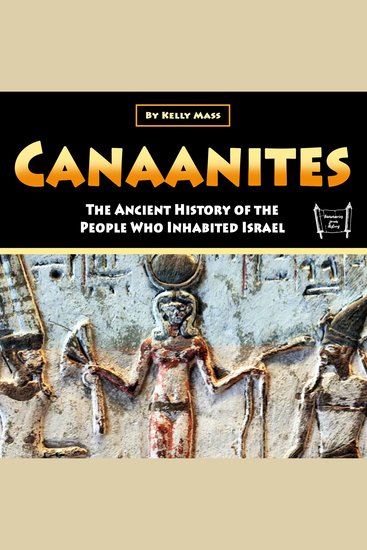
    During the late 2nd millennium BC, Canaan was a Semitic-speaking civilization located in the Ancient Near East. The region held significant geopolitical importance, especially during the Late Bronze Age Amarna Period in the 14th century BC, when it became a crossroads for major empires. The Egyptian, Hittite, Mitanni, and Assyrian Empires all had areas of interest that converged or overlapped in Canaan, making it a key territory for trade, warfare, and cultural exchange. Much of our understanding of Canaan comes from archaeological excavations at sites such as Tel Hazor, Tel Megiddo, En Esur, and Gezer, where remnants of ancient Canaanite life have been uncovered. 
    In biblical texts, the term "Canaan" frequently appears to refer to the broader geographical region known as the Levant, particularly the Southern Levant. This area includes several territories that are central to the Bible’s narrative, such as the Land of Israel, Philistia, and Phoenicia. The Canaanites were the indigenous peoples of this region, and their diverse societies included both settled agricultural communities and nomadic-pastoral groups.
    Show book