Join us on a literary world trip!
Add this book to bookshelf
Grey
Write a new comment Default profile 50px
Grey
Subscribe to read the full book or read the first pages for free!
All characters reduced
Enigmatic Lives - cover

Enigmatic Lives

Pasquale De Marco

Publisher: Publishdrive

  • 0
  • 0
  • 0

Summary

In "Enigmatic Lives," we embark on a profound exploration of the complexities that define human existence. This thought-provoking book delves into the intricate tapestry of emotions, relationships, and self-discovery, unveiling the hidden truths behind our struggles and illuminating the essence of the self.

Through introspection and connection, we unravel the interplay between identity and society, the masks we wear, and the secrets we hold. We navigate the challenges of communication, the power of connection, and the longing for belonging. Relationships, in their myriad forms, become a crucible where we forge bonds, confront conflicts, and explore the delicate balance between intimacy and independence.

The journey of self-discovery beckons us to confront the shadows of the past, redefine our identities in a constantly changing world, and cultivate self-awareness and acceptance. Through this transformative process, we unlock the potential for personal growth and embrace the beauty of our unique journeys.

Emotions, in their kaleidoscope of colors, become a symphony of human experience. We explore the power of emotional intelligence, the art of navigating complex feelings, and the transformative potential of embracing our emotions. From the depths of adversity to the heights of joy, we uncover the resilience of the human spirit and the hidden gifts that lie within challenges.

The quest for meaning propels us forward, driving us to contemplate the purpose of life, to seek fulfillment amidst uncertainty, and to explore existential questions that have perplexed humanity for eons. We embrace the beauty of impermanence and cultivate a meaningful existence, leaving behind a legacy of positive change.

In the tapestry of diversity, we celebrate the richness of human cultures, the beauty of our differences, and the power of unity. We navigate the challenges of cross-cultural communication, promote inclusion and equality, and strive to build a global community rooted in understanding and respect.

"Enigmatic Lives" is an invitation to embark on a transformative journey, to unravel the complexities within us and to embrace the beauty of the unknown. Through introspection, connection, and the exploration of our shared humanity, we unlock the potential for a life filled with purpose, meaning, and fulfillment.


If you like this book, write a review!
Available since: 06/02/2025.
Print length: 166 pages.
Other books that might interest you

  • Essays On Transcendence - cover

    Essays On Transcendence

    Ralph Waldo Emerson

    • 0
    • 0
    • 0
    Ralph Waldo Emerson was an American essayist, lecturer, philosopher, abolitionist, and poet who led the transcendentalist movement of the mid-19th century. He was seen as a champion of individualism and a prescient critic of the countervailing pressures of society, and his ideology was disseminated through dozens of published essays and more than 1,500 public lectures across the United States.Emerson gradually moved away from the religious and social beliefs of his contemporaries, formulating and expressing the philosophy of transcendentalism in his 1836 essay "Nature". Following this work, he gave a speech entitled "The American Scholar" in 1837, which Oliver Wendell Holmes Sr. considered to be America's "intellectual Declaration of Independence."Emerson wrote most of his important essays as lectures first and then revised them for print. His first two collections of essays, Essays: First Series and Essays: Second Series, represent the core of his thinking. They include the well-known essays "Self-Reliance", "The Over-Soul", "Circles", "The Poet", and "Experience." Together with "Nature", these essays made the decade from the mid-1830s to the mid-1840s Emerson's most fertile period. Emerson wrote on a number of subjects, never espousing fixed philosophical tenets, but developing certain ideas such as individuality, freedom, the ability for mankind to realize almost anything, and the relationship between the soul and the surrounding world. Emerson's "nature" was more philosophical than naturalistic: "Philosophically considered, the universe is composed of Nature and the Soul." Emerson is one of several figures who "took a more pantheist or pandeist approach by rejecting views of God as separate from the world."
    Show book
  • "Conversations with ChatGPT: Exploring the Theory of Morality and Existence" - 2nd Edition - cover

    "Conversations with ChatGPT:...

    William Search

    • 0
    • 0
    • 0
    Discover the enthralling synthesis of faith and reason in "Conversations with ChatGPT: Exploring the Theory of Morality and Existence" - 2nd Edition. This groundbreaking philosophical work navigates life's most profound mysteries by artfully weaving together religious, scientific, and philosophical perspectives. 
    Join the author as he recounts his transformative 20-year odyssey to uncover the meaning of existence, ultimately reconciling faith in God with scientific knowledge. The book delves into intriguing existential questions, such as:The compatibility of faith in God and faith in scienceThe origins of diverse religions across culturesThe reasons behind God's concealed presenceThe reconciliation of religious texts with scientific theories like the Big Bang and evolutionThe role of an all-powerful God in the evolutionary process 
    The 2nd Edition features the enhanced commentary of chatGPT-4, offering profound insights and stimulating discussions that will challenge your beliefs, inspire reflection, and open your mind to new possibilities. This book is an essential read for philosophers, students seeking comprehensive guidance, or curious readers eager for a deeper understanding of the interplay between faith and science. 
    Immerse yourself in the captivating world of "Conversations with ChatGPT: Exploring the Theory of Morality and Existence" - 2nd Edition. The author presents a clear, compelling theory supported by rigorous analysis and a synthesis of religious, scientific, and philosophical viewpoints. Don't miss the opportunity to experience the future of philosophical exploration.
    Show book
  • Riding Jane Crow - African American Women on the American Railroad - cover

    Riding Jane Crow - African...

    Miriam Thaggert

    • 0
    • 0
    • 0
    Miriam Thaggert illuminates the stories of African American women as passengers and as workers on the nineteenth- and early-twentieth-century railroad. As Jim Crow laws became more prevalent and forced Black Americans to "ride Jim Crow" on the rails, the train compartment became a contested space of leisure and work. Riding Jane Crow examines four instances of Black female railroad travel: the travel narratives of Black female intellectuals such as Anna Julia Cooper and Mary Church Terrell; Black middle-class women who sued to ride in first class "ladies' cars"; Black women railroad food vendors; and Black maids on Pullman trains. Thaggert argues that the railroad represented a technological advancement that was entwined with African American attempts to secure social progress. Black women's experiences on or near the railroad illustrate how American technological progress has often meant their ejection or displacement; thus, it is the Black woman who most fully measures the success of American freedom and privilege, or "progress," through her travel experiences.
    Show book
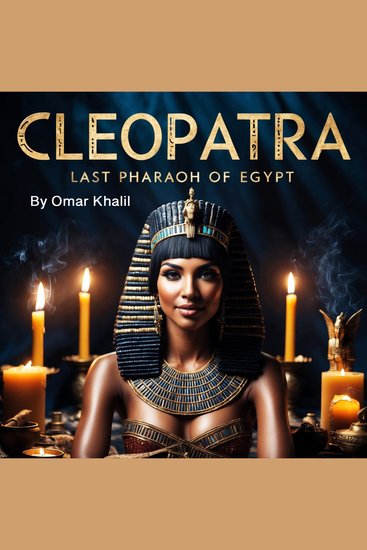
  • Cleopatra - Last Pharaoh of Egypt - cover

    Cleopatra - Last Pharaoh of Egypt

    Omar Khalil

    • 0
    • 0
    • 0
    Cleopatra VII was born into the powerful Ptolemaic dynasty, a Greek ruling family that had governed Egypt since the time of Alexander the Great. As the daughter of Ptolemy XII, she was raised in a world of immense political intrigue and royal rivalries. Unlike many of her predecessors, Cleopatra was highly educated, mastering several languages, including Egyptian—an unusual skill among the Greek rulers of Egypt. Her intelligence, charm, and deep understanding of politics set her apart as a leader destined for greatness. 
    From a young age, Cleopatra was immersed in the complexities of governance. She studied philosophy, mathematics, and diplomacy, acquiring knowledge that would later aid her in navigating the dangerous world of ancient power struggles. While her early years were marked by luxury, they were also shadowed by uncertainty. Egypt, under her father’s rule, was heavily dependent on Rome, and political instability threatened the Ptolemaic dynasty. Cleopatra observed these tensions closely, preparing herself for the inevitable challenge of ruling a divided kingdom. 
    When Ptolemy XII died in 51 BCE, Cleopatra, at just eighteen years old, ascended to the throne alongside her younger brother, Ptolemy XIII. According to Egyptian tradition, royal siblings often married to secure dynastic rule, and Cleopatra was expected to govern jointly with her brother-husband. However, she had little interest in sharing power. She quickly demonstrated her political ambition, seeking to rule Egypt independently. Her intelligence and strategic mindset made her a formidable leader, but her brother’s advisors viewed her as a threat.
    Show book
  • Autumn Time Festivals in Finland Estonia Latvia and Lithuania - cover

    Autumn Time Festivals in Finland...

    Niina Niskanen

    • 0
    • 0
    • 0
    Autumn was a magical time in Finland, Latvia, Lithuania and Estonia. Estonia and Finland belong to the same language family (Finno-Ugric languages) but the similarities of these old autumn time festivals in these four countries are strikingly similar. 
    In this course, we will touch on some of the important Finnish and Baltic gods and deities that were connected to harvest and fertility. What happened during All Hallow´s Eve, and how in all these cultures, there was a special time period that was completely dedicated to honouring the ancestors and remember those who had passed away. 
    Several of these old festivals are no longer celebrated, but some of them like Finnish Kekri and Mardipäev in Estonia, still hold certain traditions that have lived on ´till today. 
    This course can help you to build a deeper understanding of the world view of ancient Baltic and Finno-Ugric tribes and the society that was based on agriculture. 
    - You will learn about the importance of family and honouring the ancestors. 
    -Names of these festivals, and when they were celebrated. 
    -Different magical rituals and spells were performed during these holidays. 
    - You will learn why the forest was such an important place in the past and home to many myths 
    -How the spirits were invited to be part of these festivities. 
    By the end of this course, you have a better understanding of folklore and the connections that these cultures had with one another. 
    Show book
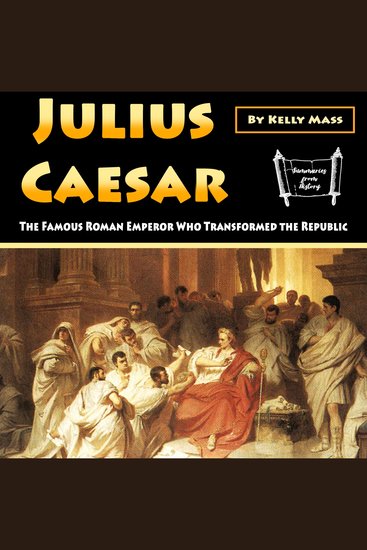
  • Julius Caesar - The Famous Roman Emperor Who Transformed the Republic - cover

    Julius Caesar - The Famous Roman...

    Kelly Mass

    • 0
    • 0
    • 0
    Gaius Julius Caesar remains one of the most influential and recognizable figures in history. A brilliant military commander and astute statesman, Caesar played a decisive role in the events that led to the collapse of the Roman Republic and the rise of the Roman Empire. His life and career were marked by political ambition, military conquests, and transformative reforms that forever changed the Roman world.  
    Born into a patrician family, Caesar rose to prominence in Roman politics through strategic alliances and persuasive rhetoric. In 60 BC, he formed the First Triumvirate with Marcus Licinius Crassus and Gnaeus Pompeius Magnus, known as Pompey. This informal political alliance dominated Roman politics for several years, enabling Caesar to secure the consulship in 59 BC. The Triumvirate sought to advance the interests of the Populares, a political faction advocating for the rights of the common people, in opposition to the Optimates, the conservative faction of the Roman Senate. Powerful senators such as Cato the Younger and orator Cicero resisted Caesar’s growing influence, leading to increased political tensions.  
    To solidify his power, Caesar launched a series of military campaigns known as the Gallic Wars from 58 BC to 51 BC. These campaigns significantly expanded Roman territory, bringing Gaul (modern-day France and Belgium) under Roman control. Caesar's military success earned him wealth, popularity, and the unwavering loyalty of his legions. His invasion of Britain and the daring construction of a bridge over the Rhine River showcased his strategic prowess and ambition. These victories, however, unsettled Pompey, who grew increasingly aligned with the Senate following Crassus’ death in 53 BC. Fearing Caesar’s rising power, the Senate ordered him to disband his army and return to Rome as a private citizen. 
    Show book