Join us on a literary world trip!
Add this book to bookshelf
Grey
Write a new comment Default profile 50px
Grey
Subscribe to read the full book or read the first pages for free!
All characters reduced
Energy Blues - cover

Energy Blues

Pasquale De Marco

Publisher: Publishdrive

  • 0
  • 0
  • 0

Summary

In the heart of California, a battle for the future of energy is brewing. Pacific Gas and Electric (PG&E), one of the largest utilities in the United States, is facing a growing chorus of criticism. The company has been accused of neglecting its infrastructure, leading to a series of deadly wildfires. It is also under fire for its cozy relationship with regulators and its resistance to renewable energy.

A group of activists decide they have had enough. They file a lawsuit against PG&E, alleging that the company is violating the public trust. The case drags on for years, but in the end, the activists prevail. A judge orders PG&E to overhaul its operations and invest in renewable energy.

This landmark victory is a major turning point for the energy industry. It shows that utilities can be held accountable for their actions and that the public has a right to clean, affordable energy. It also inspires other communities across the country to challenge the status quo and demand a more sustainable energy future.

But the fight is far from over. PG&E and other utilities are pushing back, spending millions of dollars on lobbying and public relations campaigns to protect their profits. And the Trump administration is rolling back environmental regulations, making it easier for utilities to pollute.

This book tells the story of the PG&E lawsuit in detail, from the early days of the activists' campaign to the final courtroom victory. It also explores the broader context of the energy crisis, including the rise of renewable energy, the challenges of climate change, and the need for a more just and equitable energy system.

This book is a must-read for anyone who wants to understand the challenges and opportunities facing the energy industry today. It's a story of hope and inspiration, and it shows us that it is possible to create a clean energy future for all.


If you like this book, write a review!
Available since: 06/02/2025.
Print length: 163 pages.

Other books that might interest you

  • Imperialism - cover

    Imperialism

    Vladimir Lenin

    • 0
    • 0
    • 0
    Written in 1916 against the backdrop of the First World War, Imperialism: The Highest Stage of Capitalism explains the flaws and power of capitalism, which inevitably lead to monopolies, imperialism and colonialism. Lenin develops Marx’s theories of political economy, which had been put forward 50 years earlier in Das Kapital. He goes on to argue that imperialism is the most advanced state of capitalism, characterised by the domination of monopolies on an international scale, with the export of capital leading to the big imperialist powers carving up the world.More than a century later, Imperialism remains highly relevant in understanding the historical background to the strategies of many of today’s major nations.
    Show book
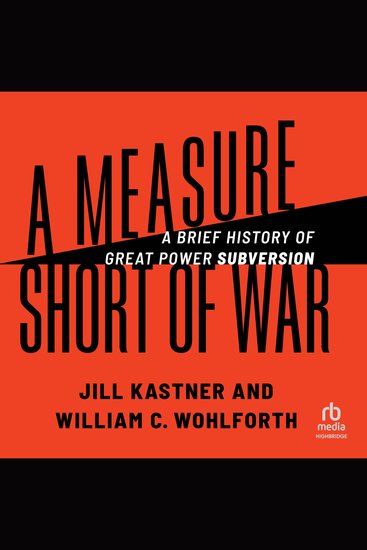
  • A Measure Short of War - A Brief History of Great Power Subversion - cover

    A Measure Short of War - A Brief...

    William C. Wohlforth, Jill Kastner

    • 0
    • 0
    • 0
    In 2016, the United States was stunned by evidence of Russian meddling in the US presidential elections. But it shouldn't have been. Subversion—domestic interference to undermine or manipulate a rival—is as old as statecraft itself. The basic idea would have been familiar to Sun Tzu, Thucydides, Elizabeth I, or Bismarck. 


    It came as a surprise in 2016 because the sole superpower had fallen asleep at the wheel. But what's really new? Have we entered a new age of vulnerability? To answer these questions, and to protect ourselves against future subversion, we need a clear-eyed understanding of what it is and how it works. 


    In A Measure Short of War, Jill Kastner and William C. Wohlforth provide just that, taking the listener on a compelling ride through the history of subversion, exploring two thousand years of mischief and manipulation to illustrate subversion's allure, its operational possibilities, and the means for fighting back against it. With vivid examples from the ancient world, the great-power rivalries of the nineteenth century, epic Cold War struggles, and more, A Measure Short of War shows how prior technological revolutions opened up new avenues for subversion, and how some democracies have been fatally weakened by foreign subverters while others have artfully defended themselves—and their democratic principles.
    Show book
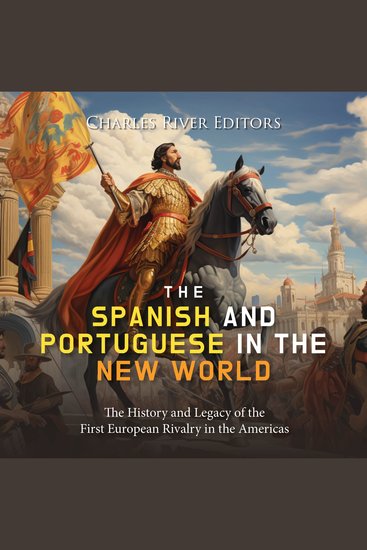
  • Spanish and Portuguese in the New World The: The History and Legacy of the First European Rivalry in the Americas - cover

    Spanish and Portuguese in the...

    Editors Charles River

    • 0
    • 0
    • 0
    In 1451, Prince Henry the Navigator helped fund and develop a new type of ship, the caravel, that featured triangular lateen sails and would be able to travel in the open ocean and sail against the wind. In 1488, Bartholomew Diaz rounded the southern tip of Africa, named the Cape of Good Hope by King John of Portugal, and entered the Indian Ocean from the Atlantic. 
    One explorer, Christopher Columbus, sought funding from the Portuguese to search for a passage to Asia by sailing westwards, but he was rejected. At this time in the late 15th century, Portugal’s domination of the western African sea routes prompted the neighboring Crown of Castile and the Catholic monarchs in modern Spain to search for an alternative route to south and east Asia (termed Indies), so they provided Columbus with the funding he required. By the time Christopher Columbus started setting back east from the New World after landing there in October 1492, he had explored San Salvador in the Bahamas (which he thought was Japan), Cuba (which he thought was China), and Hispaniola, the source of gold. As the common story goes, Columbus, en route back to Spain from his first journey, called in at Lisbon as a courtesy to brief the Portuguese King John II of his discovery of the New World. King John subsequently protested that according to the 1479 Treaty of Alcáçovas, which divided the Atlantic Ocean between Spanish and Portuguese spheres of influence, the newly discovered lands rightly belonged to Portugal. To make clear the point, a Portuguese fleet was authorized and dispatched west from the Tagus to lay claim to the “Indies,” which prompted a flurry of diplomatic activity in the court of Ferdinand and Isabella.
    Show book
  • Dream Psychology - Psychoanalysis for Beginners - cover

    Dream Psychology -...

    Sigmund Freud

    • 0
    • 0
    • 0
    In his book Dream Psychology, Sigmund Freud argues that dreams are a manifestation of our unconscious desires. He believes that they are a way for our mind to process and make sense of the events of the day. Dreams can also be a way for us to work through our fears and anxieties. Freud believes that understanding the symbolism in our dreams can help us to better understand ourselves and our subconscious minds. Read in English, unabridged.
    Show book
  • Pertinax - The Son of a Slave Who Became Roman Emperor - cover

    Pertinax - The Son of a Slave...

    Simon Elliott

    • 0
    • 0
    • 0
    The son of a former slave, Pertinax was the Roman Emperor who proved that no matter how lowly your birth, you could rise to the very top through hard work, grit and determination. 


    Born in AD 126, Pertinax made a late career change from working as a grammar teacher to a position in the army. As he moved up the ranks and further along the aristocratic cursus honorum, he took on many of the most important postings in the Empire, from senior military roles in fractious Britain, the Marcomannic Wars on the Danube, to the Parthian Wars in the east. He held governorships in key provinces, and later consulships in Rome itself. When Emperor Commodus was assassinated, the Praetorian Guard alighted on Pertinax to become the new Emperor, expecting a pliable puppet. But Pertinax was nothing of the sort and when he then attempted to reform the Guard, he was assassinated. His death triggered the beginning of the "Year of the Five Emperors" from which Septimius Severus, Pertinax's former mentoree, became the ultimate victor. 


    This previously untold story brings a fascinating and important figure out of the shadows. A self-made everyman, a man of principle and ambition, a role model respected by his contemporaries, Pertinax's remarkable story offers a unique and panoramic insight into the late 2nd century AD Principate Empire.
    Show book
  • White Poverty - How Exposing Myths about Race and Class Can Reconstruct American Democracy - cover

    White Poverty - How Exposing...

    Reverend Dr. William Barber II,...

    • 0
    • 0
    • 0
    A generational work with far-ranging social and political implications, White Poverty promises to be one of the most influential books in recent years. 


    One of the most pernicious and persistent myths in the United States is the association of Black skin with poverty. Though there are forty million more poor white people than Black people, most Americans, both Republicans and Democrats, continue to think of poverty—along with issues like welfare, unemployment, and food stamps—as solely a Black problem. Why is this so? What are the historical causes? And what are the political consequences that result? 


    These are among the questions that the Reverend Dr. William J. Barber II, a leading advocate for the rights of the poor and the "closest person we have to Dr. King" (Cornel West), addresses in White Poverty, a groundbreaking work that exposes a legacy of historical myths that continue to define both white and Black people, creating in the process what might seem like an insuperable divide. Analyzing what has changed since the 1930s, when the face of American poverty was white, Barber, along with Jonathan Wilson-Hartgrove, addresses white poverty as a hugely neglected subject that just might provide the key to mitigating racism and bringing together tens of millions of working class and impoverished Americans.
    Show book