Join us on a literary world trip!
Add this book to bookshelf
Grey
Write a new comment Default profile 50px
Grey
Subscribe to read the full book or read the first pages for free!
All characters reduced
Echoes of Past Mistakes - cover

Echoes of Past Mistakes

Pasquale De Marco

Publisher: Publishdrive

  • 0
  • 0
  • 0

Summary

In a world teetering on the precipice of tyranny, this thought-provoking book delves into the insidious rise of authoritarian regimes and the devastating consequences they unleash upon societies. Through a meticulous examination of historical case studies and contemporary events, it uncovers the warning signs of impending oppression and the strategies employed by tyrants to consolidate their power.

With incisive analysis, the book explores the psychological and social factors that contribute to the rise of tyranny, shedding light on the role of fear, anger, and disillusionment in driving people towards authoritarian leaders. It also investigates the strategies that tyrants employ to suppress dissent, manipulate the media, and erode democratic institutions, leaving societies vulnerable to their iron grip.

Furthermore, the book delves into the human cost of tyranny, the suffering inflicted upon individuals and communities, and the lasting scars left on societies. It highlights the resilience of the human spirit, the power of nonviolent resistance, and the importance of international solidarity in the fight against oppression.

This book is not merely a historical account of tyranny; it is a call to action, a stark reminder of the importance of vigilance and the need to confront the forces that seek to undermine our freedoms. By understanding the nature of tyranny and the lessons of the past, we can work towards building a future where democracy, human rights, and the rule of law prevail.

This book is essential reading for anyone concerned about the rise of authoritarianism and the erosion of democratic values. It is a timely and thought-provoking examination of the dangers of complacency and the importance of fighting for the freedoms we hold dear.


If you like this book, write a review!
Available since: 06/02/2025.
Print length: 161 pages.


Other books that might interest you

  • Behind the Mask Beyond the Mind: Discover who your really are - Transcending Anxiety Fear and Depression Without Techniques or Skills – A Self-Help Guide to Rediscover Life's Essence - cover

    Behind the Mask Beyond the Mind:...

    Rudy Daniel

    • 0
    • 0
    • 0
    Discover who your really are. Transcending Anxiety, Fear, and Depression Without Techniques or Skills – A Self-Help Guide to Rediscover Life's Essence.Have you ever truly pondered the most fundamental questions of life? Who are you anyway? What is this place we call the Universe? What is reality?As midlife came about, drained and unfulfilled despite being fairly successful, I was almost done . From the outside, my life looked usual, positive, but inside - there was a whole different story.During my life journey, extraordinary encounters propelled me onto a path of deep exploration that concerns the nature of reality. It led me to the crossroads of spirituality, philosophy, science, psychology and even the veiled territory of the psychedelic realm, all in pursuit of understanding the very essence of myself.In a span of years, I delved into the depths of my mind, confronting its enigmatic corners, including the dark ones, in a search for clarity.I’m not a scientist or a mystic. You could say that I’m a philosopher that went outside the perimeters of the institution to test out his philosophy in real life, or in other words, I live by what I say. This is my experience, my self-evident interaction with the universe on a daily basis over a lifetime of almost 40 years.I’m here not to create another belief system but rather to make you question yours.This book could be interpreted as a self-help guide, a spiritual journey, or a philosophical discourse. However, I believe that within the words of "Behind the Mask, Beyond the Mind," readers can discover themselves, or provoke deep questions. In this sense, this book represents a dialogue between you and me; I pose questions, and you respond within yourself. Through honest conversations, we can come to perceive reality as it truly is, and as a result, celebrate, accept, and love ourselves just as we are.
    Show book
  • Spinoza - Freedom's Messiah - cover

    Spinoza - Freedom's Messiah

    Ian Buruma

    • 0
    • 0
    • 0
    Ian Buruma explores the life and death of Baruch Spinoza, the Enlightenment thinker whose belief in freedom of thought and speech resonates in our own time 


    Baruch (Benedictus) Spinoza (1632–1677) was a radical free thinker who led a life guided by strong moral principles despite his disbelief in an all-seeing God. Seen by many as Satan's disciple during his lifetime, Spinoza has been regarded as a secular saint since his death. Many contradictory beliefs have been attached to his name: rationalism or metaphysics, atheism or pantheism, liberalism or despotism, Jewishness or anti-Semitism. However, there is no question that he viewed freedom of thought and speech as essential to an open and free society. 


    In this insightful account, the award-winning author Ian Buruma stresses the importance of the time and place that shaped Spinoza, beginning with the Sephardim of Amsterdam and followed by the politics of the Dutch Republic. Though Spinoza rejected the basic assumptions of his family's faith, and was consequently expelled from his Sephardic community, Buruma argues that Spinoza did indeed lead a modern Jewish life. To Heine, Hess, Marx, Freud, and no doubt many others today, Spinoza exemplified how to be Jewish without believing in Judaism. His defense of universal freedom is as important for our own time as it was in his.
    Show book
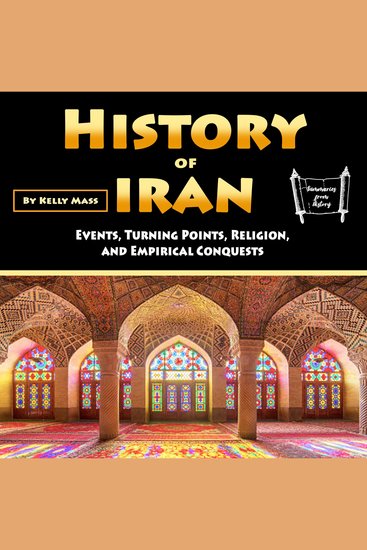
  • History of Iran - Events Turning Points Religion and Empirical Conquests - cover

    History of Iran - Events Turning...

    Kelly Mass

    • 0
    • 0
    • 0
    The history of Iran, once known as Persia in the Western world until the mid-twentieth century, is deeply intertwined with the history of a much broader region, referred to as Greater Iran. This expansive area stretches from Anatolia in the west to the borders of ancient India and the Syr Darya in the east, and from the Caucasus and Eurasian Steppe in the north to the Persian Gulf and the Gulf of Oman in the south. This vast territory has been home to a series of powerful civilizations and empires, each contributing to Iran's rich and complex history. 
    Iran's historical roots date back to around 7000 BC, with evidence of ancient settlements that make it one of the world's oldest continuous major civilizations. From the Early Bronze Age onward, the southwestern and western regions of the Iranian Plateau became integrated into the broader tapestry of the Ancient Near East. Early inhabitants such as the Elamites, followed by the Kassites, Mannaeans, and Gutians, played significant roles in shaping the region's cultural and political landscape. The Persians themselves are often regarded as the "first historical people" by the philosopher Georg Wilhelm Friedrich Hegel, reflecting their pivotal role in the development of world history. 
    In 625 BC, the Medes, a people native to the Iranian Plateau, succeeded in uniting Iran into a single nation and empire. This marked the beginning of the country's transformation into a major power. However, it was the Achaemenid Empire, founded by Cyrus the Great in 550 BC, that truly set Iran on the global stage. Under Cyrus, the Achaemenid Empire became the first true superpower in history, stretching across three continents—from the Balkans and North Africa to Central Asia.
    Show book
  • Omoiyari - The Japanese Path to Compassion - cover

    Omoiyari - The Japanese Path to...

    Amadeus Sorensen

    • 0
    • 0
    • 0
    Omoiyari is the philosophy of selfless compassion. 
    This is the audiobook to help you see the beauty in omoiyari and bring harmony into your own life. All simply by bringing happiness into the lives of others. Understanding the foundations of omoiyari will give an even greater sense of embodiment and appreciation. From the main branch omoi and kirei to omakase, this book breaks down the principles of omoiyari to boost your comprehension and in turn your attainment. 
    Have a listen and see if you can bring omoiyari into your life, and make your own happiness.
    Show book
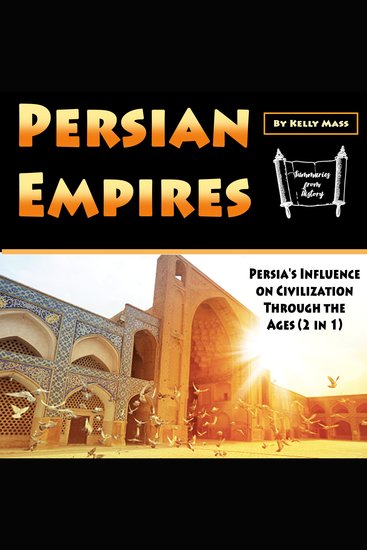
  • Persian Empires - Persia's Influence on Civilization Through the Ages (2 in 1) - cover

    Persian Empires - Persia's...

    Kelly Mass

    • 0
    • 0
    • 0
    This title contains two books, which are these: 
    1 - Safavid Empire - The Safavid Empire, often referred to as Safavid Iran or Safavid Persia, stands out as one of the most influential Iranian empires following the Muslim conquest of Persia in the 7th century. Ruling from 1501 to 1736, the Safavid dynasty is regarded as the catalyst for modern Iranian history and is recognized as one of the prominent gunpowder empires of its time. A pivotal moment in Muslim history, the Safavid rulers established the Twelver school of Shia Islam as the empire's official religion, which fundamentally shaped the spiritual and political landscape of Iran. 
    The origins of the Safavid dynasty can be traced back to a Sufi order founded in the Azerbaijani city of Ardabil. Initially a spiritual movement, the Safavid order transformed into a formidable political force. The dynasty, which had Kurdish Iranian roots, became increasingly Turkified through intermarriages with various ethnic groups, including Turkoman, Georgian, Circassian, and Pontic Greek officials. As a result, the Safavid leaders became Turkish-speaking and culturally integrated into the diverse milieu of the region. 
    2 - Sasanian Empire - The Sasanian Empire, often referred to by historians as the Neo-Persian Empire, was the last significant Iranian empire before the Muslim invasions of the 7th and 8th centuries AD. Named after the House of Sasan, this empire lasted nearly four centuries, from 224 to 651 AD, making it the longest-lived Persian imperial dynasty. The Sasanian Empire emerged during late antiquity, succeeding the Parthian Empire and re-establishing Persian prominence in the region, rivaling the Roman Empire (later known as the Byzantine Empire after 395 AD).
    Show book
  • Invitation to Sociology - A Humanistic Perspective - cover

    Invitation to Sociology - A...

    Peter L. Berger

    • 0
    • 0
    • 0
    This lucid and lively book, punctuated with witty, incisive examples, is addressed both to the layman who wants to know what sociology is all about and to students and sociologists who are concerned about the larger implications and dimensions of their discipline. Professor Berger places sociology in the humanist tradition and recognizes it as a "peculiarly modern, peculiarly timely form of critical thought." Without underestimating the importance of scientific procedures in sociology, he points out its essential affinity with history and philosophy, and he shows how sociology in this sense can contribute to a fuller awareness of the human world. 


    "Unlike puppets," he notes, "we have the possibility of stopping in our movements, looking up and perceiving the machinery by which we have been moved. In this act lies the first step towards freedom." Professor Berger discusses this consciousness in detail, in relation to one's own biography, to the operations of social institutions, and to the makeup of an individual as a product of this institutions. In each instance, he outlines the major contributions to sociology of such classical sociologists as Weber, Pareto, and Drukheim in Europe; Veblen, Cooley, and Mead in the United States; and some of the most important names in the field today.
    Show book