Join us on a literary world trip!
Add this book to bookshelf
Grey
Write a new comment Default profile 50px
Grey
Subscribe to read the full book or read the first pages for free!
All characters reduced
Defying the Skies - Bomber Crews Over Germany - cover

Defying the Skies - Bomber Crews Over Germany

Pasquale De Marco

Publisher: Publishdrive

  • 0
  • 0
  • 0

Summary

In the vast expanse of World War II, the air war stands as a testament to human ingenuity, courage, and the devastating power of technology. Defying the Skies: Bomber Crews Over Germany takes readers on a gripping journey through this pivotal conflict, offering a unique perspective from the cockpits of bomber crews on both sides of the war.

From the early days of the conflict, when the Luftwaffe reigned supreme over Europe, to the strategic bombing campaigns that brought devastation to cities and industries, this book delves into the complexities and consequences of air warfare. Through the eyes of bomber crews, we witness the harrowing realities of aerial combat, the immense challenges faced by those tasked with carrying out bombing raids, and the profound impact of air power on the outcome of the war.

This book sheds light on the technological advancements that transformed aerial warfare, from the development of radar and electronic countermeasures to the introduction of long-range bombers and precision bombing techniques. It also explores the human cost of the air war, paying tribute to the bravery of bomber crews who risked their lives in every mission. Their stories of resilience, camaraderie, and unwavering determination serve as a poignant reminder of the sacrifices made by those who fought in the skies.

Beyond the individual experiences of aircrew, Defying the Skies examines the strategic significance of bombing, analyzing its impact on civilian morale, war production, and the political landscape. It raises important questions about the ethics and effectiveness of strategic bombing, prompting readers to reflect on the complex moral and military considerations that shaped this aspect of warfare.

As we delve into the history of the air war, we gain a deeper understanding of its lasting legacy. The lessons learned from this conflict continue to influence military strategy, international law, and our understanding of the role of air power in modern warfare. This book serves as a tribute to the brave men who flew in the skies during World War II, while also providing valuable insights into the enduring impact of air power on warfare and society.

Defying the Skies is a gripping and thought-provoking account of the air war in World War II, offering a unique perspective on this pivotal conflict through the eyes of bomber crews. It is a must-read for anyone interested in military history, aviation, or the human stories behind one of the most transformative conflicts in history.


If you like this book, write a review!
Available since: 06/02/2025.
Print length: 167 pages.

Other books that might interest you

  • The Rest Is Memory - cover

    The Rest Is Memory

    Lily Tuck

    • 0
    • 0
    • 0
    THE HEARTBREAKING STORY OF A YOUNG CATHOLIC GIRL TRANSPORTED TO AUSCHWITZ BECOMES A RASHOMON-LIKE RONDO BY ONE OF OUR GREATEST NOVELISTS. 
     
    First glimpsed riding on the back of a boy’s motorcycle, fourteen-year-old Czeslawa comes to life in this mesmerizing novel by Lily Tuck, who imagines her upbringing in a small Polish village before her world imploded in late 1942.  
     
    Stripped of her modest belongings, shorn, and tattooed number 26947 on arriving at Auschwitz, Czeslawa is then photographed. Three months later, she is dead. 
     
    How did this happen to an ordinary Polish citizen? This is the question that Tuck grapples with in this haunting novel, which frames Czeslawa’s story within the epic tragedy of six million Poles who perished during the German occupation. A decade prior to writing The Rest Is Memory, Tuck read an obituary of the photographer Wilhelm Brasse, who took more than 40,000 pictures of the Auschwitz prisoners. Included were three of Czeslawa Kwoka, a Catholic girl from rural southeastern Poland. Tuck cut out the photos and kept them, determined to learn more about Czeslawa, but she was only able to glean the barest facts: the village she came from, the transport she was on, that she was accompanied by her mother and her neighbors, her tattoo number, and the date of her death. From this scant evidence, Tuck’s novel becomes a remarkable kaleidoscopic feat of imagination, something only our greatest novelists can do. 
     
    “Beautifully written, all the while instilling a sense of horror” (Susanna Moore), Tuck’s language swirls about, yet not a word is out of place. The subtly rotating images tumble out at us, accelerating as we learn about Czeslawa’s tragic stay in Auschwitz, the lives of real people such as the barbaric Commandant Rudolf Höss; his unconscionable wife, Hedwig; the psychiatrist and child rescuer Janusz Korczak; and the mordant Polish short story writer Tadeusz Borowski. 
     
    Although we are certain of Czeslawa’s fate, we have no choice but to keep turning the pages, thoroughly mesmerized by Tuck’s near otherworldly prose. 
     
    In Lily Tuck’s hands, The Rest Is Memory becomes an unforgettable work of historical reclamation that rescues an innocent life, one previously only recalled by a stark triptych of photographs. 
     
    “The Rest Is Memory is a literary resurrection, as shattering as it is astonishing. Lily Tuck has done the impossible; from darkness and hideous cruelty, she has woven an unforgettable paean to hope, to life, to justice.”—Junot Diaz
    Show book
  • The Brothers of the Shining Robe - cover

    The Brothers of the Shining Robe

    Manly P. Hall

    • 0
    • 0
    • 0
    In this rare and mystical work, Manly P. Hall unveils the hidden thread of spiritual brotherhood that guides the evolution of humanity from behind the veil. The Brothers of the Shining Robe refers to the invisible order of Initiates, Sages, and Adepts who, throughout the ages, have silently labored for the advancement of truth, beauty, and enlightenment on Earth. 
    Through poetic symbolism and philosophical insight, Hall traces the legacy of these hidden guardians—from ancient Egypt and Greece to the esoteric schools of the East and the secret societies of the modern West. He explores their doctrines, their sacred duty to the soul of the world, and their constant battle against ignorance and materialism. 
    More than a history, this book is a spiritual call to remembrance: that there are still those who wear the shining robe—not of cloth, but of light—and who work for the regeneration of the human spirit. Their presence is known not by words, but by their silent wisdom and unwavering service.
    Show book
  • There's Nothing Like This - The Strategic Genius of Taylor Swift - cover

    There's Nothing Like This - The...

    Kevin Evers

    • 0
    • 0
    • 0
    Singer-songwriter. Trailblazer. Mastermind. The Beatles of her generation. From her genre-busting rise in country music as a teenager to the economic juggernaut that is the Eras Tour, Taylor Swift has blazed a path that is uniquely hers. But how exactly has she managed to scale her success—multiple times—while dominating an industry that cycles through artists and stars like fashion trends? How has she managed to make and remake herself time and again while remaining true to her artistic vision? And how has she managed to master the constant disruption in the music business that has made it so hard for others to adapt and endure? 


    In There's Nothing Like This, Kevin Evers, a senior editor at Harvard Business Review, answers these questions in riveting detail. With the same thoughtful analysis usually devoted to iconic founders, game-changing innovators, and pioneering brands, Evers chronicles the business and creative decisions that have defined each phase of Swift's career. 


    Mixing business and art, analysis and narrative, and pulling from research in innovation, creativity, psychology, and strategy, There's Nothing Like This presents Swift as the modern and multidimensional superstar that she is—a songwriting savant and a strategic genius.
    Show book
  • Aurora - Part 3: Teasing The Straight Gay - cover

    Aurora - Part 3: Teasing The...

    Kathrin Pissinger

    • 0
    • 0
    • 0
    A female domination story with a queer twist. 
    In a glorious finale, I'm setting the bathroom stripper and her peeping toyfriend up for a meeting at a gay bar, where I'm finally going to see who is willing to become gay in order to get a threesome with me.
    Show book
  • They'll Never Hold Me - cover

    They'll Never Hold Me

    Michael Adams

    • 0
    • 0
    • 0
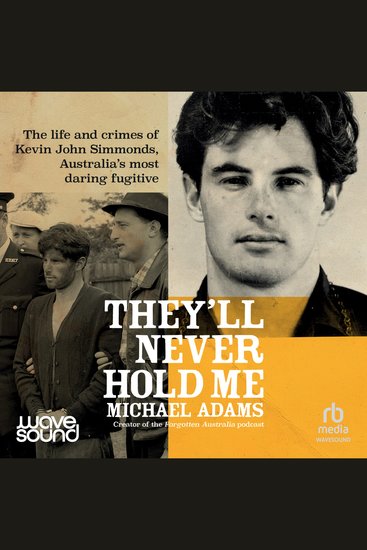
    The life and crimes of Kevin John Simmonds, Australia's most daring fugitive. 
     
    In 1959, Australians thrilled to every move made by a new criminal underdog, a Ned Kelly for the rock 'n' roll era. 
    Kevin John Simmonds was a charismatic crook whose brazen crime spree had scored him a lengthy prison sentence. But as he was led from court, he boasted, 'They'll never hold me.' 
    Two months later, Simmo made good on his promise, staging a daring escape from Long Bay Gaol. When his bid for freedom took a deadly turn, legendary Detective Ray 'the Gunner' Kelly took charge of the search, putting the fugitive in the crosshairs of the biggest armed manhunt in Australian history. 
    They'll Never Hold Me is the true story of an antihero with a code of honour who captured the public's hearts and minds even as he enraged the cops and the establishment. Brilliantly researched and written by Michael Adams, of the Forgotten Australia podcast, this never-before-told tale takes us beyond the public adventures that made Simmo into Public Enemy No. 1 to reveal the haunting tragedies he was trying to outrun – and the terrible fate that even he might not escape.
    Show book
  • The Power of Nothing to Lose - The Hail Mary Effect in Politics War and Business - cover

    The Power of Nothing to Lose -...

    Anonymous

    • 0
    • 0
    • 0
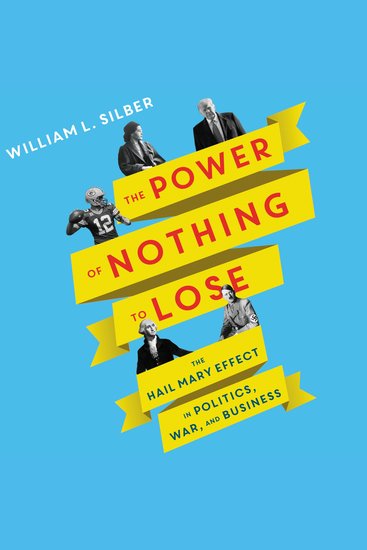
    Following books by Malcolm Gladwell and Dan Ariely, noted economics professor William L. Silber explores the Hail Mary effect, from its origins in sports to its applications to history, nature, politics, and business. 
    A quarterback like Green Bay’s Aaron Rodgers gambles with a Hail Mary pass at the end of a football game when he has nothing to lose -- the risky throw might turn defeat into victory, or end in a meaningless interception. Rodgers may not realize it, but he has much in common with figures such as George Washington, Rosa Parks, Woodrow Wilson, and Adolph Hitler, all of whom changed the modern world with their risk-loving decisions. 
    In The Power of Nothing to Lose, award-winning economist William Silber explores the phenomenon in politics, war, and business, where situations with a big upside and limited downside trigger gambling behavior like with a Hail Mary. Silber describes in colorful detail how the American Revolution turned on such a gamble. The famous scene of Washington crossing the Delaware on Christmas night to attack the enemy may not look like a Hail Mary, but it was. Washington said days before his risky decision, “If this fails I think the game will be pretty well up.” Rosa Parks remained seated in the white section of an Alabama bus, defying local segregation laws, an act that sparked the modern civil rights movement in America. It was a life-threatening decision for her, but she said, “I was not frightened. I just made up my mind that as long as we accepted that kind of treatment it would continue, so I had nothing to lose.” 
     The risky exploits of George Washington and Rosa Parks made the world a better place, but demagogues have inflicted great damage with Hail Marys. Towards the end of World War II, Adolph Hitler ordered a desperate counterattack, the Battle of the Bulge, to stem the Allied advance into Germany. He said, “The outcome of the battle would spell either life or death for the German nation.” Hitler failed to change the war’s outcome, but his desperate gamble inflicted great collateral damage, including the worst wartime atrocity on American troops in Europe. 
    Silber shares these illuminating insights on these figures and more, from Woodrow Wilson to Donald Trump, asylum seekers to terrorists and rogue traders. Collectively they illustrate that downside protection fosters risky undertakings, that it changes the world in ways we least expect.
    Show book