Join us on a literary world trip!
Add this book to bookshelf
Grey
Write a new comment Default profile 50px
Grey
Subscribe to read the full book or read the first pages for free!
All characters reduced
Cunning Wordplay - Exposing the Hidden Meaning Behind Common Phrases - cover

Cunning Wordplay - Exposing the Hidden Meaning Behind Common Phrases

Pasquale De Marco

Publisher: Publishdrive

  • 0
  • 0
  • 0

Summary

In a world saturated with information and relentless persuasion, we are constantly bombarded with messages vying for our attention and seeking to influence our thoughts, beliefs, and actions. Amidst this cacophony of voices, the ability to navigate the labyrinth of language has become paramount.

Doublespeak, that insidious art of obscuring, distorting, and misleading through language, has permeated every aspect of our lives. From the halls of power to the corridors of commerce, from the media to the classroom, doublespeak has become a pervasive force, shaping our perceptions and influencing our decisions. It is a language of obfuscation and deception, designed to conceal the truth, promote hidden agendas, and maintain control.

This book is a comprehensive guide to understanding and countering doublespeak. Through a series of incisive chapters, we will explore the different manifestations of doublespeak, from political rhetoric to corporate jargon, from legal mumbo-jumbo to educational doublespeak. We will examine the techniques used to manipulate language, the psychology behind doublespeak, and the devastating consequences it can have on individuals and society as a whole.

More importantly, we will equip you with the tools and strategies to effectively challenge doublespeak, to see through the smokescreen of deception, and to demand honest and transparent communication. We will empower you to become active participants in the fight against doublespeak, to hold those who use it accountable, and to create a culture of truth and integrity.

With this book as your guide, you will learn to:

* Recognize and identify different forms of doublespeak
* Understand the strategies and techniques used to manipulate language
* Develop critical thinking skills and question assumptions
* Demand clarity and transparency in communication
* Challenge doublespeak and promote honest and ethical communication

Join us on this journey to decode doublespeak and reclaim the power of language. Together, we can create a world where words are used to enlighten, empower, and uplift, rather than to deceive, manipulate, and control.


If you like this book, write a review!
Available since: 06/02/2025.
Print length: 165 pages.

Other books that might interest you

  • Silurian Period The: The History of the Prehistoric Era When Life Formed on Land - cover

    Silurian Period The: The History...

    Editors Charles River

    • 0
    • 0
    • 0
    The early history of Earth covers such vast stretches of time that years, centuries, and even millennia become virtually meaningless. Instead, paleontologists and scientists who study geochronology divide time into periods and eras.  
    The Silurian Age occurred during the mid-Paleozoic, and despite its relative brevity, the era developed some interesting features that promulgated life on Earth. Roderick J. Murchison, a British geologist, named a sequence of rocks after a group of indigenous people called the Silures living in Wales during the mid-19th century. Despite their absence in the Silurian Age, the name was bestowed to honor the tribe. 
    Murchison was inspired by close friend Adam Sedgwick, who named the Cambrian Age, employing the Latin word for Wales. In 1835, the two presented a paper together entitled On the Silurian and Cambrian Systems. Their separate categorizing systems caused a serious enough disagreement over chronology that the friendship ended bitterly. The alternative name for Siluria was Gotlandia after the Baltica island of Gotland. 
    What ultimately precipitated these subdivisions in the chronology was a “famous unconformity” on the River Onny in Shropshire. It indicated a natural break within “classic Silurian on its own home territory.” The timeline for beginning and end dates has remained imprecise, but the order of fossilized discoveries has proven correct. Joachim Barrande, a French paleontologist, geologist, and botanist, pursued the same issue in the Prague Basin of Bohemia. Studying the Paleozoic trilobite for a period of 10 years, his extensive work was published in his Silurian System of Central Bohemia. Altogether, he identified and analyzed over 4,000 new fossil species, producing the enormous Encyclopedia of Fossils, numbering over 6,000 pages.
    Show book
  • Habit Forming - Drug Addiction in America 1776-1914 - cover

    Habit Forming - Drug Addiction...

    Elizabeth Kelly Gray

    • 0
    • 0
    • 0
    Habitual drug use in the United States is at least as old as the nation itself. Habit Forming traces the history of unregulated drug use and dependency before 1914, when the Harrison Narcotic Tax Act limited sales of opiates and cocaine under US law. Many Americans used opiates and other drugs medically and became addicted. Some tried Hasheesh Candy, injected morphine, or visited opium dens, but neither use nor addiction was linked to crime, due to the dearth of restrictive laws. After the Civil War, American presses published extensively about domestic addiction. Later in the nineteenth century, many used cocaine and heroin as medicine. As addiction became a major public health issue, commentators typically sympathized with white, middle-class drug users, while criticizing such use by poor or working-class people and people of color. When habituation was associated with middle-class morphine users, few advocated for restricted drug access. By the 1910s, as use was increasingly associated with poor young men, support for regulations increased. In outlawing users' access to habit-forming drugs at the national level, a public health problem became a larger legal and social problem, one with an enduring influence on American drug laws and their enforcement.
    Show book
  • Impact of New Technologies on Society The: A Blueprint for the Future - cover

    Impact of New Technologies on...

    Siddhartha Paul Tiwari

    • 0
    • 0
    • 1
    Biography of the Author - Siddhartha Paul Tiwari 
    Siddhartha Paul Tiwari is an educator and a technologist. Currently, he is employed by Google Asia Pacific, Singapore. Prior to that, he was responsible for global learning and development at Google, based in Tokyo. His achievements include innovative educational techniques, the development of new graduate and postgraduate course curricula, digital intervention strategies, and the use of information and communication technologies in education. As the teaching environment has rapidly changed, Tiwari has been working tirelessly to integrate new technologies into university curricula and to help academia adjust to these changes. 
    An Overview of the Book 
    We already see the impact of emerging technologies on our lives and the economy in many different ways, particularly when it comes to the way we live our lives and the way we work. Due to this, there is fierce competition among companies across the globe in order to ensure that they are able to benefit from the new technological developments. Globally, the United States and Asia are emerging as the two global leaders in this area. Over the years, there has been a significant change in the landscape of emerging technologies since Alan Turing first asked in the 1950s if machines could think like humans. Emerging technologies will enhance economic growth and efficiency in the future. It is possible to greatly improve decision-making when large amounts of data are analysed by improving efficiency. It is likely that new products and services, new markets, and new industries will be created as a result, which will in turn boost consumer demand and generate new revenue streams. On the other hand, emerging technologies may also have a profound effect on society and the economy.
    Show book
  • Zoology - The Animal Kingdom - cover

    Zoology - The Animal Kingdom

    Mike Crawford

    • 0
    • 0
    • 0
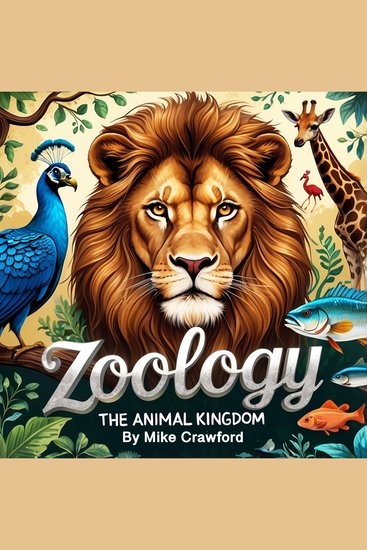
    Zoology, the scientific study of animals, is a broad and dynamic field that encompasses a wide range of topics, from the anatomy and physiology of organisms to their behaviors, evolutionary history, and interactions with their environments. It is a fundamental branch of biology, crucial for understanding life on Earth. The word "zoology" comes from the Greek words "zoo," meaning animal, and "logos," meaning study, thus literally translating to the "study of animals." This field not only explores the diversity of animal life but also offers insights into the nature of life itself and the interrelationships among all living organisms. 
    The scope of zoology is vast, as it covers every aspect of animal life, from the microscopic world of single-celled organisms to the complex behaviors of large mammals. The study of zoology can be broken down into several subfields, such as physiology, behavior, evolution, ecology, and taxonomy, each of which provides valuable information about the functioning of animals in the natural world. For example, physiologists examine how animals’ bodily systems—like the nervous, respiratory, and circulatory systems—function to maintain life, while evolutionary biologists trace the development of animal species over time. Ecologists focus on how animals interact with their environments, while taxonomists classify and name the vast array of species found on Earth.
    Show book
  • HowExpert Guide to Moths - 101+ Tips to Learn about Save and Educate Others About Moths - cover

    HowExpert Guide to Moths - 101+...

    HowExpert, Jessica Dumas

    • 0
    • 0
    • 0
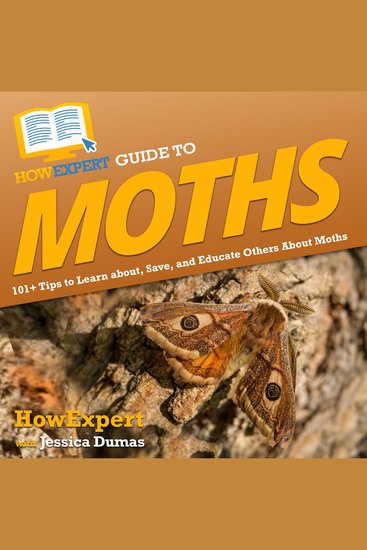
    HowExpert Guide to Moths written by Jessica Dumas is a guidebook that is packed with more than 101+ fun facts and tips to learn about moths. In this guidebook, you will learn everything you ever wanted to know about moths. In addition, this book will be an eye-opener as to how important they are and why they should be appreciated as much as the butterflies. 
    This guidebook has more about moths than an encyclopedia and is much easier to understand. It is not an official field guide normally used for identifying moths; however, you can use it along with your field guide for additional details that may not be in a field guide. You can use this book to teach children or anyone else interested in learning about moths. Some of the topics of this guidebook are as follows: 
    - Tips on who belongs to the Lepidoptera family 
    - Tips on distinguishing a moth from a butterfly 
    - Tips on how to identify different types of moths 
    - Moth life cycle and stages of metamorphosis 
    - Descriptions of body parts and their functions 
    - Learn why moths are attracted to lights 
    - Learn how to repel moths in your closets 
    - Learn why there’s a decline in moth population 
    - Learn important reasons why moths matter 
    - Learn how moths act as a gauge for the ecosystem 
    - Tips on things you can do to help save moths 
    - Tips on growing a moon garden for moths 
    - Tips on being a moth-er and going mothing 
    - Tips on science careers of studying moths 
    - Tips on educating children and others about moths 
    There are several more fascinating topics included that will be fun to explore. You will not find other resources that compile all the most interesting and educational information about moths in one organized source like this book. 
    About the Author 
    Jessica Dumas is a freelance writer who was inspired to write about butterflies and moths because of her love for them.
    Show book
  • Java in Action - The Journey of Java: From Core Concepts to Advanced Programming - cover

    Java in Action - The Journey of...

    Elizabeth King

    • 0
    • 0
    • 0
    "Java in Action: The Journey of Java: From Core Concepts to Advanced Programming," is for beginners and intermediate programmers who want to master Java. Every chapter comes with exercises and code examples that can help in building and developing problem-solving skills. 
    Right from basic concepts that act as a foundation of Java to high-level programming methods, it takes the reader through the complete journey and prepares the reader with all that would be needed to start programming applications confidently in real life. 
    In the beginning sections, it talks about OOP and some core principles of Java that focus on variables, data types, and control structures. Readers are well-oriented and acquainted with Java basics via simple explanations and working examples. 
    The subjects the book involves become more sophisticated along with this: file handling, multi-threading, structures for data, and more detailed best practices about effective coding and scalability. 
    What is impressive besides analyzing the robust standard libraries and APIs of Java is that it even throws in some valuable insights into how this language can be used for database integration, concurrent programming, and web development. 
    "Java in Action" takes readers beyond syntax so they can understand what Java can do and where it's being applied within all types of industries, so it's the perfect book for any person looking to upgrade his or her programming skills. 
    This book will be a comprehensive and very readable guide to Java's rich programming ecosystem, whether the system you are designing is small or large.
    Show book