Join us on a literary world trip!
Add this book to bookshelf
Grey
Write a new comment Default profile 50px
Grey
Subscribe to read the full book or read the first pages for free!
All characters reduced
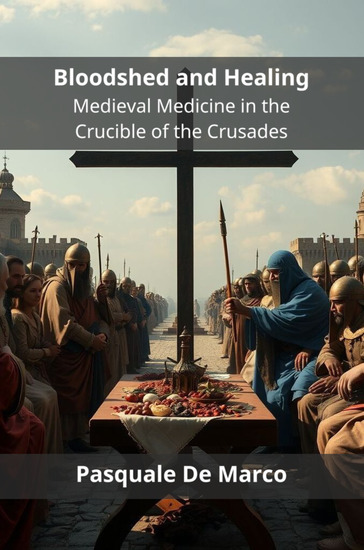
Bloodshed and Healing - Medieval Medicine in the Crucible of the Crusades - cover

Bloodshed and Healing - Medieval Medicine in the Crucible of the Crusades

Pasquale De Marco

Publisher: Publishdrive

  • 0
  • 0
  • 0

Summary

In this groundbreaking exploration of medicine during the Crusades, we unveil a world of healing and innovation amidst the chaos of war. From the battlefields to the hospitals, we witness the remarkable contributions of surgeons, physicians, and healers who dedicated their lives to alleviating suffering and preserving life.

Through a captivating narrative and meticulous research, this book transports readers to the front lines of medical care in the Crusader era. We encounter skilled surgeons performing complex operations, utilizing techniques that pushed the boundaries of surgical practice. We discover the vital role of women in medicine, as female healers and caregivers provided compassionate care to the sick and wounded.

Beyond the battlefield, we delve into the vibrant exchange of medical knowledge that took place between East and West during the Crusades. We witness the translation of Arabic and Islamic medical texts into Latin, facilitating the cross-pollination of ideas and expertise. We explore the rise of medical schools and universities, where scholars from different cultures came together to study and debate the latest medical theories and practices.

This book not only chronicles the medical advancements of the Crusades but also sheds light on the challenges and obstacles faced by medieval healers. We uncover the limitations of their knowledge and the often-harsh realities of treating injuries and illnesses in an age without antibiotics or anesthesia. We also examine the ethical dilemmas that arose in the context of war and captivity, as medical practitioners grappled with the moral implications of their actions.

Through a comprehensive examination of historical records, archaeological findings, and literary sources, this book paints a vivid picture of medicine in the Crusades. It is a testament to the resilience of the human spirit and the unwavering pursuit of healing in the face of adversity. This book is an essential read for anyone interested in the history of medicine, the Crusades, or the enduring legacy of cultural exchange.


If you like this book, write a review!
Available since: 06/02/2025.
Print length: 165 pages.
Other books that might interest you

  • The Birth of the Internet – A Digital Revolution - How Innovation Machines and Factories Transformed the World - cover

    The Birth of the Internet – A...

    Carter Reed

    • 0
    • 0
    • 0
    The world we live in today—one of skyscrapers, mass production, and global trade—was born from one of history’s greatest transformations: the Industrial Revolution. But how did we go from handcrafting goods to building massive factories, steam-powered locomotives, and electric cities? 
    This audiobook takes you deep into the story of the Industrial Revolution, uncovering its inventions, economic impact, and the people who drove progress forward. Discover: 
    ✅ How steam engines, textile mills, and railroads reshaped economies 
    ✅ The key figures behind industrial breakthroughs, from James Watt to Henry Ford 
    ✅ The social effects of urbanization, child labor, and factory life 
    ✅ How the Industrial Revolution paved the way for the modern technological era 
    The Industrial Revolution – The Birth of Modern Society is a must-listen for history lovers, technology enthusiasts, and anyone fascinated by the forces that shaped today’s world.
    Show book
  • Cryptography in World War I: The History of the Efforts to Make and Break Secret Codes during the Great War - cover

    Cryptography in World War I: The...

    Editors Charles River

    • 0
    • 0
    • 0
    World War I was the first major conflict in which new electronic means of transmitting and receiving messages became a major factor in political and military operations. The electric telegraph was developed in the first half of the 19th century, and by 1850, there were several telegraph companies around the world providing a service that allowed virtually instantaneous communication over long distances. This was a major breakthrough, but the telegraph depended on the availability of wires to transmit messages between stations, meaning that if these wires were broken or damaged, communications were cut off. 
    	Late in the 19th century, there was another new development, the telephone, though this too relied on wires to transmit and receive information. At the same time, there was a new invention that provided instant voice and Morse code communication over long distances that did not require wires. Initially called wireless, radio was quickly adopted by armies around the world as a way of providing rapid communication between military units. By the time World War I began in 1914, all the major nations involved had provided their forces with some form of radio equipment. 
    	Of course, this came with a fundamental problem: radio, telephone, and telegraph messages could be intercepted by the enemy, potentially giving them notice of impending operations. To protect these electronic messages from being read by the enemy, armies began to use codes and ciphers to disguise the meaning of messages. Teams were created to devise effective codes and ciphers, and these were quickly followed by other teams whose role was to attempt to break the codes and ciphers used by the other side. As a result, a secret war began, almost completely hidden from public view, as the belligerents devised complex ways of hiding the real meaning of their own messages while simultaneously attempting to understand those of the enemy. 
    Show book
  • Building An Interactive AI Video Clone - Unlocking The Power Of Personalized Communication - cover

    Building An Interactive AI Video...

    TJ Walker

    • 0
    • 0
    • 0
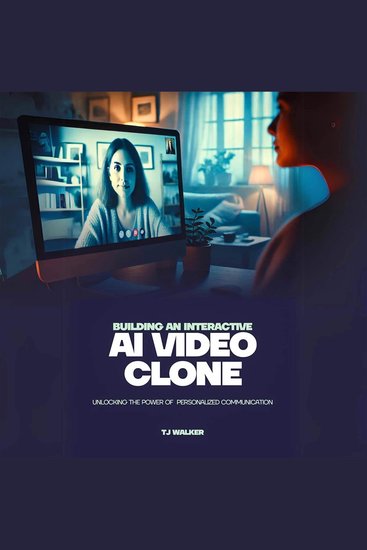
    Step into the future of communication with "Building an Interactive AI Video Clone." In this comprehensive guide, TJ Walker takes you on an inspiring journey to create your very own AI that embodies your unique voice, style, and personality. Imagine having a Video twin that can engage your audience, respond to inquiries, and provide personalized experiences—all while reflecting your authentic self.This book dives deep into the transformative potential of AI technology, offering step-by-step instructions and practical tools to help you build an interactive Video clone tailored to your needs. Whether you're a business owner looking to enhance customer engagement, a content creator aiming to connect with your followers, or an individual curious about the possibilities of AI, this guide is your key to unlocking a new realm of communication.Learn how to leverage advanced AI techniques to craft meaningful conversations, streamline your messaging, and establish a strong online presence. With real-world examples and actionable strategies, you'll discover how to make your Video clone not just a tool, but a powerful extension of your brand and personality.Join the revolution in personalized communication and elevate your interactions to new heights. Your journey to building an interactive AI Video clone starts here—transform the way you connect with the world!
    Show book
  • Rewiring Democracy - How AI Will Transform Our Politics Government and Citizenship (Strong Ideas) - cover

    Rewiring Democracy - How AI Will...

    Bruce Schneier, Nathan E. Sanders

    • 0
    • 0
    • 0
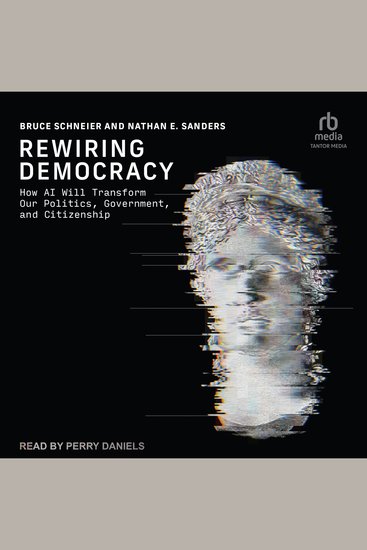
    In this advisedly optimistic book, Rewiring Democracy, security technologist Bruce Schneier and data scientist Nathan Sanders cut through the AI hype and examine the myriad ways that AI is transforming every aspect of democracy—for both good and ill.The authors describe how the sophistication of AI will fulfill demands from lawmakers for more complex legislation, reducing deference to the executive branch and altering the balance of power between lawmakers and administrators. They show how the scale and scope of AI is enhancing civil servants' ability to shape private-sector behavior, automating either the enforcement or neglect of industry regulations. They also explain how both lawyers and judges will leverage the speed of AI, upending how we think about law enforcement, litigation, and dispute resolution.Whether these outcomes enhance or degrade democracy depends on how we shape the development and use of AI technologies. Powerful players in private industry and public life are already using AI to increase their influence, and AIs built by corporations don't deliver the fairness and trust required by democratic governance. But, steered in the right direction, AI's broad capabilities can augment democratic processes and help citizens build consensus, express their voice, and shake up long-standing power structures.
    Show book
  • Creative Thinking in Schools - A Leadership Playbook - cover

    Creative Thinking in Schools - A...

    Bill Lucas, Nia Richards, Ellen...

    • 0
    • 0
    • 0
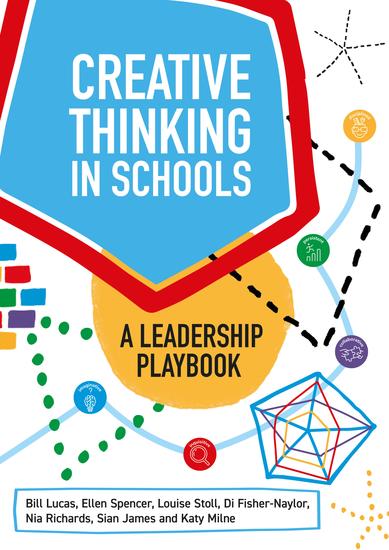
    This leadership playbook has been published to coincide with the global release of the first PISA test results on creative thinking, the Creativity Collaboratives under way in England and the growing importance of creative thinking in countries across the world.Creative Thinking in Schoolsfocuses on how leaders can create capacity among their staff to embed creative thinking, both in their own lives and in the lives of their pupils. Itoffers a framework for improving creative thinking based on the widely used five creative habits framework developed by the Centre for Real-World Learning. The framework focuses on developing learners who are inquisitive, persistent, collaborative, disciplined and imaginative.
    Underpinned by research and analysis of practice in hundreds of schools across the world, and more recently by an in-depth study of fifty schools in England,Creative Thinking in Schoolsprovides a range of accessible resources, planning tools and practical examples. These support leaders to reflect on their core purposes, understand the changes needed to embed creative thinking, develop leaders across their staff, facilitate the development of their teachers, plan, teach and assess creative thinking, and work with external partners, all the while developing a vibrant professional learning community.
    Complemented by a dedicated website which contains additional downloadable materials and case studies,the playbook will allow leaders and teachers around the world to connect with each other and share their own experiences in order to develop, spread, extend and evaluate creative thinking within and across schools.
    Creative Thinking in Schoolswill support a professional learning community of leaders and teachers who see creative thinking as a core purpose of education and are interested in making it a priority in their school. It will encourage pupils to develop their creativity in the classroom, allowing future generations to thrive in a world that is increasingly complex.
    Creative Thinking in Schools: A Leadership Playbookhas been supported by the Mercers Company, Creativity, Culture and Education and the Arts Council of Wales.
    Suitable for school and system leaders, teacher leaders and policy makers who see creative thinking as a core purpose in education.
    Show book
  • Please Don't Leave Me - How Abandonment Shapes a Man & The Love That Can Heal Him - cover

    Please Don't Leave Me - How...

    PhD Dr. William D. Harvey

    • 0
    • 0
    • 0
    This audiobook is narrated by an AI Voice.   
    When a man has been abandoned, love isn’t simple, it’s survival. 
    This is the untold story of what abandonment does to a man’s heart, and how love can either heal or destroy him. 
    In please Don’t Leave Me, Dr. William D. Harvey, PhD, nurse, social scientist, and someone who knows firsthand the impact of paternal abandonment, offers an unflinching look into the fears, walls, and silent battles that shape a man who has been left behind. 
    Drawing on his doctoral research, deeply personal experiences, and a career dedicated to patient care and human connection, Dr. Harvey reveals why abandonment leaves wounds that change how a man gives and receives love. With compassion and clarity, he shows both men and their partners how to navigate the complexities of trust, vulnerability, and healing. 
    Whether you are the man who has been left, the woman who loves him, or someone guiding others through their pain, this book offers a rare and powerful perspective on the road from survival to connection.
    Show book