Join us on a literary world trip!
Add this book to bookshelf
Grey
Write a new comment Default profile 50px
Grey
Subscribe to read the full book or read the first pages for free!
All characters reduced
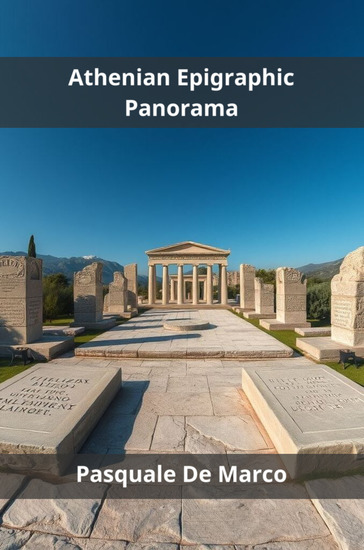
Athenian Epigraphic Panorama - cover

Athenian Epigraphic Panorama

Pasquale De Marco

Publisher: Publishdrive

  • 0
  • 0
  • 0

Summary

In the heart of ancient Greece, where democracy flourished and philosophy thrived, Athens left an indelible mark on history. Its enduring legacy extends beyond its architectural marvels and philosophical musings; it lies hidden within the inscriptions etched in stone and metal—a treasure trove of knowledge awaiting exploration.

Athenian Epigraphic Panorama invites you on a captivating journey through the world of Athenian epigraphy, unveiling the secrets and stories embedded within these ancient inscriptions. Delve into the lives of ordinary individuals, statesmen, and kings as you decipher their laws, decrees, religious practices, and artistic achievements. Discover the intricate social fabric of Athens through epitaphs, dedications, and honorary inscriptions, gaining insights into relationships, families, and community dynamics.

This comprehensive guide serves as an invaluable resource for historians, archaeologists, and anyone fascinated by the ancient world. With meticulous research and engaging storytelling, Athenian Epigraphic Panorama breathes life into the past, providing tangible evidence to corroborate historical accounts and shed light on obscure events. Trace the evolution of Athenian society and culture through the changing styles of inscriptions, uncovering the values and ideals that shaped this remarkable civilization.

More than just an academic pursuit, Athenian Epigraphic Panorama offers a profound appreciation for the enduring legacy of ancient Greece. It reminds us of the remarkable achievements of the Athenians in various fields, inspiring us to reflect on the parallels between their world and our own. As you delve into the depths of Athenian epigraphy, you will gain a deeper understanding of the human experience, the foundations of Western thought and culture, and the enduring impact of ancient Greece on our modern world.

Embark on this captivating journey through Athenian epigraphy, and discover the vibrant spirit of ancient Athens, where democracy, philosophy, and art flourished side by side.


If you like this book, write a review!
Available since: 06/02/2025.
Print length: 166 pages.


Other books that might interest you

  • Washington - A Legacy of Leadership - cover

    Washington - A Legacy of Leadership

    Dr. Paul Vickery

    • 0
    • 0
    • 0
    His name is carved in granite, his likeness cast in bronze, his legend as large as the role he played as America's first president. But before he was a commander-in-chief, George Washington was a general in a revolution that would decide the future of the people and land he called his own. If victorious, he would gain immortality. If defeated, he would find his neck in a hangman's noose. 
    Washington knew the sting of defeat—at Brandywine, at Germantown—yet this unwavering leadership and his vision for a new and independent nation emboldened an army prepared to fight barefoot if necessary to win that independence. Wrote an officer after the Battle of Princeton:  "I saw him brave all the dangers of the field and his important life hanging as it were by a single hair with a thousand deaths flying around him." 
    Among America's pantheon of Founding Fathers, one man to this day stands out.  Author Paul Vickery tracks the unlikely rise of Washington, a man whose stature in command of a young army became prelude to a presidency. As Vickery writes, "He learned to become the father of our country by first being the father of our military." 
    Accompanying images are included in the audiobook companion PDF download.
    Show book
  • How to Lose the Hounds - Maroon Geographies and a World Beyond Policing - cover

    How to Lose the Hounds - Maroon...

    Celeste Winston

    • 0
    • 0
    • 0
    In How to Lose the Hounds Celeste Winston explores marronage—the practice of flight from and placemaking beyond slavery—as a guide to police abolition. She examines historically Black maroon communities in the Maryland suburbs of Washington, DC, that have been subjected to violent excesses of police power from slavery until the present day. Tracing the long and ongoing historical geography of Black freedom struggles in the face of anti-Black police violence in these communities, Winston shows how marronage provides critical lessons for reimagining public safety and community well-being. These freedom struggles take place in what Winston calls maroon geographies—sites of flight from slavery and the spaces of freedom produced in multigenerational Black communities. Maroon geographies constitute part of a Black placemaking tradition that asserts life-affirming forms of community. Winston contends that maroon geographies operate as a central method of Black flight, holding ground, and constructing places of freedom in ways that imagine and plan a world beyond policing.
    Show book
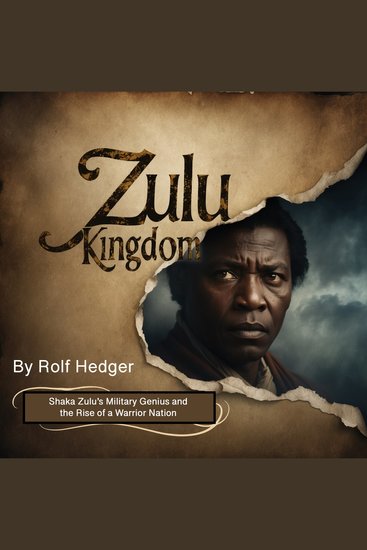
  • Zulu Kingdom - Shaka Zulu's Military Genius and the Rise of a Warrior Nation - cover

    Zulu Kingdom - Shaka Zulu's...

    Rolf Hedger

    • 0
    • 0
    • 0
    Shaka Zulu was born in 1787 to Senzangakhona, a minor chief of the Zulu clan, and Nandi, a woman of the Langeni people. His birth was unconventional and shrouded in controversy. As a child born out of wedlock, Shaka and his mother faced rejection and humiliation from Senzangakhona’s family, leading to their exile from the Zulu kingdom. They found refuge among the Langeni and later with the Mthethwa, a powerful kingdom under the leadership of Chief Dingiswayo. These early experiences of hardship, resilience, and survival shaped Shaka’s character, instilling in him a determination to rise above adversity. 
    Growing up, Shaka displayed remarkable physical strength, intelligence, and leadership abilities. Among the Mthethwa, he trained as a warrior under Dingiswayo’s command, where he was exposed to innovative military tactics that later influenced his own strategies. He quickly gained recognition for his bravery and strategic mind, earning a place of prominence within the army. It was during this period that he began developing ideas to revolutionize warfare, questioning the effectiveness of traditional long-range throwing spears and loose battle formations. 
    The political landscape of the time was volatile. Various Nguni-speaking clans, including the Zulu, were engaged in constant skirmishes for power and resources. The Mthethwa, under Dingiswayo, sought to unify smaller groups to strengthen their influence against rival factions like the Ndwandwe, led by Zwide. Shaka’s abilities as a warrior and leader caught Dingiswayo’s attention, and he became a favored protégé. This mentorship provided Shaka with the opportunity to refine his tactical skills and forge alliances that would later aid his own rise to power.
    Show book
  • How to Be Forgiving - cover

    How to Be Forgiving

    Olivia Werner

    • 0
    • 0
    • 0
    [How to Be Forgiving] delves into the intricate landscape of human emotion with unflinching honesty and profound insight, examining the peculiar way we hold onto hurts like rain-soaked clothes, heavy and familiar against our skin. Through intimate prose that reads like a confession shared between friends, this meditation on forgiveness illuminates the small, daily acts of letting go that shape our capacity for healing. The book's revolutionary perspective challenges conventional wisdom, arguing that forgiveness isn't a destination but rather a continuous practice, like breathing – something we need to do consciously at first, then naturally, until it becomes part of who we are. With its lyrical exploration of the stories we tell ourselves and the weight of unspoken words, this guide transforms our understanding of what it means to forgive, revealing how the journey toward release becomes an act of self-liberation rather than a gift bestowed upon others.
    Show book
  • Saints and Soldiers - Inside Internet-Age Terrorism From Syria to the Capitol Siege - cover

    Saints and Soldiers - Inside...

    Rita Katz

    • 0
    • 0
    • 0
    More than a decade ago, counterterrorism expert Rita Katz began browsing white supremacist and neo-Nazi forums. The hateful rhetoric and constant threats of violence immediately reminded her of jihadist militants, but law enforcement and policy makers barely paid attention to the Far Right. Now, years of attacks committed by extremists radicalized online—including mass murders at a synagogue in Pittsburgh and mosques in Christchurch, New Zealand, as well as the Capitol siege—have brought home the danger. How has the internet shaped today's threats, and what do the online origins of these movements reveal about how to stop them? 


    In Saints and Soldiers, Katz reveals a new generation of terrorist movements that don't just use the internet, but exist almost entirely on it. She provides a vivid view from the trenches, spanning edgy video game chat groups to mainstream social media platforms to what ISIS and Far-Right mass-shooters in El Paso, Orlando, and elsewhere unwittingly reveal between the lines of their manifestos. Katz shows how the online cultures of these movements create today's terrorists and shape how they commit "real world" violence. From ISIS to QAnon, Saints and Soldiers pinpoints the approaches needed for a new era in which arrests and military campaigns alone cannot stop these never-before-seen threats.
    Show book
  • Economic Impacts of Imperialism - How Empire Building Shaped Global Trade and Economics - cover

    Economic Impacts of Imperialism...

    Arlo Holders

    • 0
    • 0
    • 0
    Imperialism, as a driving force in global history, established the foundation for much of the modern world's economic and political systems. The roots of imperialism stretch back to ancient civilizations, where conquest and control of territories provided the resources and labor necessary for expansion and prosperity. Over time, the concept evolved, shaped by cultural ambitions, geopolitical competition, and economic incentives. By the late 15th century, the age of exploration began a new phase of empire building, marked by the European powers seeking wealth and influence beyond their borders. 
    At the heart of imperialism was the pursuit of economic gain. Wealth from foreign lands, particularly precious metals, spices, and other coveted resources, spurred the earliest imperial endeavors. These ventures not only enriched nations but also fueled rivalry among emerging powers. The drive for resources and markets intensified during the Renaissance and the early modern period, as advancements in navigation and maritime technology made long-distance expeditions feasible. Imperial powers sought to expand their influence by establishing colonies, which would serve as sources of raw materials and as markets for manufactured goods. 
    Cultural and ideological factors also played a role in shaping imperialism. The belief in the superiority of certain civilizations over others justified the conquest and subjugation of indigenous peoples. Religion was another motivator, with missionary efforts often accompanying territorial expansion. Christianity, in particular, became a tool for legitimizing imperial control, as colonizing powers framed their endeavors as missions to civilize and convert native populations. This intertwined economic exploitation with a sense of moral and cultural obligation, creating a complex dynamic between the colonizers and the colonized.
    Show book