Join us on a literary world trip!
Add this book to bookshelf
Grey
Write a new comment Default profile 50px
Grey
Subscribe to read the full book or read the first pages for free!
All characters reduced
America's Changing Landscape - A New History - cover

America's Changing Landscape - A New History

Pasquale De Marco

Publisher: Publishdrive

  • 0
  • 0
  • 0

Summary

America's Changing Landscape: A New History tells the story of the transformation of the American environment from the arrival of the first European settlers to the present day. This comprehensive and up-to-date account examines the impact of human activities on the land, the water, and the air, from the clearing of forests and the plowing of prairies to the rise of industrial pollution and climate change.

But this book is not just a story of environmental degradation. It is also a story of resilience and hope. It explores the ways in which Americans have responded to environmental challenges, from the conservation movement of the early 20th century to the environmental justice movement of today. It also highlights the work of individuals and communities across the country who are working to create a more sustainable future.

America's Changing Landscape is essential reading for anyone who wants to understand the environmental challenges facing our planet and the role that America has played in shaping those challenges. It is also a call to action for all Americans to work together to create a more sustainable future.

In this book, you will learn about:

* The impact of European settlement on the North American environment
* The role of the fur trade in shaping the American landscape
* The transformation of the Great Plains from grassland to farmland
* The environmental consequences of the Industrial Revolution
* The rise of the conservation movement and the fight for environmental protection
* The challenges of climate change and other environmental problems facing America today

This book is a valuable resource for students, scholars, and anyone interested in the environmental history of the United States. It is also a call to action for all Americans to work together to create a more sustainable future.


If you like this book, write a review!
Available since: 06/02/2025.
Print length: 164 pages.
Other books that might interest you

  • Life Skills For A Broken World - cover

    Life Skills For A Broken World

    Dr. Ahona Guha

    • 0
    • 0
    • 0
    A revolutionary framework for living well in a broken world, from acclaimed author and psychologist. 


    How can I manage heartbreak? How do I cope with death? How can I learn to tolerate anxiety and have hope? 


    In this helpful, practical, and realistic guide to good psychological health, Dr. Ahona Guha shows us how to cope, thrive, and still feel hopeful for the future. Combining techniques from a range of therapeutic modalities, she demonstrates how we can build a range of essential psychological skills, and apply them to live a more tranquil and joyful life. 


    Life Skills for a Broken World is a breath of fresh air, cutting through the confusion to provide solid, practical, and evidence-based answers to existential questions, big and small.
    Show book
  • Your Path to Greatness - Essential Leadership Skills - cover

    Your Path to Greatness -...

    Cliff K Locks

    • 0
    • 0
    • 0
    If you're seeking to enhance your leadership skills and navigate the complexities of being a great leader in the Artificial Intelligence (AI) era, "Your Path to Greatness: Essential Leadership Skills" is tailored for you. Whether you're an aspiring leader or already in a leadership role, this book offers valuable insights and actionable strategies to propel your success. Here's why it's for you: Clarify Your Leadership Goals: Define the skills you want to hone and envision your leadership trajectory. Set SMART goals that are specific, measurable, achievable, relevant, and time-bound to guide your development effectively. Understand Your Leadership Style: Leadership isn't one-size-fits-all. Reflect on your unique leadership approach and how it aligns with your objectives and team dynamics. Tailor your style to suit diverse situations and foster effective leadership. Cultivate Your Authentic Persona: Authenticity is key, but so is understanding how you're perceived. Shape your leadership identity consciously, embodying the qualities you aspire to be known for while remaining true to yourself. Craft a Strategic Action Plan: Translate your goals and insights into actionable steps. Develop a comprehensive plan with clear milestones to track your progress and ensure you're moving closer to your leadership aspirations. In essence, this book is designed for those committed to continuous self-improvement in leadership. Whether you're stepping into a new role or seeking to refine your existing skills, its blend of introspection, learning, and strategic action will empower you to lead effectively amidst the challenges of today's AI-driven landscape.
    Show book
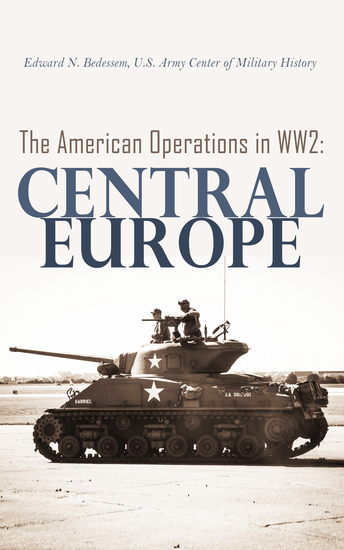
  • The American Operations in WW2: Central Europe - cover

    The American Operations in WW2:...

    U.S. Army Center of Military...

    • 0
    • 0
    • 0
    World War II was the largest and most violent armed conflict in the history of mankind. Highly relevant today, World War II has much to teach us, not only about the profession of arms, but also about military preparedness, global strategy, and combined operations in the coalition war against fascism. This book follows military operations of the US Army in Central Europe from 22 March to 11 May 1945. 
    By the early spring of 1945 events favored the Allied forces in Europe. The Anglo-Americans had by January turned back the Germans' December counterattack in the Ardennes, in the famous Battle of the Bulge. The failure of this last great German offensive exhausted much of the Third Reich's remaining combat strength, leaving it ill-prepared to resist the final Allied campaigns in Europe. Additional losses in the Rhineland further weakened the German Army, leaving shattered remnants of units to defend the east bank of the Rhine. By mid-March the western Allies had pushed to the Rhine along most of the front, had seized an intact bridge at Remagen, and had even established a small bridgehead on the river's east bank.
    In the east the Soviets had overrun most of Poland, pushed into Hungary and eastern Czechoslovakia, and temporarily halted at the German border on the Oder-Neisse line. These rapid advances on the Eastern Front destroyed additional veteran German combat units and severely limited Hitler's ability to reinforce his Rhine defenses. Thus, as the western Allies completed their preparations for the final drive into the heart of Germany, victory seemed within sight.
    Show book
  • Gustave le Bon: The Crowd – A Study of the Popular Mind - A seminal masterpiece on crowd psychology - cover

    Gustave le Bon: The Crowd – A...

    Gustave Le Bon, Jürgen Fritsche

    • 0
    • 0
    • 0
    What happens to individuals when they become part of a crowd? How can it be explained that intelligent human beings commit unspeakable cruelties once they have become one with an anonymous mass of people? Le Bon's analysis dates back to 1895 – however, the razor-sharp analysis of human behavior is still valid today! Included: a pdf document with track list.
    Show book
  • Lydia Litvyak: The Life and Legacy of the Soviet Woman Who Became World War II’s Most Successful Female Fighter Pilot - cover

    Lydia Litvyak: The Life and...

    Editors Charles River

    • 0
    • 0
    • 0
    Altogether, the Battle of Stalingrad was the deadliest battle in the history of warfare, and the Soviets’ decisive victory there is considered one of the biggest turning points in the entire war, and certainly in the European theater. Over the next two years, the German gains in Russia were steadily reversed, and the Red Army eventually began pushing west towards Berlin. Fittingly, the importance of Stalingrad was commemorated in several ways, from Churchill presenting Stalin with a “Sword of Stalingrad” to the Russians’ decision not to rebuild parts of the battle scarred city as a reminder of what happened there.  
    Partly out of dire circumstances and partly from a cultural worldview, it was the Soviet Union who first pressed female pilots into direct combat when Hitler invaded Russia. Ahead of Stalingrad, Stalin publicly declared that “women should be given the right to fly and fight for their country.” As a result, more than 800,000 women served in the Soviet military during the war years in hospitals, communication units, as road troops, anti-aircraft gunners, and snipers. 
    Of the Soviet female fighter pilots who fought the Nazis in the skies, led raids against ground targets, and stopped supply transports, the iconic Lydia Vladimirovna Litvyak stands out as the most distinguished. The most productive and highly decorated of the Soviet Union’s female pilots, Litvyak was an expert aviator by the age of 14 and trained 45 pilots in the years leading up to the war, while still a teenager. She went on to serve in several of the elite air guard regiments, and she would be credited with numerous victories as the Soviets desperately tried to hold off the German onslaught around Stalingrad. The quirky and defiant Litvyak was described as a “silent modest beauty with a blonde shock of hair and blue eyes.” She “walked with a special gait, causing delight among others,” men in particular, and she tended to look neat at all times.
    Show book
  • How to Be Kind - cover

    How to Be Kind

    Olivia Werner

    • 0
    • 0
    • 0
    [How to Be Kind] delves into the intricate nature of compassion through a richly layered exploration of human connection. With the precision of a poet and the insight of a philosopher, this guide illuminates the subtle art of kindness in all its forms—from the gentle power of listening to the profound impact of small, everyday gestures. Unlike conventional self-help books, it weaves together psychological understanding with literary sensitivity, examining how tiny moments of consideration can reshape our relationships, our communities, and ultimately, ourselves. Through chapters that read like intimate conversations, the book unravels the complexities of empathy, vulnerability, and patience, offering a nuanced perspective on what it truly means to navigate the world with an open heart.
    Show book