Join us on a literary world trip!
Add this book to bookshelf
Grey
Write a new comment Default profile 50px
Grey
Subscribe to read the full book or read the first pages for free!
All characters reduced
A Twisted Alliance - Hidden Ties That Fueled a Dictator's Reign - cover

A Twisted Alliance - Hidden Ties That Fueled a Dictator's Reign

Pasquale De Marco

Publisher: Publishdrive

  • 0
  • 0
  • 0

Summary

In the labyrinth of international relations, few alliances have been as controversial and consequential as the West's embrace of Saddam Hussein. This book delves into the murky depths of this twisted relationship, exposing the hidden agendas, miscalculations, and moral compromises that fueled it.

Through meticulous research and analysis, this book uncovers the intricate web of political expediency, economic interests, and geopolitical maneuvering that led Western governments, particularly the United States and the United Kingdom, to support a ruthless dictator for decades. It examines Saddam Hussein's rise to power, the factors that drew the West to him, and the various ways in which he was supported, from arms sales and military assistance to diplomatic recognition and economic cooperation.

The book also sheds light on the covert diplomacy and backroom deals that took place, often in defiance of public opinion and international law. It explores the consequences of this twisted alliance, including the Iran-Iraq War, the invasion of Kuwait, and the Gulf War, analyzing the human cost and long-term impact on regional stability.

This book is a stark reminder of the dangers of short-term expediency and realpolitik. It argues that only by confronting the legacy of twisted alliances and embracing a new approach to foreign policy based on transparency, accountability, and respect for human rights can we build a more just and equitable world order.

This book is essential reading for anyone interested in international relations, history, and the complex interplay between power, morality, and national interests. It is a timely and important contribution to our understanding of one of the most consequential relationships in recent history.


If you like this book, write a review!
Available since: 06/02/2025.
Print length: 162 pages.
Other books that might interest you

  • Arthashastra or The Playbook of Material Gain - Pragmatic and amoral tips on how to gain defend and expand power from India’s greatest philosopher - cover

    Arthashastra or The Playbook of...

    Chanakya

    • 0
    • 0
    • 0
    Truly radical "Machiavellianism", in the popular sense of that word, is classically expressed in Indian literature in the Arthashastra of Kautilya (written long before the birth of Christ, ostensibly in the time of Chandragupta): compared to it, Machiavelli's The Prince is harmless.— Max Weber, Politics as a Vocation (1919)Chanakya's treatise, written while turning a farmhand into the emperor of the largest empire India had ever seen, focuses on how to manage an empire, covering everything from domestic policy and personal rights to assassination and the dirtier arts of politics. This is not, as with Plato’s Republic, a work of theory. Chanakya’s guidance is entirely practical, and is based on both his education and his experience building an empire. It lacks the philosophical ponderings and moralizing of its equivalent Western works (such as The Prince, The Republic or Leviathan) and instead focuses on how one deals with the messiness of the world in practice.People will occasionally refer to Chanakya as an Indian Machiavelli, but this does some discredit to Chanakya. The Prince is a satire, and focused around exposing the tactics and inhumanity of Cesare Borgia. Arthashastra is a manual for every aspect of statecraft, and while it deals in the unethical it does so only because that is, after all is said and done, one of the options available to a ruler.If you're after a totally pragmatic analysis of leadership, stripped of moralising and focused on what works and how to deal with real-world issues, this is the book for you.
    Show book
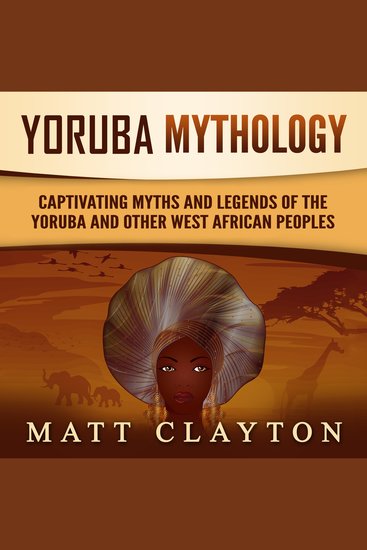
  • Yoruba Mythology: Captivating Myths and Legends of the Yoruba and Other West African Peoples - cover

    Yoruba Mythology: Captivating...

    Matt Clayton

    • 0
    • 0
    • 0
    Do you like stories about kings and queens, spirits and monsters, or tricksters and villains? 
    If so, this book is for you. Containing delightful stories from the Yoruba and other West African peoples, this book presents tales of courage and cunning, virtue and vice, and fortunes found and lost. Some of these stories draw upon actual historical persons and events, while others are purely fictional, but each story has something to delight any reader. 
    Here are just a few of the stories you will find inside this book:How Queen Moremi saved her people from their enemiesWhy King Oranyan’s staff still stands in its place todayHow Gassire gave up dreams of a kingdom to become a singer of talesHow a king wanted to know what it was like to be poor and found out the hard wayHow clever commoners outwitted the kings who wanted to kill themHow the Ashanti came to farm yamsHow a baby who was not yet ready to be born defeated the monster SasabonsamHow the wise and clever Kumba saved her village from a man-eating lionHow Kigbo the farmer learned the hard way that it is not wise to play around with spiritsAnd much, much more!                
    Scroll up and click the “add to cart” button to enjoy each of these captivating West African stories!
    Show book
  • The Wild and Free Family - Forging Your Own Path to a Life Full of Wonder Adventure and Connection - cover

    The Wild and Free Family -...

    Ainsley Arment

    • 0
    • 0
    • 0
    ""Ainsley Arment has emerged as one of the most prominent voices in [this] grass-roots community."" — New York Times 
    As parents, we dream of creating a magical childhood for our kids, yet it can be so easy to slip into autopilot. Ainsley Arment-- a mother of five, founder of the thriving community Wild + Free, and bestselling author-- is no stranger to the barrage of decisions, opportunities, and daily tasks that each day brings. But what Ainsley has discovered is that the magic of life isn’t found in the hustle and bustle of constant activity but in the intentional ordinary decisions of our days. And when we assume that a family has to look or act a certain way, we miss the opportunity to build a meaningful and fulfilling life together.  
    Drawn from her family's stories and those shared by the Wild + Free community, The Wild + Free Family explores how to create a family culture that breaks the mold by seeking to connect with our children, unleash their gifts, pursue a shared vision together, and redeem generational brokenness, among so much more. Inside these pages are Ainsley’s words of encouragement, honesty, and wisdom, guiding all parents to create a home where families can forge their own path to love stronger, live more fully, and grow closer to each other.  
    Supplemental enhancement PDF accompanies the audiobook.
    Show book
  • The Pyramid Texts - cover

    The Pyramid Texts

    Anonymous Anonymous

    • 0
    • 0
    • 0
    Brought to you by Altrusian Grace Media. Narrated by Matthew Schmitz. 
    The Pyramid Texts are the oldest ancient Egyptian funerary texts, dating to the late Old Kingdom. They are the earliest known corpus of ancient Egyptian religious texts. Written in Old Egyptian, the pyramid texts were carved onto the subterranean walls and sarcophagi of pyramids at Saqqara from the end of the Fifth Dynasty, and throughout the Sixth Dynasty of the Old Kingdom, and into the Eighth Dynasty of the First Intermediate Period. The oldest of the texts have been dated to c. 2400–2300 BC. Unlike the later Coffin Texts and Book of the Dead, the Pyramid Texts were reserved only for the pharaoh and were not illustrated. The use and occurrence of Pyramid Texts changed between the Old, Middle, and New Kingdoms of Ancient Egypt. During the Old Kingdom (2686 BCE – 2181 BCE), Pyramid Texts could be found in the pyramids of kings as well as three queens, named Wedjebten, Neith, and Iput. During the Middle Kingdom (2055 BCE – 1650 BCE), Pyramid Texts were not written in the pyramids of the pharaohs, but the traditions of the pyramid spells continued to be practiced. In the New Kingdom (1550 BCE – 1070 BCE), Pyramid Texts were found on tombs of officials.
    Show book
  • A Fragile Life - Accepting Our Vulnerability - cover

    A Fragile Life - Accepting Our...

    Todd May

    • 0
    • 0
    • 0
    It is perhaps our noblest cause, and certainly one of our oldest: to end suffering. Think of the Buddha, Chuang Tzu, or Marcus Aurelius: stoically composed figures impervious to the torments of the wider world, living their lives in complete serenity—and teaching us how to do the same. After all, isn’t a life free from suffering the ideal? Absolutely not, argues Todd May in this provocative but compassionate book. In a moving examination of life and the trials that beset it, he shows that our fragility is actually one of the most important aspects of our humanity. 
     
    May starts with a simple but hard truth: suffering is inevitable. At the most basic level, we suffer physically—a sprained ankle or a bad back. But we also suffer insults and indifference. We suffer from overburdened schedules and unforeseen circumstances, from moral dilemmas and emotional heartaches. Even just thinking about our own mortality—the fact that we only live one life—can lead us to tremendous suffering. No wonder philosophies such as Buddhism, Taosim, Stoicism, and even Epicureanism—all of which counsel us to rise above these plights—have had appeal over the centuries. May highlights the tremendous value of these philosophies and the ways they can guide us toward better lives, but he also exposes a major drawback to their tenets: such invulnerability is too emotionally disengaged from the world, leading us to place too great a distance between ourselves and our experience. Rather than seeking absolute immunity, he argues most of us just want to hurt less and learn how to embrace and accept what suffering we do endure in a meaningful way. 
     
    Offering a guide on how to positively engage suffering, May ultimately lays out a new way of thinking about how we exist in the world, one that reassures us that our suffering, rather than a failure of physical or psychological resilience, is a powerful and essential part of life itself.
    Show book
  • Kotromanić Dynasty The: The History and Legacy of the Kings Who Ruled Medieval Bosnia - cover

    Kotromanić Dynasty The: The...

    Editors Charles River

    • 0
    • 0
    • 0
    Much has been written about Western intervention during the breakup of Yugoslavia, and whether it made matters worse, prevented worse atrocities, or was simply ineffective. In early 1992, however, what was clear was that Europe was hopelessly divided over the best course of action to take towards Yugoslavia, and after several years of fighting, the Bosnian War was one of the most violent conflagrations in Europe since the end of World War II.  
    	Depending on the source, many authors have focused on different catalysts for Yugoslavia’s demise, but Vesna Drapac may have succinctly summed the situation up when he wrote that by the end, the state “lacked a reason to exist.” There is certainly something in this sentiment, but the disintegration came at an enormous cost. 
    	Given what happened in Yugoslavia, it should be little surprise that Bosnia did not have its fully-established borders until the 19th century, and even in modern times, in many respects the people distinguished and defined Bosnia as a polity more than its shifting borders, and regardless of whether Bosnia operated as an independent state or kingdom. It was during the Middle Ages that Bosnia’s culture and ethnic makeup truly began to coalesce, despite the politically rocky nature of the era in the Balkans. 
    Show book