Join us on a literary world trip!
Add this book to bookshelf
Grey
Write a new comment Default profile 50px
Grey
Subscribe to read the full book or read the first pages for free!
All characters reduced
A Shade of War - Echoes From Beyond - cover

A Shade of War - Echoes From Beyond

Pasquale De Marco

Publisher: Publishdrive

  • 0
  • 0
  • 0

Summary

**A Shade of War: Echoes From Beyond** takes readers on a riveting journey through the cataclysmic events of World War II, offering a fresh perspective on this defining moment in human history. This comprehensive and engaging narrative delves into the intricate web of causes, battles, and consequences that shaped the conflict, while also shedding light on the profound impact it had on the lives of ordinary people.

Through meticulous research and captivating storytelling, this book brings to life the key turning points of the war, from the rise of fascism and the invasion of Poland to the D-Day landings and the atomic bombings of Hiroshima and Nagasaki. Readers will gain a deep understanding of the strategies and tactics employed by the major powers, as well as the motivations and personalities of the leaders who drove them.

More than just a chronicle of battles and events, **A Shade of War** delves into the human experience of war, exploring the resilience, courage, and sacrifice displayed by soldiers, civilians, and leaders alike. It also examines the devastating impact of the conflict on societies and cultures, highlighting the profound changes it brought about in the political, economic, and social spheres.

This book is not only a valuable resource for those seeking a deeper understanding of World War II, but also a powerful reminder of the fragility of peace. By examining the lessons learned from this tragic chapter in human history, we can work towards preventing future conflicts and building a more just and equitable world.

**A Shade of War** is a must-read for anyone interested in history, politics, or the human condition. Its insightful analysis and compelling narrative make it an essential addition to the bookshelf of any reader seeking to gain a deeper understanding of one of the most consequential events in human history.


If you like this book, write a review!
Available since: 06/02/2025.
Print length: 160 pages.

Other books that might interest you

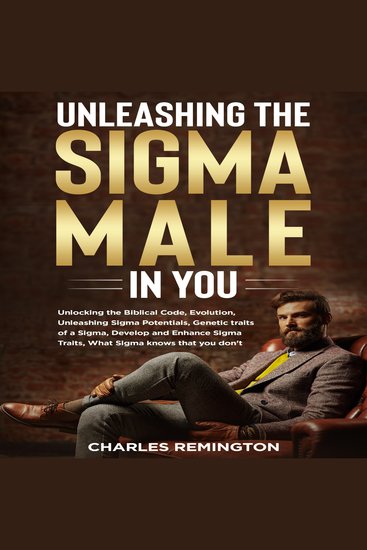
  • Unleashing the Sigma Male in You - Unlocking the Biblical Code Evolution Unleashing Sigma Potentials Genetic Traits of a Sigma Develop and Enhance Sigma Traits What Sigma Knows that You Don't - cover

    Unleashing the Sigma Male in You...

    Charles Remington

    • 0
    • 0
    • 0
    A Sigma male is not born but made! 
    By developing certain personality traits, a person can become a Sigma male. But to develop these skills and personality traits, one must be open to change and accept it. 
    Without an open mindset, it can become impossible for a person to learn new personality traits. 
    Learn the importance of having a growth mindset 
    The psychology of attraction 
    How to make yourself appear more attractive to others 
    Build charisma and charm 
    Learn the laws of attractiveness. 
    How to flirt, dating techniques 
    Self-Discipline 
    Building up Mental Toughness 
    Mindset 
    Positivity 
    Strength 
    Nobody is born a natural leader. Leadership qualities are learned. Similarly, nobody is born as a Sigma male. These qualities have to be learned as one goes through life. While some people put in efforts to develop their personalities, most people don't. 
    Those who go the extra mile to develop their personality, end up being identified as a Sigma male, while the rest fall into the beta category. 
    Buy my book now!
    Show book
  • Rare Recording of J Robert Oppenheimer A - Vol 2 - cover

    Rare Recording of J Robert...

    J. Robert Oppenheimer

    • 0
    • 0
    • 0
    Julius Robert Oppenheimer (April 22, 1904 - February 18, 1967) was an American theoretical physicist and director of the Los Alamos Laboratory during World War II. He is often credited as the "father of the atomic bomb" for his role in organizing the Manhattan Project, the research and development undertaking that created the first nuclear weapons.
    Show book
  • Swapped for My Lesbian Roommate - Gender Swap - cover

    Swapped for My Lesbian Roommate...

    Kinky Press

    • 0
    • 0
    • 0
    How does a straight guy get with a lesbian? 
      
    Eric has had the hots for his roommate since the first days of college. Now that they are both interning at the prestigious genetics company Generico, he may finally have an opportunity to do something about the unrequited lust playing out in his boxer shorts. 
      
    One medically enhanced procedure later, and Eric becomes Erica, a hot blonde ready for action. Will his roommate jump at the chance to jump Erica’s new bones?
    Show book
  • Child - A Memoir - cover

    Child - A Memoir

    Judy Goldman

    • 0
    • 0
    • 0
    A personal meditation on love in the shadow of white privilege and racism 


    Child is the story of Judy Goldman's relationship with Mattie Culp, the Black woman who worked for her family as a live-in maid and helped raise her—the unconscionable scaffolding on which the relationship was built and the deep love. It is also the story of Mattie's child, who was left behind to be raised by someone else. Judy, now eighty, cross-examines what it was to be a privileged white child in the Jim Crow South, how a bond can evolve in and out of step with a changing world, and whether we can ever tell the whole truth, even to ourselves. It is an incandescent book of small moments, heart-warming, heartbreaking, and, ultimately, inspiring.
    Show book
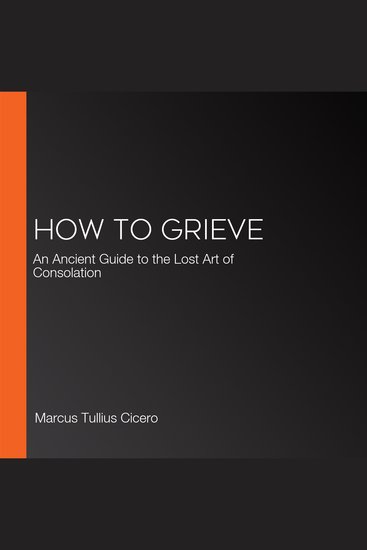
  • How to Grieve - An Ancient Guide to the Lost Art of Consolation - cover

    How to Grieve - An Ancient Guide...

    Marcus Tullius Cicero

    • 0
    • 0
    • 0
    An engaging new translation of a timeless masterpiece about coping with the death of a loved one 


    In 45 BCE, the Roman statesman Cicero fell to pieces when his beloved daughter, Tullia, died from complications of childbirth. But from the depths of despair, Cicero fought his way back. In an effort to cope with his loss, he wrote a consolation speech—not for others, as had always been done, but for himself. And it worked. Cicero's Consolation was something new in literature, equal parts philosophy and motivational speech. Drawing on the full range of Greek philosophy and Roman history, Cicero convinced himself that death and loss are part of life, and that if others have survived them, we can, too; resilience, endurance, and fortitude are the way forward. 


    Lost in antiquity, Cicero's Consolation was recreated in the Renaissance from hints in Cicero's other writings and the Greek and Latin consolatory tradition. The resulting masterpiece—translated here for the first time in 250 years—is infused throughout with Cicero's thought and spirit. 


    Complete with an inviting introduction, Michael Fontaine's engaging translation makes this searching exploration of grief available to readers once again.
    Show book
  • The America We Knew - The Evolution of a Nation - cover

    The America We Knew - The...

    Harry Montgomery

    • 0
    • 0
    • 0
    Long before the United States was conceived, the land that would become America was home to diverse Native nations with distinct cultures, languages, and ways of life. These Indigenous peoples had established intricate societies with deep spiritual ties to the land. Their histories and traditions stretched back centuries, shaped by the environment and a rich tapestry of social and economic systems. When European settlers began arriving in the early 1600s, they encountered not an empty wilderness, but thriving civilizations. However, the arrival of these settlers would soon mark a period of upheaval and change that would drastically alter the continent’s destiny. 
    The first European settlements were often fragile, dependent on Indigenous knowledge and assistance for survival. The English at Jamestown, the Pilgrims in Plymouth, and other colonial groups faced starvation, disease, and harsh climates. Over time, however, these colonies grew stronger and more permanent. As settlers established farms, towns, and trade routes, they also began to encroach upon Native lands, leading to rising tensions and inevitable conflict. Colonial powers such as Britain, France, and Spain vied for control over these territories, using both diplomacy and violence to expand their influence. The early colonial period was thus characterized by both cooperation and confrontation, shaping a complex legacy of interaction between Natives and newcomers. 
    As settlements expanded, so too did European influence over the land. Colonists brought with them not only goods and technology but also new political, religious, and economic systems. These imported ideas began to take root, forming the foundations of what would later become American governance and identity. At the same time, the enslaved labor of Africans was introduced into the colonies, creating a brutal institution that would come to define much of the nation's future struggles.
    Show book