Join us on a literary world trip!
Add this book to bookshelf
Grey
Write a new comment Default profile 50px
Grey
Subscribe to read the full book or read the first pages for free!
All characters reduced
A New Tome of the Pennsylvania Railroad Company - cover

A New Tome of the Pennsylvania Railroad Company

Pasquale De Marco

Publisher: Publishdrive

  • 0
  • 0
  • 0

Summary

The Pennsylvania Railroad was one of the most important and iconic railroads in American history. It played a vital role in the development of the United States, from the early days of the republic to the rise of the modern industrial economy. This book tells the story of the PRR, from its humble beginnings in the early 19th century to its eventual merger with the New York Central Railroad in 1968.

This book is more than just a history of the PRR. It is also a story of the people who built and operated the railroad, the passengers and shippers who relied on it, and the communities that grew up along its lines. It is a story of innovation, expansion, and consolidation. It is a story of challenges and setbacks. And it is a story of the transformative power of transportation.

The PRR played a vital role in the Industrial Revolution, the Civil War, and the Gilded Age. It helped to shape the American landscape, the arts and culture, and the future of transportation. The PRR was more than just a railroad; it was a symbol of American progress and prosperity.

This book is a must-read for anyone interested in American history, transportation history, or the history of business. It is a story that is both fascinating and inspiring. It is a story that will stay with you long after you finish reading it.

**Key Features:**

* Comprehensive history of the Pennsylvania Railroad, from its founding in 1846 to its merger with the New York Central Railroad in 1968
* Detailed look at the PRR's role in the Industrial Revolution, the Civil War, and the Gilded Age
* Examination of the PRR's impact on the American landscape, the arts and culture, and the future of transportation
* Profiles of the people who built and operated the PRR, including Andrew Carnegie, J.P. Morgan, and Alexander Cassatt
* Richly illustrated with historical photographs and maps

**Reviews:**

"A comprehensive and well-written history of one of America's most important railroads." - **Library Journal**

"A must-read for anyone interested in American history, transportation history, or the history of business." - **Booklist**

"A fascinating and inspiring story of innovation, expansion, and consolidation." - **Publishers Weekly**


If you like this book, write a review!
Available since: 06/02/2025.
Print length: 164 pages.
Other books that might interest you

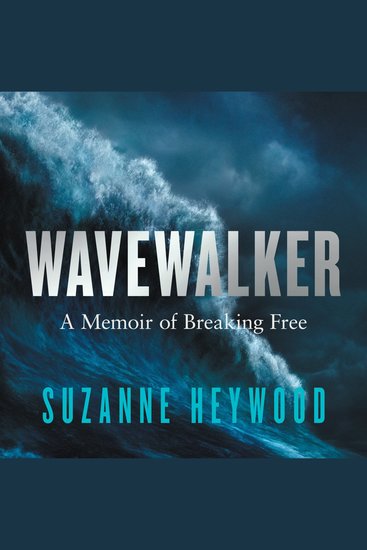
  • Wavewalker: THE INTERNATIONAL BESTSELLING TRUE-STORY OF A YOUNG GIRL’S FIGHT FOR FREEDOM AND EDUCATION - cover

    Wavewalker: THE INTERNATIONAL...

    Suzanne Heywood

    • 0
    • 0
    • 0
    THE INTERNATIONAL BESTSELLER 
    A TIMES BEST MEMOIR OF 2023 
    ‘Grippingly vivid and pacey’ THE TIMES 
    ‘A seven-year old girl on a seventy-foot yacht, for ten years, over fifty thousand miles of sailing’ SIMON WINCHESTER 
    ‘A seven-year old girl on a seventy-foot yacht, for ten years, over fifty thousand miles of sailing … a fantastic story of a truly Odyssean journey across all the world’s great oceans – but is also the inspiring story of the developing of a restless and inquiring mind’ SIMON WINCHESTER 
    'An astonishing almost day-by-day account of [a] hazardous journey and its legacy’ TELEGRAPH 
    ‘This is a story of an epic childhood journey, so exciting and so shocking it is hard to know whether you’re reading about a dream or a nightmare… Wavewalker is thrilling, horrifying, beautifully written – I couldn’t put it down’ ED BALLS 
    Aged just seven, Suzanne Heywood set sail with her parents and brother on a three-year voyage around the world. What followed turned instead into a decade-long way of life, through storms, shipwrecks, reefs and isolation, with little formal schooling. No one else knew where they were most of the time and no state showed any interest in what was happening to the children. 
    Suzanne fought her parents, longing to return to England and to education and stability. This memoir covers her astonishing upbringing, a survival story of a child deprived of safety, friendships, schooling and occasionally drinking water… At seventeen Suzanne earned an interview at Oxford University and returned to the UK. 
    From the bestselling author of What Does Jeremy Think?, Wavewalker is the incredible true story of how the adventure of a lifetime became one child’s worst nightmare – and how her determination to educate herself enabled her to escape 
    ‘A classic memoir of childhood. This is a book that every parent should read to consider the consequences of their midlife crises, and every child should read to learn how to deal with impossible mums and dads, as well as boils and barnacles’ Mail on Sunday 5* 
    ‘An electrifying story about an extraordinary childhood, and Heywood tells it with remarkable clarity and assurance . . . an engrossing book that pitches the reader into the highs and lows of a young life spent in the “Wavewalker School of the Sea”’TLS 
    HarperCollins 2023
    Show book
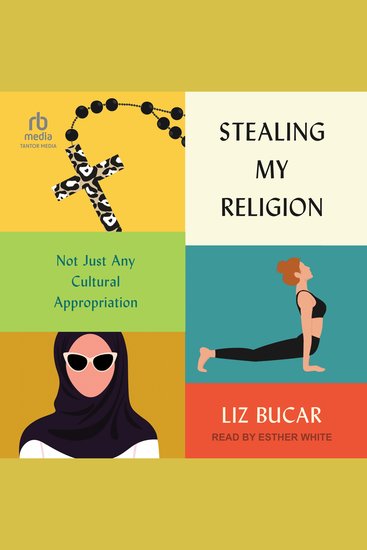
  • Stealing My Religion - Not Just Any Cultural Appropriation - cover

    Stealing My Religion - Not Just...

    Liz Bucar

    • 0
    • 0
    • 0
    We think we know cultural appropriation when we see it. Blackface or Native American headdresses as Halloween costumes—these clearly give offense. But what about Cardi B posing as the Hindu goddess Durga in a Reebok ad, AA's twelve-step invocation of God, or the earnest namaste you utter at the end of yoga class? 


    Liz Bucar unpacks the ethical dilemmas of a messy form of cultural appropriation: the borrowing of religious doctrines, rituals, and dress for political, economic, and therapeutic reasons. Does borrowing from another's religion harm believers? Bucar sees religion as an especially vexing arena for appropriation debates because faiths overlap and imitate each other and because diversity within religious groups scrambles our sense of who is an insider and who is not. 


    Stealing My Religion guides us through three revealing case studies—the hijab as a feminist signal of Muslim allyship, a study abroad "pilgrimage" on the Camino de Santiago, and the commodification of yoga in the West. Reflecting on her own missteps, Bucar comes to a surprising conclusion: the way to avoid religious appropriation isn't to borrow less but to borrow more—to become deeply invested in learning the roots and diverse meanings of our enthusiasms.
    Show book
  • Younger Dryas Period The: The History of the Earth’s Drastic Climate Change at the End of the Pleistocene Era - cover

    Younger Dryas Period The: The...

    Editors Charles River

    • 0
    • 0
    • 0
    From about 12,900 to 11,700 before present (BP), near Ice Age conditions returned to the Northern Hemisphere of the planet. It was a sudden shift from the warm temperatures that had prevailed for nearly 2,000 years. This period is referred to by archaeologists, geologists, and earth scientists as the Greenland Stadial, but it is more commonly known as the Younger Dryas. The Younger Dryas marked the end of the last glacial period, the end of the Pleistocene Era, and the beginning of the Holocene Era, which is the current era. It was a period of great change, when climate change happened quite quickly, directly affecting the flora, fauna, and humans of the Northern Hemisphere in the process. The impact on the human populations was perhaps most important because, in some places, it virtually destroyed emerging cultures, while in other places, it might have propelled humans to develop new survival traits and technologies later used to move humanity into the Neolithic era. Although scholars now know quite a bit about the Younger Dryas, many elements of it are still debated. Other aspects serve as a predictor of what humans can expect in the future. 
    	There is, however, still plenty of information about the Younger Dryas that remains unknown or open to debate. Not all scholars agree on the dates of the Younger Dryas or how long it lasted. Even more controversial are the alternate theories about what caused the Younger Dryas and the effect it had on the Northern Hemisphere’s bio-populations. This book examines the background of the Younger Dryas, its effects on bio-populations, and how it contributed to the emergence of the Neolithic Era. Alternative theories will be examined and compared to more standard ideas currently prevailing in academia.
    Show book
  • The Bengal Famine - The Forgotten Tragedy of 1943 - cover

    The Bengal Famine - The...

    Sarah Willards

    • 0
    • 0
    • 0
    The Bengal Famine of 1943 was not an isolated event, but rather the culmination of years of political, economic, and environmental factors. To understand the tragedy that claimed the lives of millions, it is essential to examine the conditions that led to this devastating famine. 
    British colonial policies in India played a significant role in shaping the socio-economic landscape of Bengal. Under British rule, India’s agrarian economy was restructured to serve the needs of the colonial administration and its industrial empire. While the British extracted resources for their own benefit, they paid little attention to the welfare of the local population. In Bengal, a region heavily reliant on rice cultivation, this exploitation became increasingly evident as agricultural output was redirected to support the war effort, leaving the local population vulnerable to food shortages. 
    The economic strain caused by World War II exacerbated the situation in Bengal. As Britain sought to maintain its colonial empire, large quantities of rice were diverted from Bengal to support the war in the Pacific, where the Japanese threat loomed large. Additionally, the colonial government’s focus on military expenditure rather than economic development in India drained resources that could have been used for famine prevention and agricultural aid. This led to an economic imbalance, further disrupting food production and distribution in Bengal.
    Show book
  • Euthydemus - Logic Language and the Absurd – Plato’s Satirical Dialogue on Sophistry and Education - cover

    Euthydemus - Logic Language and...

    Plato, Tim Zengerink

    • 0
    • 0
    • 0
    What if the cleverest arguments were the most meaningless? 
    In Euthydemus, Plato unleashes his sharpest satire on the world of sophistry. When Socrates meets two cunning rhetoricians, Euthydemus and Dionysodorus, a lesson on virtue quickly devolves into a whirlwind of verbal traps, circular logic, and baffling contradictions. Their aim? To appear wise—even if they say nothing at all. 
    This modern audiobook translation delivers Plato’s humor, irony, and insight with clarity and flair. Ideal for listeners curious about logic, language, and the fine line between cleverness and wisdom. 
    What you'll discover inside: 
    •	A comical, cautionary tale about the abuse of language and reasoning 
    •	The most absurd (and enlightening) philosophical dialogue ever written 
    •	Socrates’ cool-headed navigation through nonsense and noise 
    •	A fresh translation that brings Plato’s wit vividly to life 
    If you've ever argued just to win—or lost to someone who did—Euthydemus will both entertain and educate.
    Show book
  • The Babel Message - A Love Letter to Language - cover

    The Babel Message - A Love...

    Keith Kahn-Harris

    • 0
    • 1
    • 0
    'Quite simply, and quite ridiculously, one of the funniest and most illuminating books I have ever read. I thought I was obsessive, but Keith Kahn-Harris is playing a very different sport. He really has discovered the whole world in an egg.' Simon Garfield
    A thrilling journey deep into the heart of language, from a rather unexpected starting point.
    
    Keith Kahn-Harris is a man obsessed with something seemingly trivial - the warning message found inside Kinder Surprise eggs:
    
    WARNING, read and keep: Toy not suitable for children under 3 years. Small parts might be swallowed or inhaled.
    
    On a tiny sheet of paper, this message is translated into dozens of languages - the world boiled down to a multilingual essence. Inspired by this, the author asks: what makes 'a language'? With the help of the international community of language geeks, he shows us what the message looks like in Ancient Sumerian, Zulu, Cornish, Klingon - and many more. Along the way he considers why Hungarian writing looks angry, how to make up your own language, and the meaning of the heavy metal umlaut.
    
    Overturning the Babel myth, he argues that the messy diversity of language shouldn't be a source of conflict, but of collective wonder. This is a book about hope, a love letter to language.
    'This is a wonderful book. A treasure trove of mind-expanding insights into language and humanity encased in a deliciously quirky, quixotic quest. I loved it. Warning: this will keep you reading.' - Ann Morgan, author of Reading the World: Confessions of a Literary Explorer
    Show book