Join us on a literary world trip!
Add this book to bookshelf
Grey
Write a new comment Default profile 50px
Grey
Subscribe to read the full book or read the first pages for free!
All characters reduced
A Historical Odyssey Through the American Tapestry - cover

A Historical Odyssey Through the American Tapestry

Pasquale De Marco

Publisher: Publishdrive

  • 0
  • 0
  • 0

Summary

"A Historical Odyssey Through the American Tapestry" is an immersive journey through the annals of the United States, a nation built upon the dreams and sacrifices of countless individuals. This comprehensive volume delves into the rich tapestry of American history, exploring the triumphs and tribulations that have shaped its destiny.

From the shores of Jamestown to the skyscrapers of Manhattan, the book unveils the captivating narrative of America's past. Readers will witness the birth of a new nation, forged in the crucible of revolution and guided by the principles of liberty and equality. They will traverse the vast expanse of the frontier, where pioneers carved out a new life, and experience the transformative power of the Industrial Revolution.

The book sheds light on the struggles of the working class, the fight for civil rights, and the sacrifices made in global conflicts. It explores the technological advancements that reshaped communication and industry, and examines the social and cultural changes that have defined the American experience.

In the 21st century, America stands at a crossroads, facing a myriad of challenges. "A Historical Odyssey Through the American Tapestry" invites readers to reflect on the past as they contemplate the future. This book is an essential read for anyone seeking a deeper understanding of the United States, its people, and its place in the world.

With its captivating narrative, vivid descriptions, and insightful analysis, "A Historical Odyssey Through the American Tapestry" is a must-have for history buffs, students, and anyone interested in the American story. Embark on this journey through time and discover the resilience, innovation, and unwavering pursuit of a brighter future that has defined the American experience.


If you like this book, write a review!
Available since: 06/02/2025.
Print length: 157 pages.

Other books that might interest you

  • Moche Civilization - Warriors Pottery and the Pyramid Builders of Northern Peru - cover

    Moche Civilization - Warriors...

    Rolf Hedger

    • 0
    • 0
    • 0
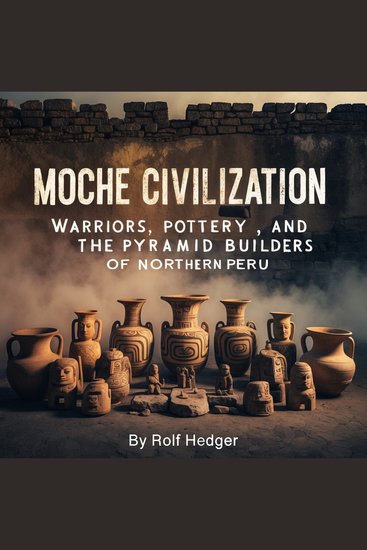
    The Moche civilization emerged along the northern coast of present-day Peru, flourishing between approximately 100 and 750 CE. This society developed in a region marked by arid deserts, fertile river valleys, and proximity to the Pacific Ocean, which shaped its economy, culture, and political structure. The Moche were not a singular unified state but rather a collection of regional polities connected through shared traditions, artistic styles, and religious beliefs. Their rise was influenced by earlier Andean cultures, particularly the Cupisnique and Chavín, which had already laid the foundations for complex societies in the region. 
    The origins of the Moche civilization can be traced to the early centuries of the Common Era when small communities along the coast began to expand due to agricultural advancements and increasing social stratification. The region's rivers, fed by Andean runoff, allowed for irrigation-based farming that supported large populations. Over time, leaders emerged who controlled land, labor, and water resources, leading to the development of hierarchical societies. These early rulers likely solidified their power through religious authority, military strength, and their ability to organize large-scale construction projects. 
    One of the defining aspects of Moche civilization was its adaptation to the harsh environment. The coastal deserts of northern Peru posed challenges for sustaining large populations, yet the Moche mastered irrigation technology, channeling river water to expand arable land. This agricultural innovation provided surplus food, which in turn fueled urban growth, specialization of labor, and the rise of elite classes. Moche settlements grew into centers of political and religious activity, with monumental architecture such as pyramids and temples becoming focal points of their cities.
    Show book
  • How to Recognize Toxic Marriages - cover

    How to Recognize Toxic Marriages

    Olivia Werner

    • 0
    • 0
    • 0
    [How to Recognize Toxic Marriages] pierces through the subtle, insidious nature of marital toxicity with haunting precision and lyrical insight. Like a masterful cartographer mapping unexplored territory, this intimate examination charts the invisible boundaries that slowly constrict within toxic relationships - from the initial silence that settles like dust between two people, to the gradual erosion of self-worth that occurs so slowly you barely notice it happening. Written with unflinching honesty and profound psychological depth, the book illuminates the quiet ways love transforms into a weapon, how shared spaces become battlegrounds, and the sophisticated machinery of control that operates just beneath the surface of everyday interactions. Through its careful dissection of the language of distance, the manipulation of reality, and the weaponization of intimacy, this work serves as both a warning signal and a validation for those caught in the bewildering maze of toxic marriages, offering a vocabulary for experiences that often defy articulation.
    Show book
  • A Rare Recording of Film Icon Burt Lancaster - cover

    A Rare Recording of Film Icon...

    Burt Lancaster

    • 0
    • 0
    • 0
    Burton Stephen Lancaster (November 2, 1913 - October 20, 1994), born in New York City, was an American actor, producer and director. Initially known for playing tough guys with a tender heart, he went on to achieve success with more complex and challenging roles over a 45-year career in films and television. He was a four-time Academy Award Best Actor nominee, winning the Oscar and Golden Globe for the 1960 film, Elmer Gantry, and BAFTA award winner for Birdman of Alcatraz (1963) and Atlantic City (1982). The following recordings are from tv interviews from 1963 and 1973.
    Show book
  • Bushmanders & Bullwinkles - How Politicians Manipulate Electronic Maps and Census Data to Win Elections - cover

    Bushmanders & Bullwinkles - How...

    Mark Monmonier

    • 0
    • 0
    • 0
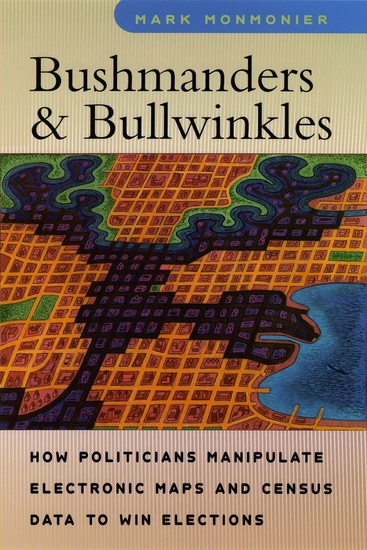
    For years Mark Monmonier, "a prose stylist of no mean ability or charm" according to the Washington Post, has delighted readers with his insightful understanding of cartography as an art and technology that is both deceptive and revealing. Now he turns his focus to the story of political cartography and the redrawing of congressional districts. His title Bushmanders and Bullwinkles combines gerrymander with the surname of the president who actively tolerated racial gerrymandering and draws attention to the ridiculously shaped congressional districts that evoke the antlers of the moose who shared the cartoon spotlight with Rocky the Flying Squirrel. Written from the perspective of a cartographer rather than a political scientist, Bushmanders and Bullwinkles examines the political tales maps tell when votes and power are at stake. Monmonier shows how redistricting committees carve out favorable election districts for themselves and their allies; how disgruntled politicians use shape to challenge alleged racial gerrymanders; and how geographic information systems can make reapportionment a controversial process with outrageous products. He also explores controversies over the proper roles of natural boundaries, media maps, census enumeration, and ethnic identity. Raising important questions about Supreme Court decisions in regulating redistricting, Monmonier asks if the focus on form rather than function may be little more than a distraction from larger issues like election reform. Characterized by the same wit and clarity as Monmonier's previous books, Bushmanders and Bullwinkles is essential background for understanding what might prove the most contentious political debate of the new decade.
    Show book
  • Collected Works Of Marxism Anarchism Communism - The Communist Manifesto Reform or Revolution The Conquest of Bread Anarchism: What it Really Stands The State and Revolution Fascism: What It Is and How To Fight It - cover

    Collected Works Of Marxism...

    Karl Marx, Friedrich Engels,...

    • 0
    • 0
    • 0
    This book contains the fundamental works of Marxism, Anarchism and Bolshevism:
    The Communist Manifesto, originally the Manifesto of the Communist Party, by Karl Marx and Friedrich Engels;
    Reform or Revolution by Rosa Luxemburg;
    The Conquest of Bread by the Russian anarcho-communist Peter Kropotkin;
    Anarchism: What it Really Stands For by Emma Goldman;
    The State and Revolution by Vladimir Lenin;
    Fascism: What It Is and How To Fight It by Leon Trotsky.
     
    Translated by Mary Fox.
    Illustrated by Dmytro Rybalko.
    Show book
  • President Abraham Lincoln's August 23 1862 Letter To Horace Greeley - cover

    President Abraham Lincoln's...

    President Abraham Lincoln

    • 0
    • 0
    • 0
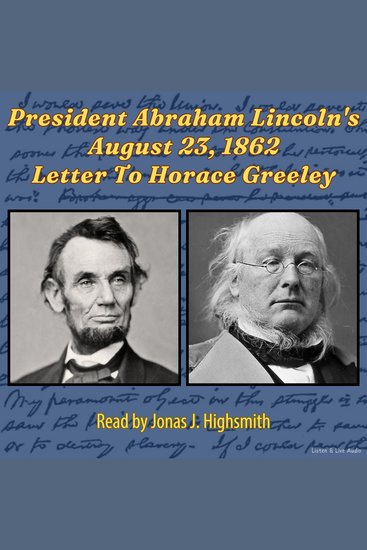
    Horace Greeley (1811–1872) was the founder and editor of the influential New York Tribune, whose circulation was among the largest in the United States. On August 19, 1862, Greeley wrote an editorial titled “The Prayer of Twenty Millions”--referring to the number of Northerners loyal to the Union--which criticized Lincoln for his reluctance to use the powers Congress had given him to confiscate southern property, including slaves, in order to emancipate them. The following is President Abraham Lincoln's reply, published in the Daily National Intelligencer on August 23, 1862.
    Show book