¡Acompáñanos a viajar por el mundo de los libros!
Añadir este libro a la estantería
Grey
Escribe un nuevo comentario Default profile 50px
Grey
Suscríbete para leer el libro completo o lee las primeras páginas gratis.
All characters reduced
A Grain of Sand - cover

A Grain of Sand

Pasquale De Marco

Editorial: Publishdrive

  • 0
  • 0
  • 0

Sinopsis

In a world awash with words, language stands as a beacon of human ingenuity and connection. It is through the tapestry of words that we navigate the complexities of life, expressing our deepest thoughts, sharing our most cherished stories, and shaping the world around us. In this groundbreaking book, we embark on an extraordinary journey to explore the multifaceted world of language, uncovering its profound impact on our lives and societies.

Delving into the depths of human communication, we uncover the power of words to convey emotions, ideas, and knowledge with remarkable precision and nuance. Language is the bridge that spans the gap between individuals, allowing us to connect, collaborate, and build communities that transcend physical boundaries. Through language, we share our histories, cultures, and traditions, weaving a rich tapestry of collective memory that binds humanity together.

The written word, in particular, has played a pivotal role in shaping the course of human civilization. From ancient manuscripts to modern-day novels, written language has served as a repository of knowledge, a catalyst for innovation, and a mirror to the human condition. It has immortalized our greatest achievements, documented our darkest moments, and ignited revolutions that have transformed the world.

But language is more than just a tool for communication and expression. It is a lens through which we perceive and interpret the world around us. The words we use, the stories we tell, and the conversations we engage in shape our understanding of reality and our place within it. Language has the power to empower or disempower, to heal or to wound, to uplift or to destroy.

As we delve into the intricate relationship between language and culture, identity, and society, we discover how language reflects and shapes our beliefs, values, and norms. We examine how it can be used to promote understanding, empathy, and cooperation among diverse groups of people, or to perpetuate division, discrimination, and conflict.

Throughout this book, we encounter a kaleidoscope of voices, perspectives, and experiences, all united by the common thread of language. We listen to poets, philosophers, scientists, activists, and ordinary individuals, each of whom has something unique to say about the power and beauty of words.

As we conclude our journey, we gain a deeper appreciation for the extraordinary gift of language and its profound impact on our lives. We recognize the importance of using language responsibly, ethically, and effectively, and we are inspired to harness its transformative power to create a more just, equitable, and compassionate world.

**A Grain of Sand** is a must-read for anyone interested in the power of language, the nature of human communication, and the role of words in shaping our lives and societies. It is a thought-provoking and inspiring exploration of one of humanity's most defining characteristics.


If you like this book, write a review!
Disponible desde: 02/06/2025.
Longitud de impresión: 163 páginas.

Otros libros que te pueden interesar

  • The Common Reader - "Volume 2" - cover

    The Common Reader - "Volume 2"

    Virginia Woolf

    • 0
    • 0
    • 0
    Do not think, because this collection of essays is titled Volume 2, that there is anything lesser or additional to it. Here is Virginia Woolf at her most entertaining and informative, relishing the portraits and insights she presents as she surveys a varied collection of individuals in English society and English literature. 
     
    The subjects range from the Elizabethans to Thomas Hardy, and then concludes, unexpectedly, with ‘How Should One Read A Book?’ Here is one delight after another: twenty-six occasional pieces (journalistic diversions) which demonstrate that her eye for history, for an individual’s place in history and in books, is just as acute and vivid as any character in her better-known novels. 
     
    Many are familiar names. John Donne, Robinson Crusoe, De Quincey, Lord Chesterfield. There is Dr Burney’s Evening Party and George Gissing, names which indicate there is no overall scheme whatsoever! Woolf champions certain figures, such as Mary Wollstonecraft (admiring her personal stance and strength) and yet has time to cast a softer, kindly eye on Dorothy Wordsworth. The detail contained in these portraits will last long in the memory—Beau Brummell descending from being the unimpeachable dandy to a sad decline; the curious eccentric personality of the poet and hymn writer William Cowper and his affection for Lady Austen. 
     
    Time and again, the skill and the wit of the great writer that is Virginia Woolf simply stops one in one’s tracks, as in her opening lines on Laurence Sterne. The essay is on A Sentimental Journey but she starts with tipping the hat to Tristram Shandy, which appeared when the author was 45. Woolf comments on Sterne: ‘No young writer could have dared to take such liberties with grammar and syntax and sense and propriety and the longstanding tradition of how a novel should be written. It needed a strong dose of the assurance of middle age and its indifference to censure to run such risks of shocking the lettered by the unconventionality of one's style, and the respectable by the irregularity of one's morals. But the risk was run and the success was prodigious.’ What a final sentence! Has the 21st century little time for the elegant essay, the joy of focused wit, of kindness, of acute observation, where the very brevity of format provides a space in which to think and reflect? In The Common Reader Volume 2, (published in 1932), the essay lives on and even more so in this sensitive and engaging book by Georgina Sutton.
    Ver libro
  • Theaetetus - cover

    Theaetetus

    Plato

    • 0
    • 0
    • 0
    Dive into the philosophical depths with Plato's Theaetetus, a compelling dialogue that probes the nature of knowledge itself. As Socrates engages the young mathematician Theaetetus in a profound conversation, timeless questions arise: What is knowledge? Can we truly perceive reality? This masterful work not only challenges the intellect but also offers rich insights into human understanding, making it a cornerstone in the study of epistemology and ancient philosophy.
    Ver libro
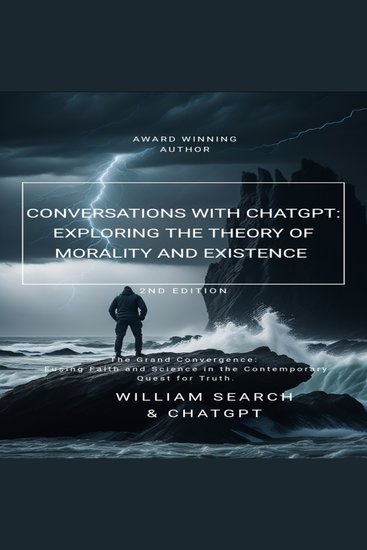
  • "Conversations with ChatGPT: Exploring the Theory of Morality and Existence" - 2nd Edition - cover

    "Conversations with ChatGPT:...

    William Search

    • 0
    • 0
    • 0
    Discover the enthralling synthesis of faith and reason in "Conversations with ChatGPT: Exploring the Theory of Morality and Existence" - 2nd Edition. This groundbreaking philosophical work navigates life's most profound mysteries by artfully weaving together religious, scientific, and philosophical perspectives. 
    Join the author as he recounts his transformative 20-year odyssey to uncover the meaning of existence, ultimately reconciling faith in God with scientific knowledge. The book delves into intriguing existential questions, such as:The compatibility of faith in God and faith in scienceThe origins of diverse religions across culturesThe reasons behind God's concealed presenceThe reconciliation of religious texts with scientific theories like the Big Bang and evolutionThe role of an all-powerful God in the evolutionary process 
    The 2nd Edition features the enhanced commentary of chatGPT-4, offering profound insights and stimulating discussions that will challenge your beliefs, inspire reflection, and open your mind to new possibilities. This book is an essential read for philosophers, students seeking comprehensive guidance, or curious readers eager for a deeper understanding of the interplay between faith and science. 
    Immerse yourself in the captivating world of "Conversations with ChatGPT: Exploring the Theory of Morality and Existence" - 2nd Edition. The author presents a clear, compelling theory supported by rigorous analysis and a synthesis of religious, scientific, and philosophical viewpoints. Don't miss the opportunity to experience the future of philosophical exploration.
    Ver libro
  • 7 Steps to Mental Toughness - Train Your Mind Conquer Adversity and Stay Focused - cover

    7 Steps to Mental Toughness -...

    Joseph Marc Lalonde

    • 0
    • 0
    • 0
    What if mental toughness was the key to handling anything life throws at you?
     
    Life will test you—unexpected challenges, setbacks, pressure. Most people crumble. They let fear, doubt, and adversity break them. But the mentally tough? They thrive under pressure, push past pain, and keep moving forward when others quit.
     
    The truth? Mental toughness isn’t something you’re born with. It’s something you build.
     
    In 7 Steps to Mental Toughness, entrepreneur and strategist Joseph Marc Lalonde reveals a battle-tested framework to develop resilience, discipline, and focus so you can dominate any challenge.
     
    This isn’t theory—it’s a step-by-step system to forge an unbreakable mind:
    
     
    Master Your Inner Dialogue – Eliminate self-doubt and rewire negative thoughts.
    
     
    Control Emotions Under Pressure – Stay calm when chaos hits.
    
     
    Turn Pain into Power – Transform adversity into fuel for growth.
    
     
    Build Unstoppable Discipline – Create habits that make toughness automatic.
    
     
    Train for High-Stress Situations – Thrive when others break.
    
     
    Detach from Outcomes – Focus on execution, not fear of results.
    
     
    Stay in the Fight – Push past breaking points and outlast any challenge.


    If you’ve ever struggled with pressure, setbacks, or staying strong when it matters most, this audiobook is your blueprint for resilience. No fluff. No hype. Just practical strategies to develop the one skill that separates the weak from the unstoppable: Mental Toughness.
     
    Forge an unbreakable mind. Master resilience. Dominate every challenge.
    Ver libro
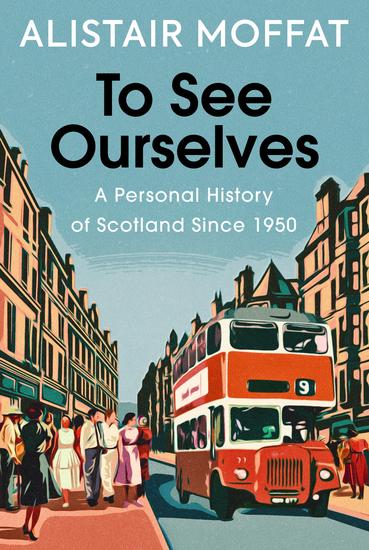
  • To See Ourselves - A Personal History of Scotland Since 1950 - cover

    To See Ourselves - A Personal...

    Alistair Moffat

    • 0
    • 0
    • 0
    Since 1945 the world has changed at breakneck speed, and life in post-war Scotland is now entirely different from what it was like when Alistair Moffat grew up in the quiet Border town of Kelso in the 1950s. At that time the rhythms and practicalities of daily life which had remained constant for many generations were about to change in the most unimaginable ways.
    This is a book about these changes – many of which have been dizzying and disorientating – and how they have affected each and every one of us in all parts of the country. The main themes, such as housing, healthcare, sport, the media, the arts and entertainment, urban and country life, our relationship with the environment, politics, religion and education, are all viewed through the lens of personal experience. Alistair's own recollections of big events and small, together with other eyewitness accounts, bring these decades alive in a way that no ordinary history can with a directness and poignancy that underlines how much has been gained – and how much lost.
    Ver libro
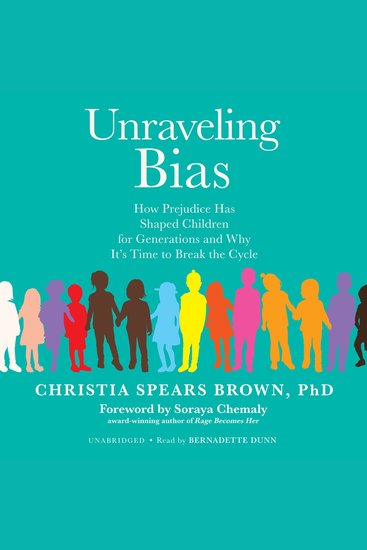
  • Unraveling Bias - How Prejudice Has Shaped Children for Generations and Why It’s Time to Break the Cycle - cover

    Unraveling Bias - How Prejudice...

    Christia Spears Brown PhD,...

    • 0
    • 0
    • 0
    We need only scan the latest news headlines to see how bias and prejudice harm adults and children alike—every single day. 
    Police shootings that give rise to the Black Lives Matter revolution, rampant sexual harassment of women and the subsequent #MeToo movement, and extreme violence toward trans men and women are just three examples. 
    It would be easy to fix these problems if the examples stopped with a few racist or sexist individuals, but there are also biases embedded in our government policies, media, and institutions. 
    As a developmental psychologist and international expert on stereotypes and discrimination in children, Dr. Christia Spears Brown knows that biases and prejudice don’t just develop as people become adults (or CEOs or politicians). They begin when children are young, slowly growing and exposed to prejudice in their classrooms, after-school activities, and, yes, even in their homes, no matter how enlightened their parents may consider themselves to be. The only way to have a more just and equitable world—not to mention more broad-minded, empathetic children—is for parents to closely examine biases beginning in childhood and how they infiltrate our kids’ lives. 
    In her new book Unraveling Bias: How Prejudice Has Shaped Children for Generations and Why It’s Time to Break the Cycle, Dr. Brown will uncover what scientists have learned about how children are impacted by biases, and how we adults can help protect them from those biases. Part science, part history, part current events, and part call to arms, Unraveling Bias provides readers with the answers to vital questions: 
    How do biased policies, schools, and media harm our children? 
    Where does childhood prejudice come from, and how do these prejudices shape children’s behavior, goals, relationships, and beliefs about themselves? 
    What can we learn from modern-day science to help us protect our children from these biases? 
    Few issues today are as critical as being aware of bias and prejudice all around us and making sure our youth don’t succumb to them. To change lives and advance society, it’s time to unravel our biases—starting with the future leaders of the world.
    Ver libro